Thank you for your interest in this story
To continue reading this article, subscribe to the Stray Ferret for as little as £1 a week
Already a subscriber? Log in here.
16
Oct
More on-call firefighters being recruited in North Yorkshire — but concerns remain
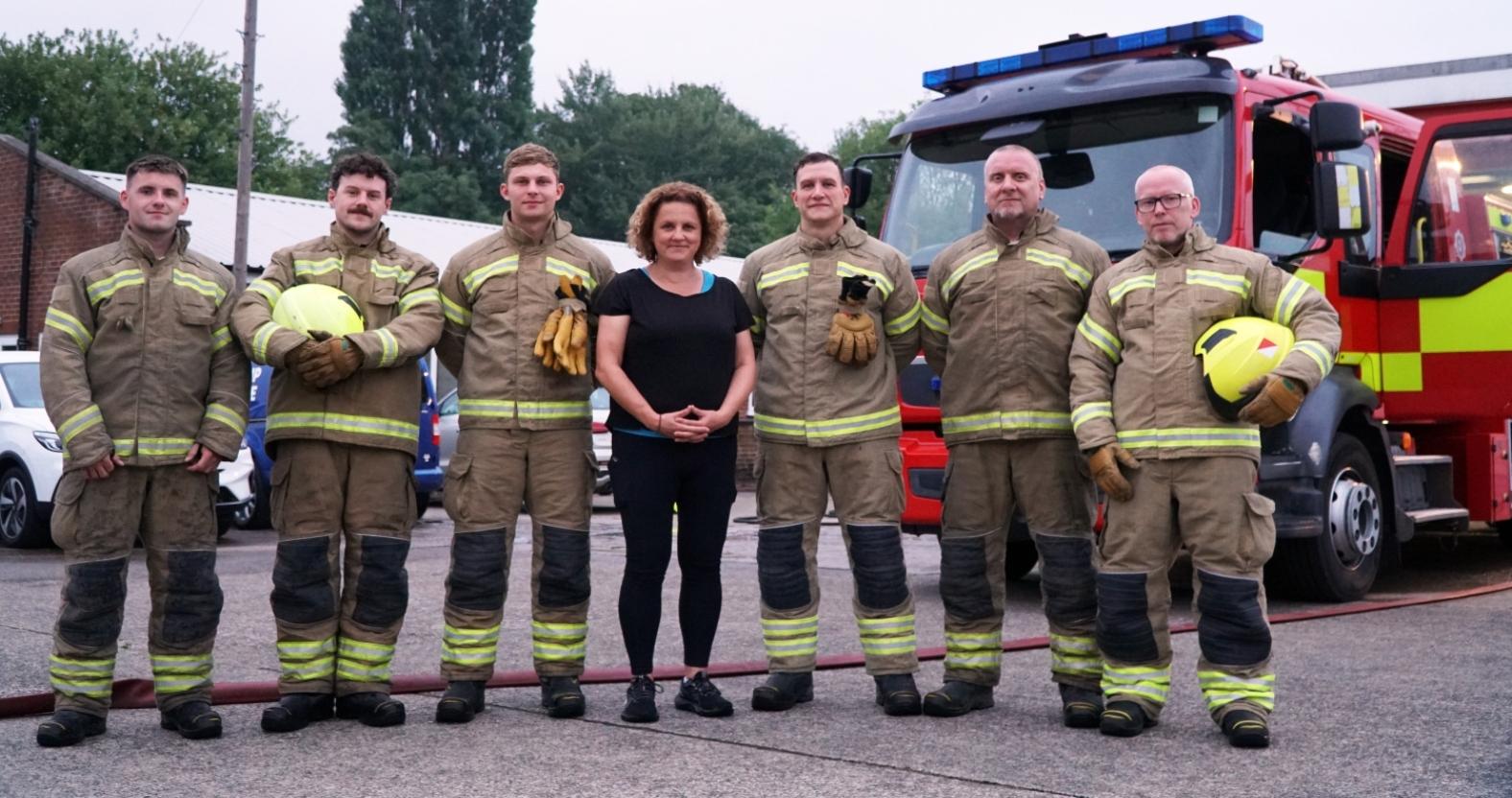
North Yorkshire Fire and Rescue Service is ‘continuing to face challenges in recruiting and retaining sufficient on-call firefighters’, a new report has revealed.
On-call firefighters are based at home or work, rather than at a fire station. They respond to a pager, and must live or work within four minutes of the station.
The role is flexible, with people able to select how many hours they work a week, on which pay is based.
Because it is large and rural, North Yorkshire relies heavily on on-call firefighters. Most of its fire stations are crewed by on-call firefighters.
The Stray Ferret published figures last year highlighting how availability of on-call firefighters was as low as 17% in Ripon.
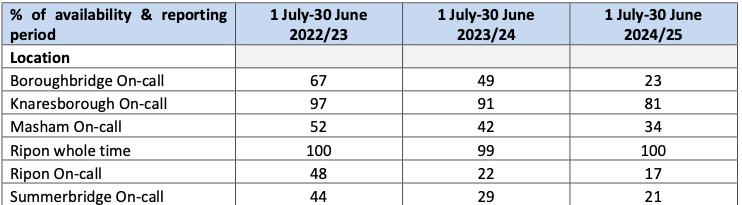
The figures show a decline over the years.
Currently, there are 339 on-call firefighters in the county, which includes 102 people who also work as wholetime firefighters, and seven members of support staff.
But the report says retention is a major concern, with many on-call firefighters retiring or resigning – especially due to competing employment commitments, demographic changes and the training required to fulfil the role.
Recruitment drive
On-call firefighter recruitment was debated on Wednesday (October 14) at a meeting of North Yorkshire Police, Fire and Crime Panel, which scrutinises the police and fire and rescue services in York and North Yorkshire.
It heard new targeted recruitment strategies are having a positive effect, attracting 53 new on-call firefighters this year, compared to previous years intake of between 32 and 34.
Interest in the role also remains strong, with 206 applications received so far during 2026, following 272 applications in 2025 and 233 applications in 2024.
But panel members flagged up concerns about how long it would take to train new recruits.
On-call firefighters undergo the same training as their whole time colleagues, which is the equivalent of a 13-week residential course. Training involves a two-week 'safe to ride course' and then a number of extra skills courses, as well as 11 knowledge tests.
It takes about two years to complete, although this varies according to each individual, leading to "a significant lag time".
Last year, Jo Coles, Labour's deputy mayor for policing and fire said that the recruitment of on-call firefighters is “always going to be a challenge” in North Yorkshire.
Speaking after the panel meeting, she said:
It's incredible to see more local people choosing to serve their communities as on-call firefighters. Their public service helps to strengthen our fire and rescue service and to ensure residents are being kept safe.
The report also reveals that about two-thirds of the fire service’s near-£55 million budget was spent on employee-related costs, such as salaries and pension contributions.
There are currently 306 wholetime firefighters, against a budgeted 285 employees, and this is set to be reviewed later in the year.

0