Thank you for your interest in this story
To continue reading this article, subscribe to the Stray Ferret for as little as £1 a week
Already a subscriber? Log in here.
17
Oct
Harrogate High head: 'Education is essentially a declaration of hope'
This article has been written for the Stray Ferret by Harrogate High School's headteacher, Sukhraj Gill, in response to the Department for Education's key education and SEND (Special Educational Needs and Disabilities) reforms.
Every government promises education reform. The real test is whether reform improves the life chances of young people. The Government’s ambition is clear: a school system that is more inclusive, more responsive to need and better able to help every child succeed. It places a stronger emphasis on mainstream inclusion, earlier intervention, workforce development and ensuring that every child can achieve and thrive.
The commitment to inclusion encourages me the most. For too long schools have been made to choose between high standards and meeting the needs of children with additional needs. In my experience, the strongest schools understand that inclusion and excellence go hand in hand. A truly successful education system doesn’t just succeed for most children; it succeeds for all children.
Across the country, schools are seeing increasing levels of complexity in the needs of the children and young people they serve. At Harrogate High School, where we support a significant number of students with individual needs, we see beyond the labels.
Every child is an individual with unique strengths, aspirations and potential. Our commitment is to understand each young person’s needs, provide the right support at the right time, and ensure they feel valued, included and able to thrive.
We embrace this responsibility because, at the heart of every decision we make, is the wellbeing, achievement and the future success of our children.
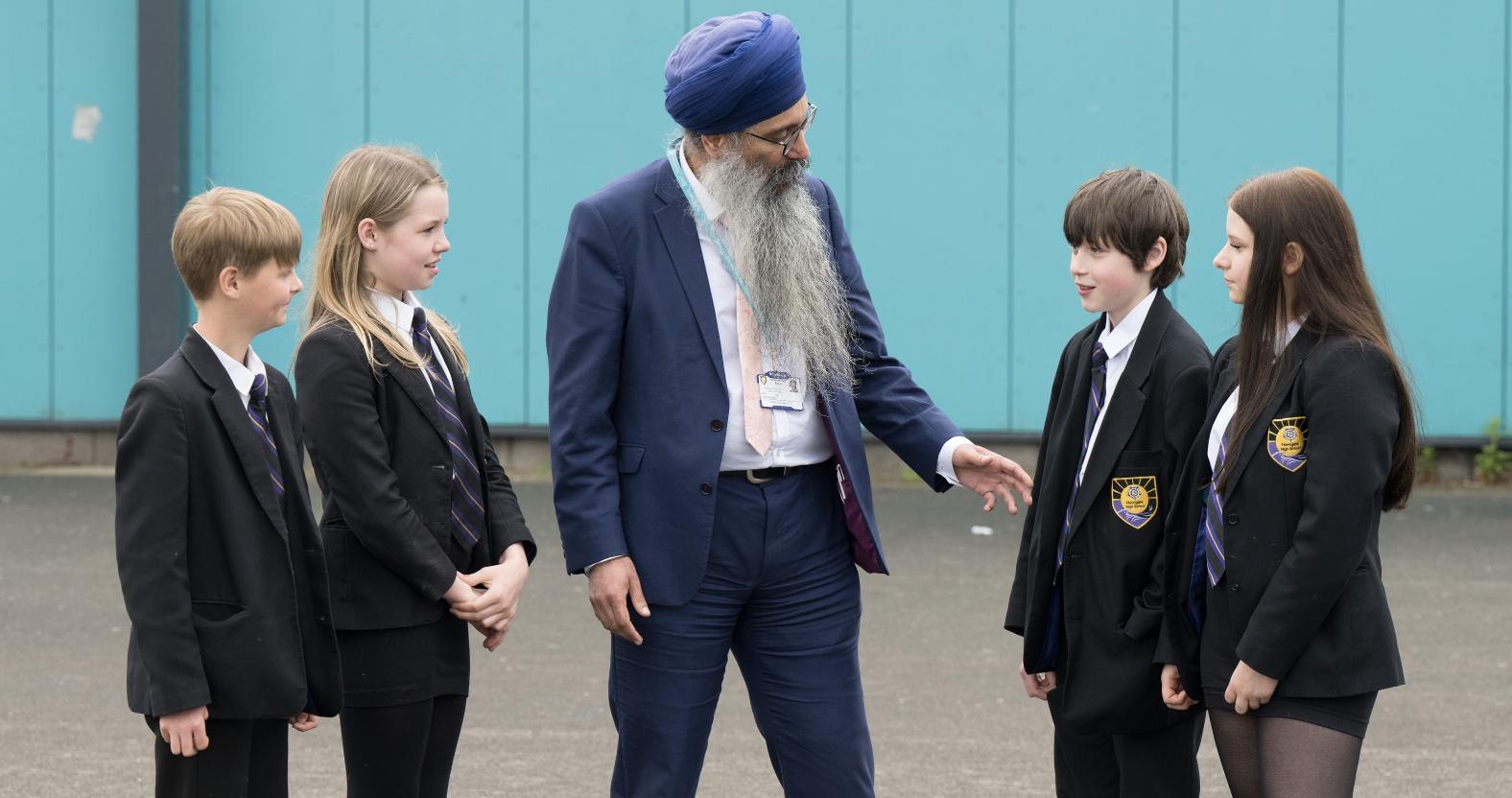
Sukhraj Gill, headteacher, Harrogate High School, with pupils.
I welcome the emphasis on earlier intervention for children with individual needs. Families want confidence that support will be available when it is required and that schools will be able to provide it.
Yet many schools struggle to access specialist services quickly enough, whilst also trying to recruit staff with the expertise required to meet increasingly complex needs. If inclusion is to become a reality for every child, schools must have timely access to the specialists required to deliver it.
For me, education is essentially a declaration of hope. At its heart, secondary education reform should be about ensuring that every young person, regardless of background, circumstance or need, has access to the opportunities and support that allow them to thrive.
Curriculum reform is therefore equally important. One of the most significant questions facing education is how we prepare young people for the rapidly changing world while maintaining high academic standards.
Future generations will still require strong literacy, numeracy and subject knowledge. Equally important will be creativity, adaptability and the confidence to work with emerging technologies.
Today’s young people are entering a world being transformed by AI and technological innovation. Many will work in roles that do not exist yet. Schools therefore must have flexibility and offer high quality vocational and technical qualifications with traditional academic routes. These pathways though must be equally valued and ambitious.
The role of schools extends far beyond the classroom. We help strengthen communities, widen opportunity helping to unlock talent. When we invest in young people, we invest in the future prosperity and cohesion of society.
The impact of education reform will be measured by the opportunities we create for children, so they gain the confidence and capability to shape our future.
Having spent nearly thirty years in education, I know how keenly ambitious staff are for the children they serve. We all want the best for children. If we want schools to succeed then government must rise to the challenge of ensuring access to the resource, expertise and support needed to turn this ambition into reality.
The greatest success any education system can achieve is not measured by the grades young people leave with, but by the possibilities that are open to them as they begin their lives outside the school gates.

0