Thank you for your interest in this story
To continue reading this article, subscribe to the Stray Ferret for as little as £1 a week
Already a subscriber? Log in here.
13
Oct
Ambulances taking longer to respond to emergencies across most of district, data reveal
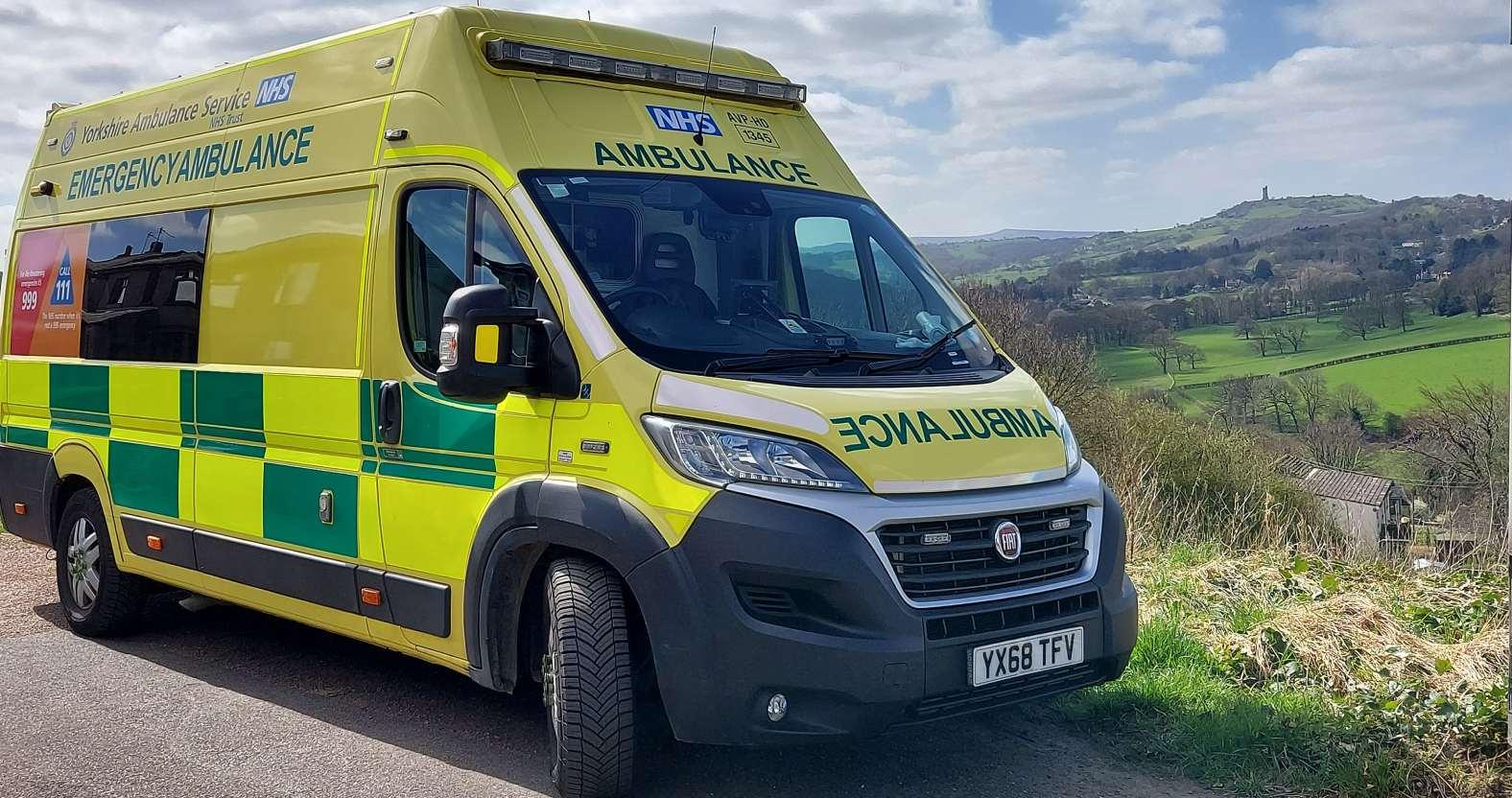
Ambulances responding to emergencies are taking longer to get to patients across most of the Harrogate district than they did seven years ago, according to figures revealed by a Freedom of Information (FOI) request.
Yorkshire Ambulance Service’s annual report for 2025-26, which was published last month, showed a region-wide average response time of 7 minutes 48 seconds for a Category 1 incident – in other words, those involving the most seriously ill or injured patients.
That was an improvement over the year of 13 seconds, but still substantially slower than the national standard of seven minutes.
Only one area sees faster response times
But in our area, the YAS's performance has got worse over the last few years in four of the five HG postcode areas, the Stray Ferret’s FOI request has revealed.
In HG1 and HG2, which cover the town of Harrogate itself, response times have slowed by 51 and 41 seconds respectively since 2019, although the current times of 6:46 and 6:06 still fall comfortably within the national standard.
But in HG3, which covers Nidderdale and the Washburn Valley, mean response times have slowed by 36 seconds, and in HG5, which covers Knaresborough, they have slowed by almost two minutes.
Only HG4, which covers Ripon and Masham, saw response times improve between 2019 and 2025. Nevertheless, response times in all three postcode areas outside Harrogate town – HG4 included – fell well below the seven-minute standard demanded nationally.
Boroughbridge is not included in the data, as it is in the YO51 postcode area.
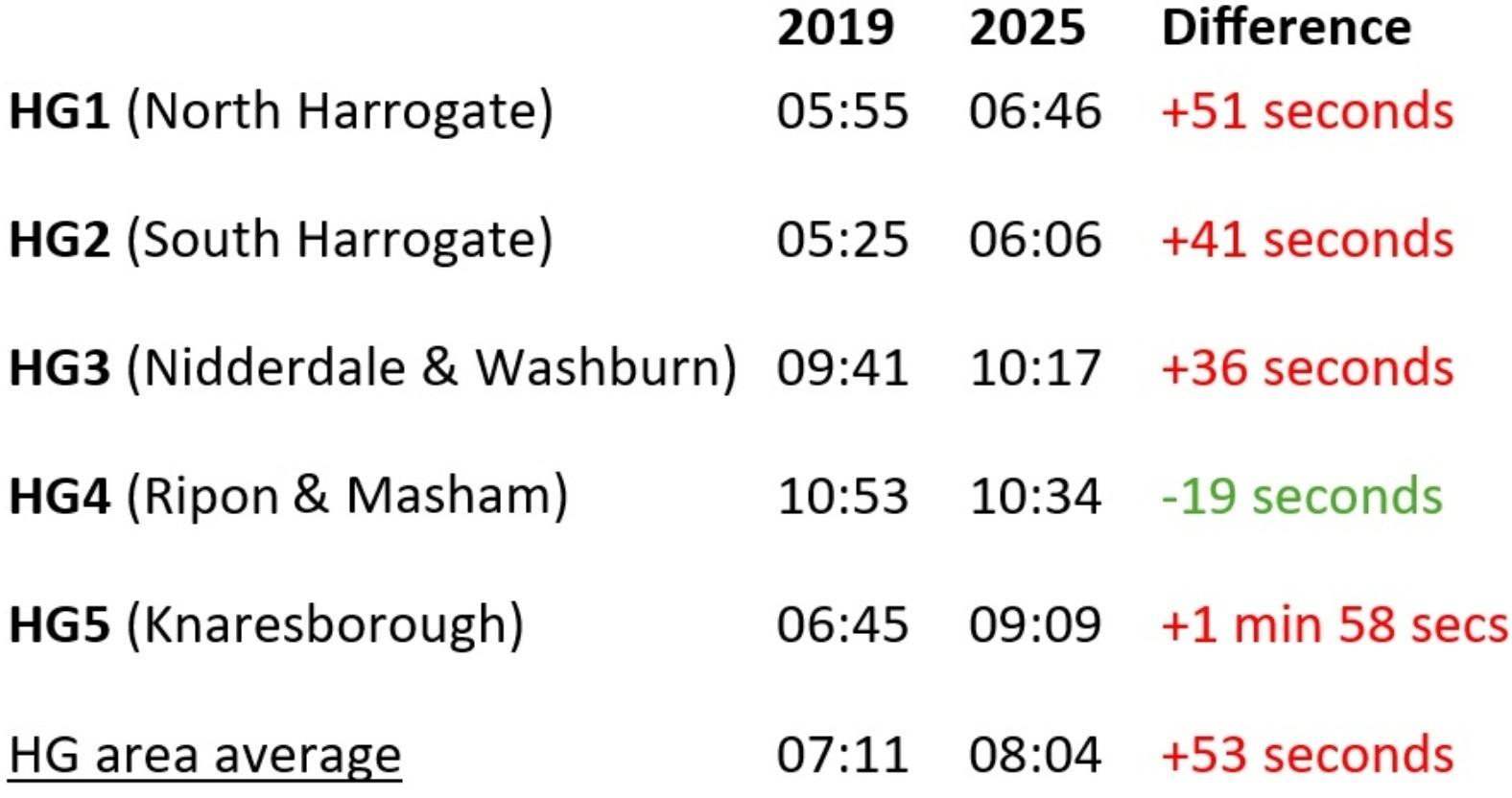
Response times have only improved in one area, HG4.
Yorkshire Ambulance Service's response
We asked Yorkshire Ambulance Service why emergency response times had slowed across most of the district.
A spokesperson told us emergency response times across the region are measured by national targets and the service is commissioned on a region-wide basis. They said:
When comparing 2019 and 2025 data, there are quite a few variables that need to be taken into account, including the impact of the covid pandemic.
In particular, the categorisation of calls has changed significantly over that period, affecting the number and type of emergency calls being classified as Category 1. This led to the number of Category 1 incidents across Yorkshire increasing by 39% between 2019-20 and 2025-26.
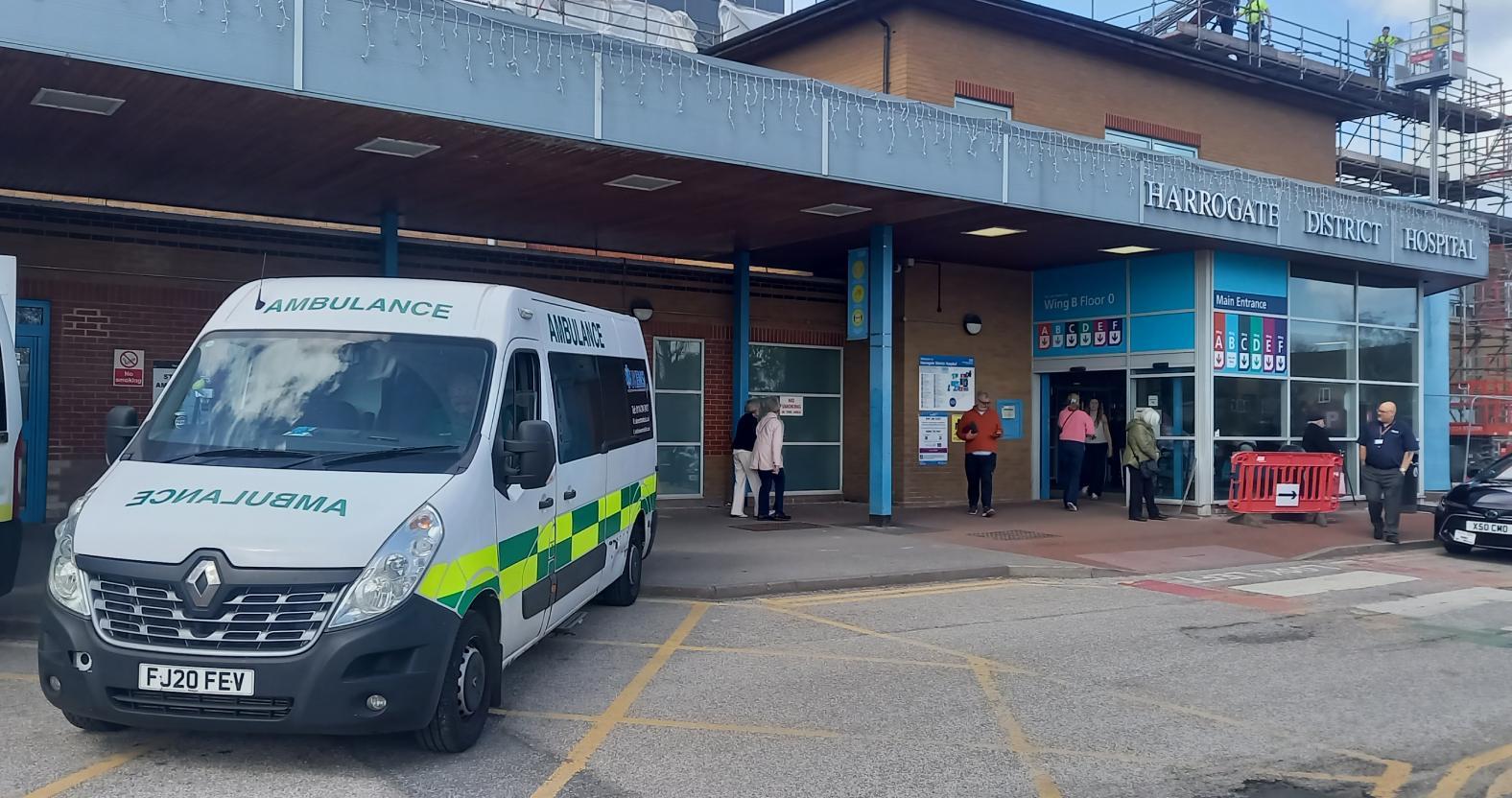
Harrogate District Hospital's main entrance.
The spokesperson said that in the national league tables, Yorkshire Ambulance Service had been the top-performing English ambulance service for the first two quarters of 2026-27.
But they added:
It is difficult to explain specific variations at postcode level, which may be due to changes in the number and composition of the population.
More generally, Yorkshire Ambulance Service continues to work on improving emergency ambulance response times through effective workforce and resource planning, optimising ambulance availability, monitoring performance, and improving hospital turnaround and crew-clear times.
Yorkshire Ambulance Service NHS Trust covers almost 6,000 square miles and a population of more than five million people. It employs just over 7,000 staff and is supported by nearly 1,000 volunteers.
In 2025-26, its Emergency Operations Centre staff received 1.25 million emergency and routine calls, an average of 3,400 calls a day.

2