Thank you for your interest in this story
To continue reading this article, subscribe to the Stray Ferret for as little as £1 a week
Already a subscriber? Log in here.
05
Sept
‘My hair started falling out from stress’: The reality of being a teacher in Harrogate

As the new school year begins, spare a thought for the teachers.
Yes, they’ve just had seven weeks off, and will have another week off in October. But truthfully, the holidays don’t make the job worthwhile.
I managed to stick out teaching for four years, including a year as a teacher at Killinghall Primary School, but the relief I feel returning to working as a journalist is immense.
Someone once said to me that teaching is the only job where you have to do work in order to be able to work. What they meant is how much of your own time you spend planning lessons, marking work and making resources in order to just do the teaching.
I would get into school just after 7am, work non-stop until nearly 5pm, plus do a few hours over the weekend. But still, I never felt on top of things.
My hair started falling out from stress, I would cry in my classroom and couldn’t sleep for worrying about what the next day would hold – and I wasn’t the only one.
As a teacher, you want nothing more than to help your children progress both academically and as people, teaching them far more than maths and English. But in schools today it’s nearly impossible to even complete a lesson to a high standard.

Graduating (with £50k of debt)
The major challenge in schools today is undoubtably behaviour. Policies, especially in primary schools, focus on "restorative practice", meaning it’s more about the children reflecting on bad choices than having punishments.
Children also don’t seem to respond to the consequences you are allowed to give – being made to miss a few minutes of break or sitting outside the classroom to do work have no positive impact on their behaviour.
You’ve also got the rise in behavioural issues being dismissed as the consequence of special needs – so you can’t blame the child, and have to instead make adaptations. In multiple schools I have worked in, the most disruptive students – shouting out continuously, walking around the class, throwing things – get consequences that seem more like rewards, such as extra time playing outside, making slime and going skateboarding.
A huge proportion of pupils in my classes had fidget toys, wobble cushions and other special adaptations to ‘help them focus’. Despite it not helping their work improve, they got to keep them.
While I completely agree that some children need this approach, it is the minority, and most teachers can see the difference between children who have a special educational need and those that just need more discipline.
As for the parents...
Which brings me on to the parents. Some parents are a dream – they ensure their child has the equipment they need, help with homework, offer to come on trips. But too many cause extra work and, in some cases, emotional distress.
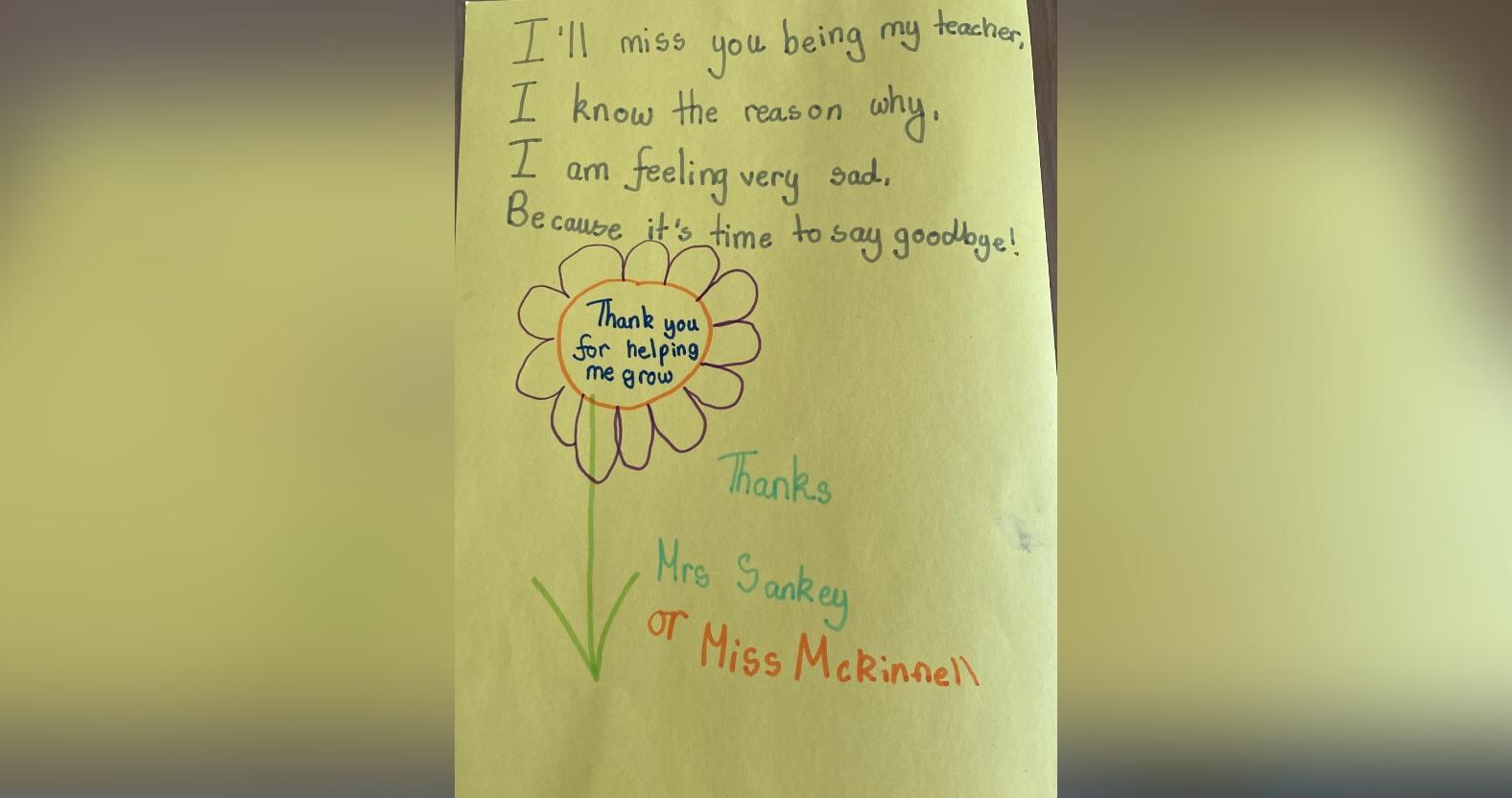
Notes like this were what you clung on to get you through.
Part of the problem with allowing pupils adjustments like fidget toys is suddenly everyone wants one. The number of parents taking their children for ADHD and autism assessments has surged, and issues such as pupils refusing to come into school because of "emotional difficulties" seem to be growing exponentially.
Parents want these labels to explain their children’s negative behaviour, and the children pick up on it – knowing they can get away with things because it’s "not their fault".
It often felt like parents saw us as a childcare service rather than educators – one time I heard a parent say to a teacher "my taxes pay your wage, so you work for me".
We received complaints that there weren't free after-school clubs each day, we were asked to Photoshop a class photo as the parent’s child had blinked and the head once received an email from one of my parents saying I was "too whiny" (given they’d never heard me teach or spoken to me, I can’t see how they would have known this).
If difficult individuals weren’t enough of a problem, there’s also the endless to do list.
Create displays, fill out paperwork, write reports, send email updates, plan trips, complete training, go to meetings, run a club, create worksheets, laminate resources, tidy class libraries, order glue sticks, buy Christmas gifts, create costumes, write a script for an assembly… and this is just off the top of my head.
It seemed that every time I was getting through my to do list, four more things were added to it.
And so, it is no wonder that around a quarter of teachers quit within three years of qualifying. I certainly will never be going back to it.
Yes, the holidays are great and it’s amazing to have a wage that increases every year, but in the end the job is incredibly damaging to mental wellbeing – and nothing can make up for hating the thing you do every day.
So, when you drop off your kids at school this week or next, spare a thought for the teachers (who have inevitably been doing a lot of working over the summer holidays).

3