(Lead image: Pixabay)
The region boasts many natural wonders, but one phenomena that never fails to bring the wow factor is the waterfall, and there are plenty of impressive examples dotted throughout the landscape.
From the popular to the tucked away, here are some unmissable walks in Yorkshire that include waterfalls en route.
Did you know? The reason that so many waterfalls have the word foss or force in their name can be traced back to the Vikings. Foss is the Old Norse word for waterfall – this is the same case with beck, fell, ghyll or gill.
Scaleber Foss, Settle
(Image: Pixabay)
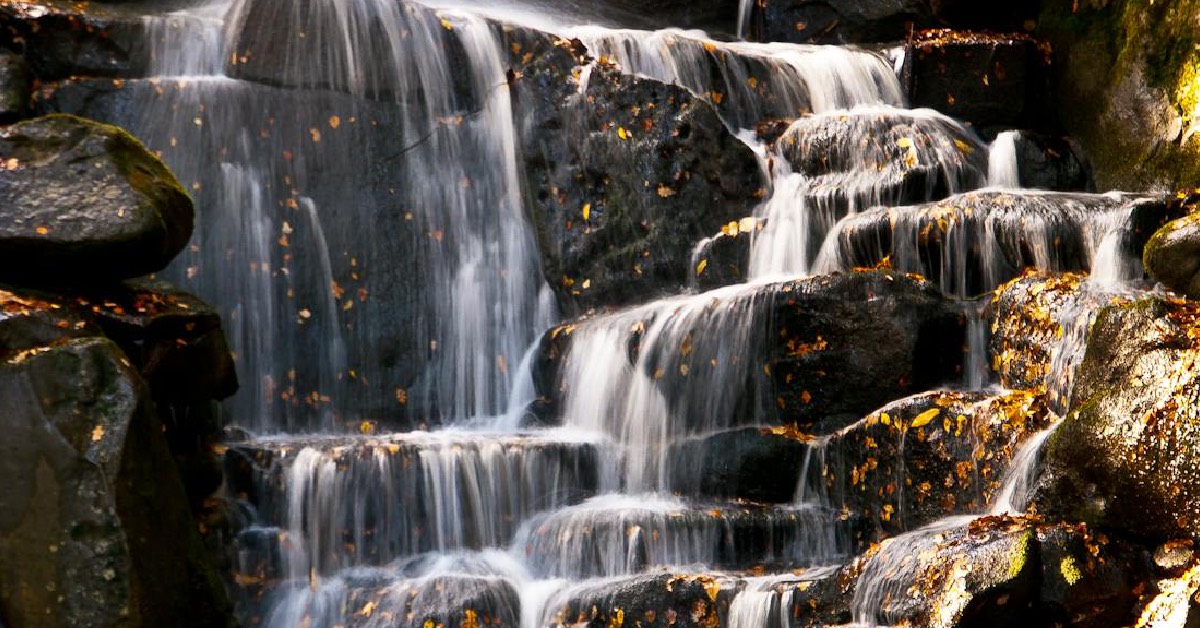
Outside of Settle and on the road to Malham, Scaleber Foss is a great stop-off point to stretch your legs if you’re on a longer journey into the heart of the Yorkshire Dales.
Although it’s a short, and well-signed route to the waterfall, there is a steep descent to the lower pool, passing a disused lime kiln on the way.
Once you’ve reached the bottom, there’s a large pool in which the waterfall cascades into, from a 40 foot drop.
Parking: There’s free parking along the verges and in the lay-by around Scaleber Bridge.
Don’t miss… The pool is a great spot to paddle when it’s warm, but take care as it isn’t always accessible, especially after periods of bad weather.
Force Gill, Whernside
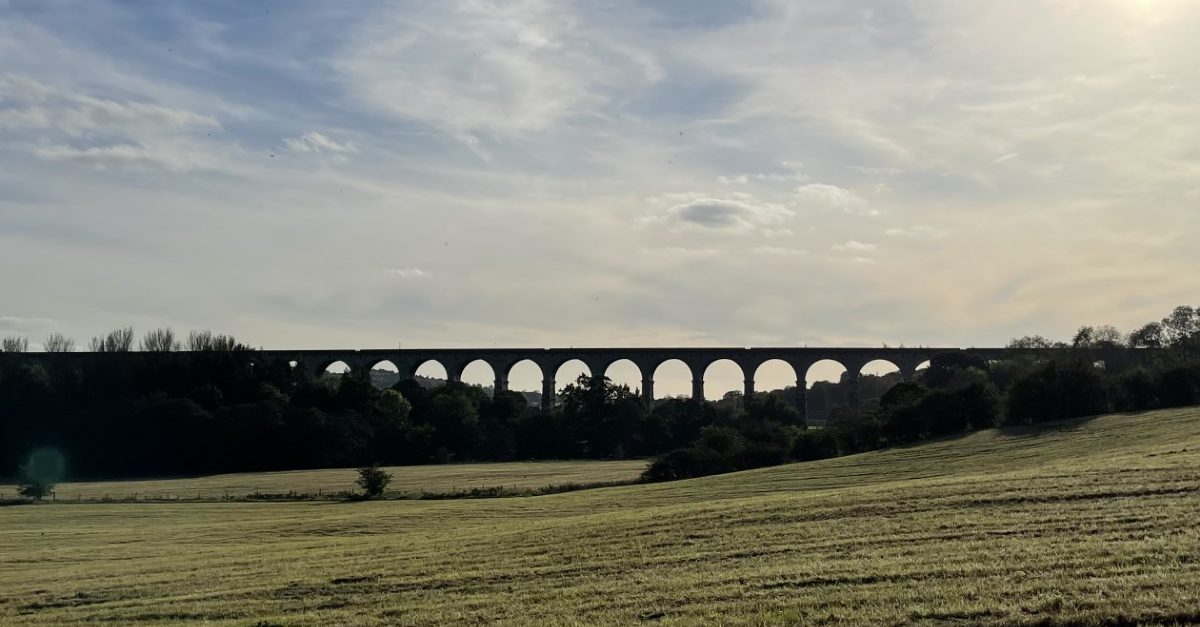
Ribbleshead Viaduct can be seen on the walk (Image: Benedict Roberts)
Whernside is best known for being one of the Yorkshire Three Peaks – but did you know there’s a waterfall cascading off one of its sides?
Passing the iconic Ribbleshead Viaduct on the way there and back, you’ll need to deviate from the footpath that climbs Whernside at the gate on Smithy Hill.
Parking: There’s free roadside parking near the viaduct, but this can be popular, especially in summer months.
Don’t miss… The Settle to Carlisle railway passes over the viaduct, so you might be able to spot the billowing smoke of a steam train.
River Nidd Falls, Lofthouse
(Image: Pixabay)
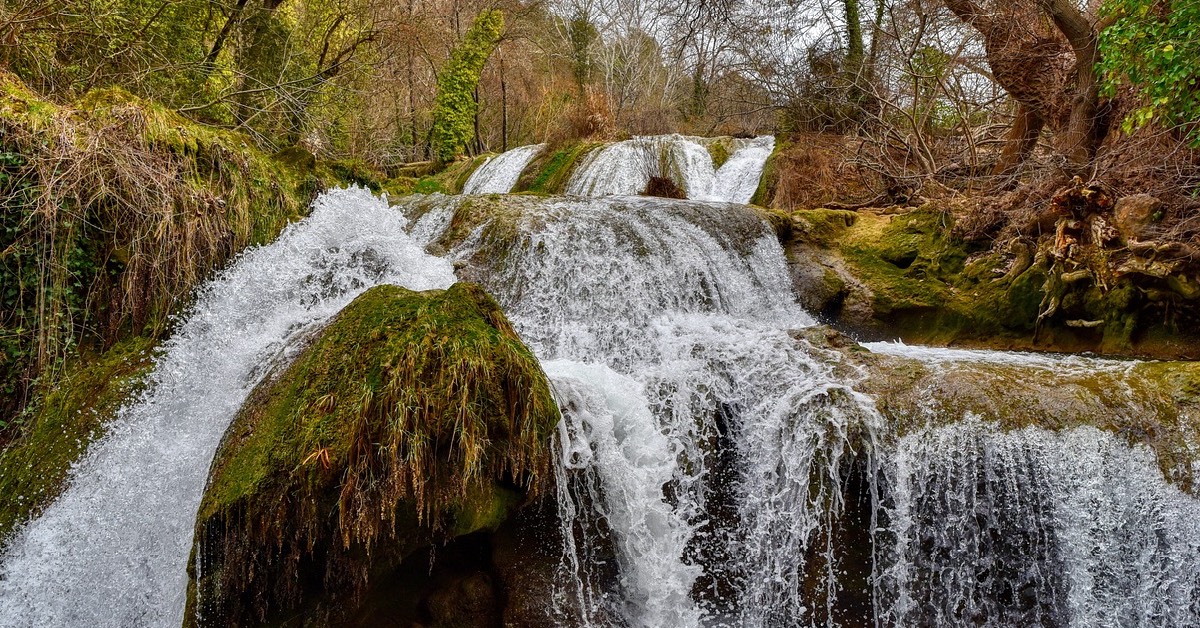
These waterfalls don’t have an official name on the map, but they’re commonly referred to as Nidd Falls.
Situated in an Area of Outstanding Natural Beauty (AONB) just outside the hamlet of Lofthouse, there’s a series of waterfalls to be discovered in the woodland, with pools that can be paddled in – carefully, of course.
If you’re looking for a longer walk, Scar House Reservoir is also located nearby, and offers a four-mile stroll around the expanse of water.
Parking: There are several places to park depending on the length of your walk; Lofthouse car park, the village itself or the access road near Scar House Reservoir.
Don’t miss… If you’re feeling peckish there’s plenty of places to refuel in Lofthouse, including the Crown Hotel, which is known for serving classic pub food, to be washed down with local ales.
Janet’s Foss, Malham
(Image: Pixabay)
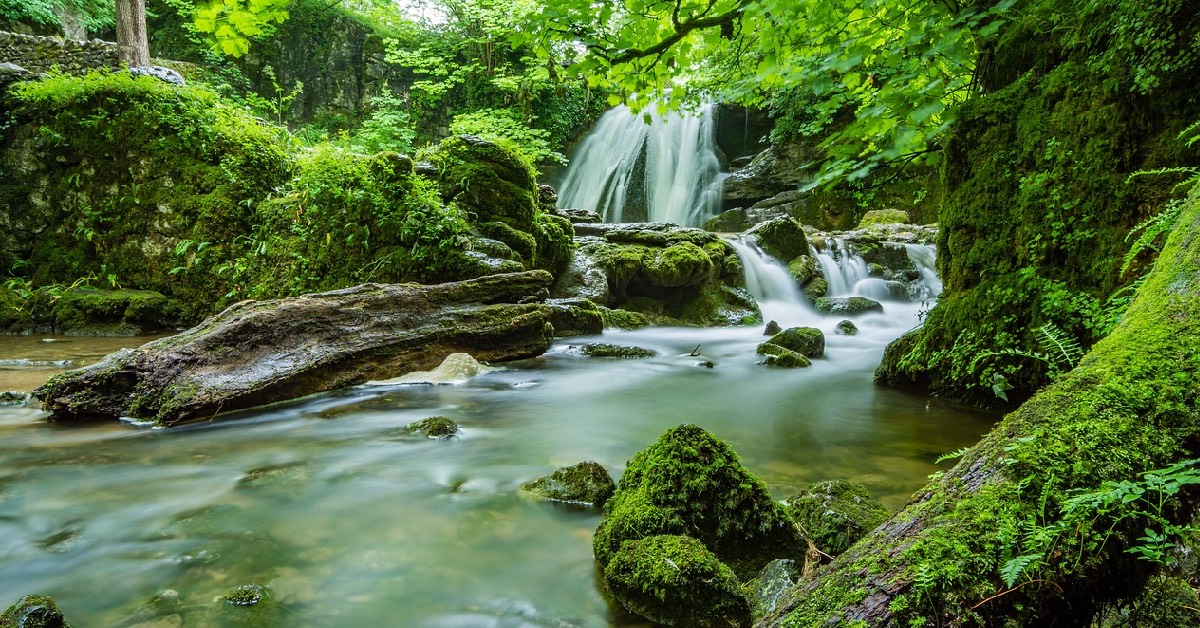
It would be remiss to not mention this popular Yorkshire Dales walk, which takes in the iconic scenery of Malham – arguably more famous for the limestone pavement at Malham Cove.
Starting from the village, a footpath winds its way along the River Aire, through meadow and woodland, before reaching Janet’s Foss.
While local folklore tells of the queen of the fairies calling the area home, a less magical – but just as surprising – historical use for the pool beneath the waterfall was as a sheep dip.
Parking: There’s a car park in Malham village, but it is advised to arrive early to secure a space.
Don’t miss… The award-winning farm shop and café Town End Farm Shop is located on Malham Road, two miles outside of the village. If you’re looking for a unique experience, it runs charcuterie, salumi and curing courses throughout the year.
Mallyan Spout, Goathland
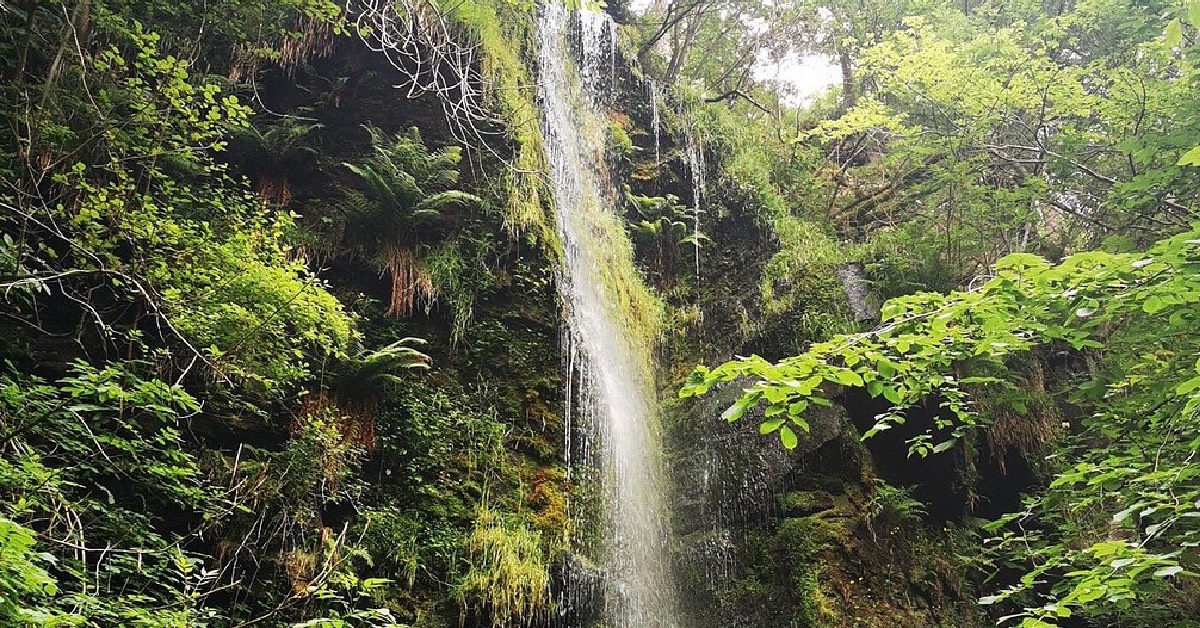
Mallyan Spout
Recognised as the highest waterfall in the North York Moors National Park at over 70 feet, Mallyan Spout was popular with tourists as far back as the Victorian era.
Accessible from Goathland, the walk can be challenging in parts, with large boulders to navigate as you near the waterfall. Walkers looking for a longer route often combine a visit to Mallyan Spout with Beck Hole, Thomason Foss and Nelly Ayre Foss.
The path can be slippery, especially in wet weather, so caution is advised.
Parking: There’s a pay and display car park in Goathland village and by the train station.
Don’t miss… Goathland station was featured in the Harry Potter film franchise, as Hogsmeade station, otherwise known as the stop for Hogwarts.
Lumb Falls, Hebden Bridge
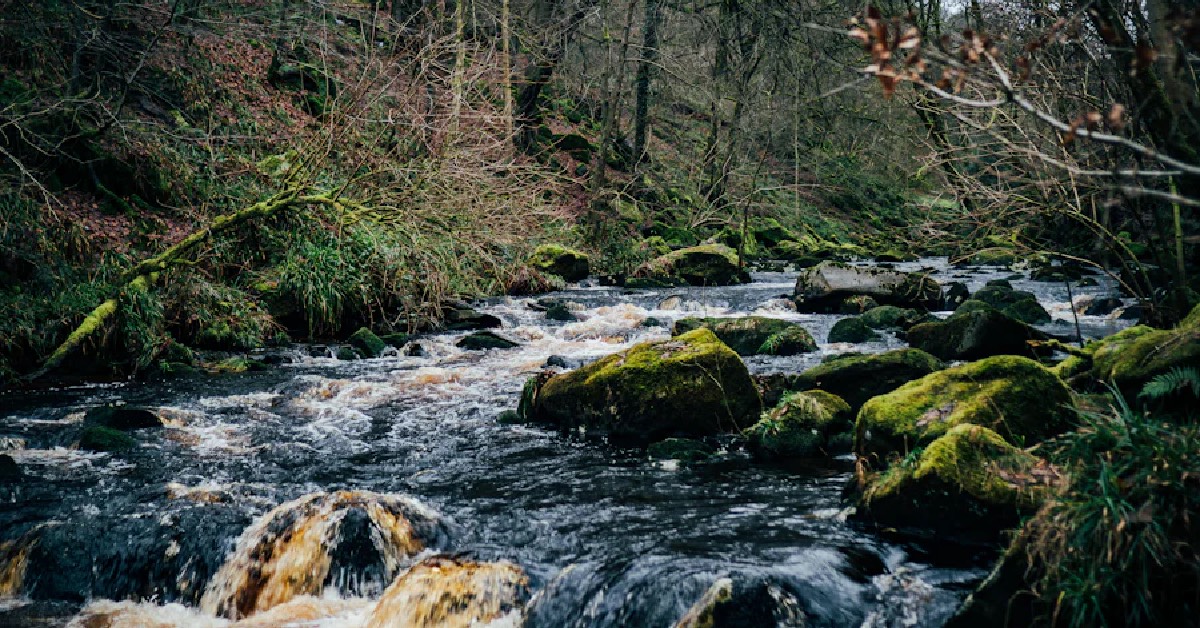
The river at Midgehole (Image: Greg Wilson/unsplash)
Lumb Falls is located three miles outside of Hebden Bridge and two miles away from Hardcastle Crags.
The route can vary in length; approximately 1.7 miles one way from Hardcastle Crags and 3 miles one way from Hebden Bridge.
From either direction, you can enjoy peaceful woodland scenery, with some uphill sections.
Parking: For walks starting near Hardcastle Crags, there’s Midgehole car park. Alternatively, if you’re starting in Hebden Bridge there are numerous pay-and-display car parks in the centre.
Don’t miss… Hebden Bridge is well worth a visit, and is known for being an artist’s haven, with numerous independent businesses to explore.
Hardraw Force, Hawes
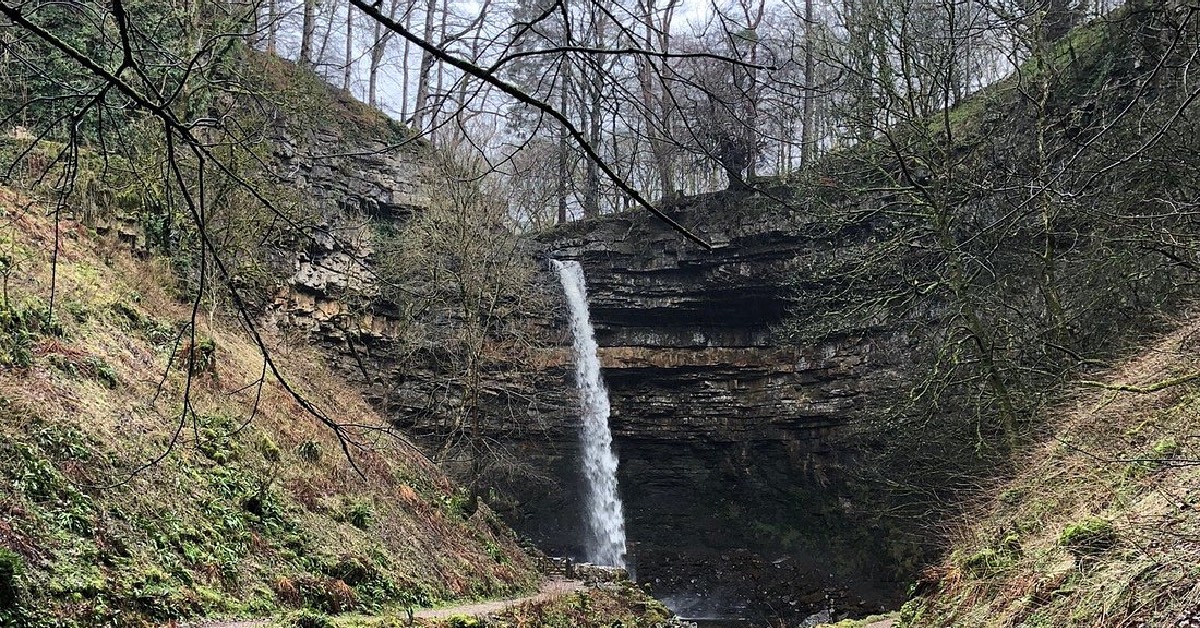
Hardraw Force
Reputed to be England’s highest single drop waterfall at 100 feet, Hardraw Force has been immortalised in the 1991 film Robin Hood: Prince of Thieves but it was already famous in its own right as a beautiful feature of the Dales landscape.
Tucked behind the Green Dragon Inn, the short trail to Hardraw Force is accessible for a small fee, as the land is privately owned. For a longer route, walkers often set off from the charming market town of Hawes and follow the River Ure.
Parking: The Green Dragon car park, or the Yorkshire Dales National Park car park in the centre of Hawes.
Don’t miss… The clearing below the waterfall lends itself to great acoustics, providing a perfect – and scenic – backdrop for the annual Hardraw Scar Brass Band Festival.
Read more:
- 7 places to see spring flowers in Yorkshire
- Weekend walks in North Yorkshire – with a pub en route
- Get on your bike and explore routes for all abilities across Yorkshire
National park leaders have criticised a government proposal to allow landowners to redevelop barns in protected landscapes into homes without planning consent.
Leading officers at both the Yorkshire Dales and North York Moors national parks have said the potential relaxation of the planning system outlined in a Department for Levelling Up, Housing and Communities consultation were very concerning.
National park bosses are dismayed a proposal to give farmers permitted development rights on barns has resurfaced less than a decade after the government abandoned the same proposal amid an outcry.
In 2014, park authorities and MPs raised concerns about the suburbanisation of rural areas if a swathe of barns was turned into homes, saying the proposal flew in the face of protecting national parks.
Impetus for the latest proposal has been linked to the government abandoning housing targets and an attempt to find ways to increase housebuilding in the face of a national housing shortage.
The consultation states:
“Allowing our town and village centres within protected landscapes (such as national parks) to benefit from the right could help ensure the longer-term viability and vitality of these community hubs, supporting the residents and businesses that rely on them.
“We also want to support the agricultural sector by providing further flexibilities to farmers to undertake works on their agricultural units and enable farm diversification without having to submit a planning application.”
Chris France, director of planning at the North York Moors National Park Authority, said agricultural buildings played a key contribution to cultural heritage of the country’s national parks.
He said:
“We don’t say you can’t do anything with them, but the whole point in having a planning system in a protected landscape is to carefully control those changes.
“The proposal to take barn conversions outside the planning process completely disenfranchises local populations, neighbours and in national parks, the nation, because we wouldn’t have any input into whether we think a proposal is acceptable.
“In national parks this isn’t going to deliver more housing for local people, which is what’s needed, it will just deliver more holiday homes and destroy our finest landscapes at the same time.”
Read more:
- Action to tackle Yorkshire Dales second homes receives ‘overwhelming support’
- Criticism as ‘affordable’ Yorkshire Dales national park houses marketed at up to £320,000
The national park leaders said the move would do nothing to ease the need for affordable housing in either area as developers would not have any restriction on the type of homes they created.
Yorkshire Dales National Park Authority chief executive David Butterworth said the proposal would mean up to 6,500 field barns across the 841sq mile area could be converted into homes, “decimating” the landscapes.
He added:
“If I was trying to devise a policy that would essentially lead to the destruction of Yorkshire Dales national park, this would be the policy. These are permitted development rights to convert a property without any planning restriction.
“It is one of the most bonkers examples of environmental destruction I could think of. I am extremely concerned that this has been introduced now with an eight-week consultation. It is just crackers.”
A spokesperson for the Department for Levelling Up, Housing and Communities said:
People in Harrogate district urged to count stars to assess light pollution“This consultation remains open and we will consider all responses, including that from National Parks UK, before coming to a decision. We have been clear that any developments must be beautiful and enhance the environment.”
People in the Harrogate district are being urged to count the stars in the sky to measure light pollution.
The Campaign to Protect Rural England is carrying out the survey from Saturday, February 26, to Sunday, March 6.
The move comes after the Yorkshire Dales joined 15 other areas as a designated dark sky reserve in 2020.
It’s possible to see thousands of stars, the Milky Way, meteors and even the Northern Lights in some areas on clear nights.
Read more:
- Yorkshire Dales joins international dark sky list
- Paddle to the stars at Nidderdale reservoir as part of Dark Skies Festival
People are now being urged to sign up on the Campaign to Protect Rural England website where they can submit their counts.

A spokesperson for CPRE North and East Yorkshire added:
“Results from Star Count will be used to help make a map of where star-spotters are enjoying deep, dark skies.
“By showing on a map where light pollution is most serious or has risen, CPRE can work with local councils and others to decide what to do about it.”
A Dark Skies Festival is currently being held in the Yorkshire Dales until March 6. It includes events across the national park area.
Yorkshire Dales see big increase in holiday accommodation plansNorth Yorkshire’s national parks are seeing a boom in plans to create tourist accommodation as demand for holidays and staycations increases.
National park bosses said dozens of planning applications have been lodged with the North York Moors and Yorkshire Dales authorities in recent weeks.
It follows concerns about the viability of foreign holidays and a massive increase in media awareness of the British landscape.
Chris France, director of planning for the moors authority, said while development proposals in general rose by 20 per cent last year, the first month of this year had seen an even sharper increase.
He said:
“Last year it was down to small-scale household applications as people were saving money and weren’t travelling, but this year it’s larger proposals as well and in particular a really significant increase from the hospitality and tourism accommodation sector.
“We are seeing a lot of small-scale works on farms, expansion of existing camping and caravanning sites, lots of glamping and holiday lodges. There’s been a move towards self-contained holiday accommodation where people don’t have to share amenity blocks.”
While the Dales has also seen numerous plans to make barns and fields more profitable, the latest accommodation plan submitted is for the conversion of Arkengarthdale’s former school, which its new owners hope to run guided walking holidays from.
Read more:
- Pandemic sparks fresh concerns over Yorkshire Dales second homes
- Yorkshire Dales joins international dark sky list
Upper Dales councillor Yvonne Peacock said she welcomed plans to create holiday cottages, but proposals which ended up as second homes were unhelpful for the communities as they were empty for much of the year.
She said:
“The important thing for the Dales is to get the balance right. We do need tourists, but don’t want the house prices to go so high that local people can’t afford to buy them.
“I wouldn’t like to see the Dales overrun with tourists like places such as the Lake District.”
Communities, particularly those in areas with high volumes of tourists, have started to react to the wave of proposals, warning the park authorities of the consequences of mass tourism.
However, planning bosses say while their policies recognise the importance of tourism for local economies, the national parks have the capacity to attract more people to enjoy their special qualities.
Mr France highlighted how the Moors national park had adopted policies last July that would protect against inappropriate tourism developments.