Subscribe to trusted local news
If you are accessing this story via Facebook but you are a subscriber then you will be unable to access the story. Facebook wants you to stay and read in the app and your login details are not shared with Facebook. If you experience problems with accessing the news but have subscribed, please contact subscriptions@thestrayferret.co.uk. In a time of both misinformation and too much information, quality journalism is more crucial than ever. By subscribing, you can help us get the story right.
- Subscription costs less than £1 a week with an annual plan.
Already a subscriber? Log in here.
28
Feb
Inside Harrogate Chess Club – one of England’s oldest chess clubs
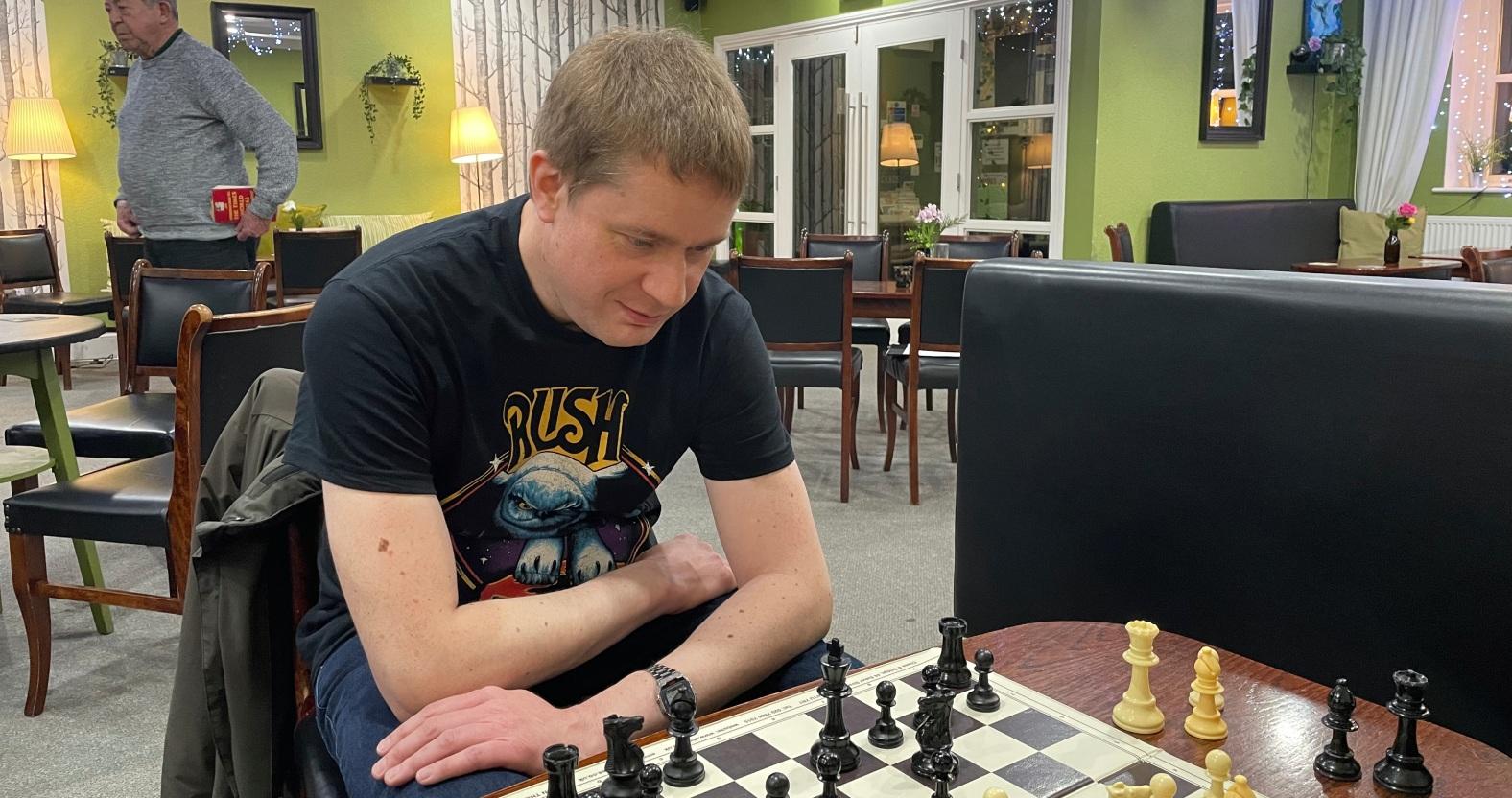
Chess has been a popular pastime for centuries. While the modern rules were established in Europe around 1500, the game traces its roots to seventh-century India.
Compared with its 1,400-year history, organised chess clubs are a recent development, emerging in 19th-century Britain as the game became more accessible.
Founded in 1884, Harrogate Chess Club is one of the oldest in the UK. It has survived two world wars and predates aeroplanes, radio broadcasts and talking pictures.
But how much has it changed? The Stray Ferret visited to find out.
A history of success
We met chairman Andrew Zigmond during a club night. Andrew, 45, has been a member for 32 years.
The club meets on Monday evenings at St Robert’s Club on Robert Street. It currently has about 40 members.
Downstairs, five boards were laid out for friendly games, each with pairs of players quietly calculating their next moves.
Upstairs, the top-ranked members were locked in an in-house tournament.
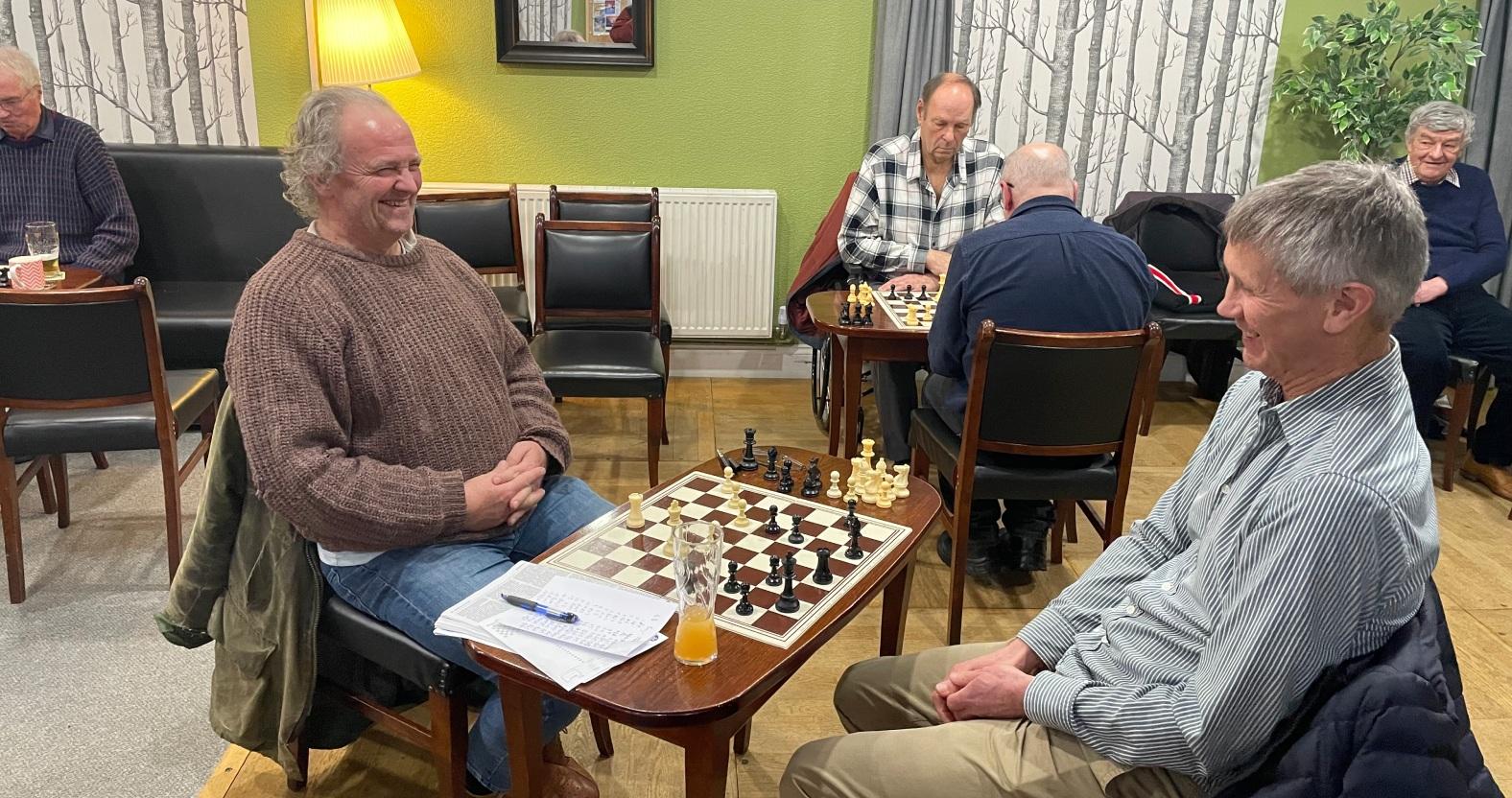
Two members laugh over a friendly match.
Most of the club’s internal trophies date back to the Second World War.
Beyond its own competitions, Harrogate also competes in the Harrogate League, the Leeds League and the Yorkshire League – the latter running since the 1800s.
Harrogate Chess Club has achieved a lot in that time.
Andrew said:
In football we talk about ’66, in Harrogate we talk about ’58, because that is the only year we’ve won the top division. We’ve won the second division several times over the years. There are two lesser divisions too. We’ve won all of them at least once.
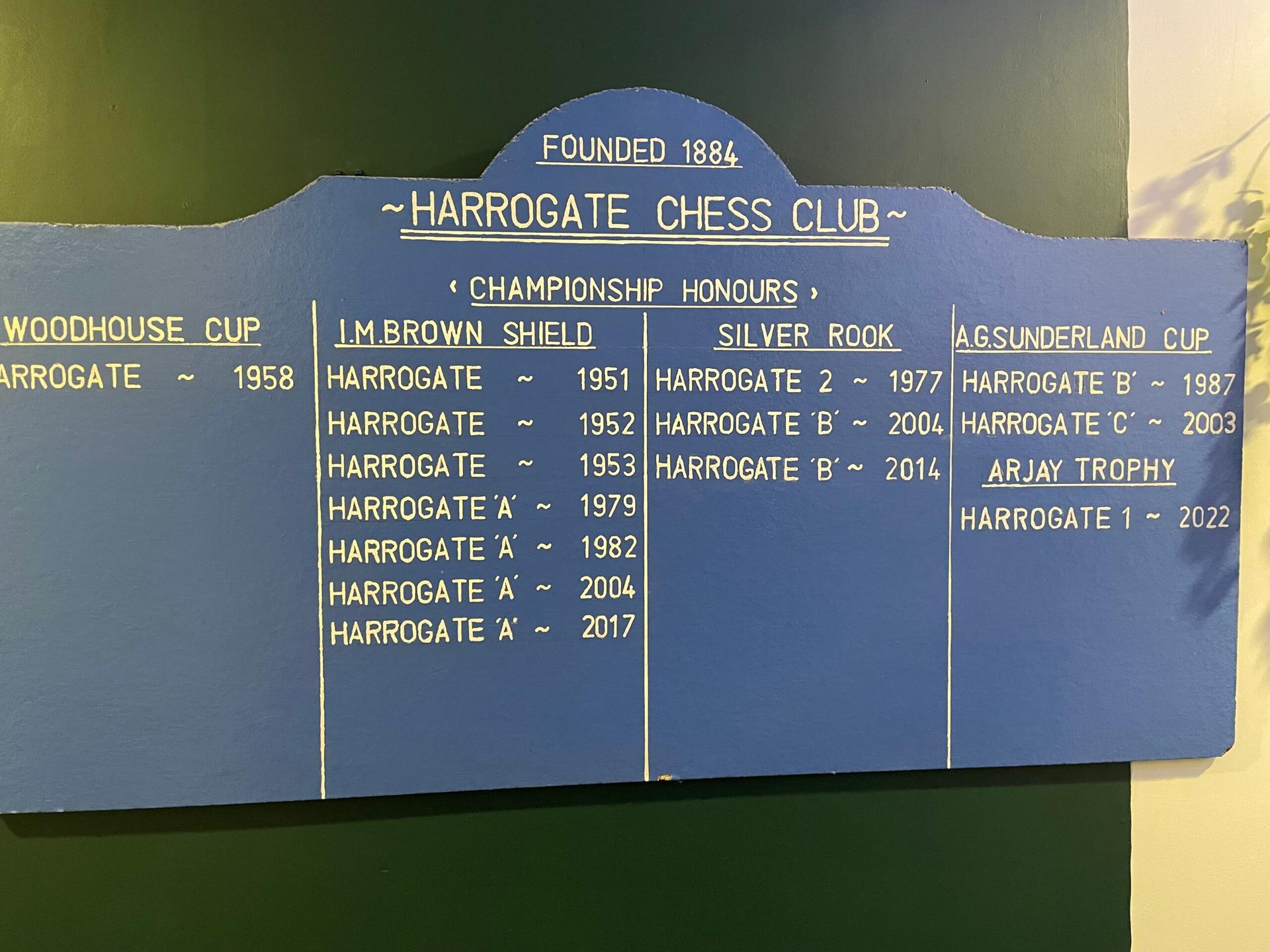
Harrogate Chess Club's honours list.
Harrogate’s grandmaster
The club has had some legendary figures pass through its doors. James Howell joined Harrogate Chess Club in 1975, aged eight. Twenty years later, he was a grandmaster.
Out of the millions who play the game, only a few ever become grandmasters.
James stepped away from competitive chess just a year after earning the title, but remains one of the club’s two honorary life members.
The other is current president Margaret Rowley. Now 92, she is less active than she was, but her involvement stretches back to the 1950s. She also took a young James Howell to his first tournament.
Former British champion Peter Lee has represented the club as well.
How much has the club changed?
At 142-years-old, Harrogate Chess Club has experienced less change than expected.
Andrew said:
Not much has changed at the club other than the changes in society – more people play chess on their devices now. Unfortunately, a lot of the records from the club’s early years were destroyed by a fire many years ago. We’ve got no idea who was there on the night the club was founded and what the standard was like.
It’s largely been a case of waxing and waning over the years. There was a big chess boom in the 1970s caused by the 1972 Fischer-Spassky world championship match, which saw membership numbers increase. Then it tapered off a bit, and regained a bit of popularity in the 90s after another world championship, which involved a Brit.
In the early 2000s, we seemed to stop attracting young players. But popularity has increased since the pandemic, when there was a boom in online chess.
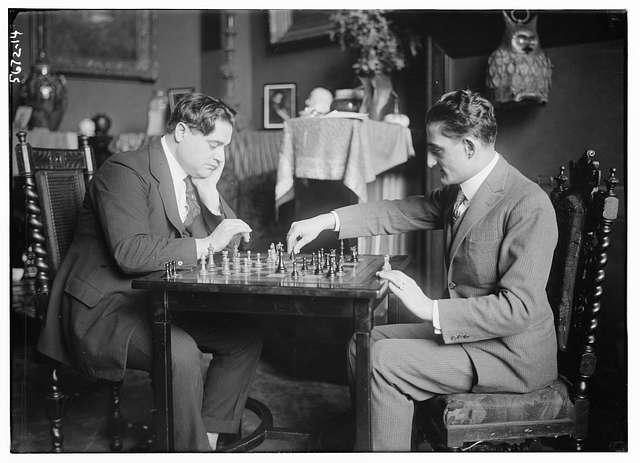
Two men play chess in the 1900s. Photo: George Grantham Bain Collection.
The growth of online chess
Online chess emerged in the 1990s, and rocketed in popularity during the covid pandemic, when lockdown drove players to digital platforms.
The club’s oldest member, 81-year-old Peter Rawcliffe, remembers a very different era.
He said:
The internet was totally unknown in the 1960s. If you wanted to learn about chess, then you’d get a book from the library and play through the games of grandmasters. These days, people can play at the drop of a hat.
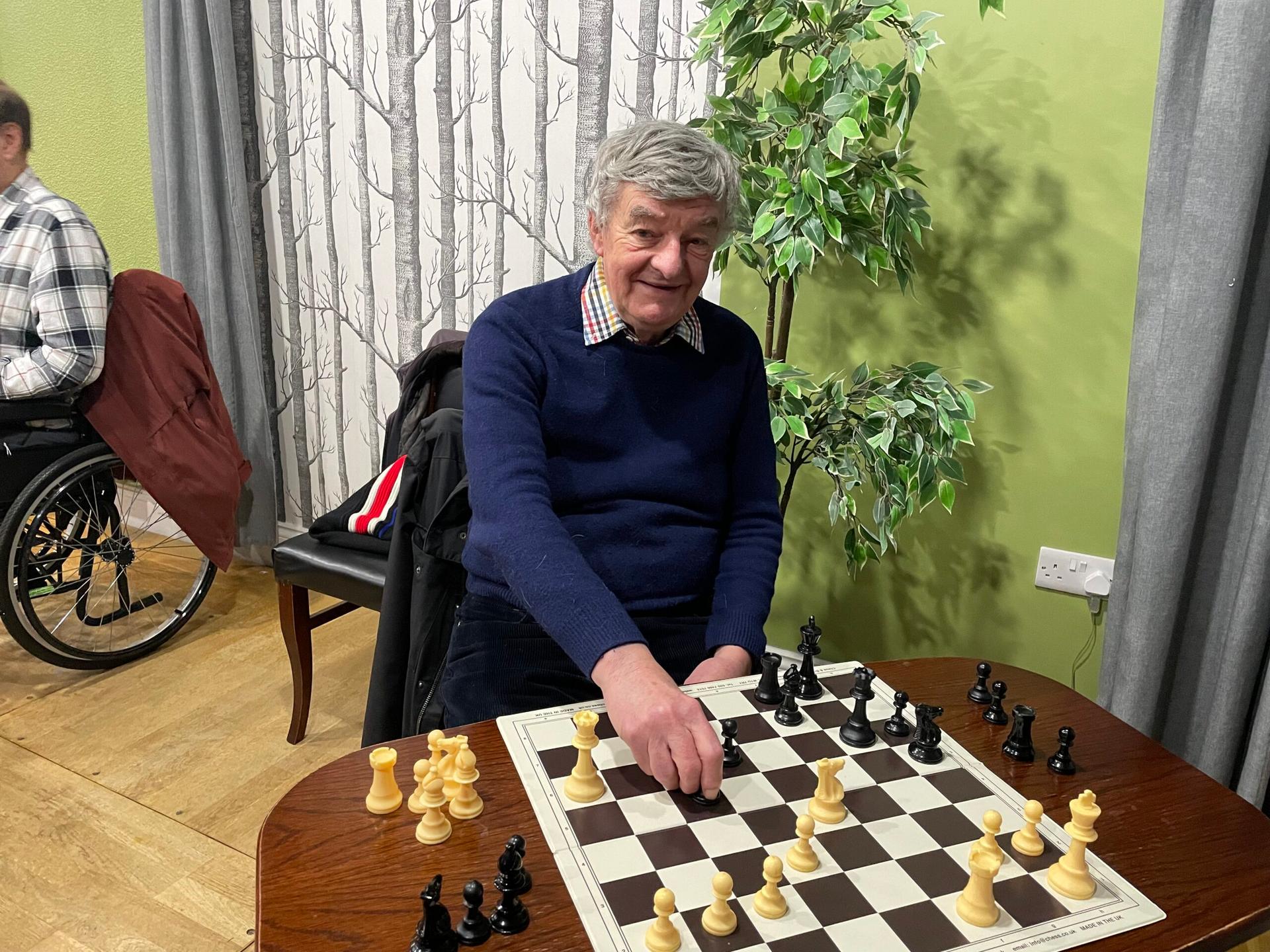
Peter Rawcliffe is the chess club's oldest member.
But has the rise of online chess helped or hindered traditional clubs? Does remote play limit the social side?
Peter believes the impact has been positive.
“Because you can log onto the web and be matched with an opponent within five seconds, the standard’s gone up. It must be a better thing if people are playing better chess,” he added.
Andrew agreed:
We might have lost the odd person who prefers to stay at home, but more critically, people get into chess online and then look for somewhere to take it more seriously.
There’s also something ingrained in the image of old-school clubs — the boards, the clocks, the scoresheets. People think, ‘Where can I do that locally?’
Online chess has made an impact on the game that players wouldn’t have been able to fathom in 1884. But the club has moved with the times.
“Chess has evolved. But there was obviously a need for Harrogate Chess Club in 1884,” Andrew said, “And there’s still a purpose for one in 2026.”

0