Subscribe to trusted local news
In a time of both misinformation and too much information, quality journalism is more crucial than ever. By subscribing, you can help us get the story right.
- Subscription costs less than £1 a week with an annual plan.
Already a subscriber? Log in here.
03
Feb
David Lloyd revives padel plans in Harrogate
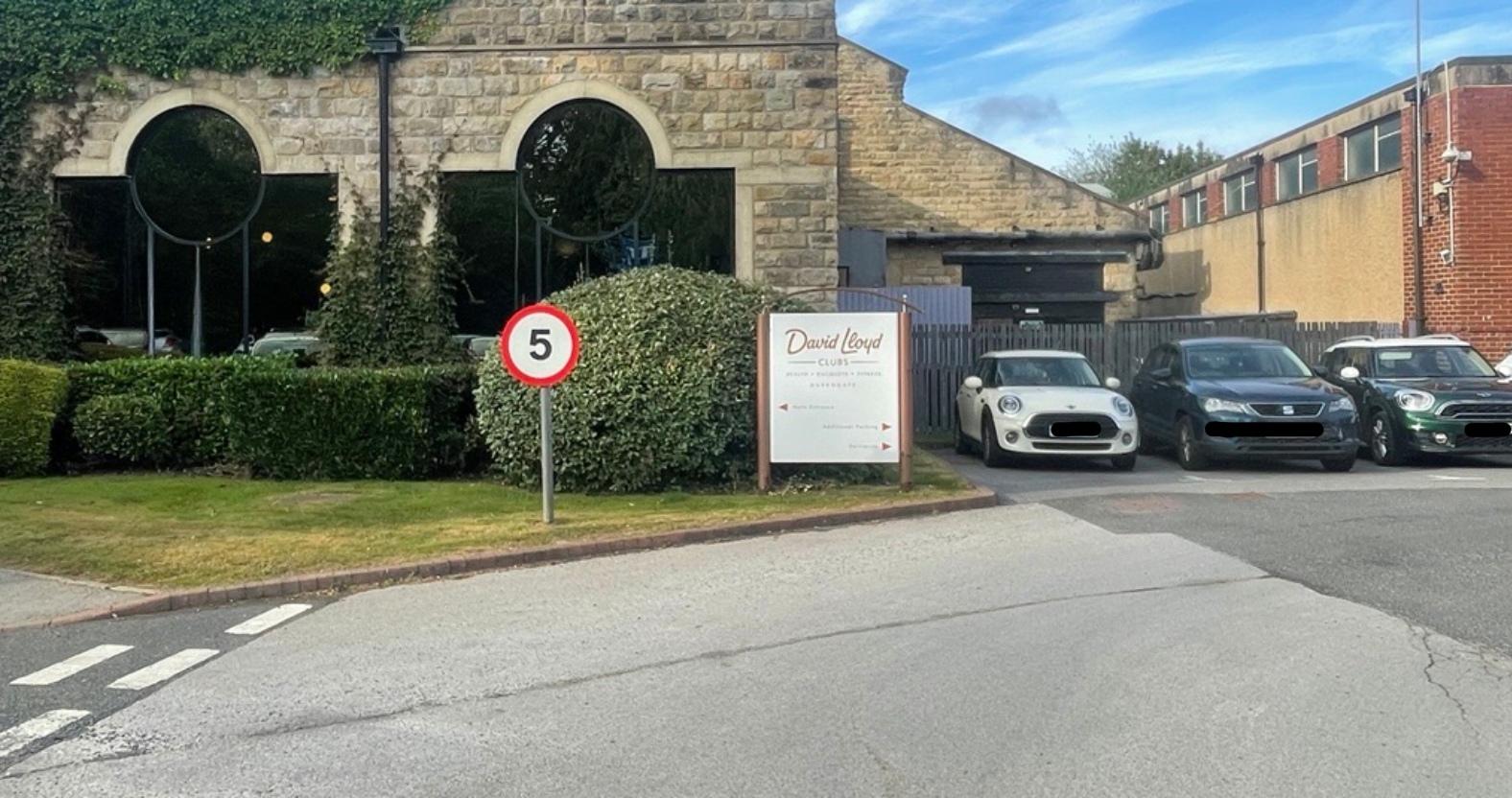
David Lloyd Clubs has submitted fresh plans to use its existing Harrogate padel courts.
The leisure club stopped using the two courts at its Oakdale Place site last year amid noise concerns by nearby residents.
North Yorkshire Council eventually refused retrospective plans to operate the courts, which had been in use since December 2023.
The authority said a noise assessment submitted in support of the plans did not “sufficiently account for the impacts created by the padel courts”, and that suitable mitigation had not been put in place to protect local wildlife.
Objectors likened the sound of balls being hit to gunshots and claimed the courts had led to a “loss of the peaceful enjoyment of homes and gardens” as they were forced to “close their windows to relax”.
A council enforcement notice in October ordered David Lloyd to cease all use of the padel courts.
The company appealed the enforcement action and is awaiting a response.
However, David Lloyd has now submitted a new retrospective application seeking approval to use the courts and a seating area.
This time, the company has proposed to install acoustic fencing around the padel court area in an attempt to mitigate any noise (pictured below).
Plans say:
A 4.0m acoustic barrier around the site, a 3.0m barrier between the courts, and a 4.0m acoustic absorptive fence to the north of the courts to keep noise from the padel courts within acceptable levels for nearby residents.
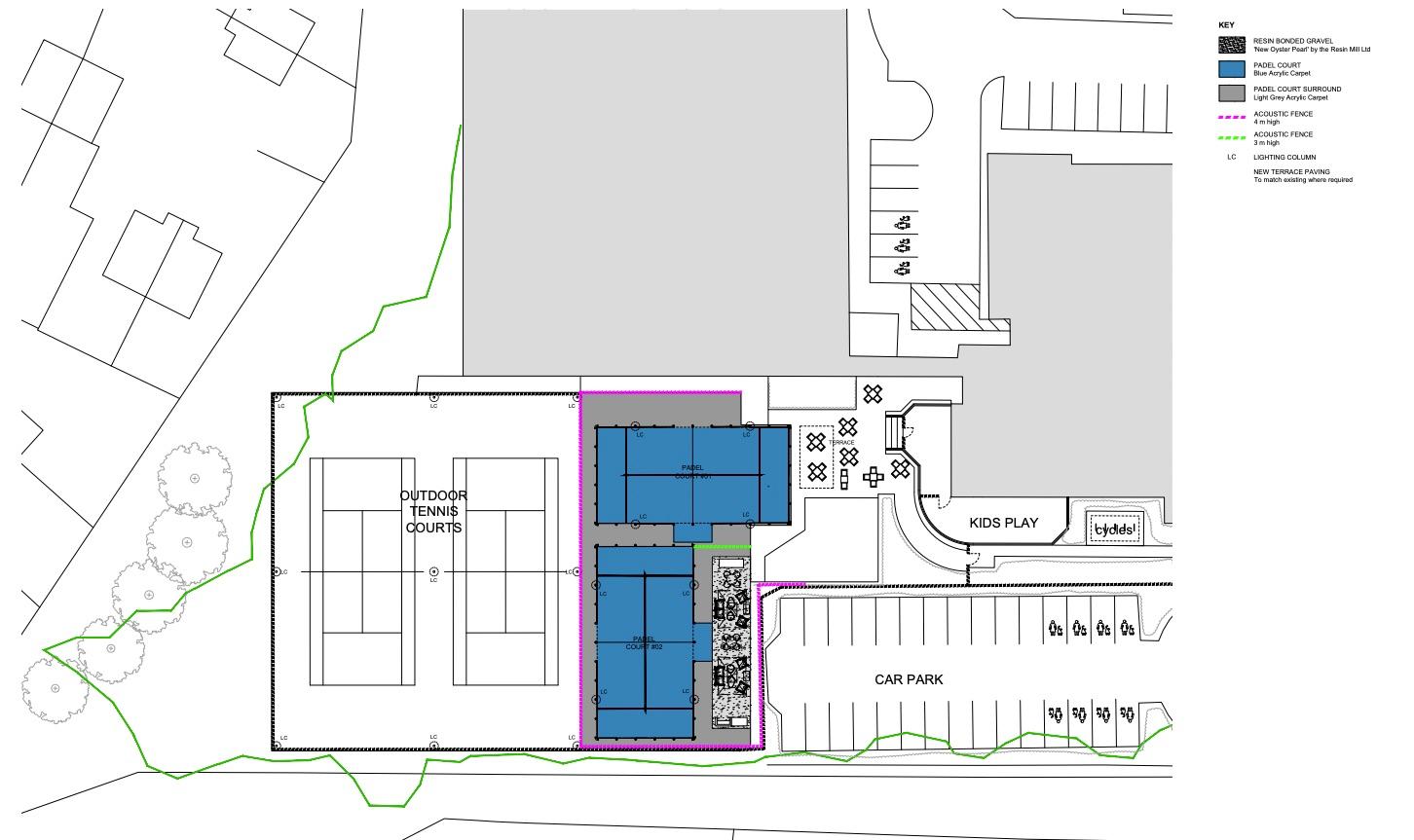
Proposed site plan for padel courts at David Lloyd in Harrogate. Credit: Hadfield Cawkwell Davidson
The application adds:
The acoustic barrier will be imperforate (have no holes or gaps) and have a surface mass no less than 10 kg/m2. If formed of timber, it will be at least 20mm thick and have double-rebated boards, cover strips and gravel boards at the base.
A noise assessment uploaded as part of the revised plans says the proposed mitigation measures would "ensure that noise from the padel courts remains appropriately controlled at nearby dwellings".
It concludes the padel courts “would not result in an adverse noise impact at the nearest dwelling”, adding:
Calculations of padel noise levels outside the nearest dwellings have been carried out. Taking all factors into account, we consider that with the implementation of suitable noise mitigation the use of the two new padel courts would not result in an adverse noise impact at the nearest dwellings and therefore would not result in any demonstrable harm to residential amenity.
However, the noise assessment does say players should be “made aware of the proximity of neighbouring properties” and advised to play "considerately”.
The assessment recommends “simple reminders, such as signage or communications with members” to ensure people are mindful, and “general good practice, such as avoiding the use of powered maintenance equipment during sensitive hours” where possible.
Lighting
Objections to the previous plans also raised concerns about lighting and its potential impact on nearby ecology.
According to a council report at the time, the principal ecologist said strong lighting can deter bats and the use of floodlights, which were used to light up the padel courts, could have an “impact on species that are light averse”.
However, the new plans say David Lloyd has addressed the council’s concerns and a new lighting assessment has been drawn up to “limit light spill and brightness, protecting the Oak Beck ecological area from disturbance”.
This includes “ensuring that vertical illuminance affecting properties at Norwood Grove and Oakdale Glen has been evaluated”.
Planning documents add:
The padel court lighting has significantly lower columns than the tennis lighting (circa 6m) due to the smaller playing surface, along with unidirectional beams allowing the courts to be lit without significant light spill.
All lighting is also controlled by a PIR [passive infa-red] sensor, which automatically switches off lights at times when the courts are not in use. Cowls are used widely on the lighting columns, which restricts spillage both vertically and horizontally, to focus on the court itself.
The council will issue a verdict on the plans at a later date.

0