13
Mar
Review: Glitch at Harrogate Theatre
This article is free to read. We publish about 100 articles a week all exclusively focused on local news, arts and sport. Please support independent local journalism by subscribing here. It costs as little as 14p a day.
Lauren Crisp is a book editor, writer and keen follower of arts and culture. She reviews theatre and cultural events in and around the district in her spare time.
You can contact Lauren on laurencrispwriter@gmail.com.
It is only in recent years, with the game-changing, much-publicised ITV series starring Toby Jones, that the Post Office Horizon scandal gained the widespread attention it deserved. Yet, for decades before, the scandal, and its devastating human cost, had been quietly and sinisterly unfolding.
Before ITV’s four-parter aired, Rabble Theatre in Reading were already busily crafting their own dramatic response to the scandal. Commissioned by the University of Reading’s law department and written by Zannah Kearns, Glitch: The True Story of the Post Office Scandal, is social theatre at its best.
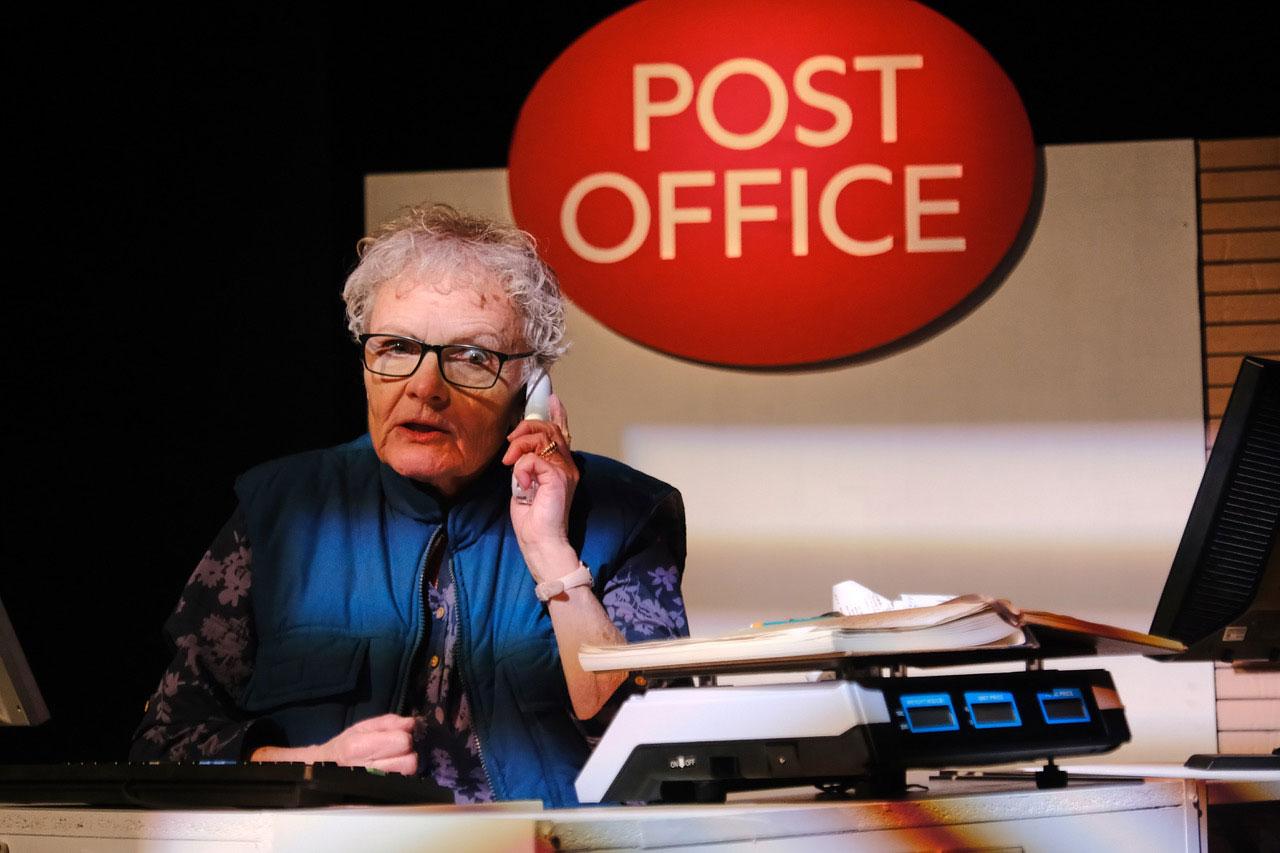
Arriving in Harrogate on Thursday night as part of a national tour, Glitch opens to a sparse set, where a Post Office sign hangs, adorned with tinsel. We meet Pam Stubbs (played by Joanne Howarth), sub-postmistress of a village branch in Barkham, Berkshire, in the busy run-up to Christmas.
As customers queue with last-minute parcels, Pam struggles with her increasingly glitchy till. Multiple attempts at calling customer services for the Horizon point-of-sale system prove useless, and, as unexplained errors and disconcerting discrepancies begin to appear, Pam pores over her accounts, tearing her hair out, late into the night.
An almost spine-tingling tension builds. Sound and lighting design are executed to perfection; the eponymous glitch in the system portrayed as brief, crackling interruptions, as the Post Office insignia flickers ominously.

Photo: Harrogate Theatre
Three more cast members (Laura Penneycard, Naveed Khan and Sabina Netherclift) play a multitude of characters, enabling the portrayal of more sub-postmasters impacted by the scandal. Performances are moving and confronting.
We learn of the 900 sub-postmasters wrongfully prosecuted between 1999 and 2015; how 236 people went to prison and thousands were suspended. Three hundred died without ever being able to clear their names, and 13 suicides were linked to the scandal.
Emblematic of the scandal’s scale are dozens of banker’s boxes piled high on stage. Scrawled with names and dates, these boxes, simple props though they may seem, prove a core tenet of the narrative, each containing the story of a sub-postmaster, the date written below their name indicating the year of their persecution.
In its tight running time of just 85 minutes, the play manages to convey decade-spanning events, while allowing the time and space to understand not just Pam’s personal plight, but those of other sub-postmasters, too.
Indeed, Rabble Theatre worked collaboratively with Pam Stubbs to carve a candid and captivating production that reflects her experience, to devastating effect: Howarth’s closing speech is so natural that you could be forgiven for thinking she had been replaced, during the play’s final minutes, with the real Pam.
Such outrageous events must never be forgotten. With Glitch, Rabble Theatre keeps the torch alight and proves the social power of theatre.
Glitch is on at Harrogate Theatre until Saturday 14 March.

0