Subscribe to trusted local news
In a time of both misinformation and too much information, quality journalism is more crucial than ever. By subscribing, you can help us get the story right.
- Subscription costs less than £1 a week with an annual plan.
Already a subscriber? Log in here.
10
Jan
What is the history of Harrogate’s cockerel?
If a group of people were asked to name historical symbols of Harrogate, they would likely point to its famous spas and spring water. Some might even mention the gardens at Harlow Carr.
Very few, however, would think of a cockerel.
There is little historical evidence to suggest Harrogate has any obvious link to the bird at all, in fact.
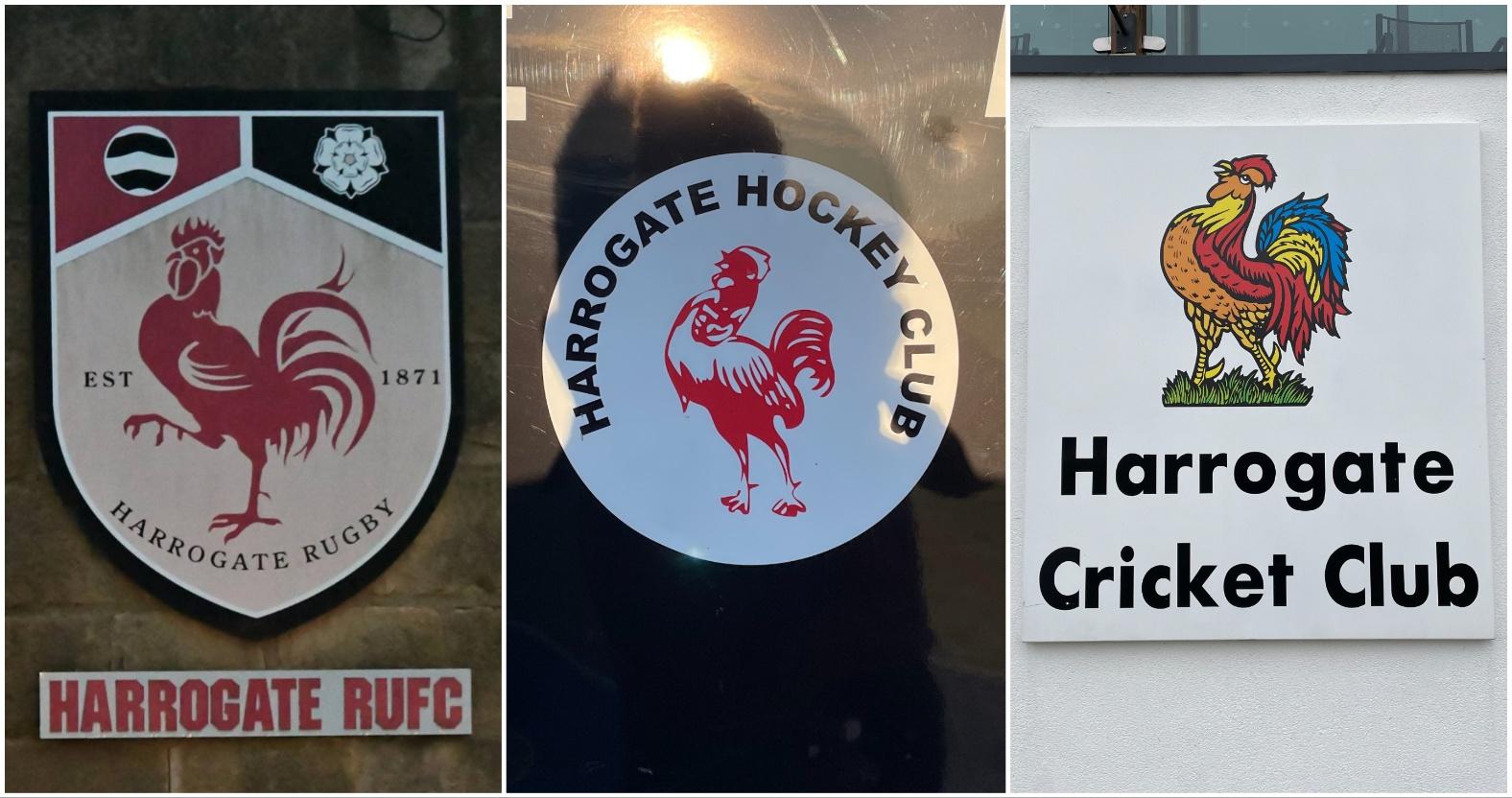
And yet, three of Harrogate’s biggest sports teams — Harrogate Rugby Club, Harrogate Hockey Club and Harrogate Cricket Club — all feature a cockerel on their club crests.
With no clear connection between the town and the bird, why does the cockerel appear in Harrogate’s sporting imagery?
Harrogate’s Heraldry
To understand Harrogate’s historic link with the cockerel, we must look at its coat of arms.
Harrogate’s arms were designed in 1884 when it was first incorporated as a borough, but were altered in 1974 following a local government reorganisation.
The original coat of arms showed a shield divided into five sections. Above it stands a cockerel perched on a tree trunk, entwined by two serpents.
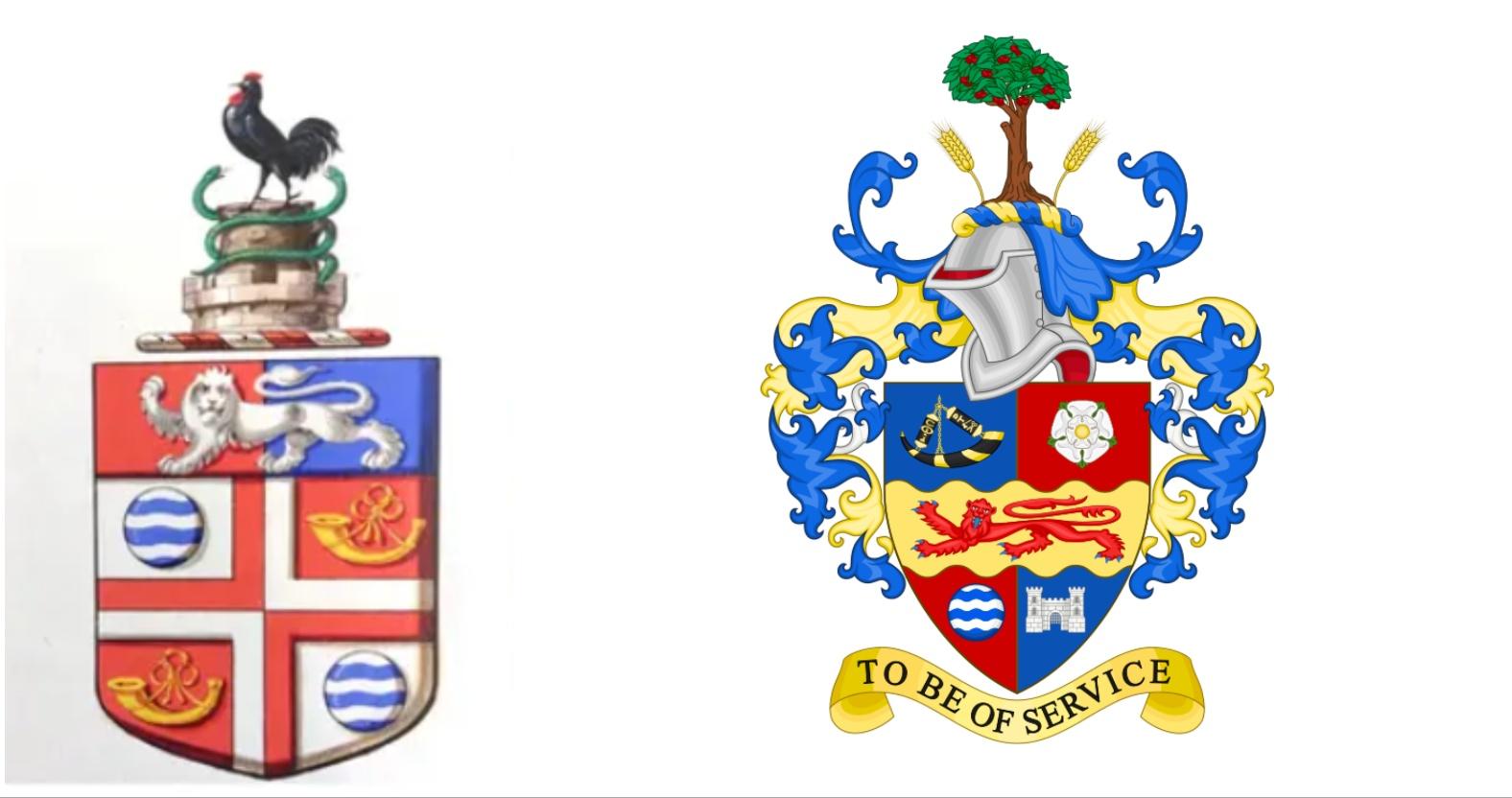
Harrogate's old coat of arms (left) and Harrogate's new coat of arms.
The parts of the shield display two bugle horns, two emblems with wavy blue and white lines and an English lion.
The horns are sometimes mistaken for a reference to Ripon. In fact, it is taken from the banner of the Slingsby family. William Slingsby discovered Harrogate’s Tewit Well in 1571.
The wavy emblem is a traditional heraldic symbol for fountains or springs, representing Harrogate’s mineral waters.
The 1974 coat of arms altered the shield to include the Yorkshire White Rose and a castle gate, which represents Harrogate.
The missing cockerel
But why was the cockerel included in the arms?
The College of Arms in London explained:
A serpent around a staff was the symbol of Asclepius, the Greek God of Medicine or Healing, and the cockerel was sacred to him. When someone considered that they had been cured of an illness, following prayers to the God Asclepius, they would give thanks by sacrificing a cockerel.
Harrogate’s history of healing spa waters likely influenced the decision to include a cockerel on its original coat of arms.
Historic design documents held at Harrogate Library also suggest the crest be similar to the banner granted to the Corporation of Physicians - a medical guild - by Louis XI of France in 1461.
This banner, given to the medical guild as a mark of royal recognition and privilege, featured the rod of Asclepius, a universally recognised symbol of medicine.
The rod of Asclepius shows two serpents entwining a rod, much like what is seen on Harrogate's original coat of arms.

The rod of Asclepius.
In 1974, the cockerel was replaced by a tree. The tree likely symbolises Harrogate’s connection to the surrounding woodland.
But why was the cockerel removed?
In short, we can't be sure. But the cockerel lives on through Harrogate's sports clubs.
From heraldry to sport
Harrogate Hockey Club was founded in 1894, while the original coat of arms was in use. This could explain its symbolism on the hockey club crest.
However, Harrogate Rugby Club and Harrogate Cricket Club were founded in 1871 and 1877 respectively — years before the coat of arms was created.
If the cockerel has always been part of these clubs' identities, its origins remain unclear.
We contacted the three clubs to see if they could shed any light.
Neither the cricket club nor hockey club were able to find records explaining its use. A history book dedicated entirely to Harrogate Cricket Club also makes no mention of the cockerel.
However, Harrogate Rugby Club’s club historian, Brian Forshaw, offered some insight:
The cockerel has been used as a symbol of bravery, and fighting spirit throughout recorded history. As part of an heraldic design it signifies courage, always ready for a battle and ready to fight to the death. This probably explains the popularity of cock fighting since Greek times.
There are no written records of when, where and why the cockerel was chosen as the emblem for Harrogate Rugby Club which first appears on photographs in the 1947/1948 season. It is also the emblem of the Harrogate Cricket Club.
Whether the clubs adopted the cockerel for its association with courage, or whether its use was influenced by Harrogate’s original coat of arms, may be a question lost to history.
But what we do know is that this iconic cockerel, once a symbol of healing and renewal, has endured as a proud emblem of Harrogate’s sporting spirit.

0