Subscribe to trusted local news
If you are accessing this story via Facebook but you are a subscriber then you will be unable to access the story. Facebook wants you to stay and read in the app and your login details are not shared with Facebook. If you experience problems with accessing the news but have subscribed, please contact subscriptions@thestrayferret.co.uk. In a time of both misinformation and too much information, quality journalism is more crucial than ever. By subscribing, you can help us get the story right.
- Subscription costs less than £1 a week with an annual plan.
Already a subscriber? Log in here.
21
Feb
The archaeologist whose hi-tech drones unlock the past

In the heatwave summer of 1976, light aircraft pilots caused a stir when they reported seeing all kinds of ancient structures appearing in the parched ground. The drought had brought forgotten archaeology out from its hiding places, and historians had a field day.
Fast-forward 50 years, and Tony Hunt can pull off this neat trick at will, whatever the weather.
Tony is a pioneer of drone archaeology, and his miniature aircraft can pick out things from the landscape that would otherwise be completely invisible.
Just last summer, for example, he flew his thermal imaging drone – he calls it Thelma – over the Devil’s Arrows standing stones at Boroughbridge. There are three monoliths still standing there, and historical accounts mention at least one more, but Tony found stone platforms for another three. No one previously knew there may have been seven stones standing there.
This is just one of many revelations – some of national importance – that have come since he first started flying specially adapted drones less than a decade ago.
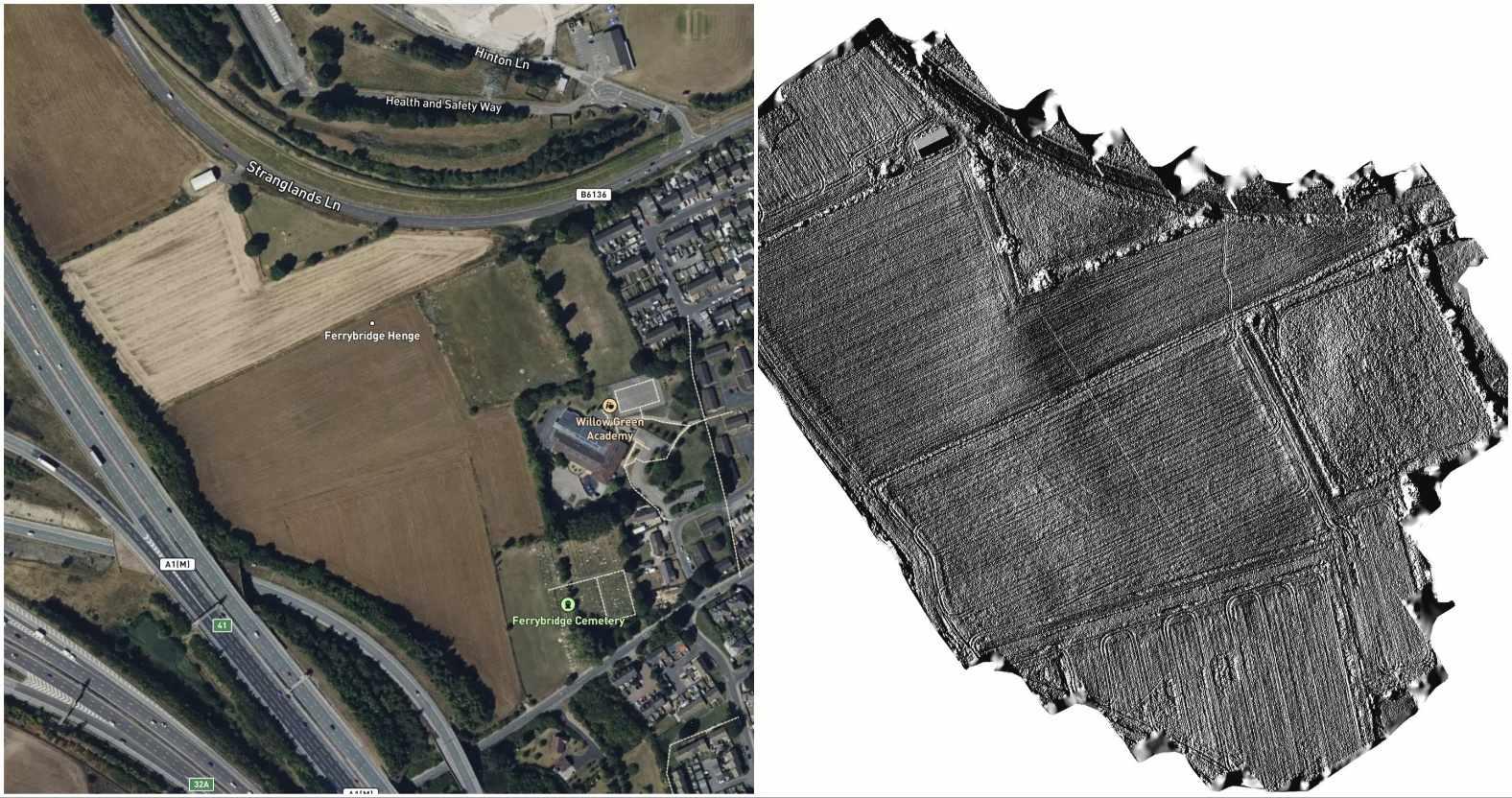
Highly processed near-infrared imaging (right) shows an almost disappeared henge at Ferrybridge in West Yorkshire, that conventional aerial photography (left) misses.
A trained archaeologist, he has had a very successful career in sales and now runs York-based electronics firm DJ Assembly.
On the side he also runs Yorkshire Aerial Archaeological Mapping, and his technology and expertise – and drones – are in high demand from amateur historians and archaeologists around the region.
He told the Stray Ferret:
I’ve never charged a penny for anything we do. It’s a hobby. Well actually, it’s probably more of an obsession.
In fact, his passion has led to DJ Assembly now making some of the cameras used on his drones.
The aircraft themselves are pretty nifty – even though they’re only about two feet across, they can fly for about 40 minutes on one battery – but it’s those cameras that are really impressive.
Tony uses several types for different kinds of image: infrared, multispectral, thermal and photogrammetric.
This is where things get a little technical, but it’s so clever that it’s worth recounting.
Tony said:
Thermal imaging cameras measure the temperature on the ground. A filled-in ditch absorbs the sun’s heat slowly, but stones heat up quickly, so ditches show up as cold, and walls show up as warm.
It’s incredibly sensitive – the temperature difference between a wall and a ditch is typically only between 0.2 and 1.2 degrees C.
The first time I tried it on the Roman fort at Newton Kyme, the archaeology just appeared from nowhere.
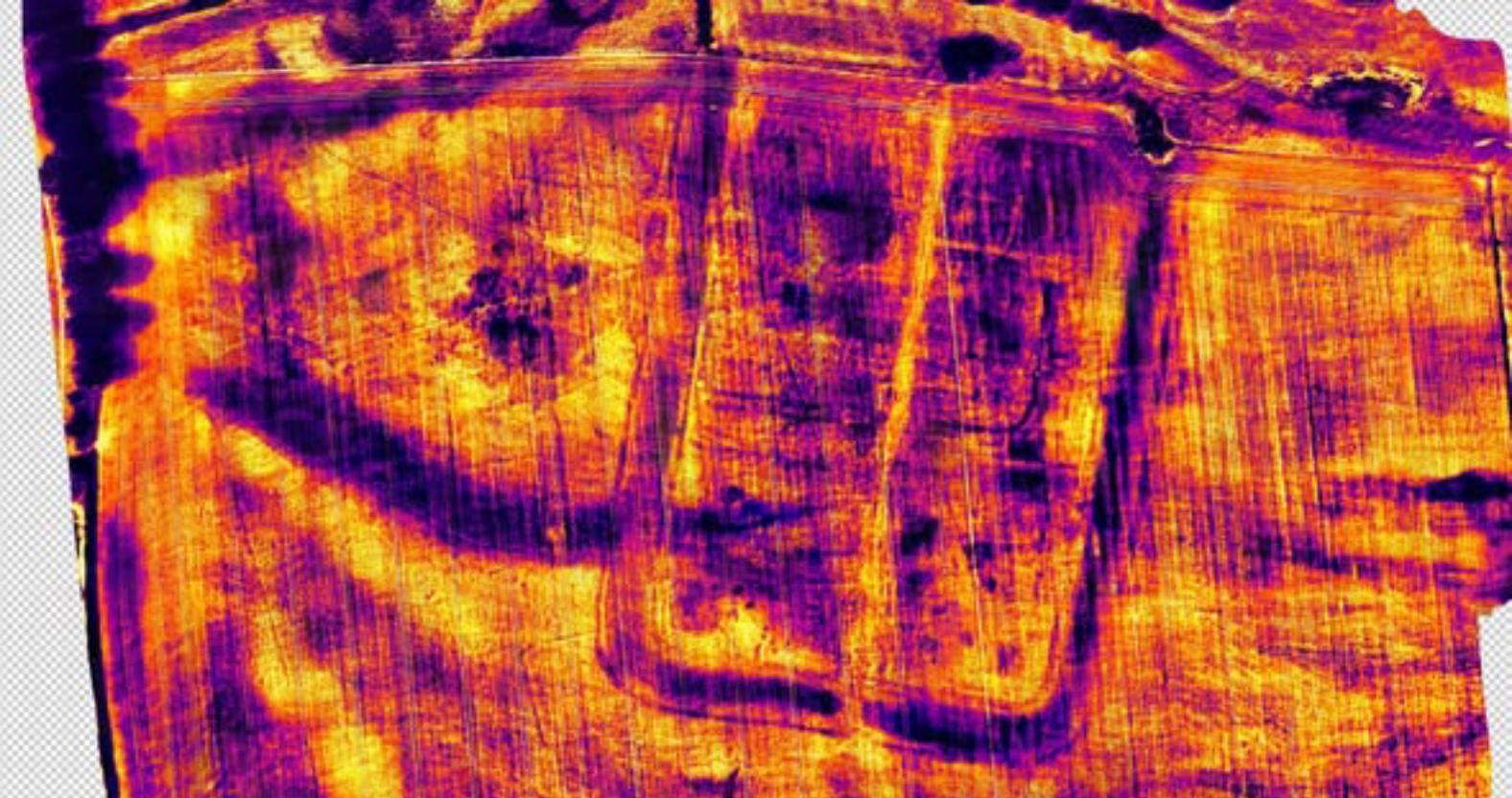
Newton Kyme Roman fort in North Yorkshire, imaged by thermal photogrammetry. Filled ditches are cool (dark), and buried walls and foundations are warmer (brighter).
Another technique is photogrammetry, where a drone takes images as it flies over the ground. These images are then overlapped and using “a lot of maths”, software works out how tall objects are in relation to their surroundings. This is the technique used by Google Earth to create 3D renderings of cities.
Tony’s camera is extremely sensitive and can pick out otherwise invisible tyre tracks and even footprints from 200 metres above the ground.
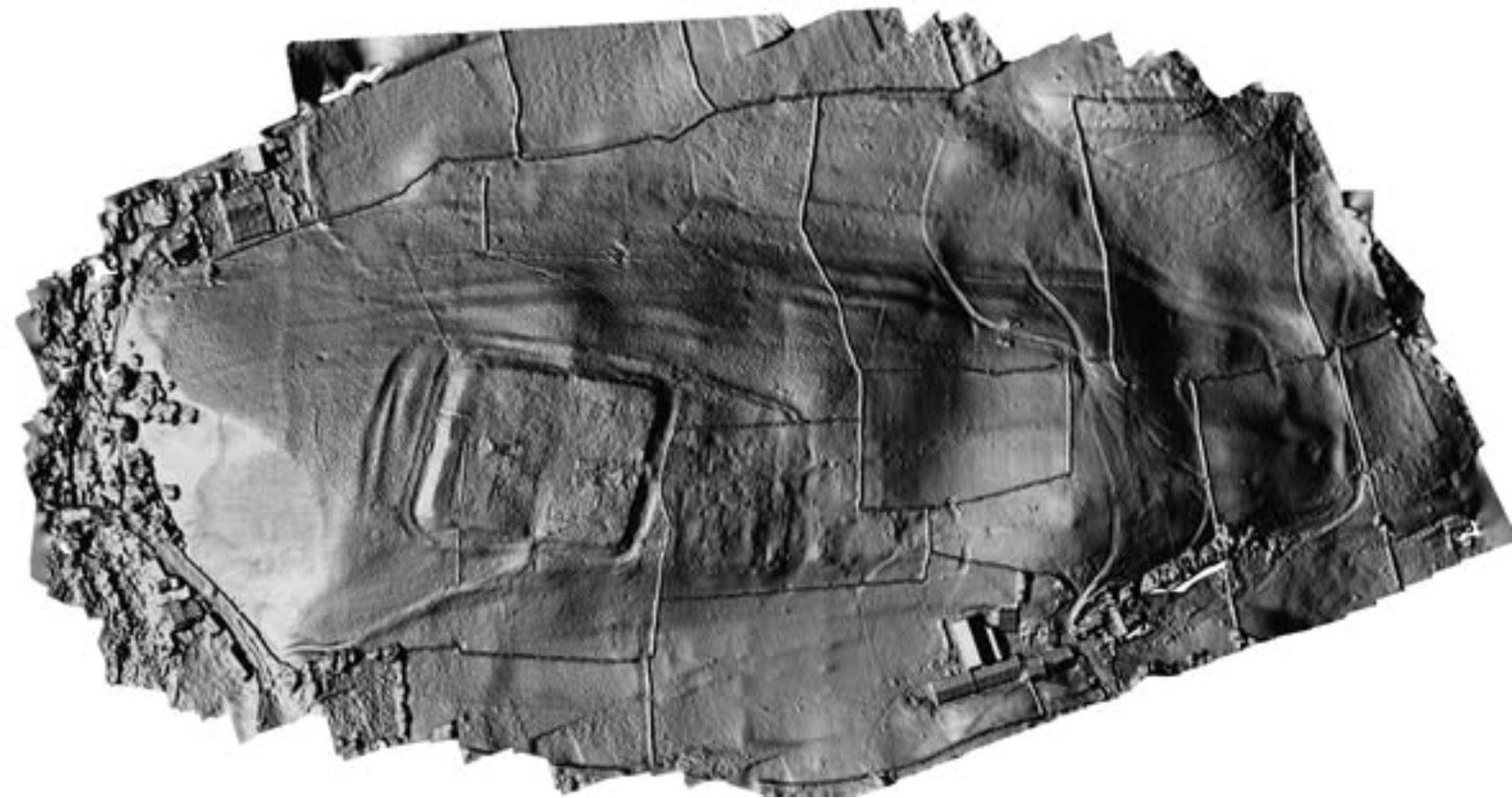
Bainbridge Roman fort, imaged using photogrammetry. The buildings and the civilian settlement are visible to the east (right) of the fort.
But perhaps the most fiendishly clever pieces of kit are the cameras that take pictures using different parts of the light spectrum.
Tony explained:
Really interesting things happen when you start to look at crops. Plants absorb blue and red light, but reflect green light, which is why they look green. But plants also reflect near-infrared wavelengths of 760 nanometers (nm).
Now, where there’s a filled-in ditch, the soil is deeper, richer, and more loamy. Plants grow better there and are healthier, so they reflect green and near-infrared light better.
So if you can make a camera that sees green and near-infrared, then that camera will be able to see archaeology.
So about nine years ago, Tony bought a 760nm filter from America, cut it to shape using a friend's machinery, and fitted it to a drone camera with gaffer tape.
It worked, and his company now makes multispectral and thermal imaging cameras for drones that are used by police and fire services across the UK.
Tony can overlay all these techniques – infrared, multispectral, thermal and photogrammetric – to make 3D models, which he then enhances to create fantastic-coloured images of archaeology that hasn’t been seen in such detail for centuries.
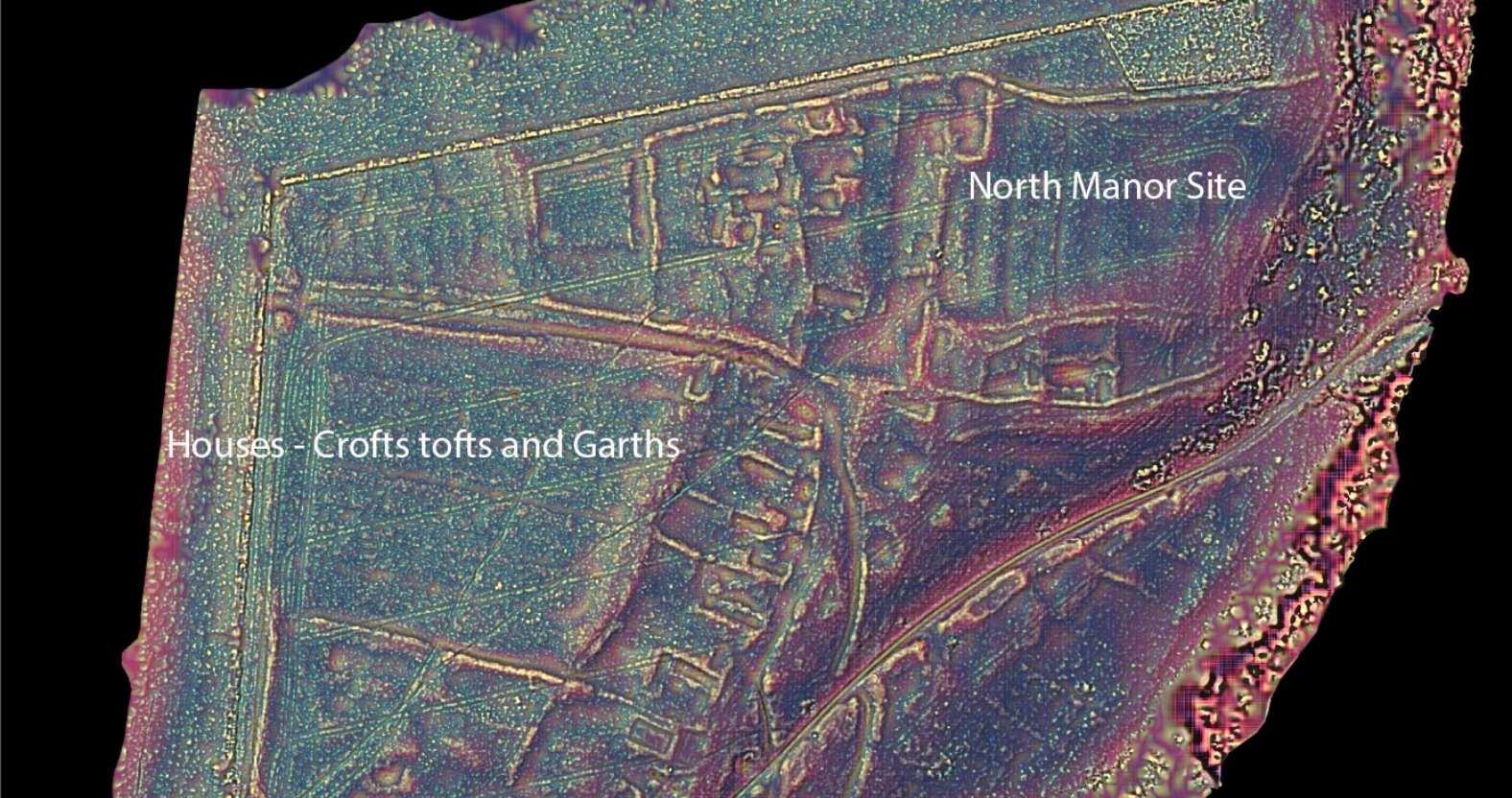
Wharram Percy deserted medieval village of Wharram Percy in North Yorkshire, created by a combination of photogrammetry and thermal imaging to reveal houses, the manors and the medieval layout.
Tony made headlines two years ago when he also discovered what is thought to be a previously unknown henge, lying beneath the village of Kirk Hammerton.
A henge is a ring-shaped bank and ditch, usually built around 4,500 years ago for purposes that remain unclear, although experts speculate that they probably had religious or spiritual meaning for ancient communities.
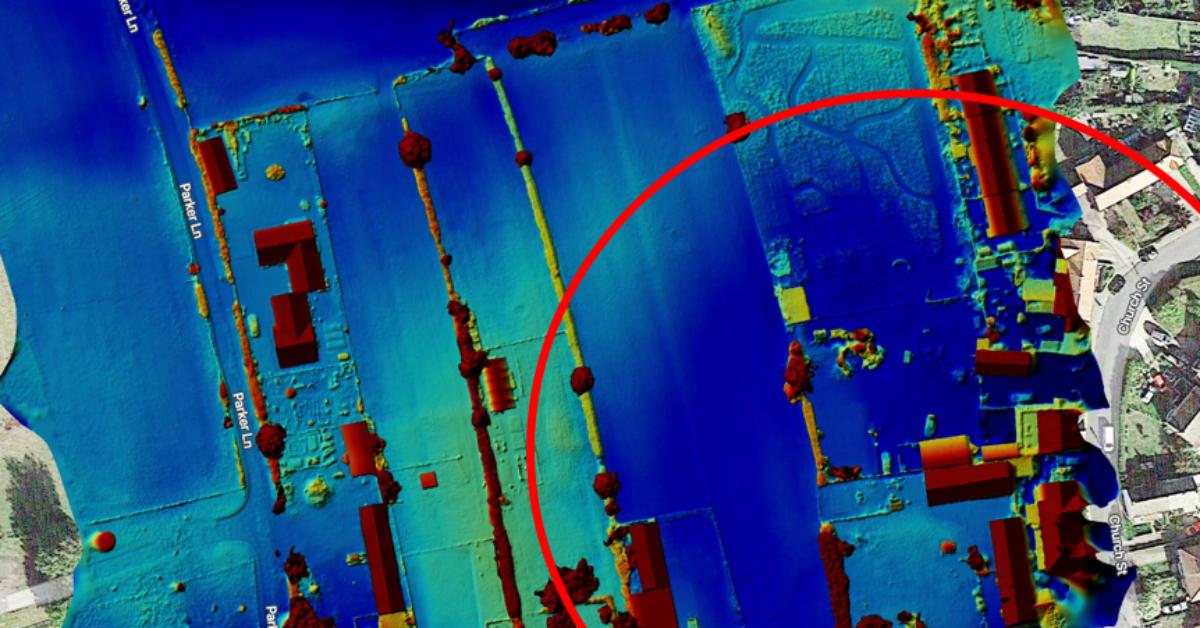
A false-colour image showing part of the suspected henge under Kirk Hammerton, taken from a drone using multispectral technology.
There are currently known to be 10 henges in Yorkshire, six of them aligned along a northwest-southeast axis, including the well-known group of three at Thornborough, north of Ripon. The Kirk Hammerton discovery, a possible 11th, lies in alignment with these.
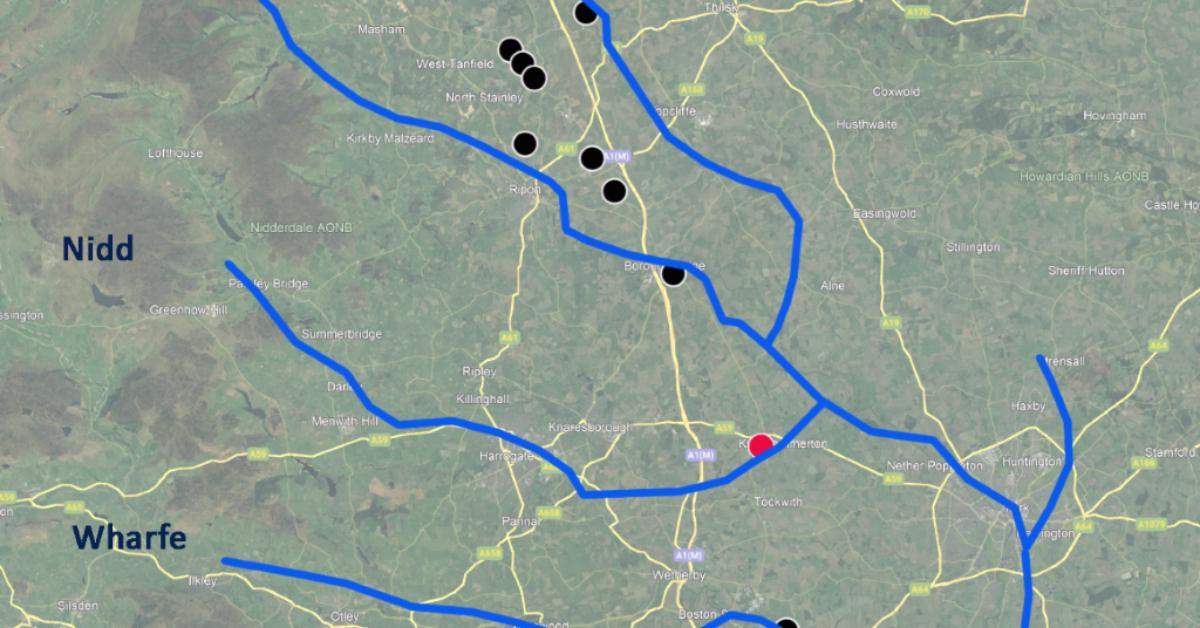
A map showing how the most recently discovered henge lines up with several of the others in North Yorkshire, including the three at Thornborough.
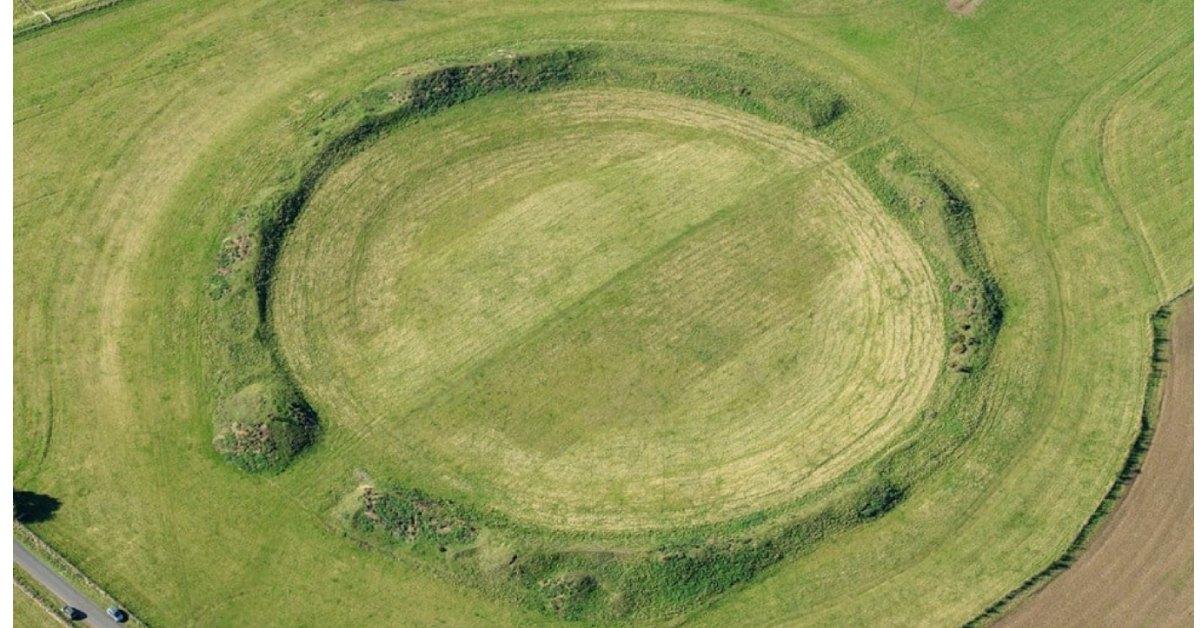
One of the still very visible Thornborough henges.
That same year, he used infrared and thermal imaging cameras to identify the probable site of a mass grave containing the remains of hundreds of Royalist soldiers from the losing side at the Battle of Marston Moor, between Knaresborough and York.
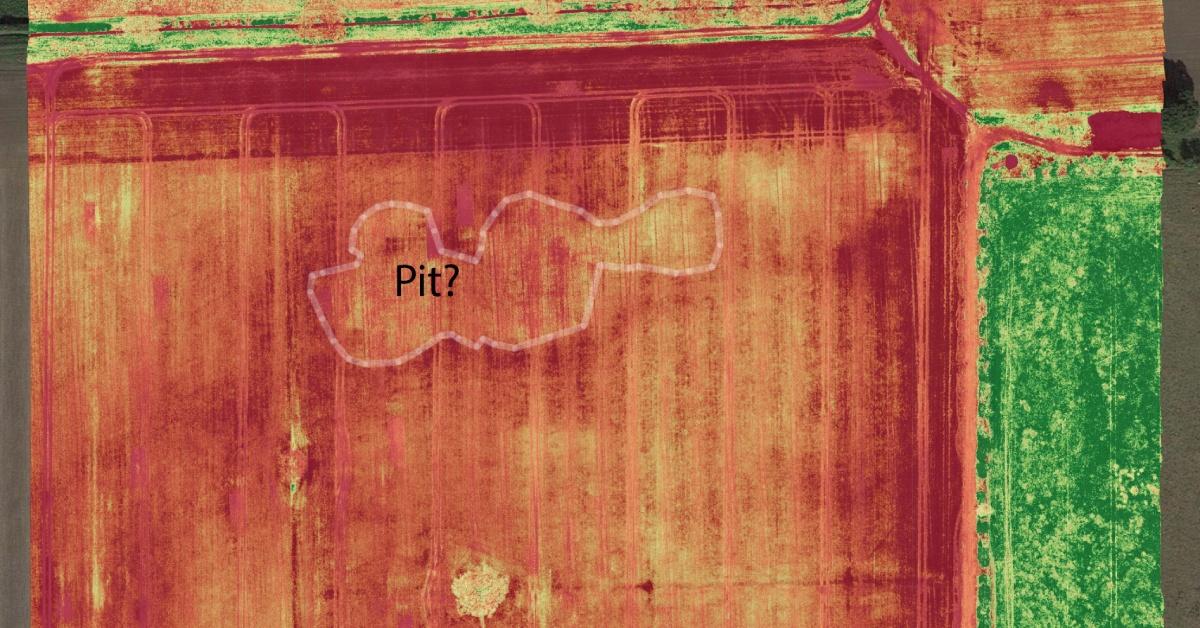
Multispectral image taken by a drone apparently showing burial pits containing the remains of hundreds, or even thousands, of Royalist soldiers.
To date, Tony has carried out more than 600 surveys of around 300 sites, and the surprises keep coming – new stretches of Roman road, marching camps, and early Christian churches.
Tony said:
You sometimes look at a site because it’s of a certain period, but then you find things from other periods. A good site will always be a good site – they get reused through history.

Tony with Thelma, his thermal imaging drone.
A well-known figure in archaeological circles – he's a director and trustee of the Yorkshire Archaeological and Historical Society – he is also writing a series of books drawing in his expertise and images.
His dream, he says, would be to find something of significance from the early medieval period – a Saxon hall, perhaps, or a Viking camp.
In the meantime, he’ll carry on sending his drones aloft, and they’ll carry on keeping his hopes airborne. It may be an unusual hobby, but if the turnouts for his talks to local history groups are anything to go by, he’s not alone in his passion.
He said:
I do it because I’ve had a fascination all my life for history and archaeology, and the feeling I get when discovering something new is a thrill.
But it’s sometimes a disappointment too, as we can’t dig and investigate everything. But it’s still a buzz!

0