Subscribe to trusted local news
If you are accessing this story via Facebook but you are a subscriber then you will be unable to access the story. Facebook wants you to stay and read in the app and your login details are not shared with Facebook. If you experience problems with accessing the news but have subscribed, please contact subscriptions@thestrayferret.co.uk. In a time of both misinformation and too much information, quality journalism is more crucial than ever. By subscribing, you can help us get the story right.
- Subscription costs less than £1 a week with an annual plan.
Already a subscriber? Log in here.
23
May
When Harrogate banned Monty Python’s Life of Brian
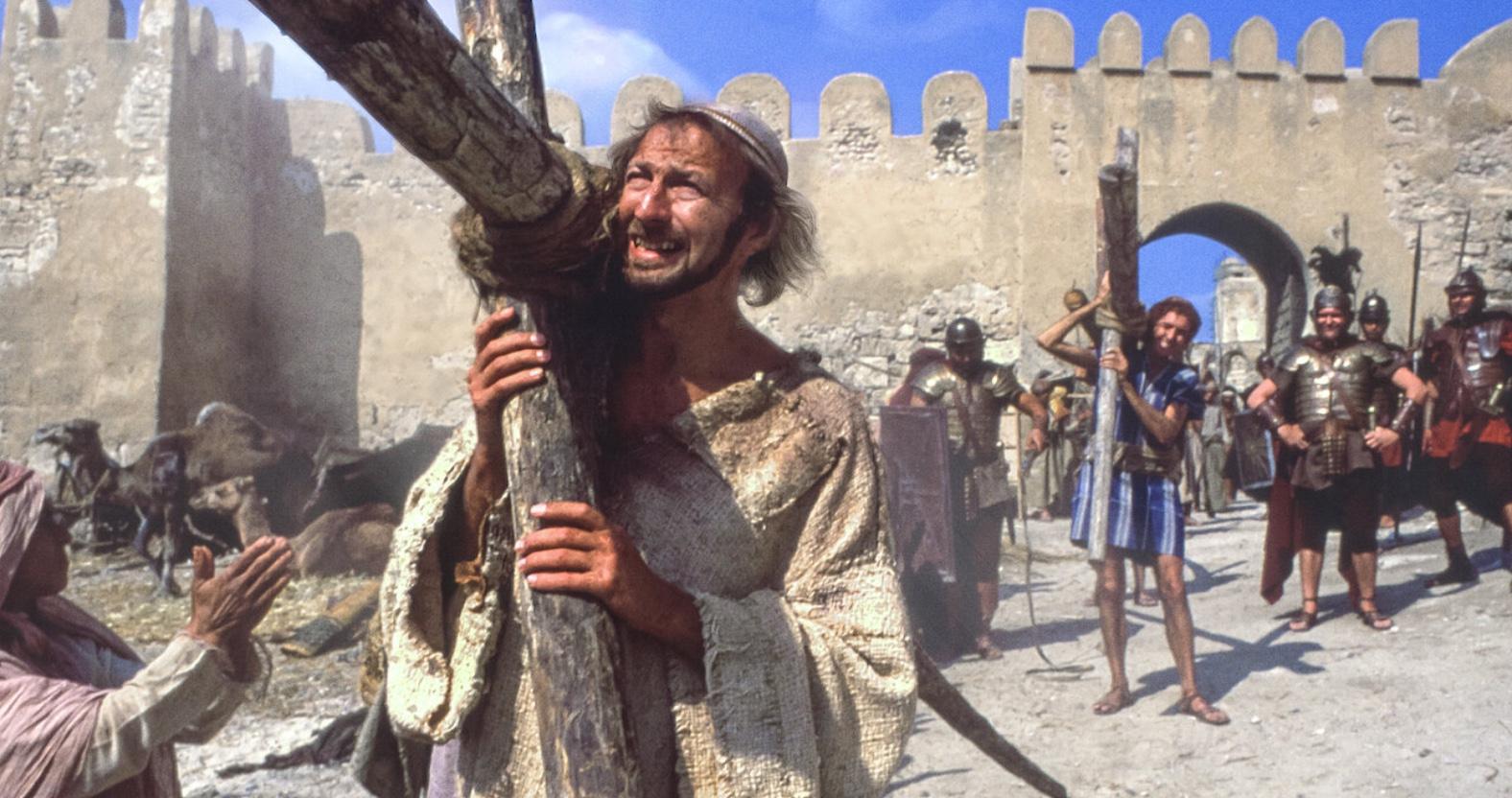
Thomas Barrett is a freelance journalist who grew up in Harrogate. In his first nostalgia article for the Stray Ferret, he takes a look at the controversy over Monty Python’s Life of Brian being screened in Harrogate.
What did Harrogate Borough Council ever do for us?
In November 1979, the council played God when they attempted to protect the innocents of Harrogate from the most controversial film of the year.
Monty Python’s Life of Brian lampooned the birth and death of Jesus Christ through Brian, played by Graham Chapman, who is born on the same day as Jesus and mistaken for him. It leads to a series of comic misunderstandings for viewers blessed with a sense of humour.
Unfortunately, local councillors weren’t impressed. The mayor-elect of Harrogate at the time, Jack Thompson, called it a “very sick” film, describing its final crucifixion scene as “distressing”.
Harrogate was the first place in the country to ban The Life of Brian from local cinemas due to blasphemy, including at the Odeon and the ABC on Cambridge Road, and the town became a dubious pioneer in censorship. But incredibly, councillors initially took the drastic step without even seeing the film first.
Their stamp of disapproval only increased the film’s notoriety and buses to York and Bradford were packed with youngsters wanting to see what all the fuss was about.
Censorship era
In the 1970s, filmmakers were pushing boundaries when it came to sex, violence and religion.
Films were already given a rating such as X by the British Board of Film Censors (BBFC), indicating suitability for different audiences, however councils still had the final say.
In Harrogate, a special Film Selection Sub-Committee was formed, where councillors could ban films from being shown on public health grounds.
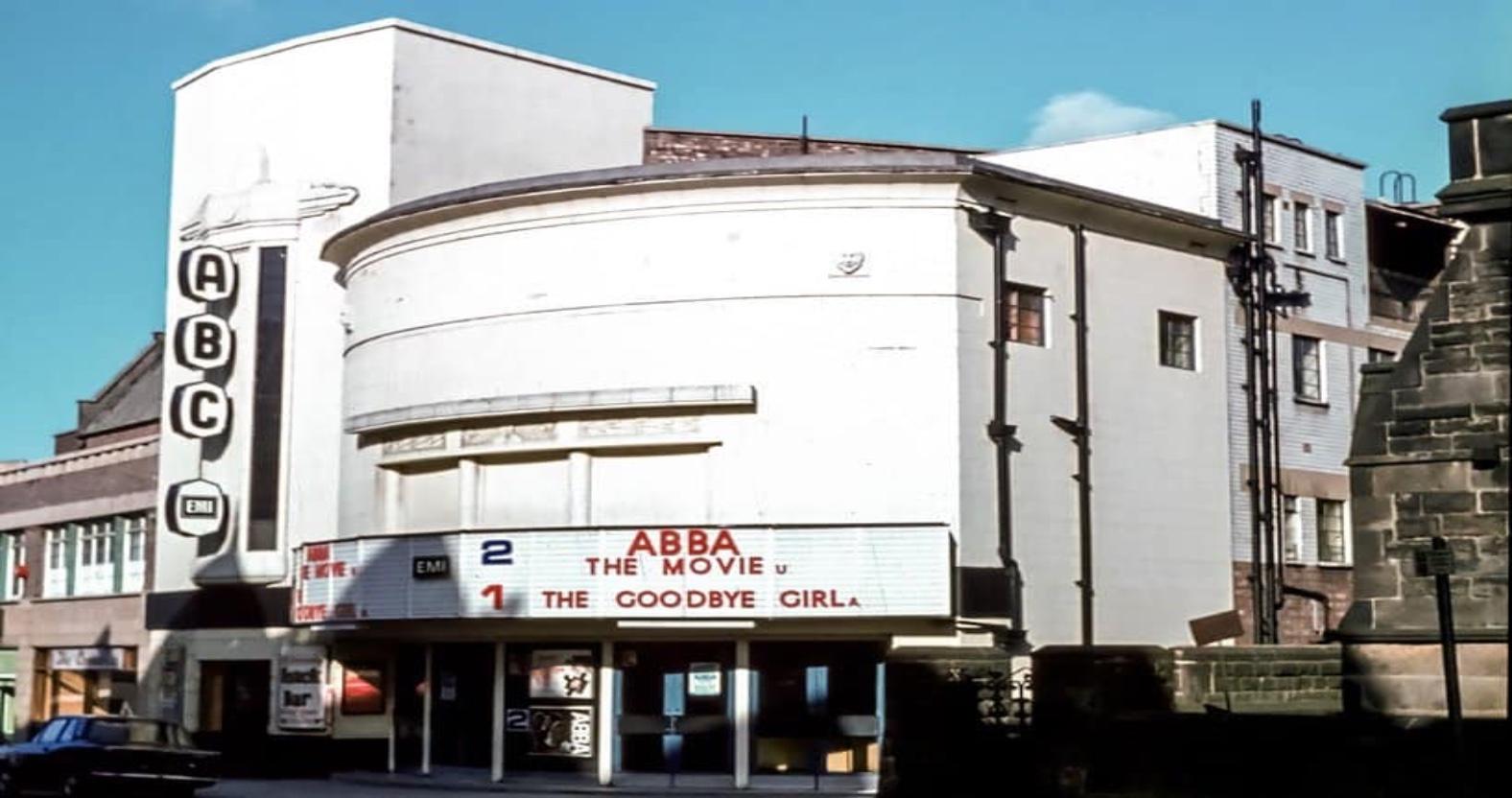
The ABC cinema in Harrogate.
These included the Emmanuelle softcore porn film in 1974, where councillors were said to have awkwardly sat through steamy sex scenes before deeming it quite unsuitable.
While anything to do with sex was beyond the pale for the prudish Harrogate councillors of the 1970s, Stanley Kubrick’s A Clockwork Orange, which was banned in Leeds in 1972 due to its depiction of violence, was allowed to be shown in Harrogate.
The film selection committee was chaired by Cllr Harold Hitchen, an old school Conservative and Methodist lay preacher. He told reporters he was particularly concerned that the Life of Brian, with its irreverent portrayal of Christianity, could corrupt the minds of young people in the district.
Comedy of errors
A fresh-faced Philip Broadbank was a newly elected councillor in 1979. He’d grown up watching the Monty Python TV show and told the Stray Ferret it was an “absolute farce” that the council banned the film. He said the campaign to get the film screened was one of his first acts as a councillor - a position he still holds today as member for Fairfax & Starbeck.
He said:
They didn’t even see it and just read reports. I thought that was ridiculous. All councillors back then were in their late 50s or even older and it was obviously a generational thing. I couldn't believe that by the 1970s, people in authority wanted to ban films.
After the Life of Brian was initially banned sight unseen, there was uproar, so a private showing took place in February 1980 and councillors took a vote. However, the original decision was upheld by 8 votes to 4.
Sixth formers in Harrogate started petitions and letters were sent to the Harrogate Advertiser, including this Pythonesque note:
Not since the Emperor Nero has such a threat been posed against Christianity as presented by this film, which I have not actually seen. There is no doubt that, were it to be shown in Harrogate, Christian Civilisation as we know it would vanish overnight, old ladies would be sold to white slavers, there would be human sacrifice on the Stray, and blood-crazed mobs of perverted young people would burn our churches to the ground. Only the brave action of our council, which knows what is best for us, has saved our community from universal chaos.
He’s not the Messiah…
In more enlightened parts of the country, some cinemas even marketed the Life of Brian as “the film that’s banned in Harrogate.”
Cllr Broadbank said the council waited until Cllr Hitchen passed away before they took another vote in the early 1980s. The film committee was disbanded and the ban on the Life of Brian was overturned. But by then, the world had moved on.
It was later revealed in 2007 Channel 4 documentary that the top brass at Harrogate Borough Council had been fed negative information about the film from the Nationwide Festival of Light.
The evangelical pressure group was led by the morality campaigner Mary Whitehouse and fought against the sweeping social changes underway in England since the 1960s. They circulated anti-Life of Brian literature and even encouraged their members to pray for the film's downfall.
Harrogate now holds a curious place in cinema history, and the Life of Brian controversy stands as an example of how censorship is rarely as effective as it is intended. Perhaps, rather than acting as moral puritans, a better lesson the council could have taught the young of Harrogate would have been to simply “always look on the bright side of life.”

2