Subscribe to trusted local news
If you are accessing this story via Facebook but you are a subscriber then you will be unable to access the story. Facebook wants you to stay and read in the app and your login details are not shared with Facebook. If you experience problems with accessing the news but have subscribed, please contact subscriptions@thestrayferret.co.uk. In a time of both misinformation and too much information, quality journalism is more crucial than ever. By subscribing, you can help us get the story right.
- Subscription costs less than £1 a week with an annual plan.
Already a subscriber? Log in here.
09
May
Why there were legitimate grounds to reject Harrogate Spring Water’s expansion
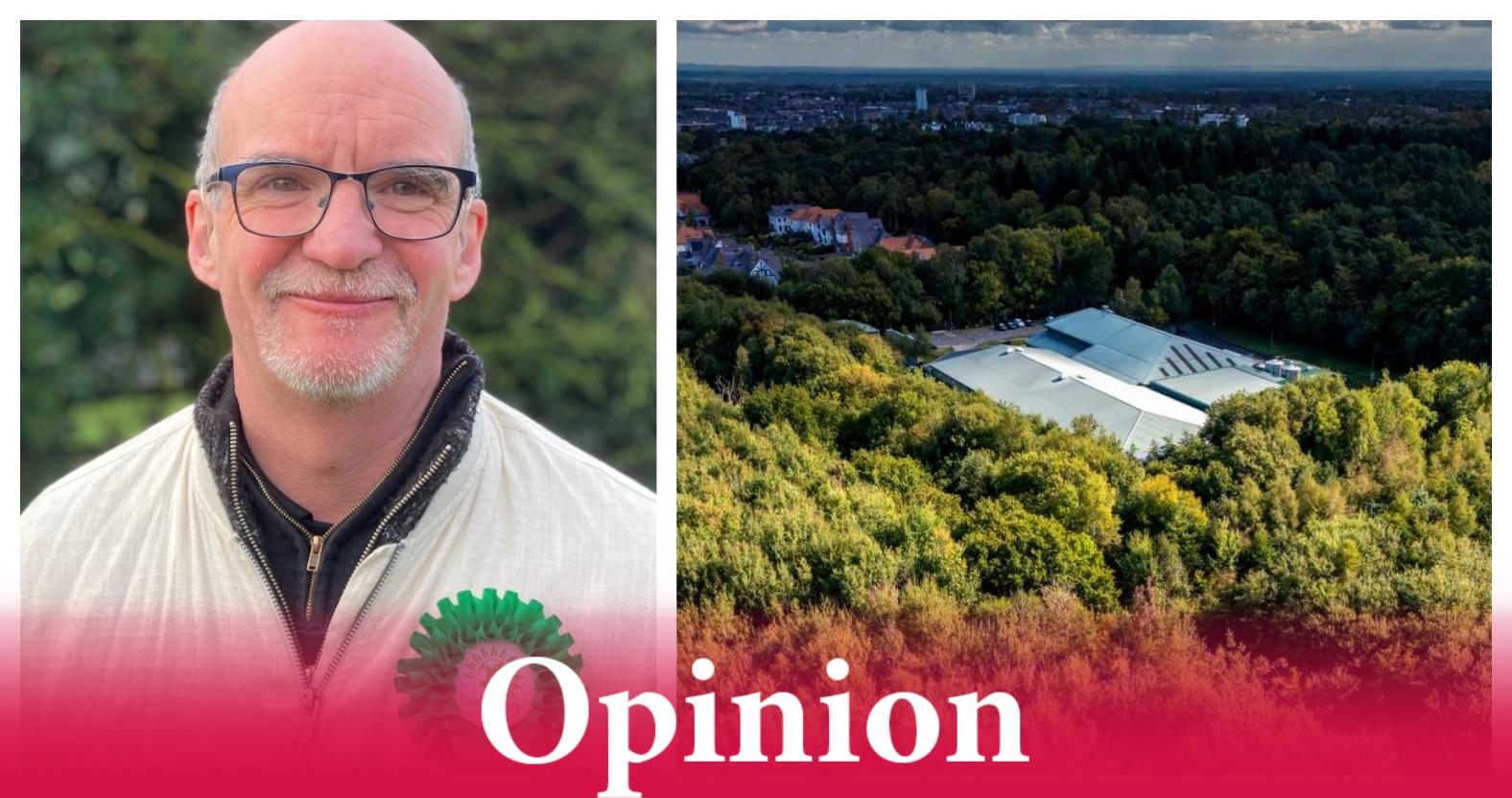
Michael Schofield is the Green Party councillor for Harlow & St George’s, which includes the Harrogate Spring Water headquarters. Here he explains why he thinks there were legitimate planning reasons to refuse the company’s expansion plans last month.
The Stray Ferret recently published an article asking whether two local planning decisions, including the rejection of Harrogate Spring Water’s expansion plans, could be overturned on appeal and result in a hefty bill for local council taxpayers.
As the councillor for Harlow and St Georges, whose division includes the Harrogate Spring Water site, I have taken a keen interest in the company’s application to expand its bottling factory — a move that would result in the destruction of 500 trees.
I was one of three people who spoke out against the scheme at the meeting at which my fellow councillors on North Yorkshire Council’s Harrogate and Knaresborough planning committee voted to refuse the application.
Let me explain why I think there were legitimate planning reasons for the decision.
There is still no hydrological survey, even though our town, and Harrogate Spring Water, trade on our water and our springs. There is now an environmental impact assessment screening, issued nine years late after we flagged it. However, it does not mention key hydrology issues such as groundwater and springs. With no survey on these issues, councillors were being asked to make uninformed decisions that could have long lasting negative impacts. Is this backwards approach correct planning procedure?
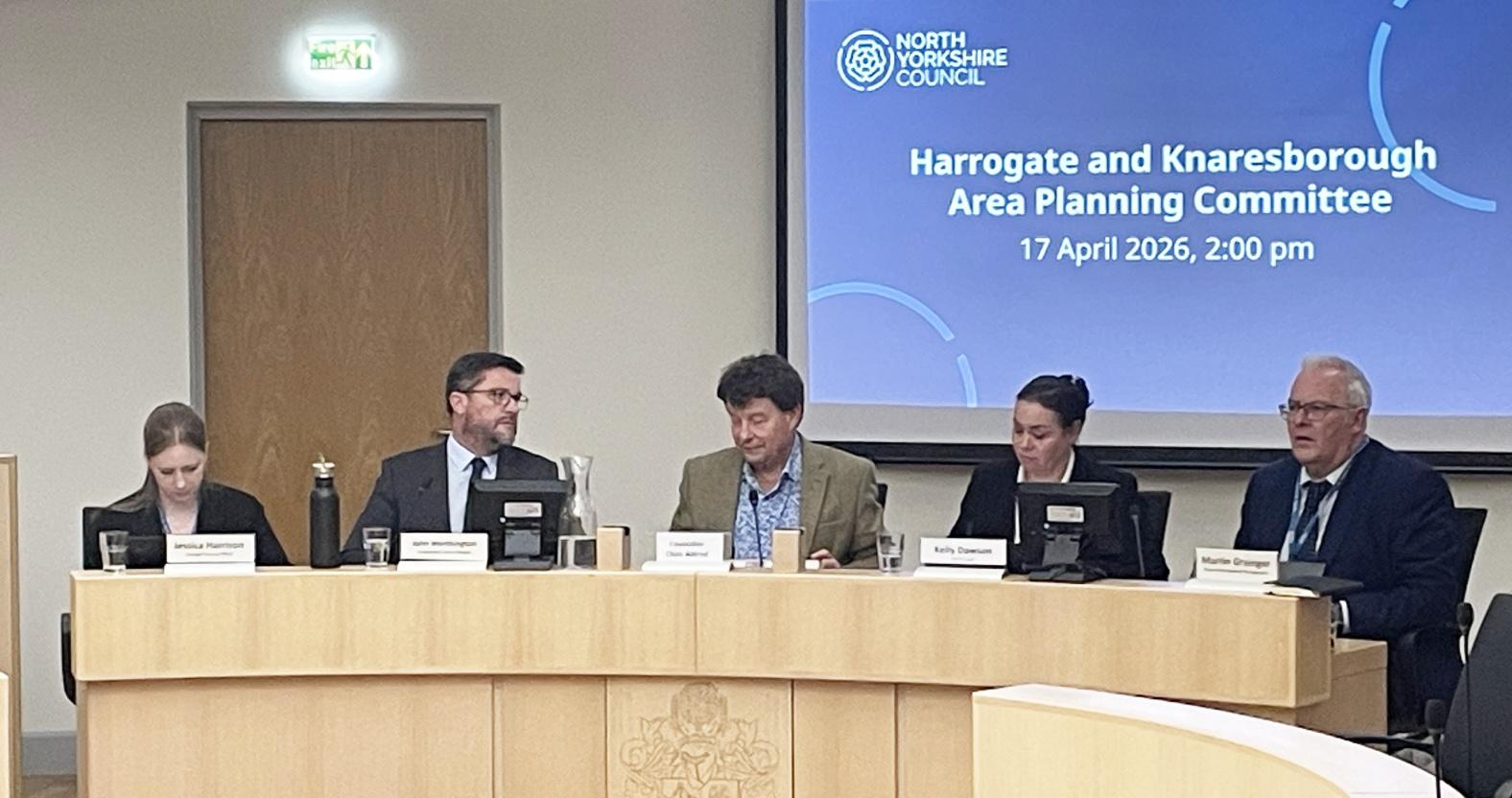
The Harrogate Spring Water planning committee meeting on April 17.
There’s still no clarification on Harrogate Spring Water’s promised 50 new jobs. What type of jobs will they be and how many are temporary? Currently it’s just a number being used to influence councillors. Besides, with only 14 extra parking spaces proposed, access would seem to be an issue.
Rotary Wood
The factory expansion would remove part of Rotary Wood, the buffer and screening that was planted as a condition of the original building in 2013 to screen over the long-term and prevent harm to the wider landscape views. We now have uncertain ecological buffers or screening, plus no lighting plans so it’s impossible to evaluate the impact on protected and priority bat species.
And the Section 106 legal agreement, compensating the community for the impact of development, is weak, offering no long-term security, only more privatisation of our green spaces.
Councillors were being told to follow planning procedure by the very people who failed to follow planning procedures from day one.
Voting against it was a vote against a flawed and failing planning system and was a demand for change.
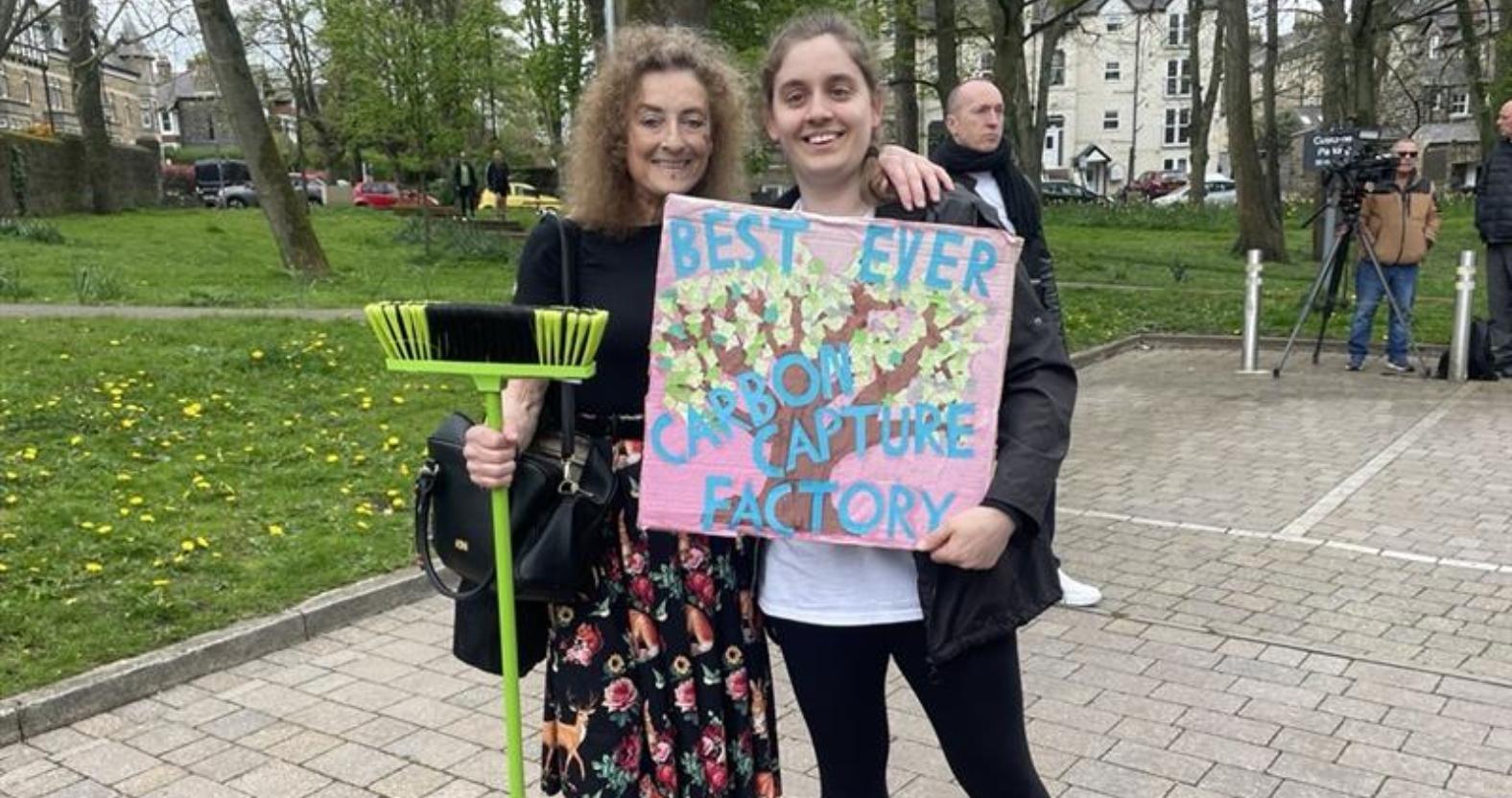
Campaigners outside the planning meeting.
We know this development would take woodland and turn it into a single-use plastic bottling factory, destroying mitigation of previous conditions, harming landscape views and threatening protected species.
It is about time that elected members stand up and challenge council officers who, while I accept and appreciate their expertise, do not always guarantee the best outcomes for local communities.
I accept that our training as elected members is not that in-depth and that is why I was fortunate to be able to work alongside Sarah Gibbs of Save Rotary Wood, Neil Hind of Pinewoods Conservation Group and Cllr Arnold Warneken, whose knowledge and insight helped guide my research.
I stand by my speech against the development and the decision taken by councillors to reject it and believe that if it had been granted, we would have had grounds for appeal as well. Our planning system is not 100% fit for purpose and more should be done to improve it.

1