Subscribe to trusted local news
If you are accessing this story via Facebook but you are a subscriber then you will be unable to access the story. Facebook wants you to stay and read in the app and your login details are not shared with Facebook. If you experience problems with accessing the news but have subscribed, please contact subscriptions@thestrayferret.co.uk. In a time of both misinformation and too much information, quality journalism is more crucial than ever. By subscribing, you can help us get the story right.
- Subscription costs less than £1 a week with an annual plan.
Already a subscriber? Log in here.
24
Jun
Gardening for climate change: 7 tips from RHS Harlow Carr's head gardener

The current heatwave — and the wider problems of climate change — present major challenges for gardeners.
We asked Claire Tatler, head gardener at RHS Harlow Carr, to provide some tips on future-proofing your garden.
Claire, who is giving a talk on climate-resilient planting in Hampsthwaite tonight (June 24), has made a career out of helping to create some of the country's finest gardens.
She was previously head gardener at Wollerton Old Hall Garden in Shropshire, and prior to that worked for the National Trust.
Claire said:
Helping your garden survive our extreme weather patterns is the key to ensuring healthy plants, healthy soil and supporting our environment. A wildlife-focused garden helps to support our mammals, birds and reptiles to thrive in ever changing environments.
Here are her seven tips.
1. Get to know your soil.
Is it clay or sandy, acidic or alkaline? Choose plants that match your soil type. Rhododendrons prefer acidic soil, for example, and you only get blue hydrangeas with acidic soil. It is important to change the soil to match your plant choice.
2. Choose plants that do different jobs
Cornus, for example, will take up excess water and provide winter interest; achillea will put nutrients back in the soil and attract butterflies.
3. Buy plants from official sources to reduce the spread of disease and pests
Growers must take the risk of plant pests and disease even more seriously these days. As our climate changes, there is an increased risk of pests and disease more traditionally associated with warmer countries surviving in our climate and affecting the health of plants. All professional growers must have plant passports for their stock — people visiting nurseries and garden centres should look out for these passports.
4. Choose disease-resistant varieties
For example, choose ilex crenata (Japanese holly or box-leaved holly) instead of other type of box plants to combat box blight and box caterpillar.
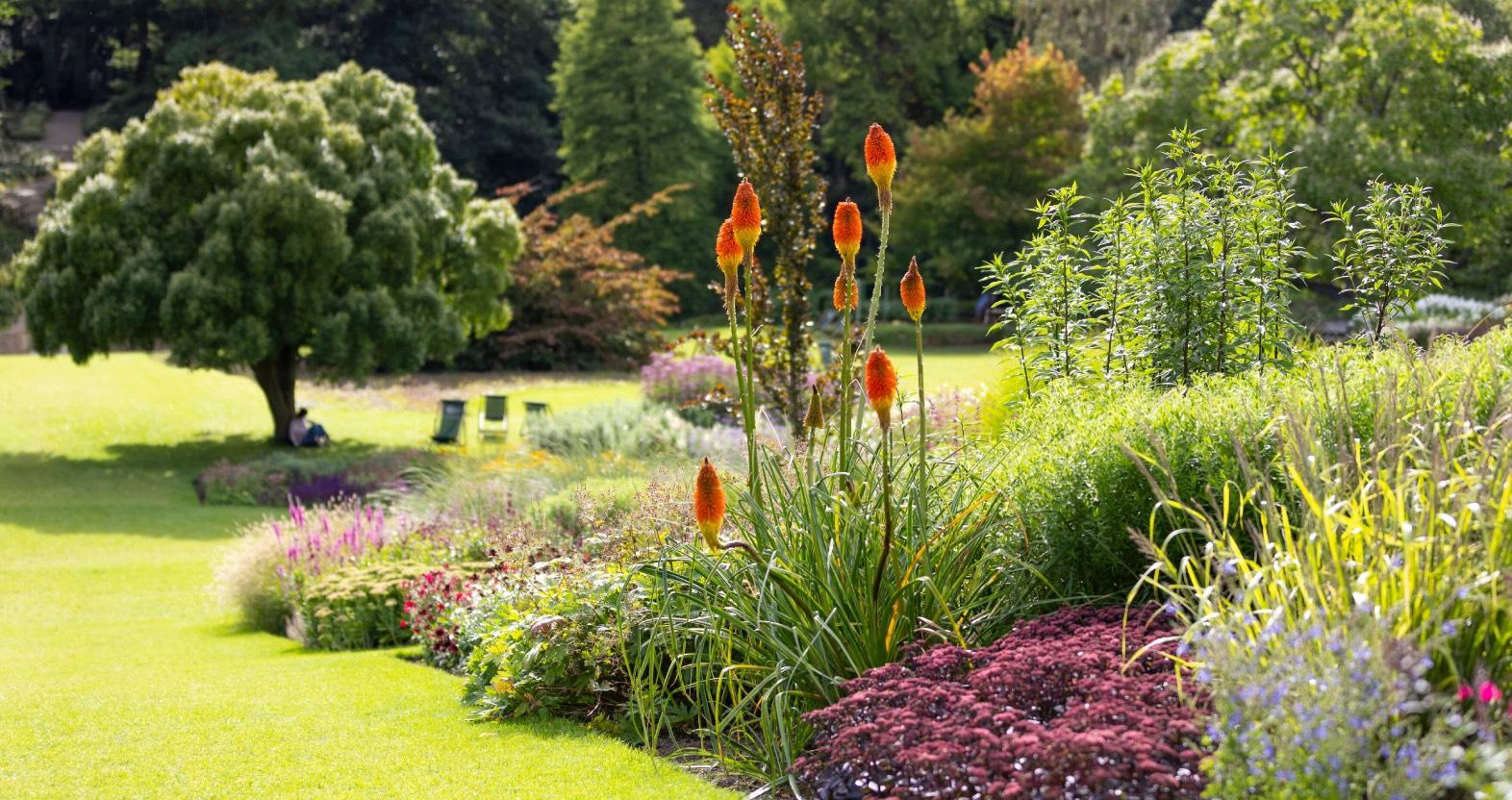
Harlow Carr
5. Water infrequently but water a lot, rather than a little regularly
This encourages strong roots which help the plant survive.
6. Promote biodiversity
This encourages a range of pollinators and beneficial insects which support the food chain. Encourage natural processes such as seed dispersal by not cutting down all your garden in winter and decomposition (by not digging the beds too much and encouraging beneficial organisms in the soil). This creates a thriving ecosystem in your green space, whatever the size, and has fundamental, proven benefits for wellbeing and mental health.
7. Keep chemical fertilisers to a minimum
Overuse can cause the natural soil biome to deteriorate, weaking your plants.
Claire's talk on climate-resilient planting, in aid of the Hampsthwaite Wildlife Friendly Village Project, takes place at Hampsthwaite Village Memorial Hall at 7.30 pm on Wednesday, June 24. Tickets are £5 per person.

0