Thank you for your interest in this story
To continue reading this article, subscribe to the Stray Ferret for as little as £1 a week
Already a subscriber? Log in here.
16
Jun
'Cars are hollowing out the town centre – Harrogate must prioritise cycling and walking'
Iain Patton grew up in Harrogate and moved back to the town from London five years ago. In his sustainability-focused career in communications and PR, he has worked with clients around the world and also set up the International Green Awards. Although a car-owner, he is a long-time advocate of walking and cycling, and he has previously worked with Islington Council to change travel behaviour.
Harrogate likes to think of itself as a refined spa town. The reality, increasingly, is a place stuck in traffic and empty retail units, clinging to an outdated identity while other towns surge ahead.
At a time when the UK Government has just announced a £4.5 billion investment in walking and cycling infrastructure, Harrogate should be positioning itself as the natural “well-being capital of Yorkshire”. Instead, it is being held back by a lack of vision and a stubborn attachment to car dominance that is quietly hollowing out the town centre.
The failure to deliver transformative projects like the Station Gateway scheme is not just a planning setback – it is symptomatic of a deeper issue. A small but influential group continues to prioritise vehicle access over people, despite overwhelming evidence that this approach is economically, socially and environmentally outdated.
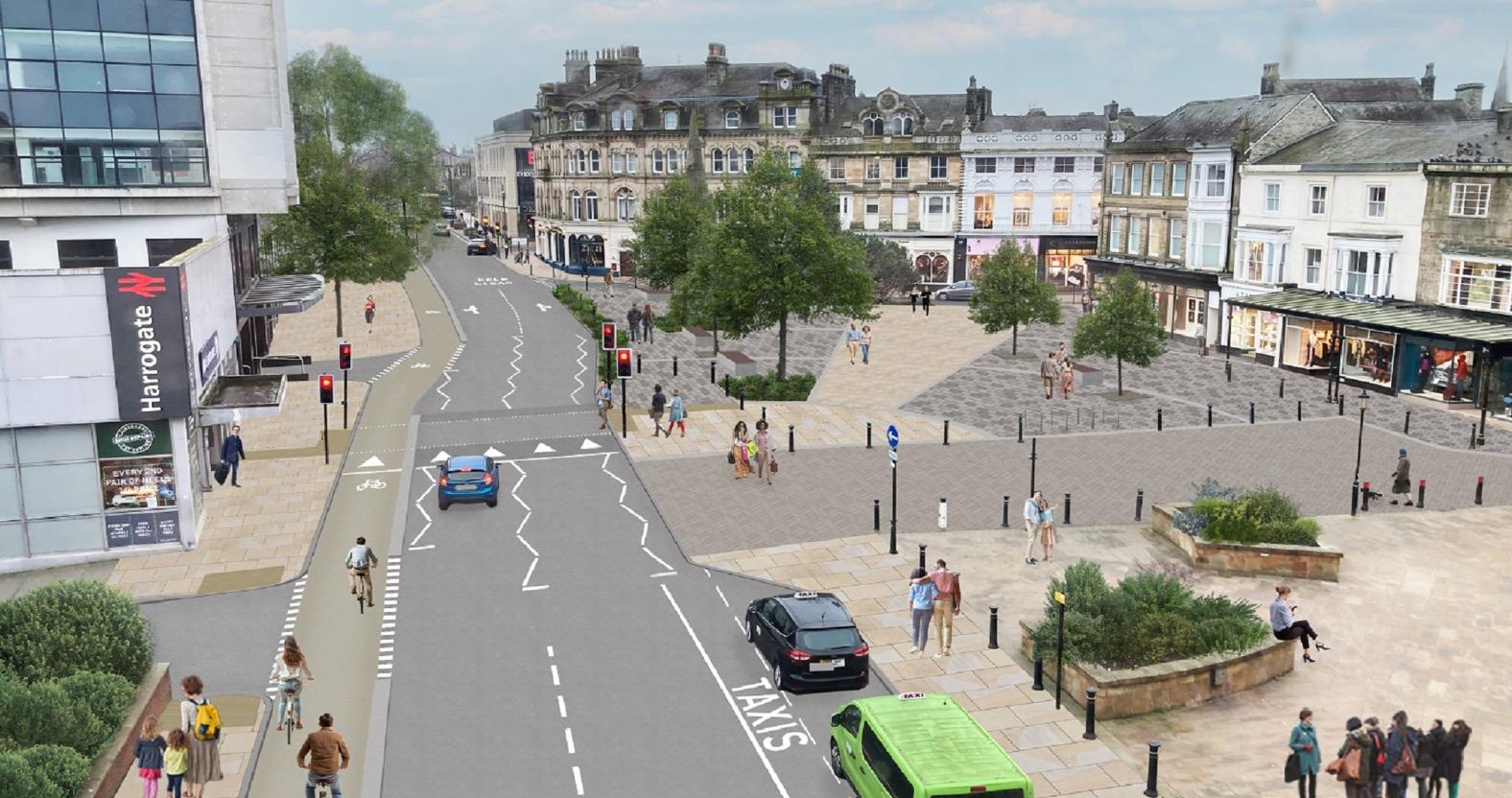
Designs for Station Parade under the Harrogate Station Gateway scheme.
Harrogate has all the ingredients to lead
If Harrogate is serious about its future, it needs to confront an uncomfortable truth: towns that prioritise cars over people are the ones losing footfall, losing investment, and losing relevance.
The irony is that Harrogate already has all the ingredients to lead. Its heritage as a spa town, its green spaces, its compact centre, and its proximity to the Yorkshire Dales position it perfectly as a hub for health, well-being, and active tourism. But potential alone is not a strategy.

All the ingredients: spa heritage, proximity to the Dales, a compact centre, and green spaces.
Active travellers spend more
Across the UK and Europe, towns that have invested in cycling and pedestrian infrastructure are seeing measurable economic benefits.
Improving cycling and walking infrastructure can increase spending in shops by up to 30%, according to a report published today by Transport for London (TfL). The research found that people walking, cycling and using public transport spend 40% more each month than car drivers.
In Manchester, the Bee Network is reshaping how people move through the city, supporting local businesses and improving accessibility. Internationally, cities such as Ghent in Belgium have transformed their centres by restricting car access – resulting in increased retail activity, cleaner air, and more vibrant public spaces.
Closer to home, York and Leeds have demonstrated how prioritising cycling and walking can enhance tourism appeal, not diminish it. Visitors increasingly choose destinations where they can move easily, safely, and enjoyably without a car.
This is the direction of travel economically, culturally, and politically. Harrogate is moving in the opposite direction.
Fierce resistance
Instead of a coherent, people-first transport strategy, the town has a fragmented layout that prioritises through-traffic over dwell time. Instead of safe, connected cycling infrastructure, it offers disjointed routes that deter all but the most confident riders. Instead of a welcoming environment for families and visitors, it presents congestion, noise, and a high street struggling with empty units, as Parliament Street is.
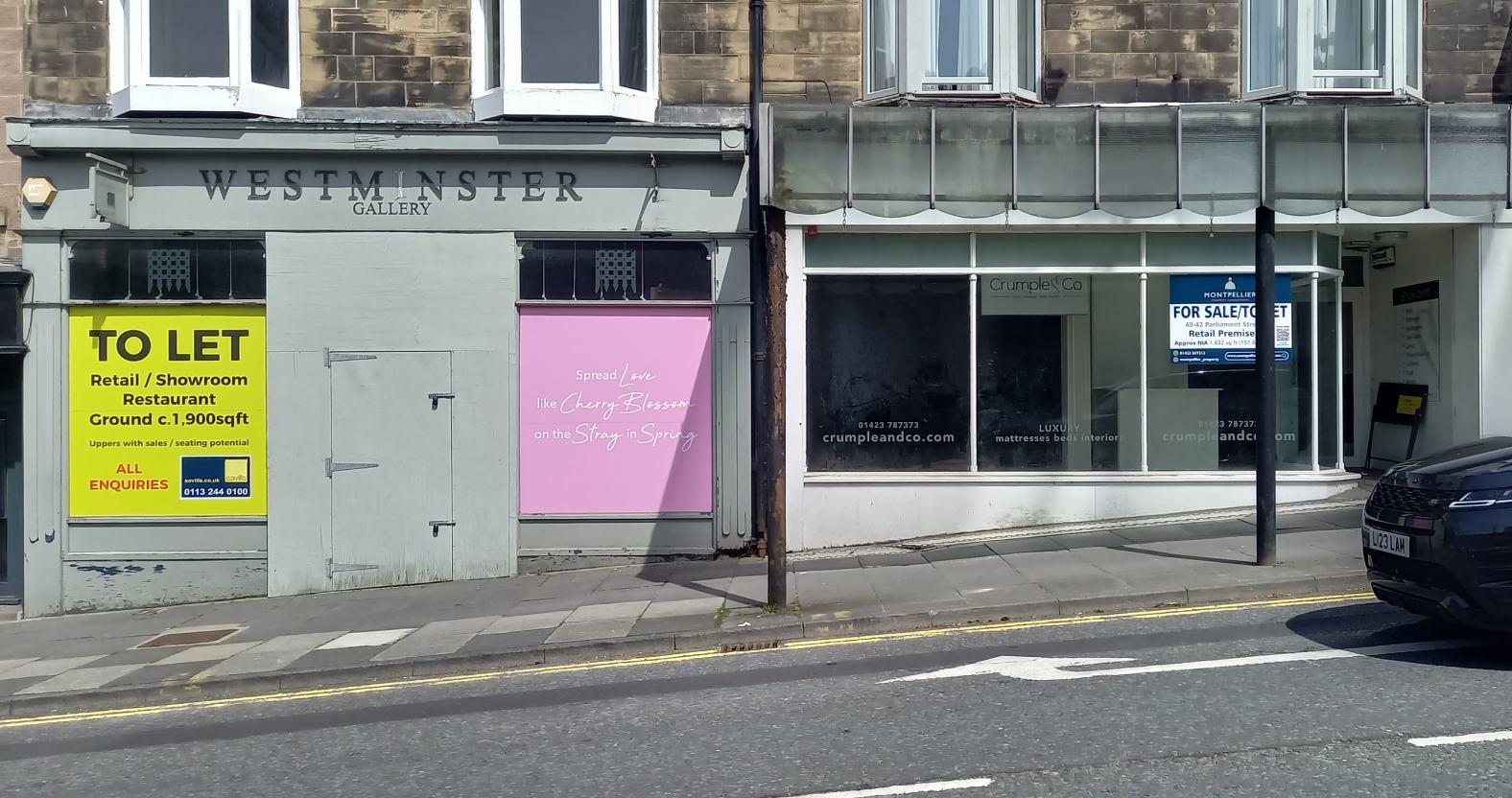
Empty units on Parliament Street in Harrogate.
And yet the resistance to change remains fierce.
Those who continue to champion the primacy of the car often frame their arguments around access and convenience. But what they are really defending is a model that no longer works. A high street dominated by traffic is not accessible – it is hostile. It discourages browsing, reduces dwell time, and undermines the very businesses it claims to support.
If we are honest, the legacy of this approach is already visible: vacant retail units, declining footfall, and a town centre that feels increasingly disconnected from modern expectations of town centres reimagined.
It is time to say it plainly: the petrol-head mindset has had its day.
A destination, not a thoroughfare
Harrogate does not need to eliminate cars entirely, but it must rebalance. That means prioritising safe cycling routes, pedestrian-friendly streets, and public spaces designed for people, not vehicles. It means thinking like a destination, not a thoroughfare.
Imagine a Harrogate where families can cycle safely from the Valley Gardens to the town centre. Where visitors arrive by train and step into a vibrant, low-traffic environment that reflects the town’s spa heritage. Where businesses thrive because people want to spend time there, not just pass through.
This is not a radical vision. It is already happening elsewhere. What is radical is continuing as we are.
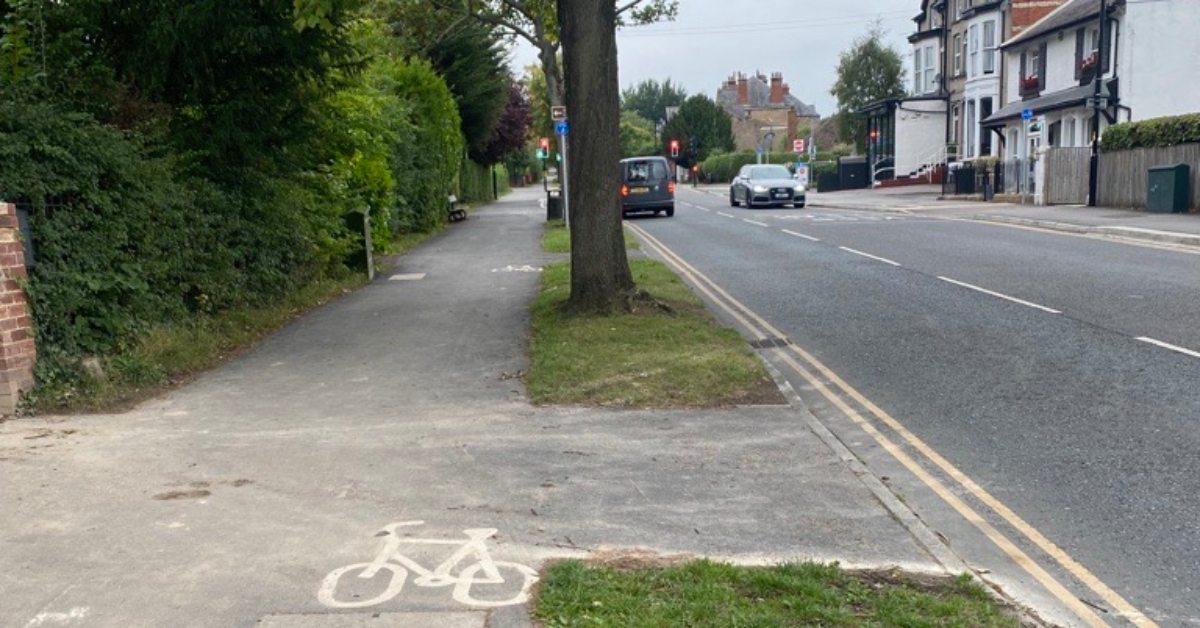
Otley Road cycle path in Harrogate.
The Government’s new funding for walking and cycling infrastructure presents a clear opportunity. But funding alone is not enough. Harrogate needs leaders willing to move beyond short-term objections and articulate a long-term vision for a healthier, greener, more prosperous town.
The choice is stark. Harrogate can either embrace its potential as a centre for well-being and sustainable tourism, or it can continue to drift, held back by outdated thinking and missed opportunities. Right now, it is choosing the latter.
That needs to change. We can reinvent Harrogate’s heyday, when it was people-centric and the centre was connected by walkways for people to promenade, be seen and delight in walking.
So let’s take advantage of the government's funding for new walking and cycling routes and start embracing transformational projects like the new Station Gateway plans, and expanding on this even more to prevent further decline.

21