Thank you for your interest in this story
To continue reading this article, subscribe to the Stray Ferret for as little as £1 a week
Already a subscriber? Log in here.
15
Dec 2025
Council responds to claim Harrogate padel court enforcement notice is ‘disproportionate’

Council officials have responded to claims that an enforcement notice at a David Lloyd’s padel courts in Harrogate is “disproportionate”.
North Yorkshire Council served a notice on the centre on October 10, which ordered that the company cease using the courts on Oakdale Place and remove them within 30 days of the order being issued.
It follows complaints from residents about noise from the outdoor facility, which was built in December 2023.
The council also denied retrospective planning permission for the two outdoor courts in September after officials felt a noise assessment submitted in support of the plans did not “sufficiently account for the impacts created by the padel courts”.
However, David Lloyd took the council’s enforcement notice to the government’s Planning Inspectorate, which deals with planning disputes.
It described part of the notice —which requires the padel court structures and associated social area to be removed in 30 days — as “disproportionate”.
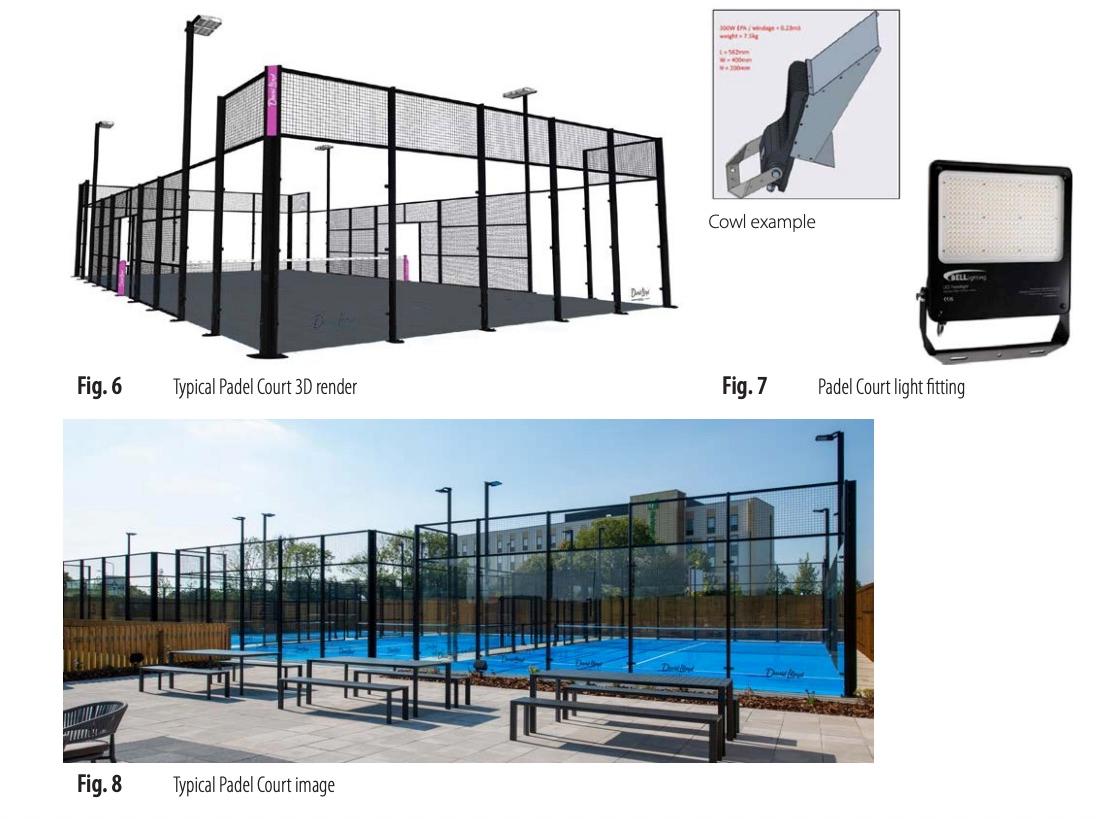
An example of a traditional padel court, uploaded in support of the plans.
David Lloyd said it was already in “positive, proactive dialogue” with planning officers about the padel courts.
But, in a response to the company’s appeal, the council said the presence of the courts continue to have a negative impact on neighbouring residents.
It said:
It remains the case that the continued presence of the padel courts and associated structures on the land provide a facility that can enable an unacceptable intensification of activity (use) that causes tangible and harmful changes in the acoustic environment that have a substantially negatively impact on neighbouring residential dwellings and their associated private outdoor amenity spaces.
The authority added that it had yet to receive details of a “remedy solution” which addresses the harm identified in its enforcement notice.
Meanwhile, David Lloyd argued that the courts were not in use and, therefore, removing them at this time was “disproportionate”.
It also said the removal would come at “significant additional expense” as a consequence of their removal and re-erection following a grant of planning permission.
The council said that any expense incurred because of a breach of planning regulations come at “their own risk”.
It added:
The local planning authority would point out that any expense incurred by the appellant because of their breach of planning regulations has come about because of actions they have pursued at their own risk and as such any expense should not be a material planning consideration in the determination of this appeal.
The council added that the authority has yet to grant planning permission for the scheme.
It said:
To claim, at the present time, their removal is unnecessary because they will ultimately just be re-erected following a grant of planning permission is at best wishful thinking and not factually correct.
To date officers are not aware of any acceptable scheme, that has been suggested by the appellant, that would make the granting of planning consent a possibility.
A government planning inspector will make a decision on the appeal at a later date.

1