Thank you for your interest in this story
To continue reading this article, subscribe to the Stray Ferret for as little as £1 a week
Already a subscriber? Log in here.
14
Jun
Déjà vu... Is North Yorkshire’s local plan history repeating itself?
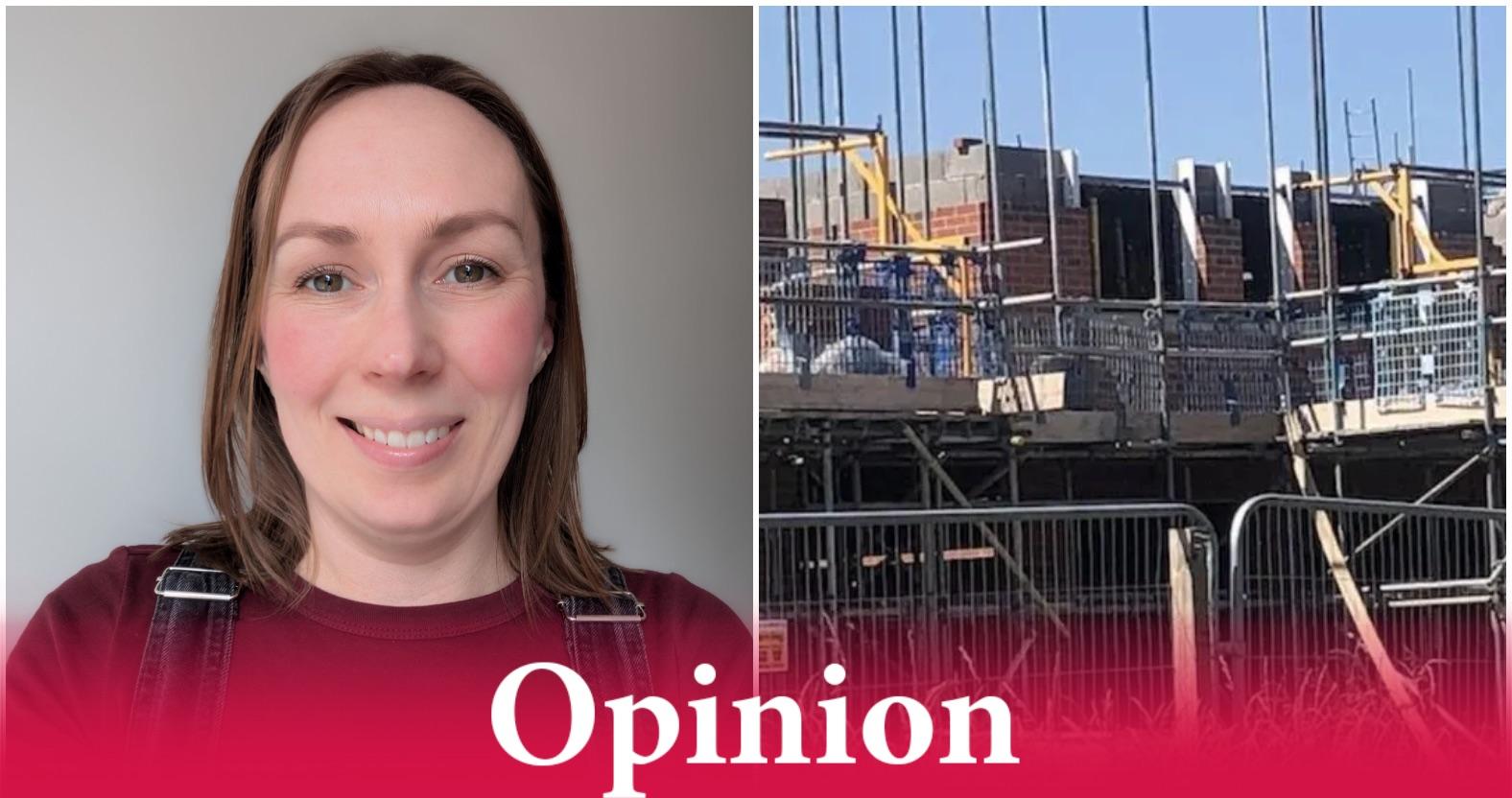
Vicky Carr is a journalist turned writer who grew up in Harrogate and returned in her late 20s to raise her family here. Find her on Instagram @vickycarrwrites.
When people say history repeats itself, usually they’re talking about events which took place decades ago.
As terrible decisions and unscrupulous behaviours become distant enough in the memories of most of the population, there’s an increasing risk they can be allowed to happen again.
Here in Harrogate, we’re in the very fortunate position of not having to wait such a long time to see the same mistakes being made repeatedly.
Just this week, we heard on the Stray Ferret that North Yorkshire Council is going to miss its deadline to create a new local plan for future housing development. The plan will not be ready until the end of 2029 – more than three years away, and 18 months later than it should have been.
Even that deadline is described as “challenging”, with a risk of further “slippage”. The local authority blames a change in government policy for this, along with the looming prospect of the first set of elections since NYC was formed.
The result of having no local plan in place is that NYC will be unable to prove it has a sufficient supply of land available to meet government homebuilding targets. When a developer puts forward a proposal for a new site, the council will find it very difficult to reject it – and even if it does, the decision could be overturned on appeal.
Now, where have we heard that before?

The affordable housing on Massey Fold in Spofforth.
It’s only just over a decade since Harrogate Borough Council put itself in almost exactly the same position, albeit for different reasons.
In the early 2000s, HBC began work on a draft local plan, which would guide where housing should be built and the facilities needed to go alongside it from 2014 to 2035.
However, when the draft plan was put forward to the government for approval, it was rapidly returned, covered in red pen, with a ‘see me!’ note for its authors.
The plan was, in essence, completely inadequate.
It took a further six years for HBC to get its act together and deliver something the government found acceptable, and the local plan 2014-2035 was finally adopted in March 2020.
Between 2014 and 2020, with no local plan in place, we saw a huge influx of residential developments: 150 houses here, 220 houses there, plus the odd 600-home site. Over the course of six years, thousands of new homes were added to the Harrogate district.
You might wonder, what difference does it make if the houses were added without a local plan? We were going to have to build more homes to meet government targets anyway.
True – but it makes a big difference, it turns out.
With a plan in place, a local authority can dictate not just where houses are built, but what infrastructure is needed to go with them.
It can decide a new village or town should be built, and with it, a new school, doctor’s surgery, railway station or sports centre.
In short, a local plan allows the council to – well, to plan.
Without it, what we got was piecemeal development. An endless stream of relatively small housing sites tacked onto the sides of existing development limits. None of them was big enough to merit additional infrastructure on its own, but the cumulative impact has been enormous.
Thousands of residents have moved in, but there are no new schools, no doctor’s surgeries, no additional hospital facilities, nor anything else that residents might rely upon.
Bus and rail services haven’t changed, even in developments which are on the outskirts of town, so new residents must use cars whenever they travel.
So what? When demand is high enough, services will follow, right?
Well, maybe. After a few years, when all the homes are occupied, perhaps a new bus service will be introduced. A new primary school might be built to cater for the additional demand from multiple housing developments.

A new housing estate in Northallerton.
But by then, people have made their choices. They’ve enrolled their children elsewhere, at schools which have had to create another classroom or two to cope with growing role numbers.
Will parents really want to disrupt their education and change their friendship groups by moving them to the new school, even if it is walking distance from their home?
And speaking of walking distance, they’re all so used to travelling everywhere by car, they don’t want to change that habit and take a risk on an infrequent and possibly unreliable new bus route, which doesn’t take them exactly where they want to go anyway.
So yes, services may follow. But by then it may be too late.
Badly let down
Harrogate, and the surrounding villages, were badly let down by HBC’s incompetency with its local plan. It’s not just those of us who were around at the time who have suffered from this: its failure to produce a plan for six years after the start date has had an irreversible impact on the district, and on its future, which will never be overcome.
We have all been left with the legacy of that failure.
And yet, despite the clear evidence of the damage done, we are walking straight back into the same situation.
As officers grapple with the challenges of finding space for thousands of new homes every year, they must feel the weight of this responsibility. They are staring down the barrel of another housing free-for-all, this time not just for the Harrogate district, but for the whole county.
NYC must do everything in its power to deliver the new local plan on time and to the highest possible standard. Without it, we face further inappropriate development, further pressure on our communities, and an even greater impact on our town’s future.
We cannot afford to let history repeat itself.

3