Thank you for your interest in this story
To continue reading this article, subscribe to the Stray Ferret for as little as £1 a week
Already a subscriber? Log in here.
30
Mar
Explained: How will the mayor’s £456 million change transport in North Yorkshire?

Over the last week, you may have read about the Mayor of York and North Yorkshire clashing with his Conservative counterparts over transport funding.
The government previously allocated transport funding directly from Whitehall to North Yorkshire Council and City of York Council.
But it now goes through the York and North Yorkshire Combined Authority, which then awards it to the two councils.
The combined authority, chaired by Labour mayor David Skaith, received a four-year settlement worth £456.2 million.
Mr Skaith's decision to allocate proportionally more of the funds to roads in York and less to roads in North Yorkshire led to a spat between him and the leaders of Tory-run North Yorkshire Council.
But that clouded wider questions of what the money will be used for.
The Stray Ferret has taken a closer look at where the money is going and what it means for the region's transport.
Where is the money going?
On Friday (March 27), members of York and North Yorkshire Combined Authority met to agree where the four-year, £456.2 million will go.
The figure is made up of £428.8 million in capital funding and £27.4 million in revenue funding.
The vast majority — £298.4 million — will be spent on highways maintenance, most notably fixing potholes.
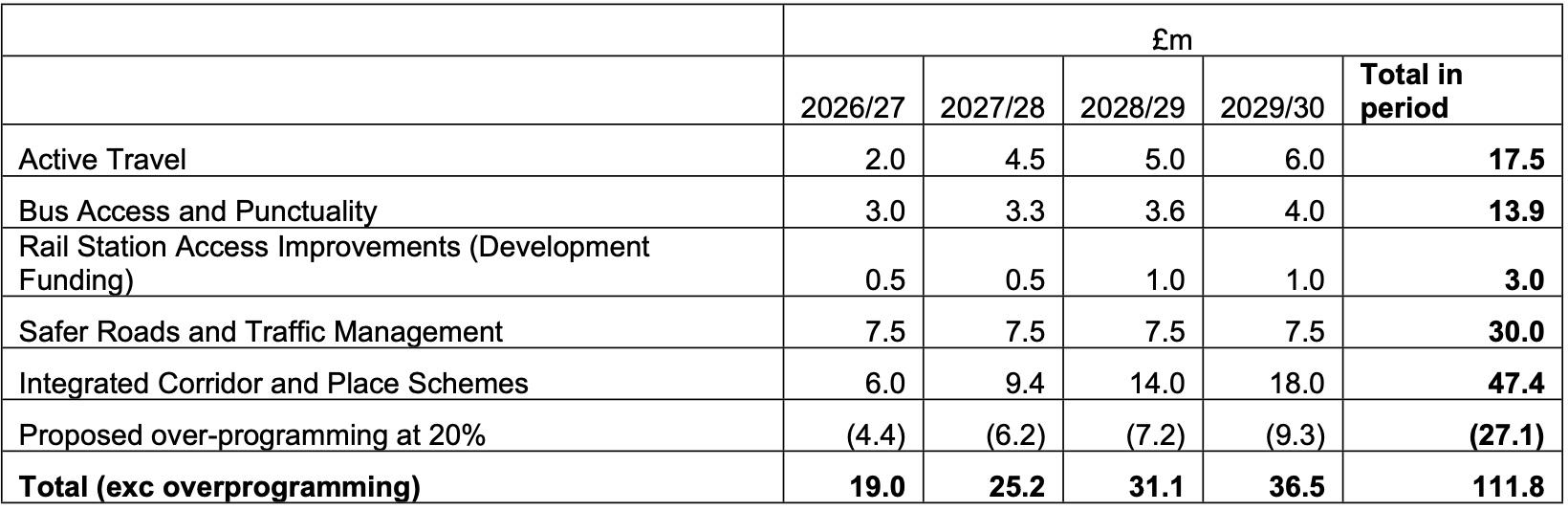
The transport schemes which are set to receive funding. Picture: YNYCA.
A further tranche of funding for "minor works" of £18.5 million over the next four years.
Meanwhile, £112 million will be set aside for “strategic schemes” such as enhancing access to bus and train stations — which both councils will be able to bid for.
This will include £17.5 million to be earmarked for active travel schemes in York and North Yorkshire.
A further £2 million has been allocated for the installation of fixed and average speed cameras across North Yorkshire, which forms part of a wider £30 million plan over the next four years for safer roads.
It was funding for road maintenance schemes which caused a stir.
Why has there been a political fallout?
The political spat between the Conservative council leaders on North Yorkshire Council and the Labour mayor and his Labour colleagues on City of York Council was about the money for highways maintenance.
All sides welcomed the four-year settlement as an improved deal for the region. But the way it is being split caused division.
The Department for Transport used to allocate funds directly to North Yorkshire Council and City of York Council on a funding ratio of 92.7/7.3, with North Yorkshire Council receiving the greater share.

Cllrs Carl Les, leader of North Yorkshire Council (left) and Gareth Dadd, deputy leader.
Mr Skaith has changed it to 90/10, meaning £4 million in 2026/27 and £20 million from 2026 to 2030 which would have come to North Yorkshire Council will go to City of York Council instead.
The mayor said the four-year investment would provide unprecedented levels of funding and fast-track a programme to repair crumbling roads.
But the decision led to a bitter exchange, particularly between Cllr Gareth Dadd, deputy leader of North Yorkshire Council, and Mayor Skaith after the latter denied Cllr Dadd a chance to respond and propose an amendment to the funding decision.
He said:
You’ve owned this Mr Mayor and you have also tried to gag a senior member of this authority. It seems to me the voice of North Yorkshire – 75% of your electorate — is not being allowed to be heard today. I think it’s utterly disgraceful.
What about bus services?
When he became mayor in 2024, Mr Skaith spoke in favour of introducing bus franchising, whereby the combined authority would take control of bus routes, fares, and schedules from private companies.
But two years into his term, there is little sign of progress.
While some money has been set aside for the enhancement of bus services, the operation of the network appears unlikely to change.
On Tuesday (March 31), North Yorkshire Council’s executive is expected to agree to continue to provide day-to-day transport functions such as bus operations and concessionary travel until March next year.
The move to delegate the powers is designed to give the mayor and combined authority time to carry out a review of bus services and draw up plans for a franchising model.
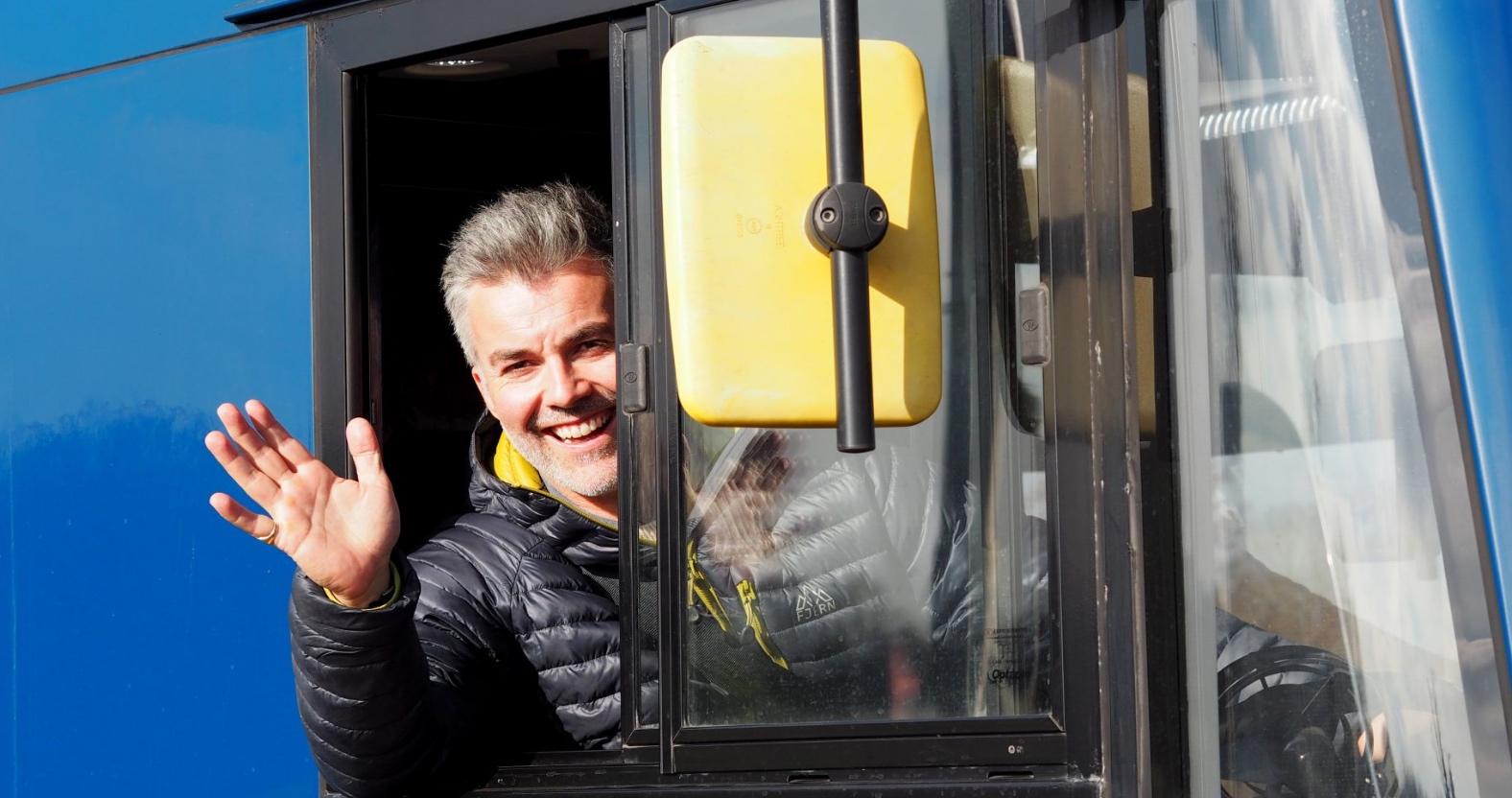
David Skaith, Mayor of York and North Yorkshire.
Mr Skaith confirmed in June 2025 that the combined authority was looking at going down the franchising route to improve what he described as a network which was “not good enough”.
However, how that franchising model would work and what it would look like remains to be seen.
How will this change transport in the region?
Even Tory politicians at North Yorkshire Council welcomed the extra funding from central government under the four-year deal.
Their gripes were over the mayor increasing the proportion to York's roads — a decision he justified on them receiving more wear and tear.
This was the first time the mayor has had a significant hand in deciding what money goes where for North Yorkshire.
Distributing the funds to the combined authority is part of the Labour government's wider plans to devolve spending.
But it has put more and more responsibility on the shoulders of a single mayor.
As Cllr Dadd put it on Friday:
This is the biggest issue to hit North Yorkshire since the inception of the combined authority.
The fallout of the £456.2 million allocation will continue to be felt until 2030.

2