10
Oct
Explained: Tourist tax, bus franchising, affordable housing and more

Dear Reader. We have made this article free to read. We publish about 100 articles a week all exclusively focused on local news. Please support independent local journalism by subscribing here. It costs as little as 14p a day.
Sometimes, local government can be confusing.
There are endless phrases that have to be Googled to be understood, policies and procedures that aren’t well known and hundred page documents to be scoured for information.
That’s why part of our job is to make it more understandable.
When a hot topic hits the headlines, we make sure to write an explainer to make it more understandable, often having to do a considerable amount of research ourselves to make sure it’s 100% accurate.
Here are just some examples of explainers we have published recently.
What would a tourist tax in North Yorkshire look like?
A visitor levy — commonly known as a tourist tax — is a charge for overnight accommodation, such as hotels, in a defined area.
It is used to raise money to help offset the strain of high visitor numbers.
Cities such as Manchester, Liverpool and Edinburgh all have versions of a levy, which are used to clean streets and set up marketing campaigns to increase footfall.
The government outlined plans this week to give mayors across England the power to implement uncapped levys.
Find out what this would look like for North Yorkshire residents, what exemptions may apply and what the 76-page report commission by the Mayor says in our full article.
Why David Skaith is taking the first step to bus franchising in North Yorkshire
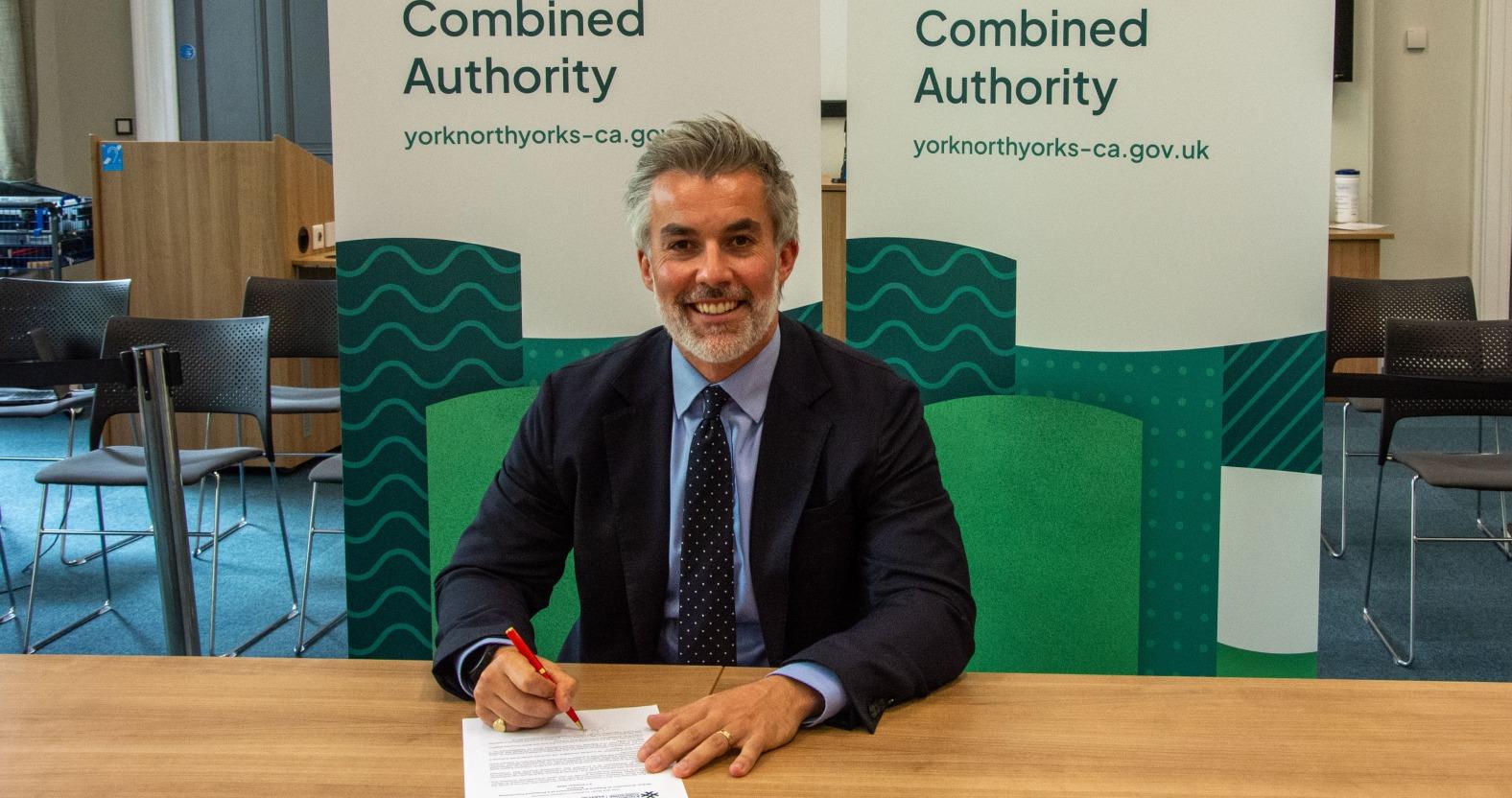
David Skaith, Mayor of York and North Yorkshire signs a Notice of Statutory Intent to Prepare an Assessment of Proposed Franchising Scheme.
Bus franchising is when a public transport authority awards exclusive contracts to a private operator to operate bus services in a specific area or on specific routes.
It means that the transport authority, such as a combined authority, takes control of timetables, fares and routes.
Greater Manchester launched a fully franchised bus network in January 2025 after Andy Burnham pledged to take buses back into public control, and a similar model in West Yorkshire is expected to be running in 2027.
So why does our Mayor want to do it, how much will it cost and is it really feasible? Our explainer answers all that and more.
What is affordable housing and how is North Yorkshire tackling the shortage?
For as long as the housing crisis has been making headlines, there has also been a debate over how affordable it is to get on the ladder.
North Yorkshire is no stranger to the desire to build what is known as “affordable housing”.
But, amid all this, there is one lingering question: what is affordable housing?
In this explainer, we answer that question and take a closer look at how North Yorkshire is tackling the issue.

The affordable housing on Massey Fold in Spofforth.
Why did your council tax bill rise by more than 4.99%?
In March, North Yorkshire residents were horrified to see their council tax bill go up by more than the maximum 4.99%.
Legally, North Yorkshire Council must hold a referendum if it wants to increase its council tax precept by more than this – and they didn’t.
But there was a reason that this was allowed to happen – and we explained what it was.
What is North Yorkshire’s 20-year housing plan and when will it come into force?
Since the government set mandatory housing targets at the end of 2024, the focus in North Yorkshire has been how to meet those demands — but also how to withstand any speculative schemes.
One way of doing so is to draw up a Local Plan, which would earmark housing schemes in the region for the next 20 years.
North Yorkshire Council started the process in earnest in 2024. But, the pace of progress appears somewhat glacial.
So what stage is the plan at and why is it important? We explain here.

0