08
Oct
Hunt begins for rare fungus in Nidderdale after exceptionally dry summer
Dear Reader. We have made this article free to read. We publish about 100 articles a week all exclusively focused on local news. Please support independent local journalism by subscribing here. It costs as little as 14p a day.
Farmers, landowners and the public are being asked to keep watch for a nationally rare fungus in Nidderdale.
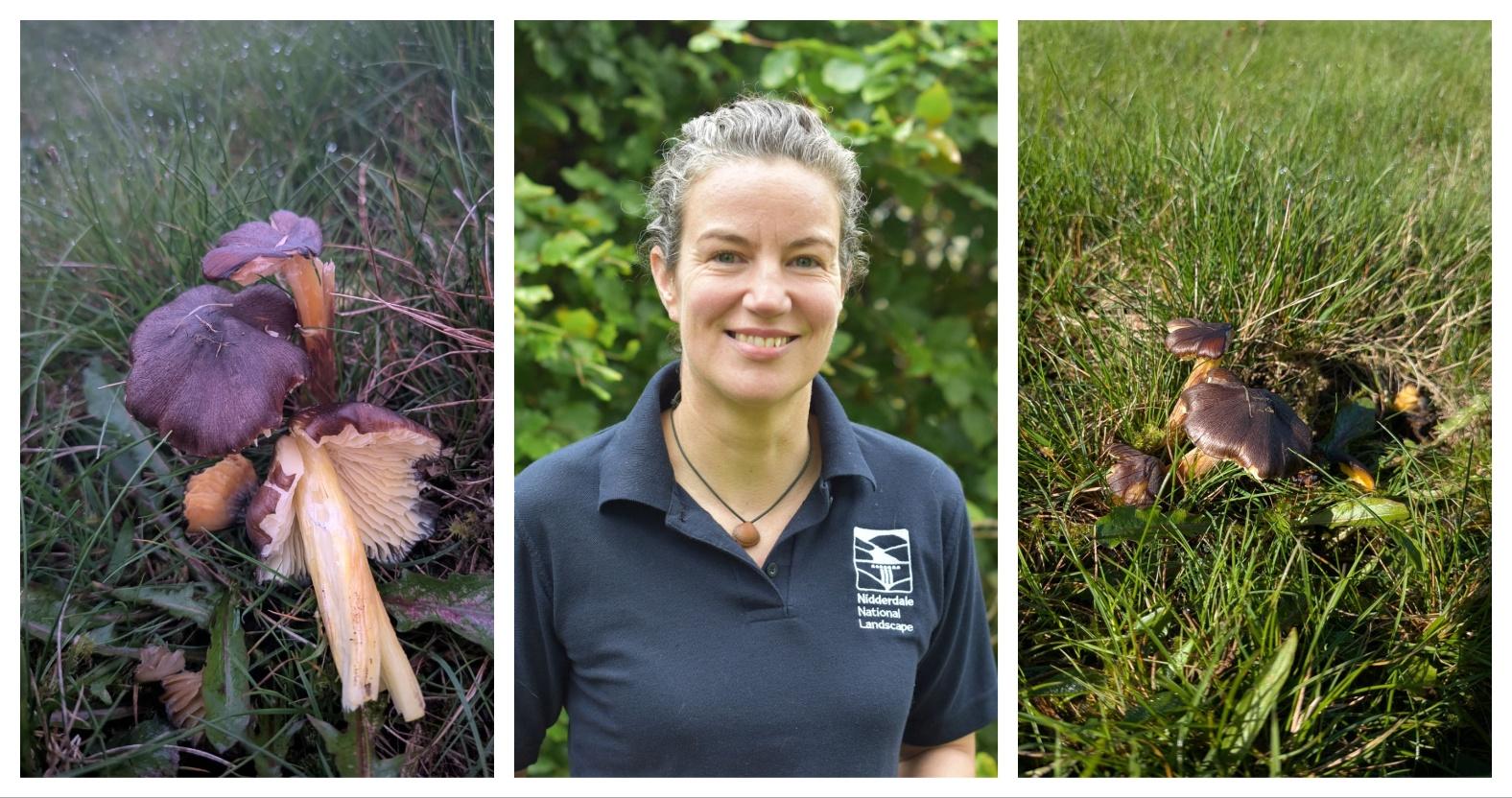
Nidderdale National Landscape is asking people to look out for the Date Waxcap, a distinctive fungus with a dark brown cap and contrasting bright yellow to orange gills and stem.
While the dry ground has delayed the appearance of many waxcaps this autumn, the Date Waxcap is different. There is evidence that it can appear more frequently following dry summers and reports of the species are already beginning to emerge elsewhere in the country.
The Date Waxcap is an early fruiting species, which means the next few weeks could provide an opportunity to find out whether it is also appearing in Nidderdale.
Dr Kelly Harmar, biodiversity officer at Nidderdale National Landscape, said:
It has been an unusual start to the waxcap season because the ground is still so dry. Most waxcaps need more moisture to fruit, but the Date Waxcap seems to relish warm summer temperatures. There is evidence that it can appear more frequently after a dry summer, and we are already seeing reports from elsewhere this year.
It is also one of the more distinctive waxcaps, with a brown cap and bright yellow gills and stem, so we’re asking farmers, land managers and anyone else who spends time outdoors to keep an eye out over the next couple of weeks. We’d love to know whether it is appearing in Nidderdale too.
Rare fungi
The search follows discoveries last autumn which confirmed the importance of some of Nidderdale’s long-established grasslands for rare fungi.
Specialist surveys at three sites recorded 45 species of grassland fungi, including 25 species of waxcaps.
Two of the sites were subsequently assessed as being of international importance for their grassland fungi and a third as nationally important. Fifteen of the species recorded are included on the IUCN Global Red List.
The Date Waxcap itself is listed as Vulnerable on the Global Fungal Red List and can go unrecorded for long periods because of its irregular fruiting.
Dr Harmar said:
Last year’s results showed us just how important some of Nidderdale’s grasslands are, but we also know there is a great deal we haven’t surveyed.
Grassland fungi are easily missed because most traditional vegetation surveys happen in spring and summer, before many of them appear. A field can look quite unremarkable for much of the year and then reveal an extraordinary diversity of fungi in autumn.
By surveying more sites and encouraging people to record what they find, we can start filling some of those gaps and build a much better picture of what is here.
How to get involved
People do not need to be fungi experts to help.
The charity Plantlife’s national Waxcap Watch is running again this autumn, inviting people to record waxcaps and other grassland fungi found in permanent pasture, hay meadows and upland grassland as well as churchyards, village greens, parks and other long-established grasslands.
The citizen science survey is designed so participants do not have to identify individual species. Instead, people record the different colours of waxcaps and other grassland fungi they find, helping to identify potentially important sites for further investigation.
Think you’ve found a Date Waxcap?
Look for a dark, date-brown cap with contrasting bright yellow to orange gills and stem.
Anyone who thinks they have found one should take clear photographs showing the cap, stem and underside, record the precise location and date, leave the fungus where it is and email the photographs and location details to Kelly.Harmar@northyorks.gov.uk.
Other waxcap sightings can be recorded through Plantlife’s Waxcap Watch here.

0