Thank you for your interest in this story
To continue reading this article, subscribe to the Stray Ferret for as little as £1 a week
Already a subscriber? Log in here.
20
Feb
‘I knew instantly it was important’: 80,000-year-old carnivore bones discovered in Nidderdale caves
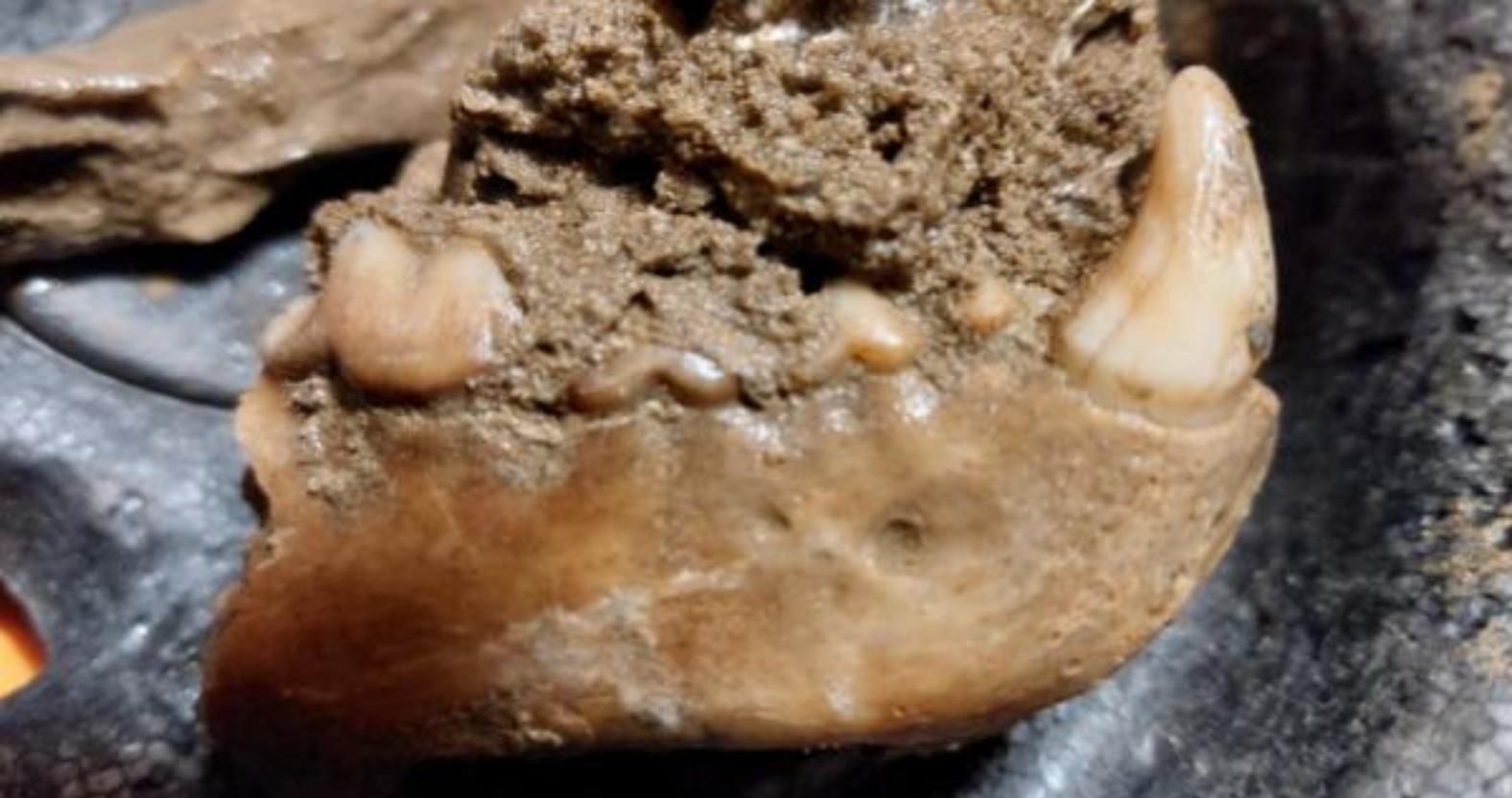
The jawbone of a prehistoric wolverine has been discovered at Stump Cross Caverns near Pateley Bridge.
The incredibly well preserved jawbone is believed to be more than 80,000 years old.
Several teeth, including its sharp front incisors, remain intact.
Cave digger Tom Thompson was part of the excavation team that made the discovery.
Talking to the Stray Ferret yesterday (February 19), Mr Thompson said:
We were lifting sediments out of the cave to clear a path for the show cave. All of the sediment is lifted up a fifty-foot shaft and is put onto a table to be sifted through.
I picked up a lump of mud which had something shiny in it. When I washed it off, I knew instantly that it was important.
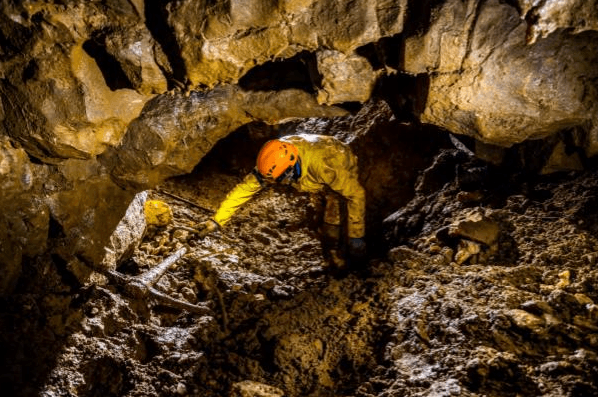
Picture: Stump Cross Caverns, Tom Thompson, James Smith, Dave Headley.
Having sent the fossil to Professor Phil Murphy at the University of Leeds for dating, it was discovered that the animal died between 80,000 and 100,000 years ago.
Wolverine bones had been discovered at Stump Cross before, but so too had the bones of reindeer, bison and wolves. Further advice was therefore needed to identify this ancient enigma.
The pair met with Professor Danielle Schreve from the University of Bristol, and together they determined it was, in fact, a wolverine jaw.
Mr Thompson said:
It’s 80,000 years old and its teeth are better than mine! It was certainly a moment.
Wolverines belong to the same family as badgers, otters, weasels and ferrets, but are much larger – and more aggressive – than their cousins.
They can kill prey many times larger than themselves.
They are primarily found in cold tundra climates, such as mountain ranges and forests in America, Russia, and the Nordic countries of Europe.
The discovery of these bones at Stump Cross, alongside wolves, bison and reindeer, suggests that North Yorkshire was a much colder place 80,000 years ago.
It is believed the wolverine was attracted to the cave by reindeer that had become trapped, but subsequently became trapped itself.
A full set of wolverine bones discovered in the cave in the 1980s showed evidence of cannibalism, further suggesting that these animals became trapped and had to resort to eating each other.
Mr Thompson said that the fossil will remain at Stump Cross Caverns, and will go on display alongside other discoveries made at the site.
Stump Cross Caverns, which is run by Lisa and Richard Bowerman, is excavating a new cave previously only seen by potholers.
It will eventually be opened to the public.

0