Thank you for your interest in this story
To continue reading this article, subscribe to the Stray Ferret for as little as £1 a week
Already a subscriber? Log in here.
03
Oct
‘Not sustainable’: Planned housing in Killinghall reaches 885 homes
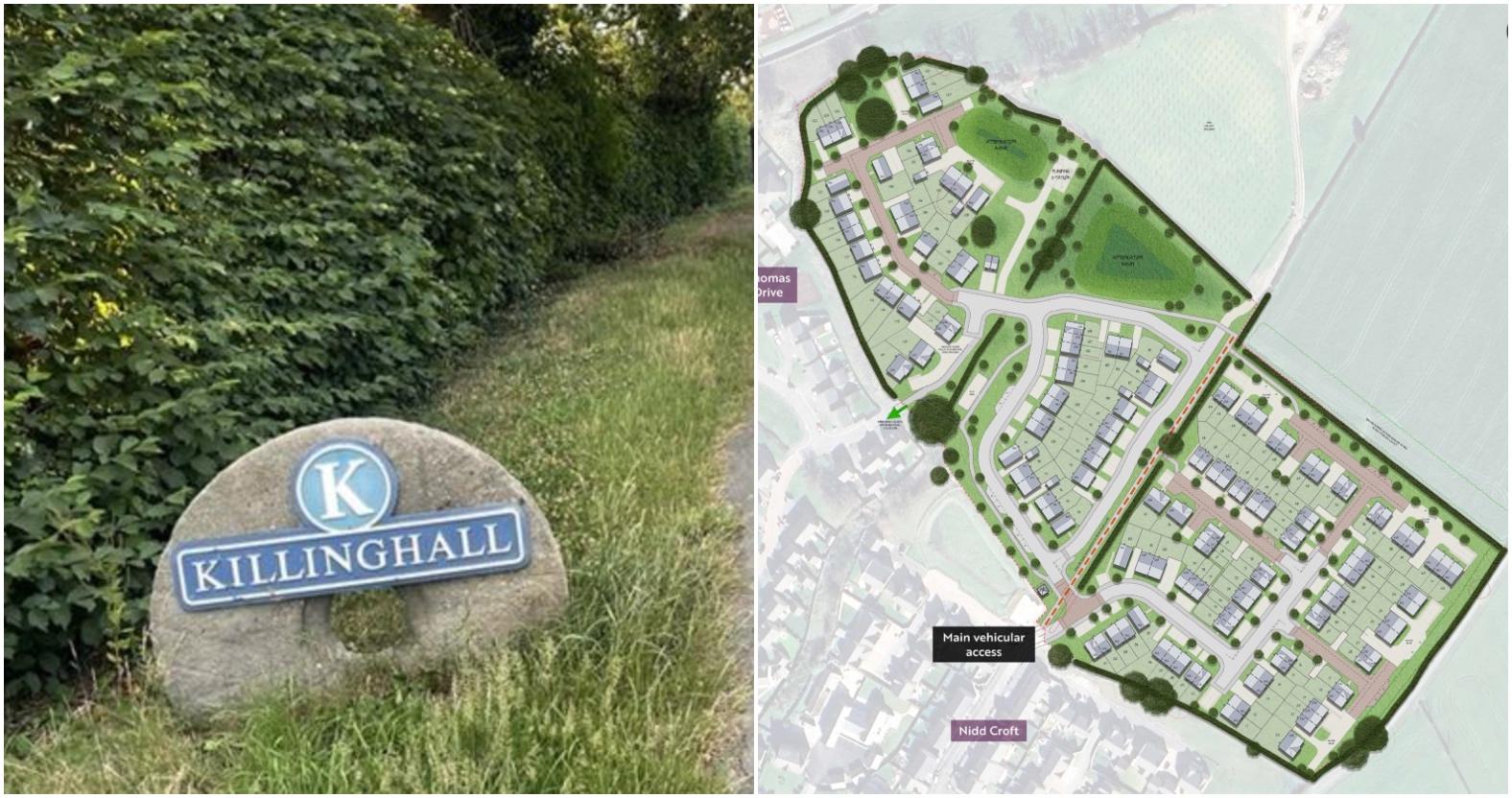
Over the last 12 months, six new housing developments have been proposed for Killinghall — a village of around 6,500 people.
On Tuesday, the Stray Ferret revealed that the latest plan was from Vistry Group and Yorkshire Housing, which unveiled plans for another 140 homes.
The latest proposal to expand Killinghall came in a week in which Prime Minister Andy Burnham announced his Your First Home scheme — a plan to get more first time buyers on the housing ladder.
Yet, as the government continues its drive to build more homes and stimulate demand through first-time buyer initiatives, residents in the village fear services will not cope.
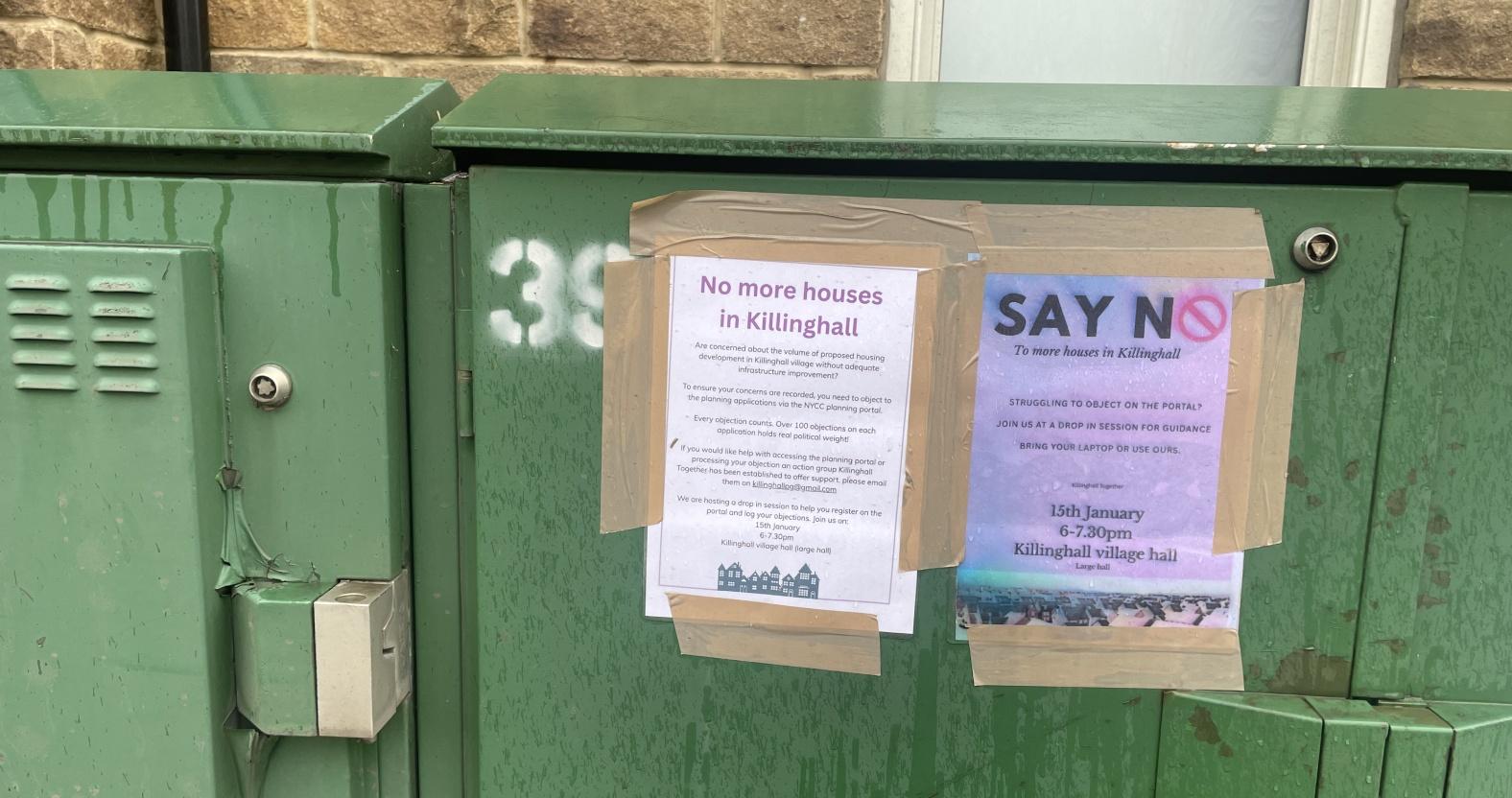
Notices have appeared around the village.
The Stray Ferret has analysed the last 12 months of housing proposals for Killinghall and found that the area is braced for 885 new homes from six proposals — should they all be approved.
Not all the schemes have been formally submitted — and none have been given the green light at this stage — but five of them are for 100 or more dwellings.
If all the schemes get the go-ahead, the population of Killinghall could rise by 2,000.
Among the proposed developments are:
- 75 homes by Miller Homes on land at Picking Croft Lane, just off Otley Road
- 130 homes by Hallam Land off Otley Road
- 100 homes by Gladman Developments off Otley Road
- 120 homes by Bellway off Ripon Road
- 140 homes by Vistry Group and Yorkshire Housing off Nidd Croft
- 320 homes by Taylor Wimpey off Pennypot Lane and Oaker Bank
The sheer scale of development has galvanised residents to band together to oppose the number of schemes.
‘We need infrastructure’
Killinghall Together was formed with a clear message that the village needs more infrastructure if it is going to cope with the amount of housing it is earmarked for.
James Houseman, who is part of the residents group, points to school capacity, the closure of the village GP surgery and pressure on the road network as just a few examples of how the area is already struggling to cope.
He said:
Once again, our message is very clear: we are not opposed to development, but new housing must be matched by the infrastructure needed to support it. Killinghall’s roads are already under significant pressure, and the Otley Road/Ripon Road junction is a particular concern, with residents witnessing multiple near misses and regular accidents. Our school is at capacity, and we understand that the sewage treatment works is also operating at capacity. At the same time, Killinghall has very limited local amenities, with just one shop and no GP surgery, pub or other significant services.
Building more homes without first addressing these fundamental infrastructure constraints is not sustainable. We want to see serious, meaningful investment in roads, education, wastewater and local services before further large-scale development takes place.
The figure of 885 homes are the schemes which developers have made public.

James Houseman of Killinghall Together, next to one of the fields targeted for development.
As North Yorkshire Council draws up its local plan — which will guide where developments, such as housing and employment, can take place in the county — the fear is that Killinghall, with its proximity to Harrogate, could be braced for much more.
Mr Houseman said the council needs to take a “holistic” and long-term look at how the village will be able to accommodate more new homes.
He said:
The cumulative impact of multiple developments on the village’s roads, schools, sewage infrastructure and services needs to be properly understood. This is not simply about whether an individual development can technically be accommodated; it is about the long-term sustainability of Killinghall and whether we are creating the infrastructure and community needed for the village to thrive.
The B6161 already effectively acts as Harrogate’s informal western bypass, yet it is inadequate for that role, and substantial development is already committed to the west of Harrogate. Any further growth along this corridor must address the existing traffic bottleneck through Killinghall rather than adding further pressure to it. With so much land along the B6161 corridor being put forward through the Local Plan, it is essential that the infrastructure implications are considered as a whole.
Mr Houseman added:
If the local plan becomes simply a process of allocating parcels of land for housing to meet housing targets, without properly considering the cumulative impact on roads, schools, wastewater, services and the creation of a sustainable community, then we believe it is fundamentally deficient. Planning should be about creating places where people can live and communities can thrive, not simply about counting houses.
While developers continue to draw up plans for Killinghall and beyond, residents in the village intend to use social media and other means to empowers local people to object to such schemes.

2