Thank you for your interest in this story
To continue reading this article, subscribe to the Stray Ferret for as little as £1 a week
Already a subscriber? Log in here.
04
Apr
Table Tennis vs Parkinson’s: Harrogate players are winning the battle!
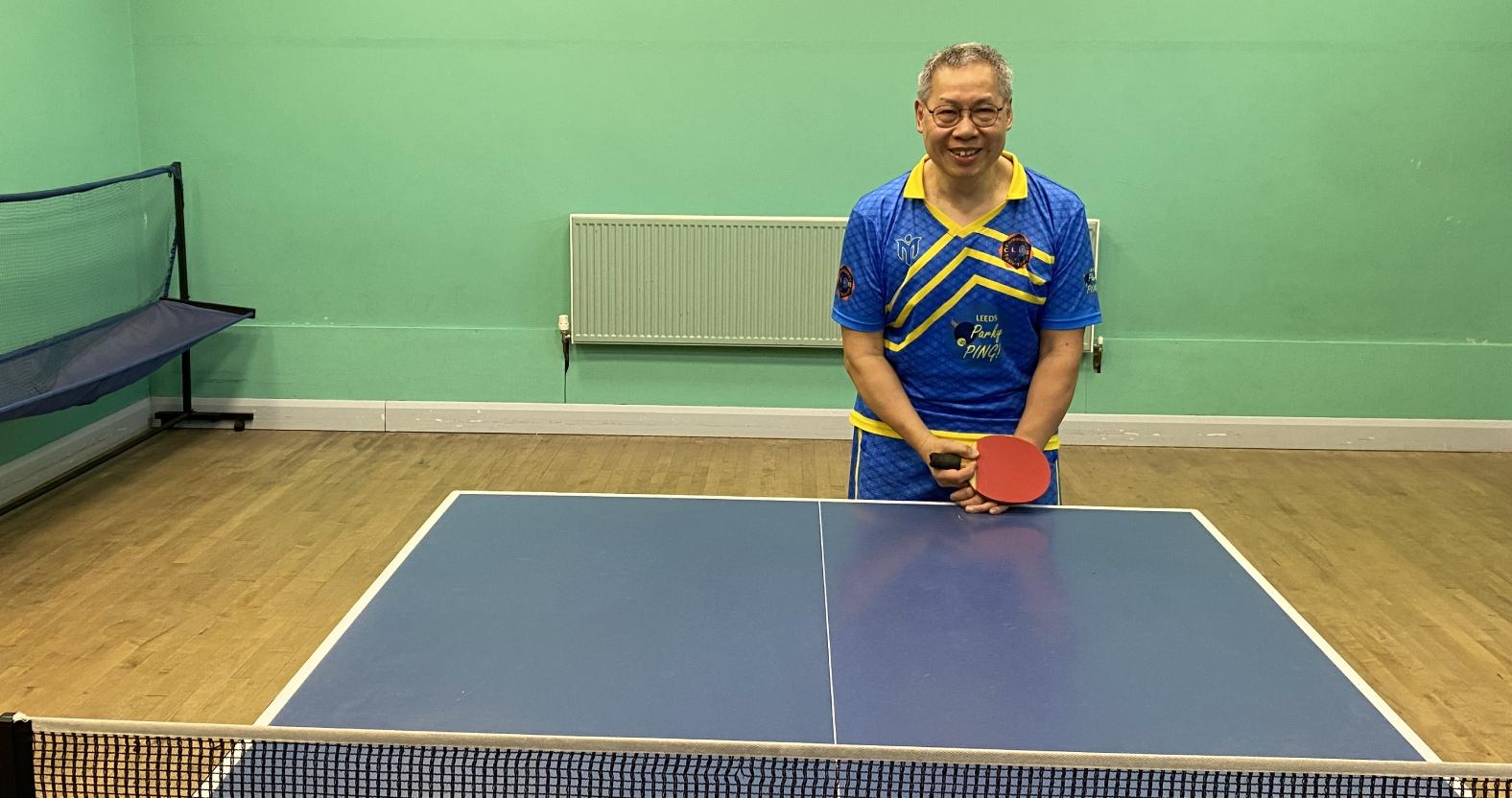
What if keeping your brain sharp well into your 70s and 80s was as simple as picking up a bat and playing table tennis a few times a week?
For some Harrogate players, table tennis isn’t just a hobby — it’s a lifeline, helping them push back against Parkinson’s.
George Chan was diagnosed in 2012. Instead of slowing down, he kept playing. By 2021, he won gold at the Parkinson’s World Table Tennis Championships.
Now, he runs “Bat and Chat” sessions in Harrogate, offering exercise, social connection, and confidence for others living with the condition.

Attendees at the Parkinson's Bat and Chat session having a cuppa.
The sessions are simple: play first, then tea, cake, and conversation. The social side matters just as much as the sport. George recalled:
One lady came and said, ‘I’m glad I came, I didn’t really want to get out of the door until my son persuaded me,’ and she really enjoyed it because you meet new faces all with the same common ailment.
His message is clear: table tennis first, Parkinson’s second.
George has been a huge inspiration to the Parkinson’s community at Harrogate Racquets Club, and it is the following message that drives that home. He said:
I’m living proof that you can still play. There is hope.
So how exactly does it help? Its benefits are physical, mental and social.
Physically, table tennis boosts coordination, balance, and fitness without the heavy strain of running or contact sports — perfect for older players or those managing injuries.
Mentally, it’s relentless: every rally demands focus, quick reactions, and sharp decision-making — a constant workout for the brain.
Socially, it’s perhaps most powerful: clubs create routine, conversation, and connection, helping combat isolation.
So, can table tennis fight off Parkinson’s?
Not completely. But it slows decline, sharpens the mind, and — perhaps most importantly — gives people a sense of purpose and belonging.
The wider impact
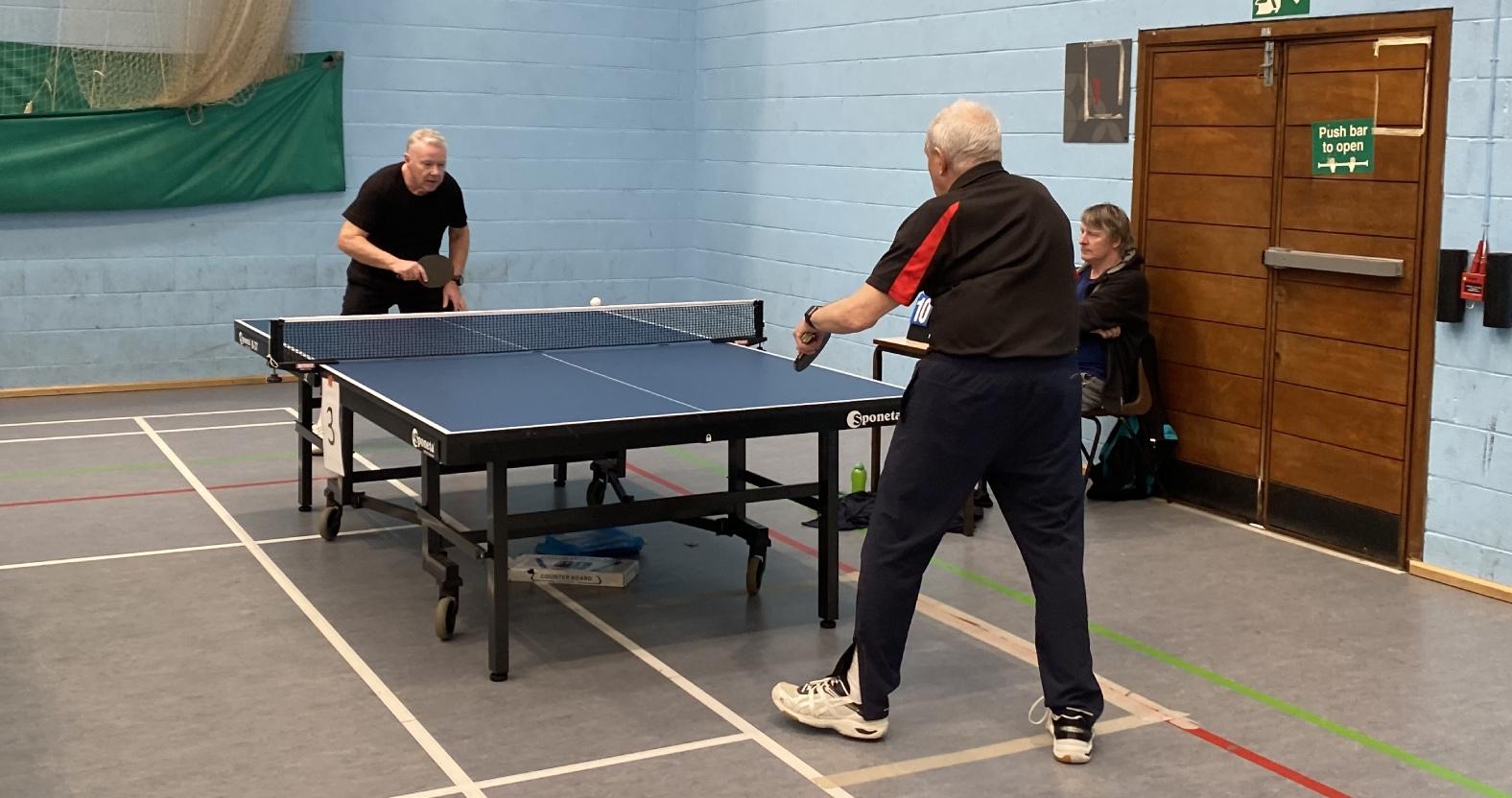
Retired players locked into a fierce rally.
Even beyond Parkinson’s, the same pillars of purpose, movement, and social connection make table tennis a winning formula for anyone in retirement.
Step inside Harrogate Racquets Club and one thing is immediately clear: this is not gentle exercise. The rallies are fast, the focus intense, and the competition serious.
But the real surprise isn’t the speed — it’s the age. With 63 members over 60 and the oldest still playing at 84, this is a game that outlives retirement.
Bob Moffat, 70, refused to let retirement dull his purpose. As he wound down his business, he built five table tennis clubs around Ripon, turning spare time into something meaningful and social. He said:
It’s filled a gap in my life, really. I was a bit worried about retiring, because I’d been a busy man. I didn’t just want to go and do the garden!
Trevor D’Arcy Evans, a retired club member, added with humour:
I try to play at least three times a week for practice and fitness, as I hate going to the gym. It’s improved my game a lot and my fitness a little.
I'm now playing a lot more table tennis. I would play every day but would probably have to get divorced first!
So, for many Harrogate players, whether they’re living with Parkinson’s or simply navigating retirement, table tennis offers a sense of purpose, belonging, and joy — bat in hand, age just a number, and brains firing on all cylinders.
0