Thank you for your interest in this story
To continue reading this article, subscribe to the Stray Ferret for as little as £1 a week
Already a subscriber? Log in here.
03
Sept
Two men jailed for Breaking Bad-style chem lab in Harrogate which caused huge explosion at old Jewson factory
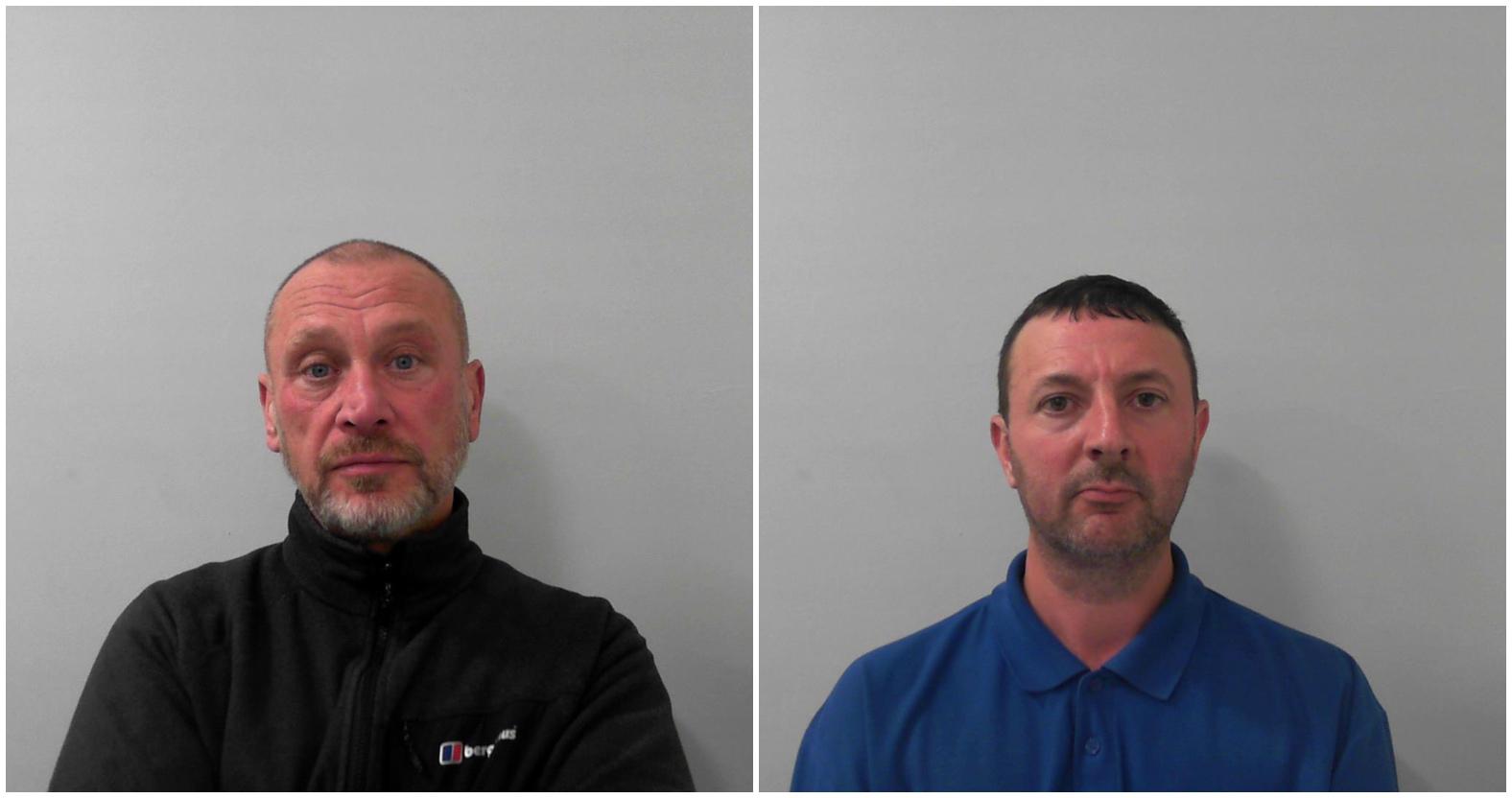
A qualified chemist and his hardened criminal sidekick have been jailed after their doomed plot to set up a Breaking Bad-style synthetic-drug factory ended with a huge explosion and a raging inferno at a former Jewson warehouse in Harrogate.
Daniel Sidebotham, 47, and Richard Gray, 58, were arrested following the huge blaze which erupted while they were “brewing” and mixing chemicals to produce Chloromethcathinone (CMC) - an illegal Class B “designer drug” and synthetic stimulant similar to Mephedrone - at the empty former industrial unit on Skipton Road in January 2024, York Crown Court heard.
It led to long delays during Friday night rush hour on Skipton Road.
Sidebotham, a chemistry graduate with two university degrees, was recruited by others for his expertise in chemicals and Gray, the older, hardened criminal with convictions for drug-dealing and possessing an imitation firearm, was called upon by his drug overlords for his nous in the narcotics trade and because he owed them a drug debt.
Prosecutor Daniel Cordey said that Sidebotham, described as “the chemist”, was the brains behind the chemical production and Gray, his sidekick, was the “sophisticated drug criminal”.
It had all the hallmarks of the major US hit television series Breaking Bad in which the main protagonist, the fictional Walter White, was a middle-aged chemistry teacher who teamed up with a former student to create a chemical lab under an industrial unit to produce illegal drugs.
At the real-life laboratory in Harrogate, the “highly sophisticated commercial enterprise” came to a juddering halt when one of the plotters accidentally knocked over a camp stove which ignited a glass container, causing the chemicals it was “brewing” to ignite.
Fled after fire
They had travelled from their homes in the north-west several days earlier to rig up the chemical factory to produce the crystalline white powder ready for sale on the streets.
Sidebotham’s expertise in chemistry was crucial to the planning of the laboratory, which was equipped with a mixing unit, a Bunsen burner, glass beakers and bottles, scales, an electronic control unit and a camping stove used to heat a large glass as part of the manufacturing process.
Officers also found a tent inside the chemical factory which the men had used to set up camp, as well as a fully stocked fridge and plastic containers full of deionised water.
Mr Cordey said the Chloromethcathinone was “in the process of being manufactured by these two men at a former industrial unit at the former Jewsons yard” on Skipton Road.
He said the drug factory was only discovered when the fire broke out, upon which the two men fled the scene.
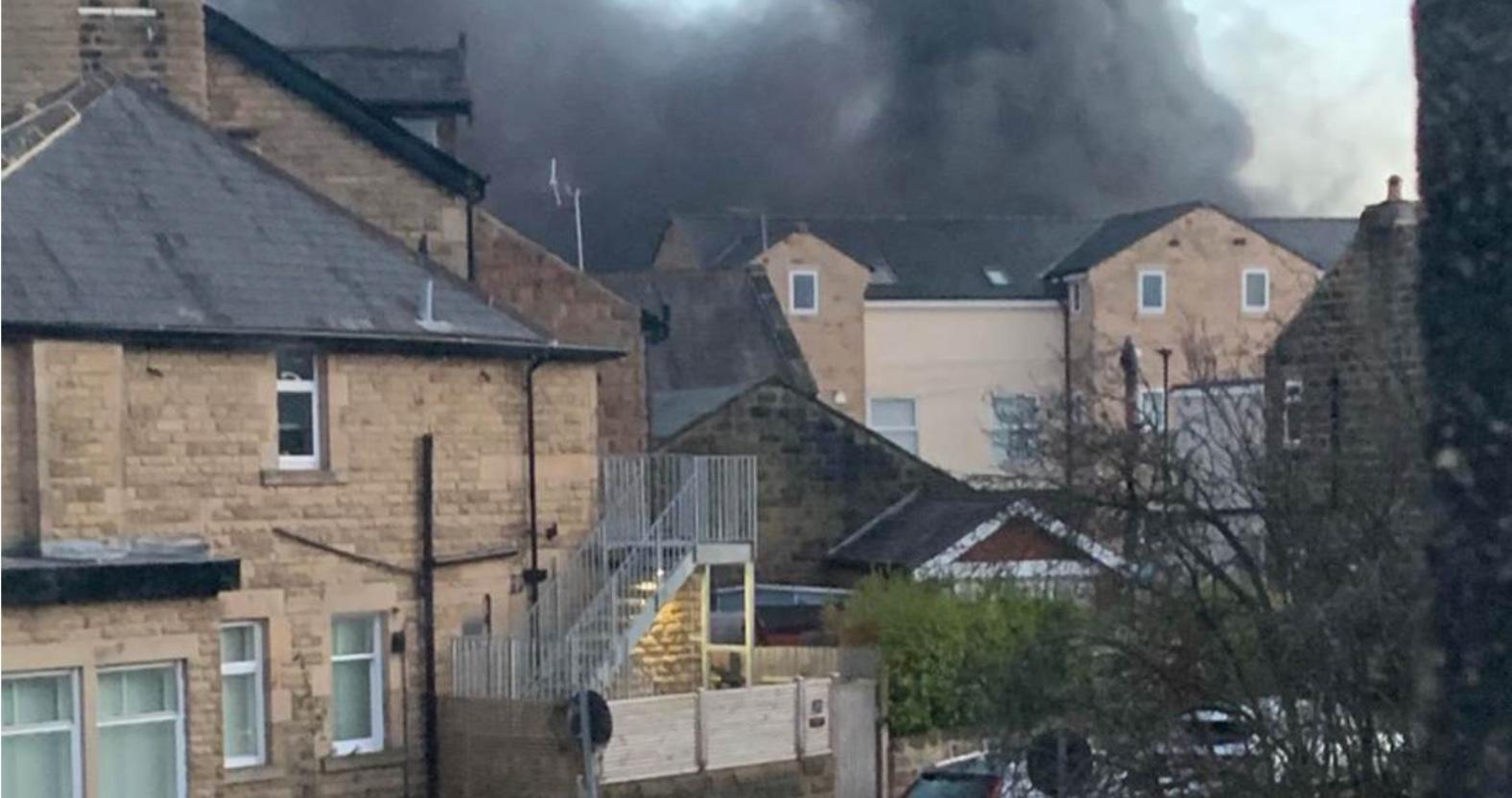
The fire at the former Jewson warehouse on Skipton Road.
Billowing smoke
Four fire engines were needed to tackle the blaze which was reported by a member of the public just before 4pm on January 26, 2024. The fire was brought under control by firefighters wearing breathing apparatus.
CCTV footage showed smoke belching out of the old warehouse and “billowing across the road”.
A fire investigation revealed that the seat of the blaze was the area around a camping stove just behind the roller shutters at the front of the factory.
“The fire spread quickly due to the combustibility of the chemicals and caused thick, black smoke which filled the unit, causing extensive smoke damage,” added Mr Cordey.
Sidebotham and Gray “left in a hurry”, abandoning their equipment and mobile phones inside the old warehouse.
Mr Cordey said the former industrial unit had been sub-let several weeks earlier to a man who had never been traced.
“The chemicals and equipment found show a commercial set-up in the process of manufacturing that illegal designer drug,” he added.
“The laboratory had been specifically rented in order to fit it out and allow the manufacture of commercial quantities of Chloromethcathinone. It appears that the explosion happened in the early days of the manufacturing process.”
Drug research
Before setting up the lab, Sidebotham and Gray had studiously researched what equipment was required and bought the materials for the operation.
Officers found their phones on a bench in the “work area”. On Sidebotham’s phone, they found messages sent to him in October 2023 by two other men, giving him instructions on the manufacture of the drug and the equipment and materials he needed for the lab.
On October 26, 2023, Sidebotham sent one of these men a request for £2,000 to purchase the materials and asked about the welding for the equipment which was bought on e-bay and included metalwork and glassware. It was duly delivered to his house in Disley, near Stockport, Cheshire.
Around the same time, Gray was carrying out research on items needed for the manufacture of “illicit drugs” which included heating oil and sodium hydroxide.
On January 3, 2024, just weeks before the explosion, Sidebotham sent Gray a message saying: “Hi pal, do you want to get started? We’ve got a lot to get through so let’s get an early start.”
They then agreed to meet in a “boozer” in an affluent south Manchester village to finalise their carefully laid plans. They then travelled to Harrogate to move into their temporary new home in the old Jewsons warehouse and set up their lab.
Both men were arrested following the blaze and charged with attempting to produce a Class B drug. They both admitted the offence.

Harrogate Fire Station on Skipton Road
Arson allegation
They were initially also charged with arson but denied this allegation. The prosecution agreed to withdraw this allegation because the fire had been started accidentally.
The prosecution accepted Sidebotham’s basis of plea, namely that he had “significant” financial problems at the time and was “offered this opportunity” to make some quick money, and that he had been “directed” by others higher up the drug chain because he had no prior experience of illicit substances.
Gray, of Holcroft Drive, Wigan, pleaded guilty on the basis that he too was directed by others to whom he owed a drug debt.
The two unlikely co-conspirators appeared for sentence today (September 3) after being remanded in custody.
Mr Cordey said that both men could have expected “significant financial rewards” if their illicit plot had come to fruition, but the factory went up in flames after only the “first batch” of the designer drug had been produced and had not yet hit the streets.
Previous convictions
While Gray had a plethora of previous convictions, former chemistry student Sidebotham had none.
Gray’s 22 previous offences included seven drug offences including supplying cocaine for which he received a three-year prison sentence in 2006.
In 2008, he was jailed for four years and 10 months for possessing an imitation firearm and producing cannabis.
In September 2017, he was jailed for 12 years and four months for supplying cocaine and producing and supplying cannabis. He served part of that sentence before being released on prison licence.
Following his arrest for the Harrogate drug plot, he had been recalled to prison to serve the remainder of that sentence.
Defence barrister Susannah Proctor, for Sidebotham, said that he was from a good family and had two degrees including one in chemistry.
She said that Sidebotham, who lived with his parents at the time, had been “recruited for his expertise” in chemistry but had been “provided with recipes for the production” by the real criminal masterminds behind the plot.
His plan was to leave the factory after making money form the “first batch” after lending his chemical expertise.
She said that since his arrest, he had been trying to set up his own legitimate business in chemical polishing.
Anna Chestnutt, for Gray, said the father-of-three was on prison licence at the time of the drug plot at a time when he was working for Timpsons, the shoe and watch repairers, his “first meaningful job”.
‘A highly sophisticated operation’
Judge Sean Morris said told the defendants:
What caused the explosion was that you two had set up a sophisticated drug factory for the production of Chloromethcathinone.
You two were both significant players in this enterprise and it would have gone on to put that drug on the streets.
The only reason that it didn’t get out on the streets is that one of you kicked over a stove, igniting some of the chemicals that were brewing on it, igniting the factory, causing an explosion and causing four fire engines to have to attend and firefighters having to put their lives on the line.
This was a highly sophisticated operation capable of producing commercial quantities of a Class B drug.
You, Sidebotham, were the chemist. You’ve got a university degree in chemistry and you are a clever man, which is an aggravating factor because you should have known better. Without the chemist, there is no chemical being produced.
The judge slammed Gray for his “shocking” criminal record and told him: “You are a proficient and sophisticated drug criminal.”
Sidebotham, of Waterside Road, Disley, was jailed for three years and seven months.
Gray was jailed for three years and one month because of the amount of time he had spent on remand after being recalled to prison.

0