Thank you for your interest in this story
To continue reading this article, subscribe to the Stray Ferret for as little as £1 a week
Already a subscriber? Log in here.
18
Oct
'We should use all options to generate our own cheap energy'

Philip Allott is a businessman, author and politician who attended King James's School in Knaresborough and still lives in the town. He was leader of the Conservatives on Harrogate Borough Council, is a former Mayor of Knaresborough, and also served as the Police, Fire and Crime Commissioner for North Yorkshire. He is now the chair of a national charity Blue Light Whistle Blowers.
The Harrogate district is fortunate to be situated in rural surroundings, with a plentiful supply of natural resources that are capable of producing cheap energy for homes and businesses – if only successive governments can get their act together to harness it.
I am not talking about solar farms, which resolve one issue at the expense of fresh locally grown food, but wind, roof solar panels and yes, even river power.
I was therefore interested to hear the Prime Minister Andy Burnham say last month that a new publicly owned company called Great British Grid will challenge the National Grid plc to speed up connections to the grid by driving up competition for connection projects.

Prime Minister Andy Burnham.
Burnham is putting the proposals at the heart of a new goal to bring UK energy costs in line with other nations in Europe within 10 years, which is to be welcomed. But Great British Grid has only been given £4 billion of funding, which is a drop in the ocean – but it is at least a start.
The transition of electricity to renewables requires the UK’s ageing transmission grid to undergo extensive rewiring over the next few years, at a cost of around £70 billion, according to the energy regulator, Ofgem.
Poor grid connectivity is very costly
Anyone entering Harrogate from Skipton can’t miss the wind turbine blades, but readers may be shocked to know that, due to the antiquated nature of the National Grid which conveys the electricity produced, UK wind farm operators are often paid on windy days not to produce electricity. This is because the grid is incapable of conveying the volume of electricity produced from renewables – despite the power demands from other parts of England – which then requires the firing-up of local gas-powered generators to meet demand.
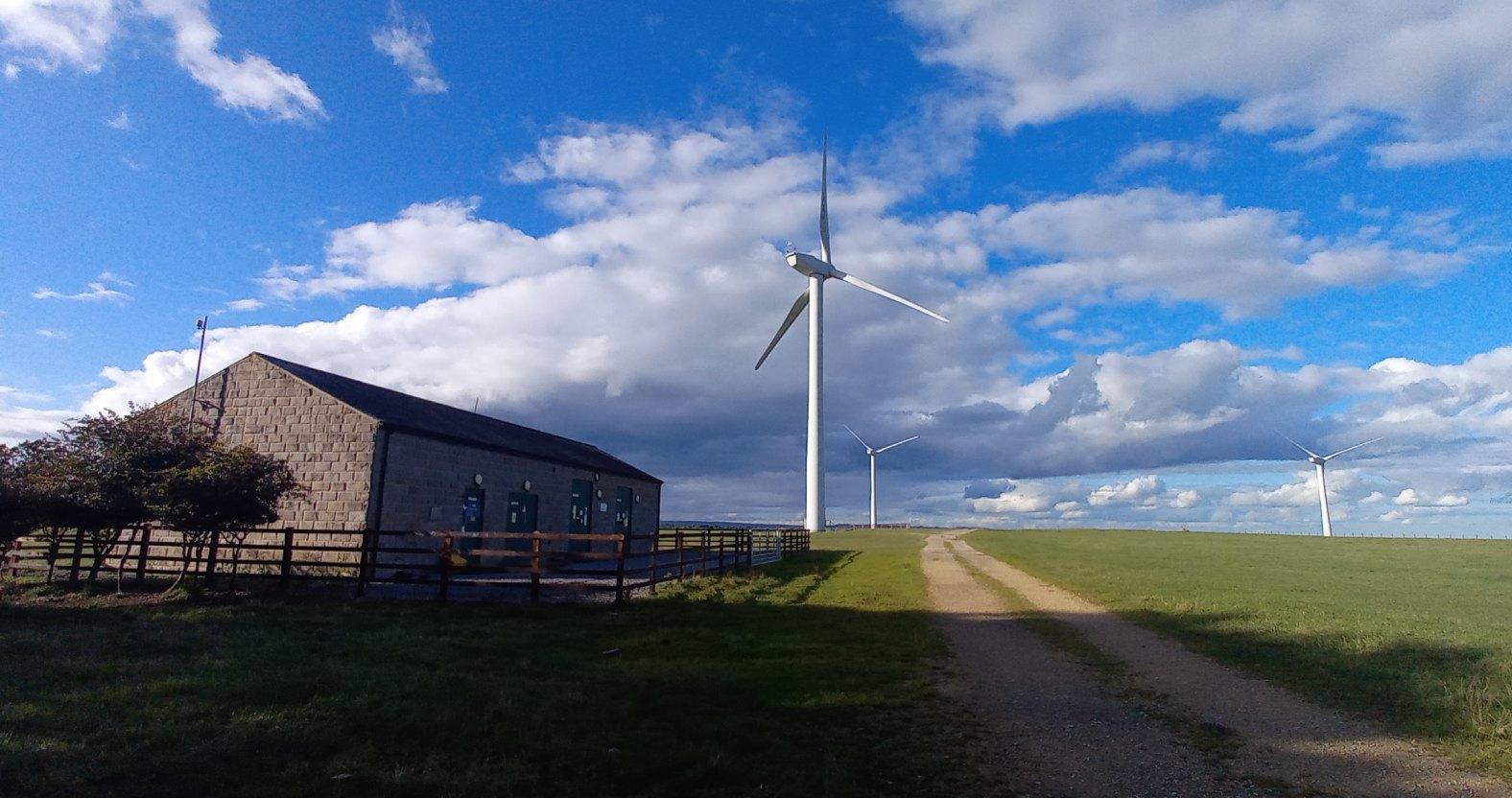
Wind turbines at Knabs Ridge, just west of Harrogate.
Meanwhile, the bill for paying for electricity produced by renewables which are not useable is mounting. Last year, the UK paid £1.5 billion to wind farms to switch off and gas plants to switch on, according to Tim Harper, a deep tech adviser. He says without urgent reform, that figure could reach £8 billion a year by 2030.
Could Harrogate district produce more electricity?
The bureaucracy and time involved in getting small quantities of power into the national grid has discouraged river production, which is something the Prime Minister must also address.
Back in 1500s, there were a number of water-powered mills located at St Robert’s Friary, Spittle Croft, Nidd, Bishop Thornton, Boroughbridge, Bewerley and Westhouse. Some of these sites could be used by their current owners to produce electricity using an Archimedes screw-style waterwheel for their own use, with the surplus given to neighbours or put into national grid. However, costs, bureaucracy and access to the national grid have stopped everyone but the foolhardy from doing so.
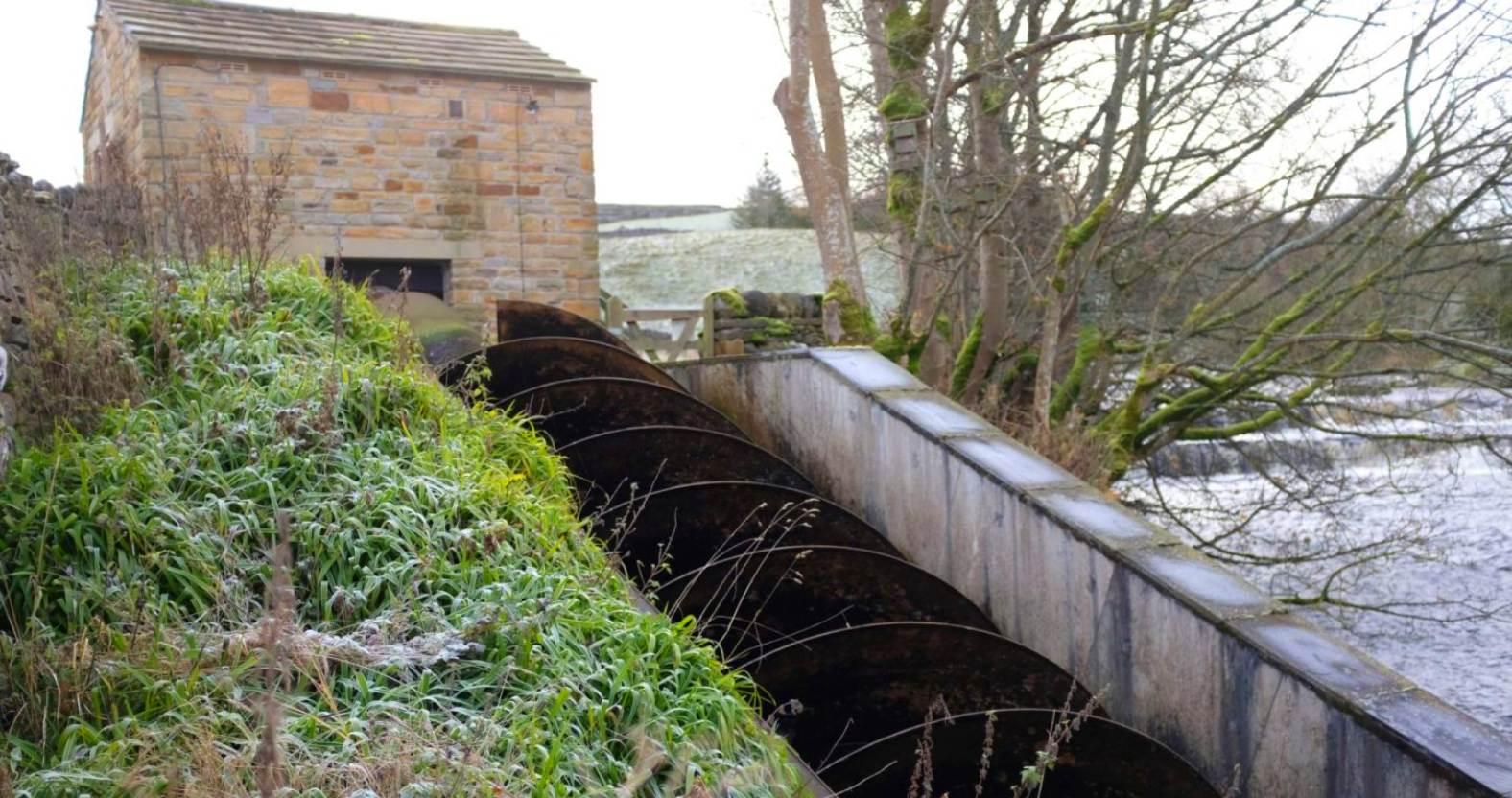
The Bainbridge hydroelectric screw turbine in Wensleydale routinely exports power to the grid. Photo: Yorkshire Dales National Park.
Conversely, the number of solar panels across Harrogate on houses and businesses continues to multiply – as an example the Yorkshire Showground now has 3,476 solar panels.
Encouraging businesses and householders to also store power using large powerbank batteries could be a gamechanger. Those with batteries can access special tariffs with ultracheap energy during restricted hours and store this overnight when there is little demand and wholesale costs are lower, to use during the day.
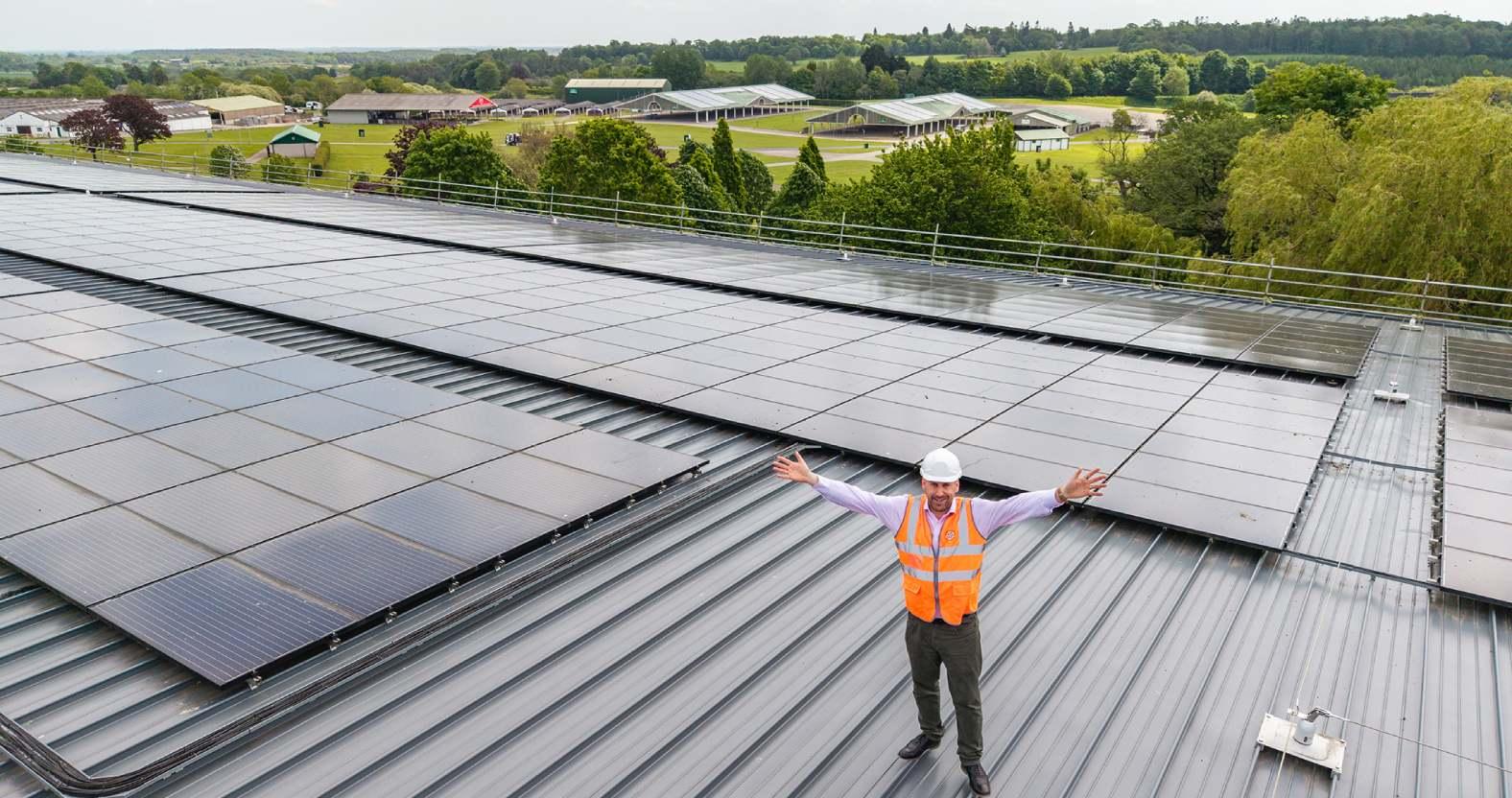
Yorkshire Agricultural Society commercial director Graham Thompson showing off the solar panels on the roof of the Great Yorkshire Events Centre. Photo: YAS.
Storage is key to the long-term solution
Getting the National Grid upgraded – which is what everyone in the Harrogate district is funding through their 'enhanced' electricity bills – is only part of the issue, because on sunny and windy days especially over a weekend, the UK has very limited storage capacity. To solve this issue the government is deploying a vast number of grid-scale battery facilities, which is essential to support this effort to decarbonise the national grid.
Currently there are 11 such facilities in Yorkshire, with a storage capacity of 346 MW. However, the pressure is on, because under the UK Government’s Clean Power 2030 action plan, electricity generation from offshore wind farms will triple, while generation from onshore wind farms will double.
To encourage a much faster uptake by householders to install solar panels with battery storage, the government should allow residents to offset the cost of battery storage against their annual tax bill over two or three years, as it will reduce the need for supersized storage facilities.
North Sea extraction fund decarbonisation
It is an open secret that the government is broke and is borrowing billions of pounds each month, to fund a multitude of different spending programmes, but which doesn’t yet include the full uplift in military spending needed to meet the 3% of GDP on defence by 2030.
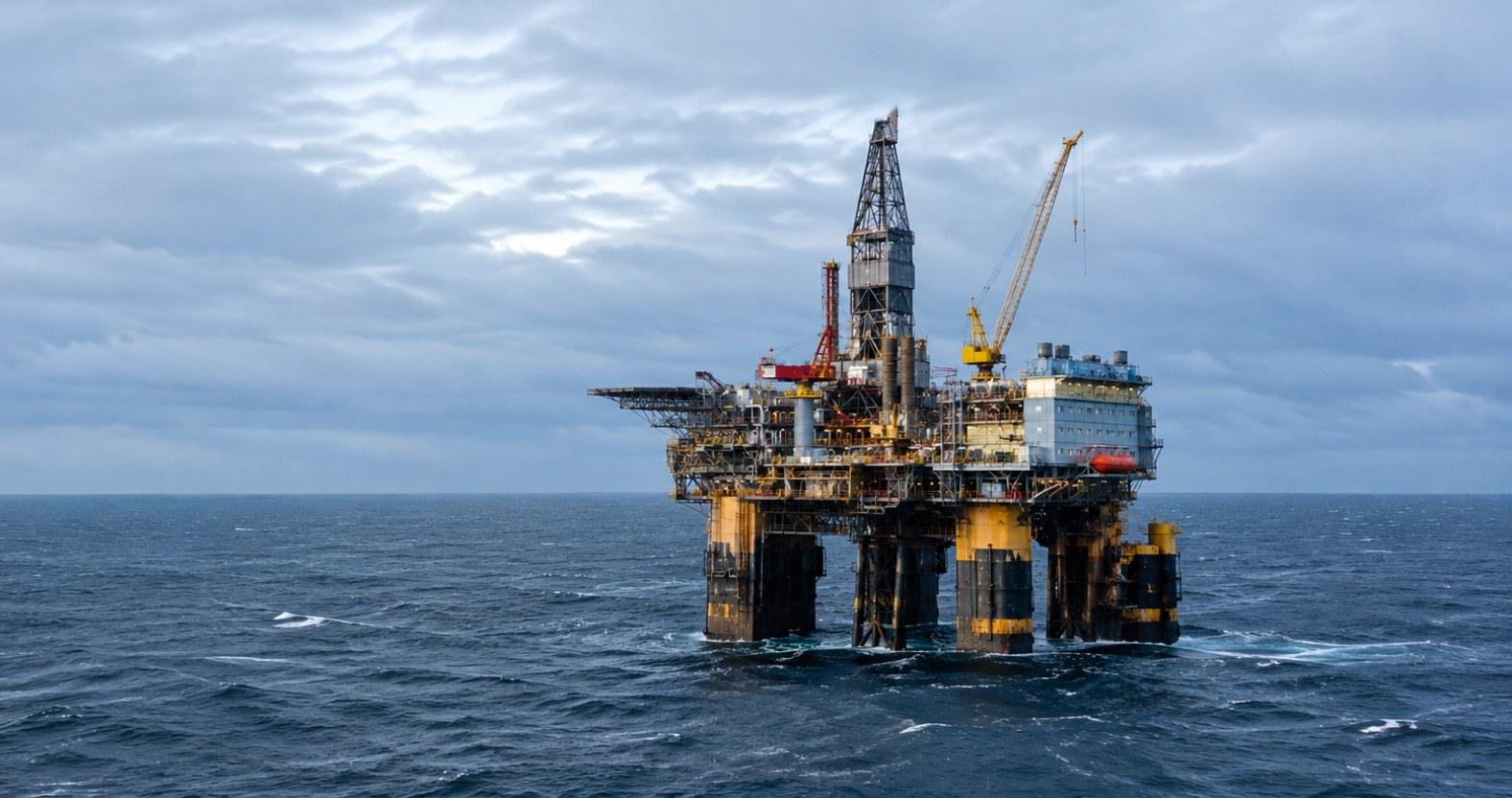
A North Sea oil rig.
So why is the government so resistant in the interim to exploiting the North Sea? It should be encouraging further gas and oil extraction to fund the vast investment needed for decarbonising the grid and to offset the massive annual energy pricing hikes that no government seems capable of slowing.
Yes, this means using local gas instead of importing it from the likes of the US, which anyway makes massive sense, given the volatility of the current US administration and the need for ongoing infrastructure funding.
But here’s the thing: if we use the tax generated from extra oil and gas extractions on upgrading the grid to accommodate decarbonisation, we can remove the pain on hard-pressed residents in the short term, and still achieve our future green objectives.
Come on, Prime Minister, play all the energy cards you hold and we could all end up winners.

0