Thank you for your interest in this story
To continue reading this article, subscribe to the Stray Ferret for as little as £1 a week
Already a subscriber? Log in here.
26
Jul
Why Almscliffe Crag invites tales of druids, fairies and giants
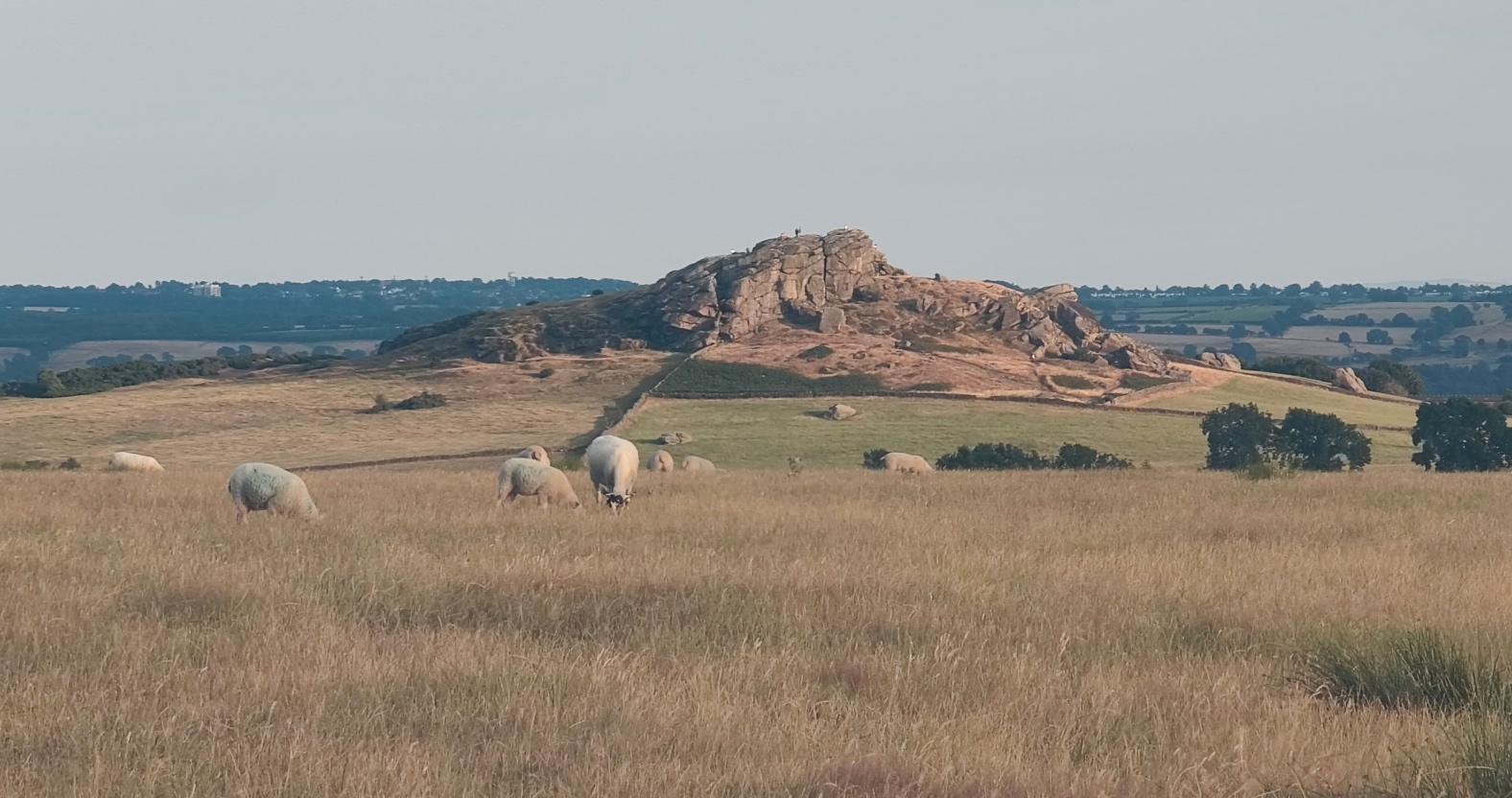
It’s another balmy evening and cars and vans park tightly together on the road that snakes round Almscliffe Crag. Climbers attached to ropes scale the steepest rocks and children race each other up the hill, excited to reach the summit. If you’re lucky, there is sometimes an ice cream van here, but not tonight.
The Crag, as it’s simply known locally, looks out onto our corner of Yorkshire like an all-seeing eye. The view up there is always immense. You can see the edge of Harrogate and the new housing around Whinney Lane, the Harlow Hill observatory, aeroplanes landing at Yeadon as well as windfarms and power stations in the distance.
A new addition poking over the horizon is the Cirrus Point, Leeds’s newest tallest building. It is but a mere blip in the 300 million-year history of Almscliffe Crag, which will yet see more civilisations, religions and purpose-built student skyscrapers rise and fall.
I was brought up nearby and can’t remember a time when I haven’t enjoyed looking out at it. When I’ve lived abroad, I’ve missed its presence. It’s always been there, indomitable and immovable. On a foggy day, the Crag is often the first thing to forcefully reemerge from the mist.
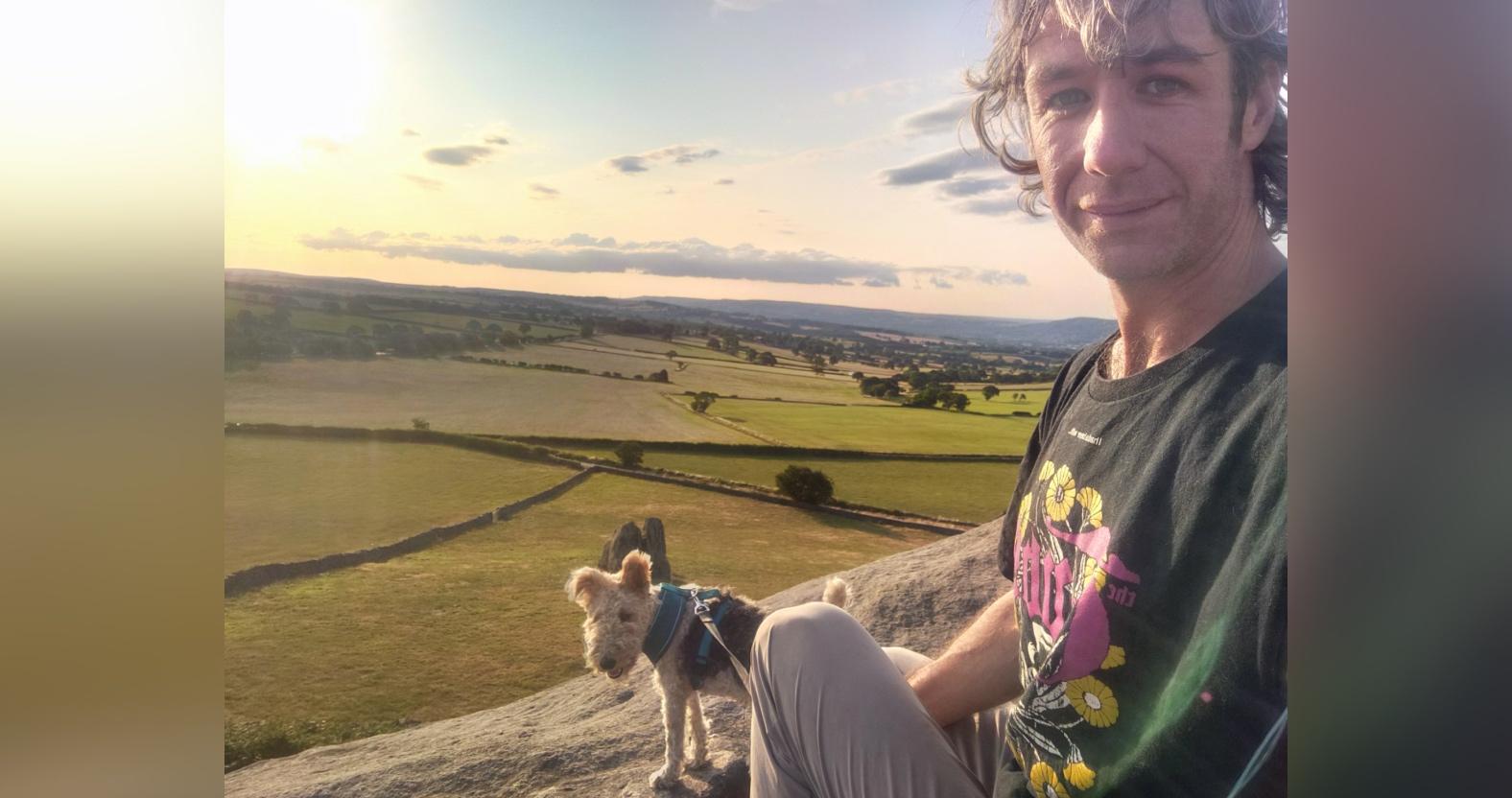
Tom and his dog Aki sitting on the Crag. Picture: Thomas Barrett.
About 100 metres from my family's farm near North Rigton was an Iron Age camp. Farmers have long ploughed over any trace of the people who lived here more than two thousand years ago. I like to think that the Crag would have been important to these ancient people, too. It must have been. I feel a strange sort of connection with them. Maybe we weren’t so different after all if we could both gaze at the Crag and feel as we do.
Giants
The Crag is built into the fabric of the area. St John’s Church in North Rigton, a relatively recent addition by church standards, was built in 1911 using stone quarried from there. Families from Huby, Stainburn and North Rigton take walks up there on Christmas Day and pagan pilgrims come each year to mark the solstices.
People have left their mark on the Crag too. There is graffiti carved into the rock with hammers and chisels all over, like crude tattoos on a sailor’s arm.
Almscliffe has invited stories and folklore throughout human history. One is that Rombald the giant became involved in a rock fight with the devil, and the Crag was formed after some stray missiles were thrown. An alternative story says it was actually the giant’s formidable wife who threw the rocks at him during a squabble. Rombald’s footprints are also supposed to have caused the natural basins in the rocks when he walked across them from his home above Ilkley.
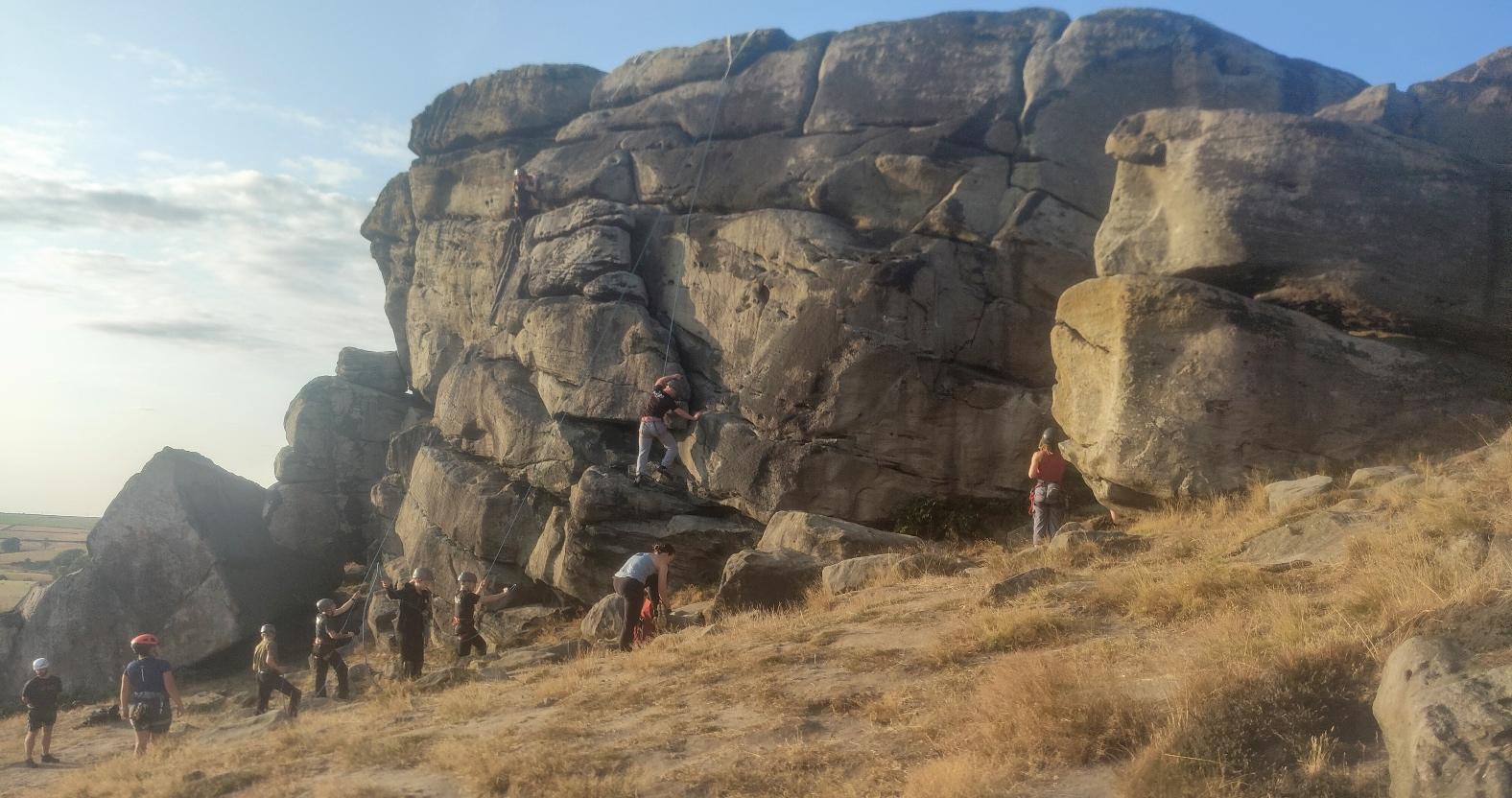
Climbers on the Crag. Picture: Thomas Barrett.
Another well-told tale about the Crag was that in 1776, the daughter of a North Rigton farmer threw herself off the highest peak after a heartbreak. A strong gale inflated her dress like a parachute and she landed safely at the bottom before living to a ripe old age. This section is now known as Lover’s Leap.
‘Shrieks of murdered children’
Henri Trail Simpson, a 19th-century fire-and-brimstone rector of Adel church in Leeds, claimed that Yorkshire had been a hotbed of “horrible worship” and Druidic rites during prehistoric times, with Almscliffe Crag its epicentre. He reckoned channels in the rocks had been awash with the blood of humans and animals sacrificed to the sun.
In 1850, a religious periodical aimed at children wrote about the Crag and said it was once the site of an old Druid altar. Though it mercifully added, “the shrieks of murdered children and the uproar of savage men are no longer heard amongst its rocks.”
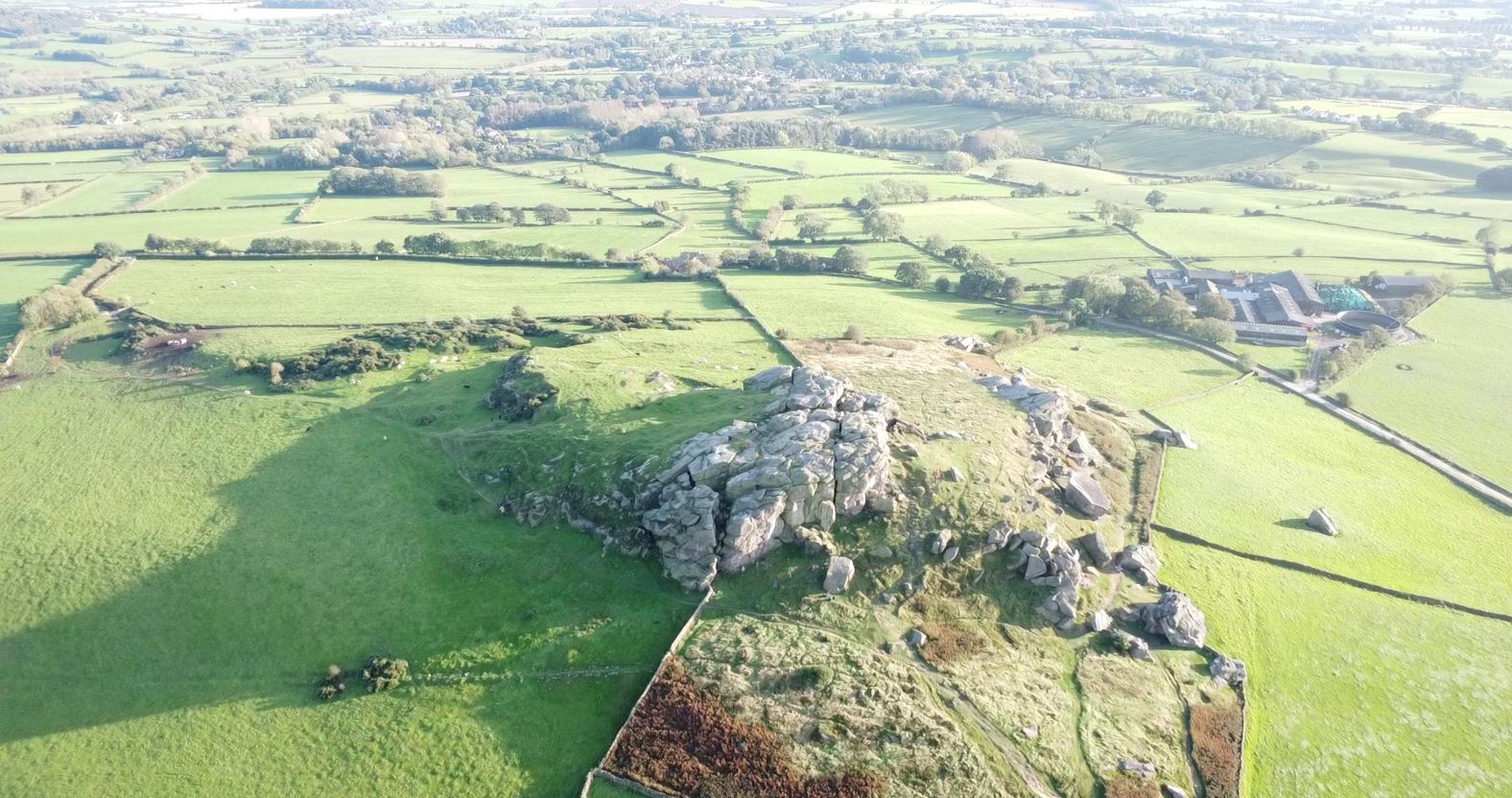
A drone shot of the Crag. Picture: Thomas Barrett.
I spoke to Dr Phil Legard, a folklore expert and senior lecturer at Leeds Beckett University. In 2010, Dr Legard co-wrote a fascinating e-book about Almscliffe Crag for Harrogate International Festivals called Almias, which is one of its old names. The book used music to explore the folklore and rumours surrounding the Crag.
Dr Legard was sceptical about the tales of blood sacrifice, but he said it’s always been a place that has invited speculation.
He said:
A lot of the claims about Almscliffe Crag being a place of sacrifice are quite fanciful, but people have been talking about it for a long time and these ideas have persisted. It’s a place that is attractive to pagans and druids. It’s cool how we build up auras around the place. I love it for that respect, it’s a thing in the landscape that invites stories and interpretations.
In his research, Dr Legard has found candles and other paraphernalia up there associated with modern pagan rituals, though activity has not always been benign. He says it has also been used by neo-nazi groups too, suggesting the sublime power of the Crag has been used to summon both good and evil.
Fairies
Fairies have long been associated with the folklore of the Crag. This is not your cute Disneyfied Tinkerbell but sinister sprites that lived beneath the rocks.
The fairies of the Crag had a reputation for stealing children in the early 19th century. According to the legend, a local farmer called Bradley had three children who were tall, confident and married well, but three others, who he suspected were changelings, were dwarfish, crooked and ill-tempered. Nobody wanted to marry them.
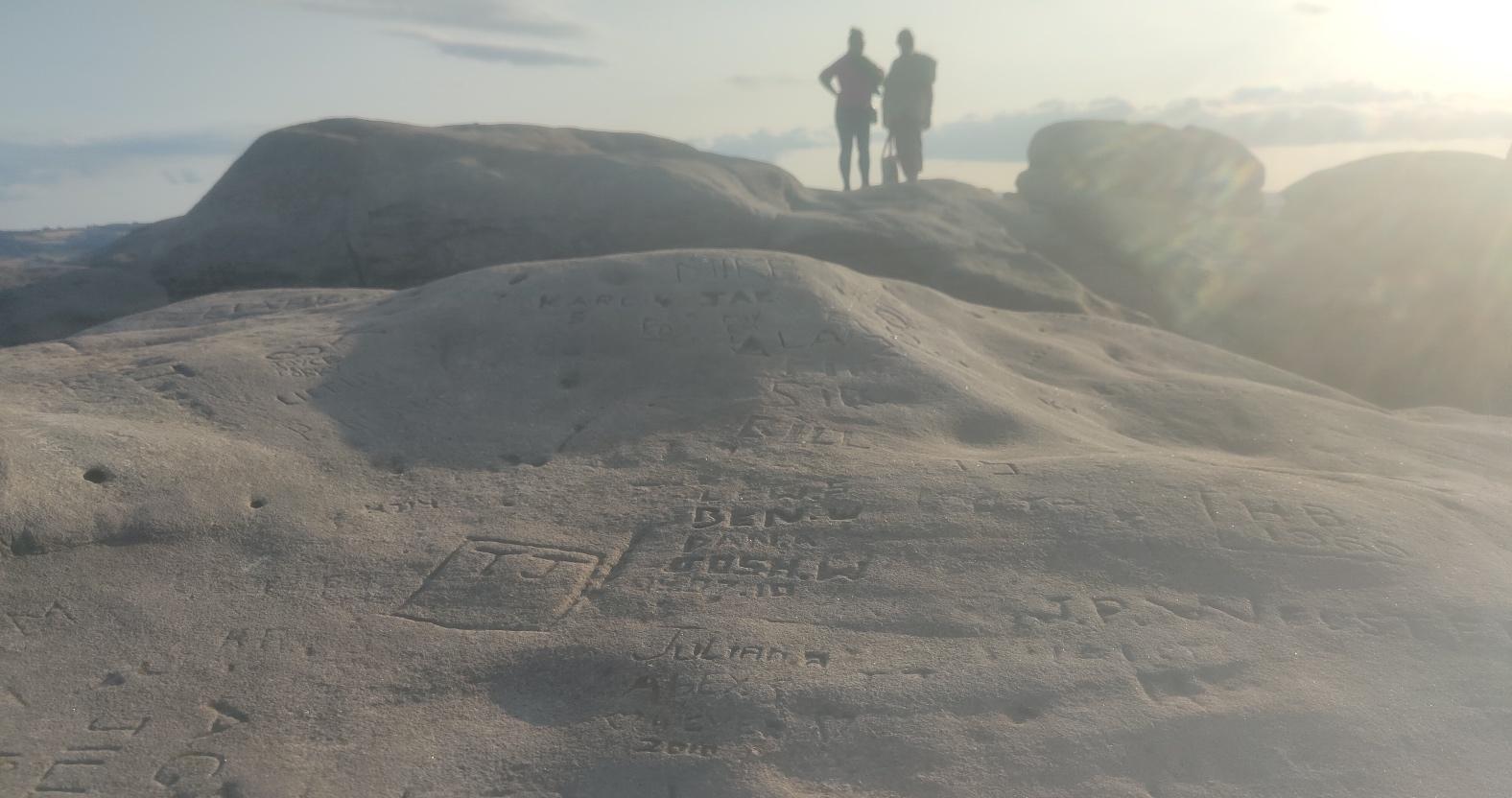
Graffiti on the Crag. Picture: Thomas Barrett.
An entrance to the so-called Fairies Parlour leads into a tunnel that goes deep underneath the Crag. My brother and I would creep down there as children until we grew too big to fit down it.
Fairies, druids and giants all sound fanciful, but every generation has projected its own stories onto the Crag. This says less about the rocks themselves than it does about the people like me who have lived beneath them.
The Crag does not give up its secrets easily, so as long as humans are drawn to it, it will continue to inspire new interpretations and myths.

0