Thank you for your interest in this story
To continue reading this article, subscribe to the Stray Ferret for as little as £1 a week
Already a subscriber? Log in here.
28
Feb
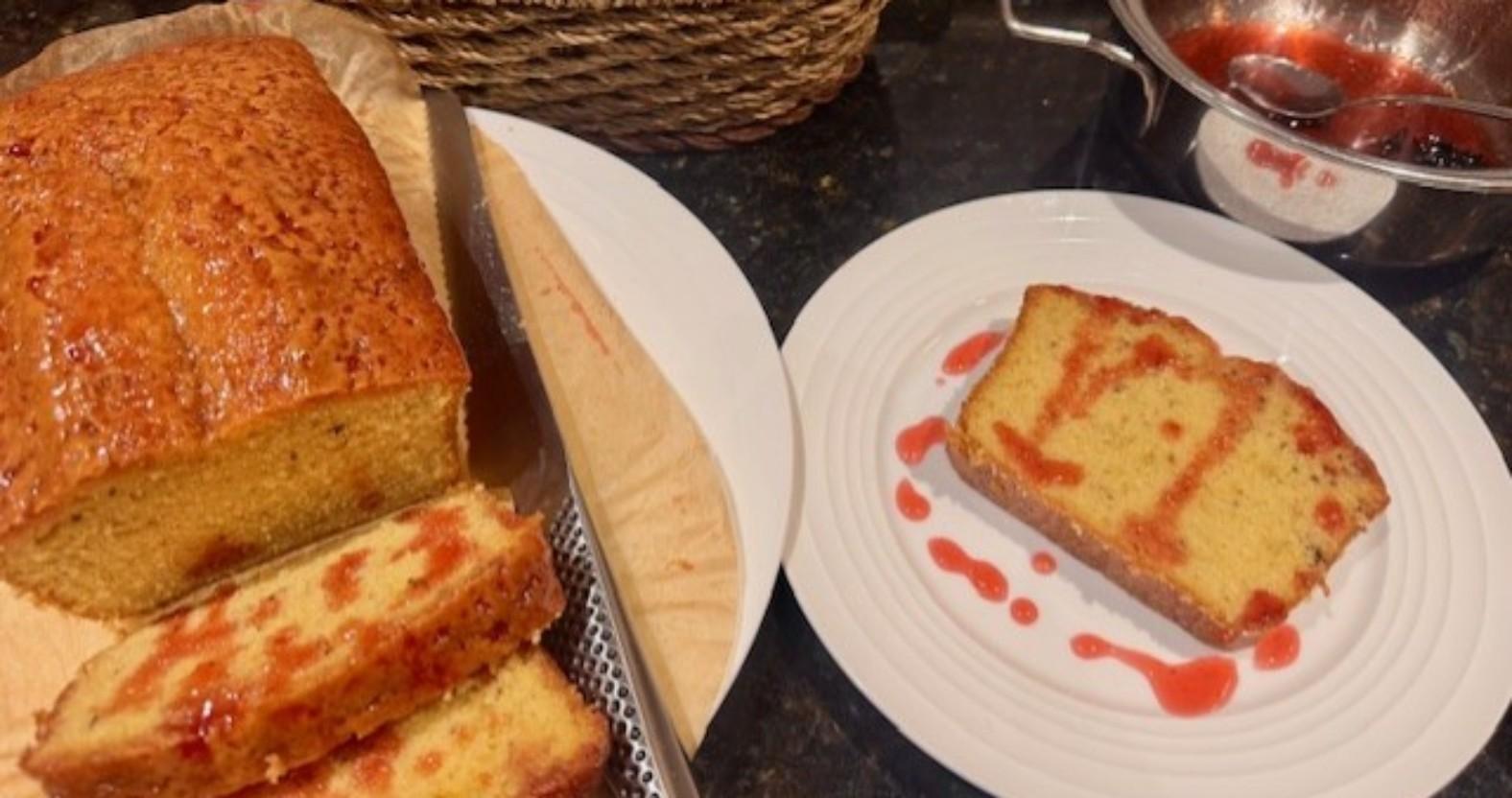
Yemi's Food Stories: Blood orange and hibiscus drizzle cake
Yemi Adelekan is a food writer and blogger who was a semi-finalist in the 2022 series of BBC TV’s Masterchef competition.
Yemi writes for the Stray Ferret about her love of the area’s food and shares cooking tips.
There are some bakes that feel like a rite of passage and many home cooks will have a fail-proof recipe hidden somewhere within the pages of their old cookbooks or perhaps on a loose sheet of paper tucked away safely. These are recipes we know off by heart but we still reach for them perhaps for the comfort that looking over the recipe brings.
For me, lemon drizzle sits firmly in that category, alongside Victoria sponge, brownies, sticky toffee pudding, banana cake and carrot cake. Many home baker’s holy trinity of early baking victories will often include some of these cakes. They are simple, reliable and generous as they give back great results in exchange for minimal expertise and effort.
A drizzle cake is forgiving if you’re still learning and is an easy canvas that allows you to take the cake from basic to something special.
The first drizzle cake that I learnt to bake was the classic lemon drizzle, which is loved for many reasons, including the brightness the lemon and orange rinds lend to it. But all you need are a few pantry staples and a few thoughtful changes to take your cake in a different direction.
Blood oranges
That’s where blood oranges come in. They are available for a brief period tucked between the colder months when we’re all craving something comforting to counter the effects of grey skies and constant drizzle. From the outside, they can look unassuming like any another orange but cut into one, and if you’re lucky, you’re rewarded with that dramatic, ruby-red flesh. Deep, jewel-like, almost too beautiful to eat. (Well, I said 'almost'...!)
Blood oranges teach me about the importance of hope because there is always a small moment of anticipation when you slice into a blood orange. You pause, hold your breath and wonder if this will this be the one that will reward you with ruby red juice.
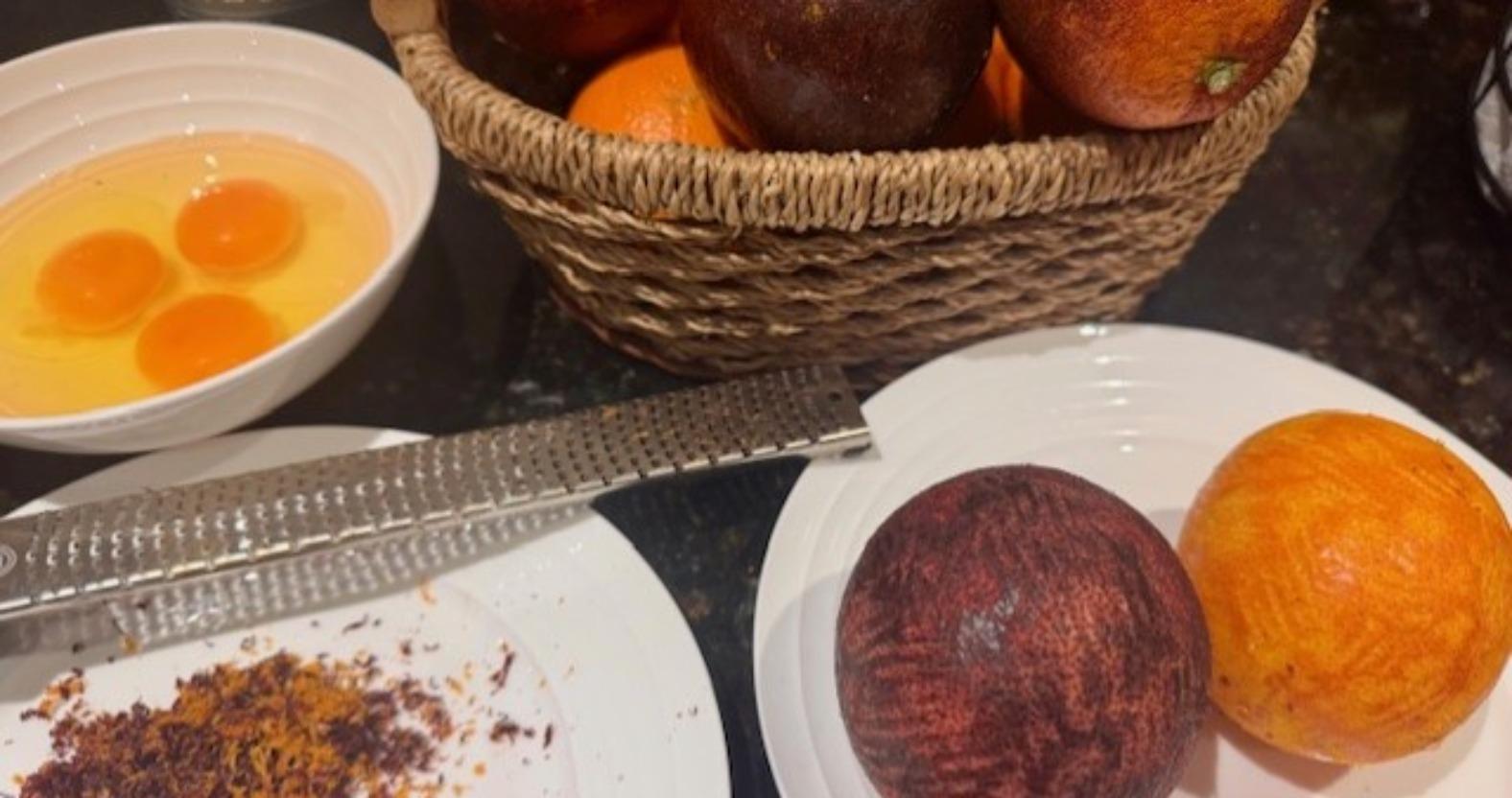
You'll need to grate the oranges for their zest.
Sadly the promise is not always delivered; some are pale, barely blushed, offering only a whisper of what could have been. Others reveal that rich, wine colour that makes you stop for a second, knife suspended mid-air. Each one that delivers feels like a small win, a quiet kind of joy; this begs the question – can you choose them for colour?
The honest answer: not really. There’s always an element of surprise and maybe that’s part of their charm.
The red pigment in blood oranges develops with cool night temperatures, so the depth of colour depends largely on how and where they were grown. That said, there are a few clues to look for:
· Look for varieties like Moro – these tend to be the deepest in colour
· Choose fruit that feels heavy for its size – a sign of good juice content
· Slight blush on the skin can help, but isn’t a guarantee; I have bought some that are completely blush on the outside with the juice not different from some that just have a hint of redness on the skin
· Buy in peak season (January to March) for your best chance
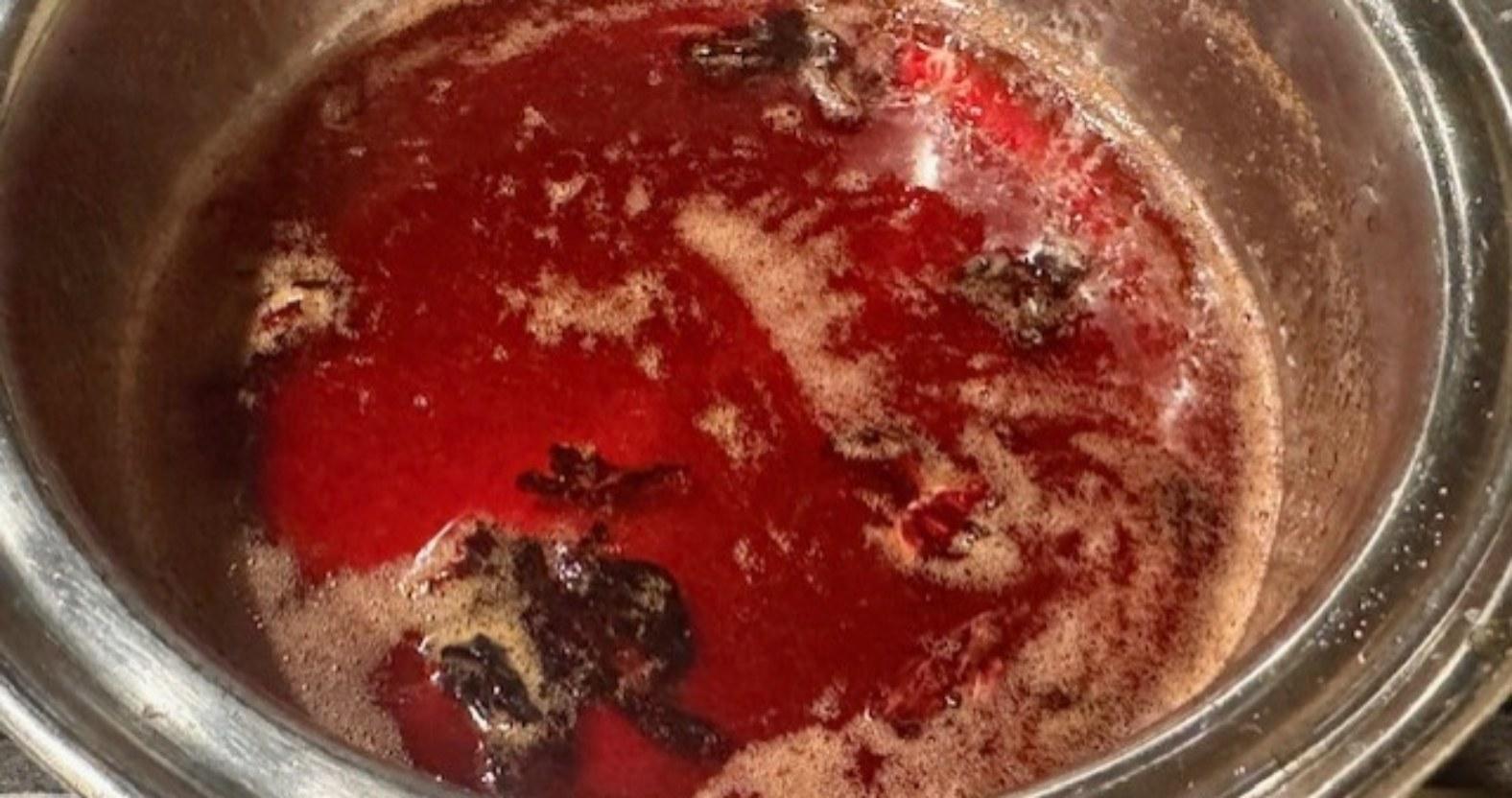
For the drizzle: juice, sugar and petals.
Blood oranges are wonderfully versatile with flavour that sits somewhere between citrus and berry, with a gentle bitterness that keeps things interesting. They are perfect in a marmalade for a deeper, more complex bitterness or in a vibrant and silky smooth curd great for pancakes or as a syrup to drizzle over desserts. I love to juice and freeze it ready for summer granita, ice cream and sorbet.
The most visuallyimpressive tart I ever made was with blood orange segments creating a vision for the eyes, and the segments are perfect for nestling over panna cotta or a blood orange posset. An exciting way to use blood orange is to infuse it into a balsamic vinegar, which creates a deeply complex vinegar. And of course we can’t forget a simple citrus salad with the blood oranges bringing the visual element to it.
Or you can simply join me in taking it right back to where your baking began and make a blood orange drizzle cake.
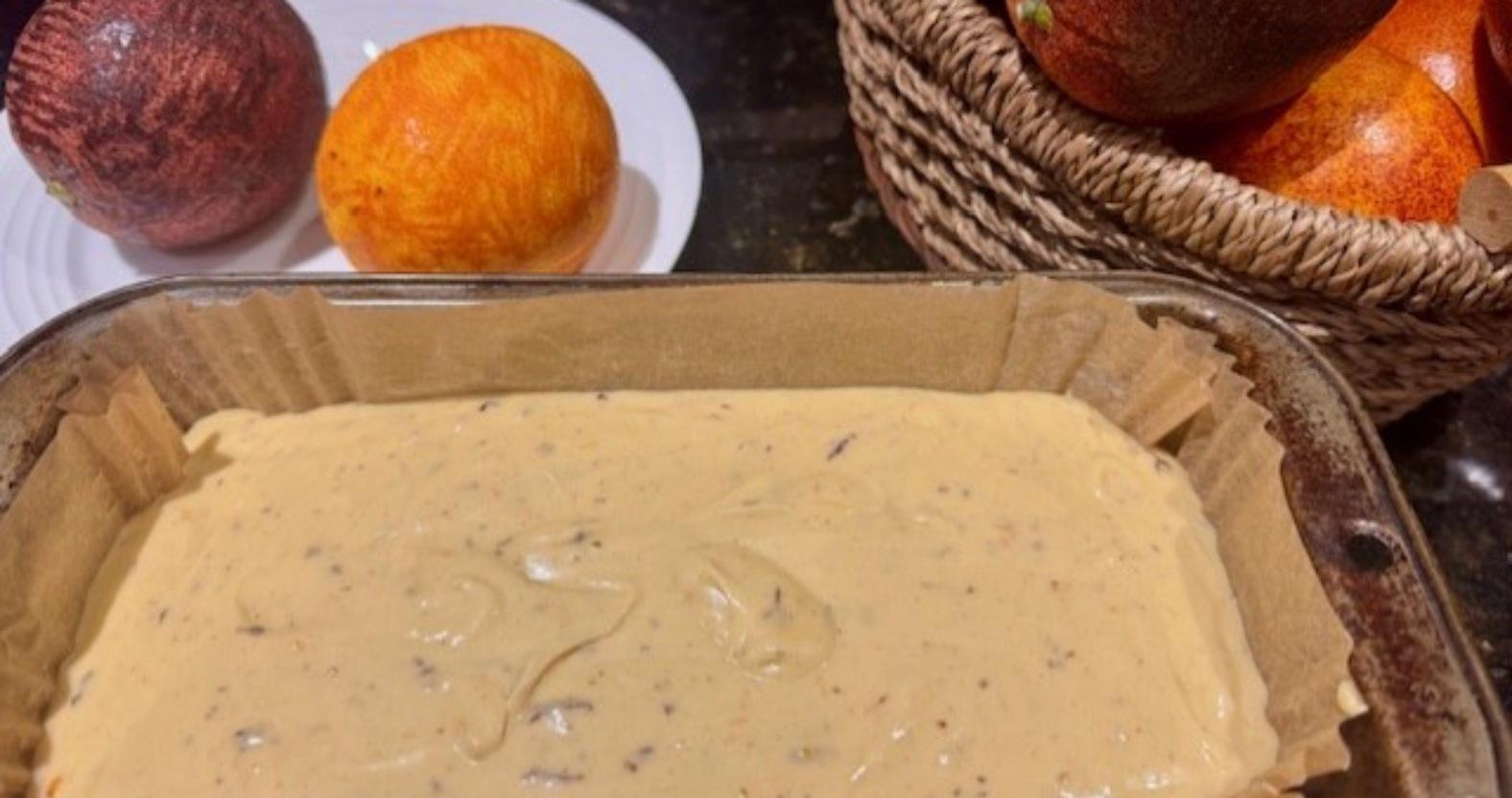
The cake before baking.
Blood Orange & Hibiscus Drizzle Cake
This version keeps the ease of the original but adds a subtle twist. The hibiscus brings a gentle floral sharpness and deepens the colour, while the blood orange gives you that balance of sweetness and bitterness without losing its soul.
Ingredients (serves 8)
For the cake:
· 175g unsalted butter, softened
· 175g caster sugar
· 3 large eggs
· Zest of 2 blood oranges
· 175g self-raising flour
· 2 tbsp milk
For the drizzle:
· Juice of 2 blood oranges (about 125ml)
· 125g caster sugar
· 2-3 dried whole hibiscus petals
Optional mascarpone cream:
· 150g mascarpone
· 2 tbsp double cream
· 1-2 tbsp icing sugar (to taste)
· A little blood orange zest or leftover flesh after sieving the juice
· Hibiscus syrup to serve (optional)
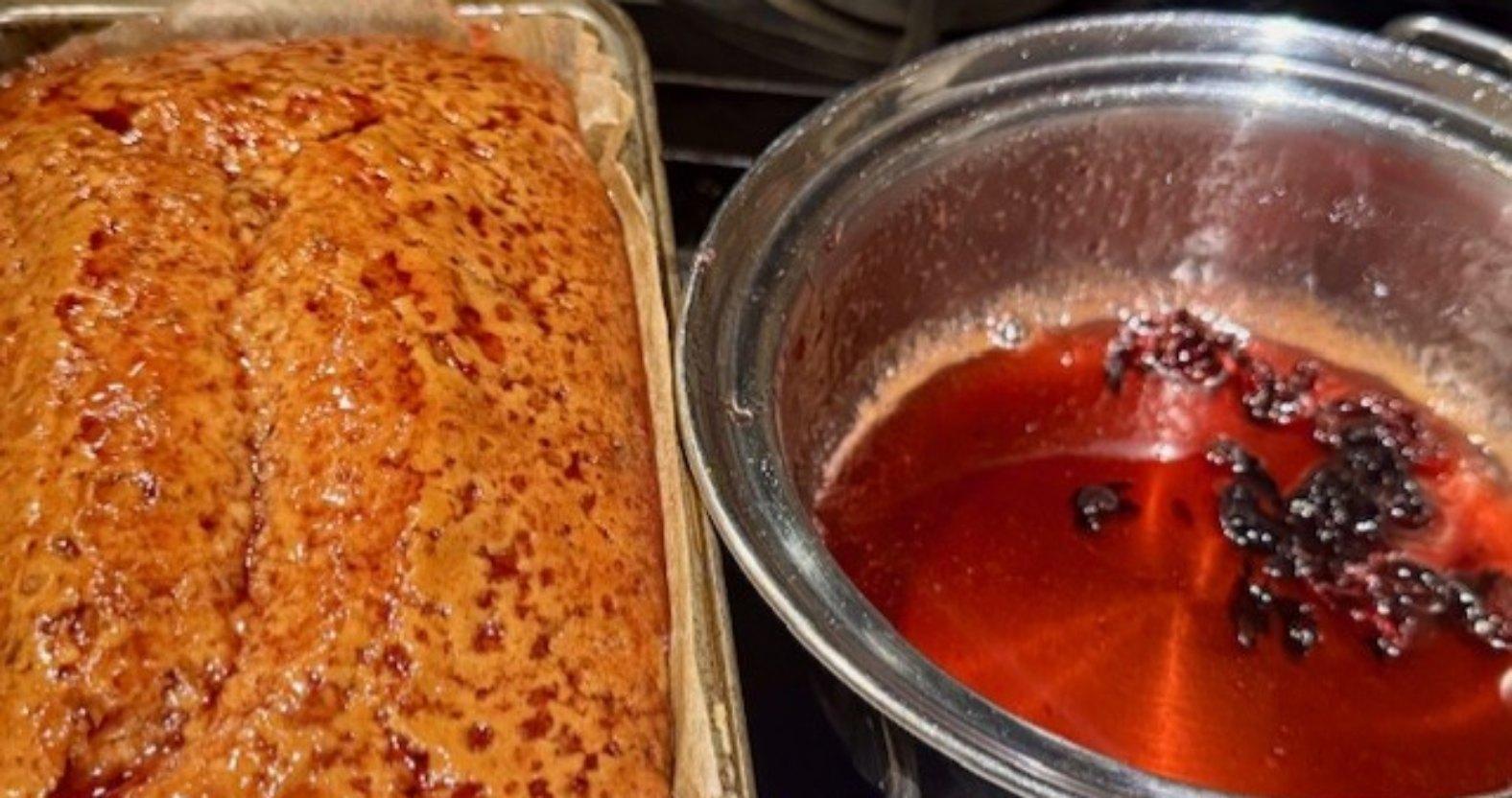
Leave the cake to cool in the tin.
Method
1. Preheat the oven to 180°C (160°C fan). Grease and line a loaf tin. I set my oven lower at 170°C
2. Cream the butter and sugar together until pale and fluffy.
3. Add the eggs, one at a time, beating well after each addition.
4. Stir in the zest, then fold in the flour. Add the milk to loosen the mixture.
5. Spoon into the tin and bake for 45 minutes to an hour, or until a skewer inserted into the centre comes out clean.
6. While the cake bakes, prepare the drizzle:
Add the blood orange juice, hibiscus and sugar to a small pan over low heat and gently cook until sugar is dissolved. Allow to simmer for 5 -10 minutes until syrupy; remove the hibiscus petals when you’re ready to serve.
7. Pierce the warm cake all over with a skewer and slowly pour over the syrup, letting it soak in.
8. Leave to cool completely in the tin.
9. For the cream, whisk the mascarpone, cream, icing sugar and zest until smooth
Serve a thick slice with a dollop of mascarpone on the side; drizzle with the syrup. Alternatively, create a dip in the mascarpone and fill with the syrup.
The cake offers the same quiet thrill as cutting into a perfect blood orange with colour and contrast woven into something familiar but made a little more exciting. Reinvention isn’t always necessary, sometimes what you need to know is how to add a little twist to a classic.

0