Thank you for your interest in this story
To continue reading this article, subscribe to the Stray Ferret for as little as £1 a week
Already a subscriber? Log in here.
07
Nov
Yemi's Food Stories: Let's talk Suya spice
Yemi Adelekan is a Harrogate-based food writer and blogger who was a semi-finalist in the 2022 series of BBC TV’s Masterchef competition.
Yemi writes for the Stray Ferret about her love of the area’s food and shares cooking tips.
There is Italian mixed herbs, ras el hanout, Chinese five spice, Japanese togarashi, and then there is suya spice. Popular in Nigeria and across West Africa, suya is a delicious invitation to put spice and nuts centre stage.
It’s sometimes referred to as Yaji but there is a subtle difference between them, Suya spice is the blend that is often used as a pre-seasoning while Yaji has ground roasted peanuts added to the suya spice which lends the finished dish the nutty flavour.
The spice works for chicken, beef or fish lending the dish heat, colour and flavour. Beef is the meat that is the most used for suya; the skewered meat is arranged around open wood fire that gives it a delicious and distinctive smoky aroma and flavour. The meat is served with freshly sliced onions, tomatoes and generous dusting of the pea-nutty Yaji powder.
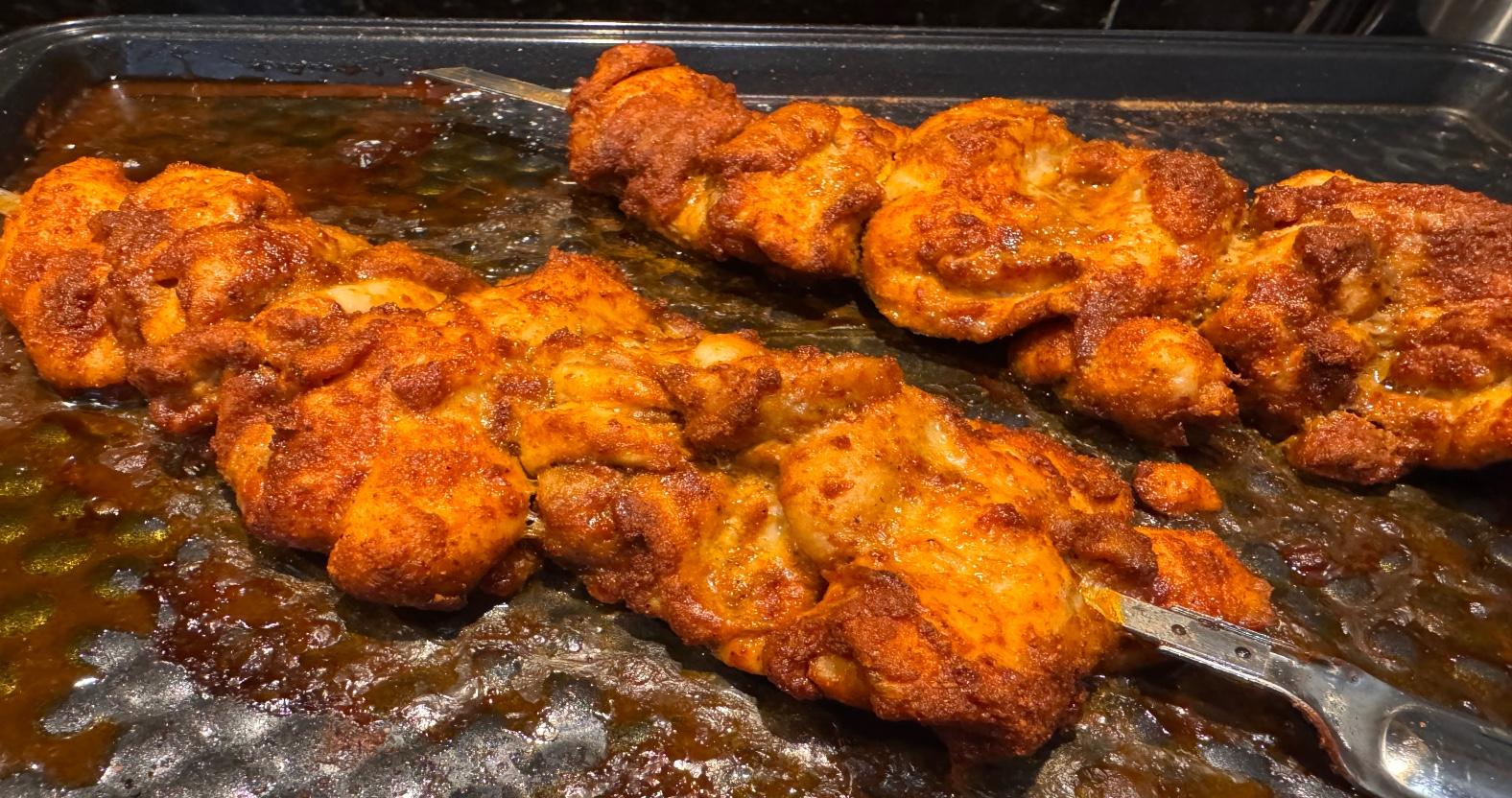
A spice blend can offer a different answer to the familiar question: what shall we do with chicken tonight? Just in case you are wondering, this week, my answer is suya chicken. For this home version, think nutty warmth, chilli heat and chicken with beautifully browned edges. If your usual chicken supper needs a little excitement, this is a lovely place to start.
The suya or Yaji spice is a closely guarded secret but many home cooks have devised versions that are close to the one the Suya mallams sell.
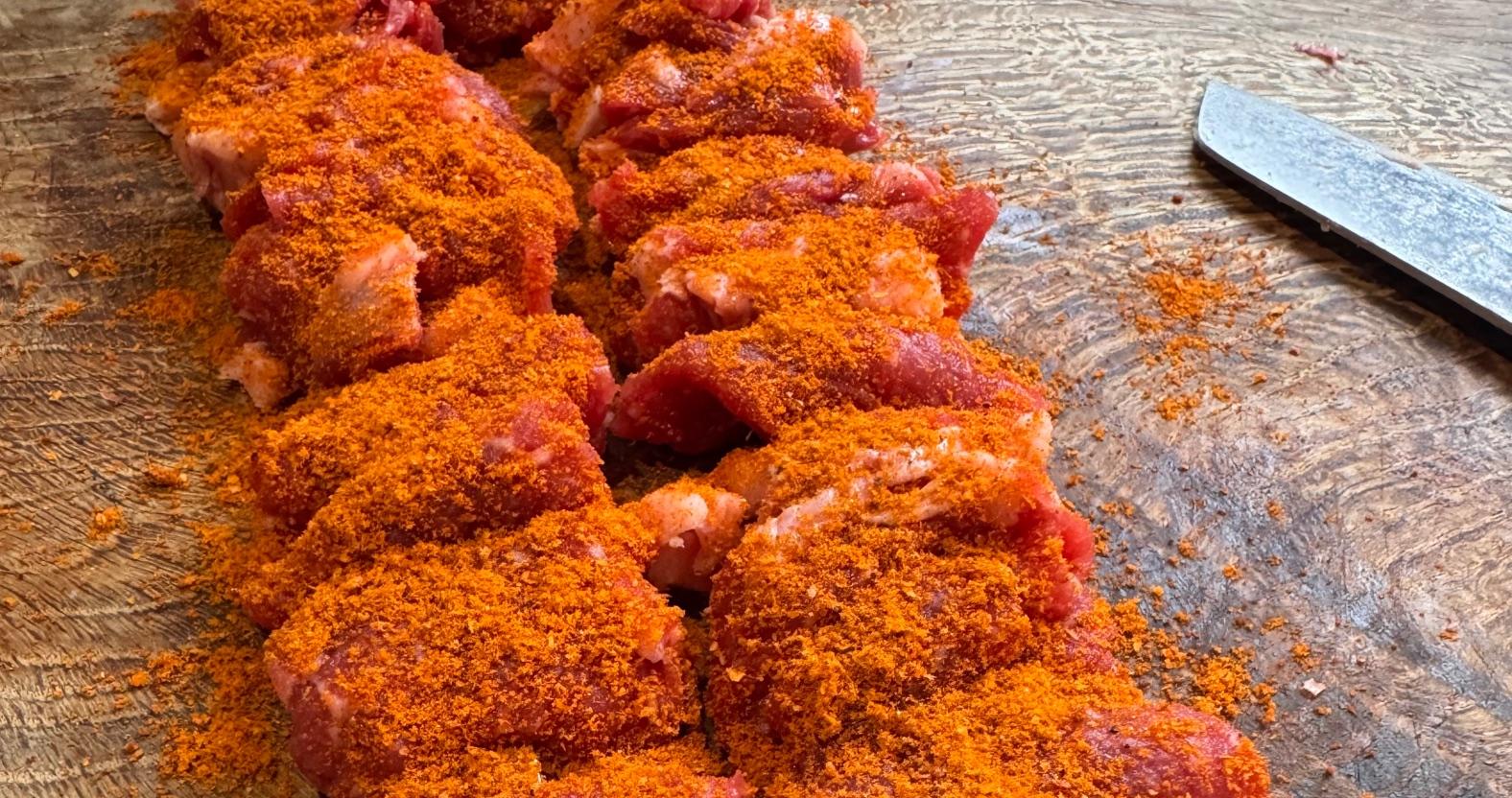
Preparing Suya spiced chicken.
You can buy Suya spice in some stores or online but you don’t need a shopping trip or a cupboard full of unfamiliar ingredients to make your own spice blend. You can build the flavour with ground spices and peanuts, then make it work with your oven or grill. The good thing about making it is you can adjust the ingredients to your taste – less cayenne or more peanut – the choice is yours.
Chicken thighs are my go-to because they are tender and forgiving, even when overcooked. That’s not an excuse to abandon them to the heat, but it’s reassuring for anyone trying something new. Boneless thighs are particularly convenient for coating, cooking and tucking into flatbread.
The peanut element is worth keeping in mind as you mix. Peanut flour offers an easy way to bring in that nutty flavour; smooth peanut butter is another accessible option. They behave differently, so the butter version becomes a coating rather than a dry sprinkle. Either gives you a practical starting point without needing to buy a ready-made suya blend.
Homemade suya-style spice
For 600g boneless chicken thighs, mix 3 tablespoons peanut flour, 2 teaspoons ground ginger, 2 teaspoons paprika, 1 teaspoon garlic granules, 1 teaspoon onion granules, ½ - 1 teaspoon cayenne pepper, ½ teaspoon ground black pepper, ½ teaspoon salt and 1 crushed seasoning cube)
For a gentler introduction, reduce the cayenne. If peanut flour is unavailable, use finely ground, unsalted roasted peanuts. Alternatively, leave out the peanut flour and combine the spices with 2 tablespoons smooth peanut butter. Choose one without added sugar to avoid getting sweet rather than savoury notes.
To make the chicken
You will also need: 2 tablespoons vegetable oil and 1 tablespoon lemon juice. With the peanut-butter option, start with 1 tablespoon oil and loosen with a little water until spreadable.
1. Make the spice mixture and set a small amount aside in a separate bowl for basting. Coat the thighs thoroughly with the rest of the spice mixture, oil and lemon juice. Cover and refrigerate for at least an hour, or overnight if that suits your schedule.
2. Heat the oven to 200°C, or 180°C fan. Spread the thighs on a lined roasting tray, leaving space between them. For a more authentic version, insert the chicken on to soaked wooden or metal skewers. Roast for around 25–35 minutes, turning halfway through. Timing will depend on their size, so check the thickest part with a meat thermometer and ensure the chicken is fully cooked before serving.
3. Baste during cooking with the reserved spice mixture mixed with some oil. Aim for a consistency that clings rather than pools.
Let the chicken rest for 5 minutes, then slice and pile on to warm flatbread with salad and spiced mayo: simply stir a pinch of paprika and chilli into mayonnaise. Or serve alongside your favourite rice dish, or over salad as its protein. Put extra chilli on the table, allowing everyone to choose their own level of adventure.

0