Thank you for your interest in this story
To continue reading this article, subscribe to the Stray Ferret for as little as £1 a week
Already a subscriber? Log in here.
18
Apr
Yemi's Food Stories: Macarons, meringue and a dash of Poirot magic
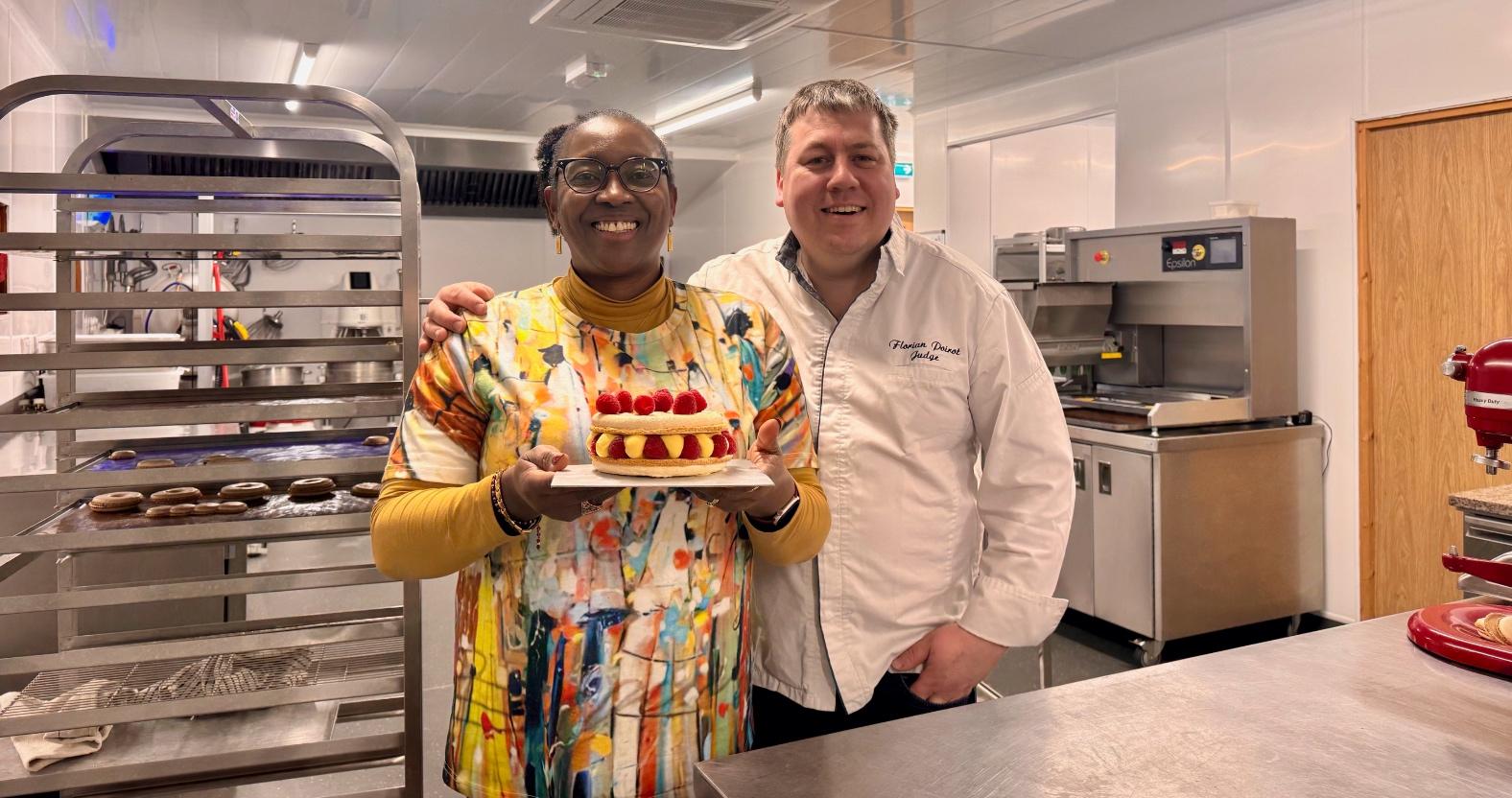
Yemi Adelekan is a food writer and blogger who was a semi-finalist in the 2022 series of BBC TV’s Masterchef competition.
Yemi writes for the Stray Ferret about her love of the area’s food and shares cooking tips.
There’s something beautiful about learning precision baking from a man whose personality isn’t restrained. Florian Poirot, chocolatier, pâtissier, UK pastry champion, and all-round creative force, is as colourful as his food is delicious.
With stores in York and Malton (aka Yorkshire’s food capital), Florian also opens the doors to his production kitchen just outside Malton for hands-on workshops. It’s here, in a space that felt as sacred as it was intimidating, that I found myself in a macaron making class with a few other people from across the country. I was also fascinated by the oldest model of thermomix that I had ever seen.
Two creations
Florian has represented Britain on the competitive stage, but there’s nothing intimidating about the way he teaches. His approach is generous, practical, and refreshingly myth-busting. The class centred around two creations: an almond cake and macarons, born from the same base but raised with different intentions.
Both begin with Italian meringue, the backbone of the structure and texture. Sugar and water is heated to a precise temperature (typically around 118°C), then streamed slowly into whipping egg whites. Timing is everything, and one tip was to add the water to a pot first before adding the sugar to prevent the sugar from burning.
The result is a glossy, stable meringue with a marshmallow-like sheen. It’s a process that demands attention – too hot and you scramble the eggs, too cool and you lose structure – but Florian guides it with the calm confidence of someone who’s done it thousands of times.
Restraint is the key
From here, the paths diverge.
For the almond cake, the meringue is gently folded into finely ground almond flour and icing sugar. The key, Florian stressed, is restraint. You don’t want a perfectly smooth batter; instead, you leave faint streaks of meringue visible. This under-mixing creates a lighter, more tender crumb and, crucially, a dessert that doesn’t overwhelm with sweetness.
“You can serve a proper slice,” he explained, “without it becoming too much.” This insight shifts how you think about indulgence, realising it’s not just flavour, but portion and balance.
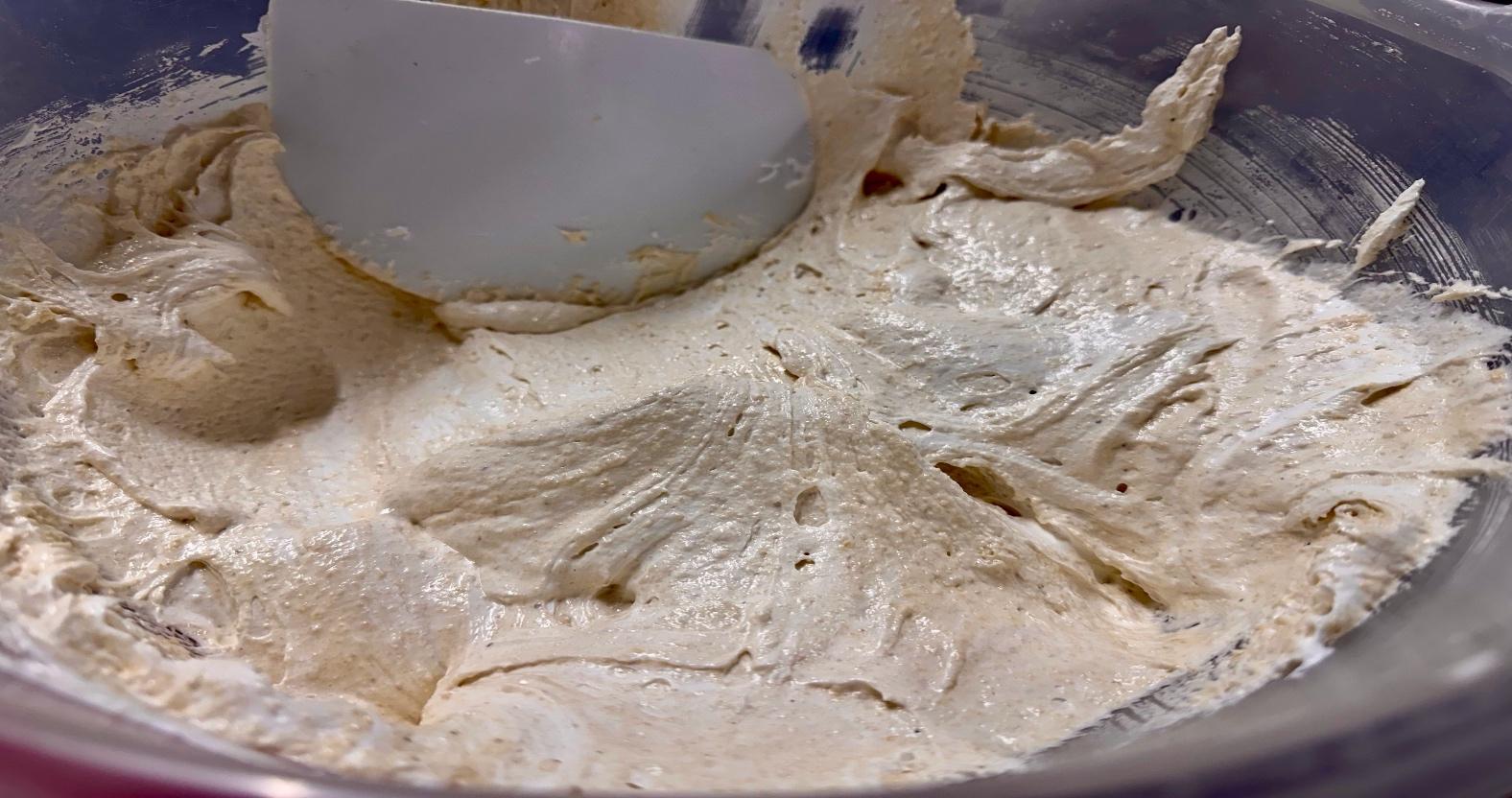
The process.
Macarons, on the other hand, demand commitment. The same ingredients are mixed until the batter becomes glossy and flows like lava. This stage, known as macaronage, fully incorporates the almond flour into the meringue. The result is a smoother, sweeter mixture designed for smaller, more concentrated bites. Florian emphasised the importance of texture here: too stiff and the shells crack, too loose and they spread into sad puddles.
Surprising insights
One of his practical tips was deceptively simple: blend your almond flour. Even if it looks fine, blitzing it ensures a smoother batter and a more refined shell. Another tip raised eyebrows: egg whites can be aged on the worktop for up to three days. It’s about reducing moisture and improving consistency, though it still feels faintly rebellious and scary to leave eggs sitting out with such intent.
Then came the piping; armed with piping bags, we shaped our mixtures into neat rounds not daring some of the others shapes we were shown like the elongated strips and playful hearts. Florian encouraged experimentation: join shapes together, create rings, or leave a hollow centre. It was a reminder that even in a discipline as exacting as pâtisserie, there’s room for your personality to come through.
And then, a surprise: the myth of drying macarons before baking. Many recipes insist on leaving piped shells to form a skin, but Florian questioned its necessity. In his experience, technique and consistency matter more than waiting around. It’s a small rebellion against received wisdom, and one that felt liberating in a world of rigid baking rules.
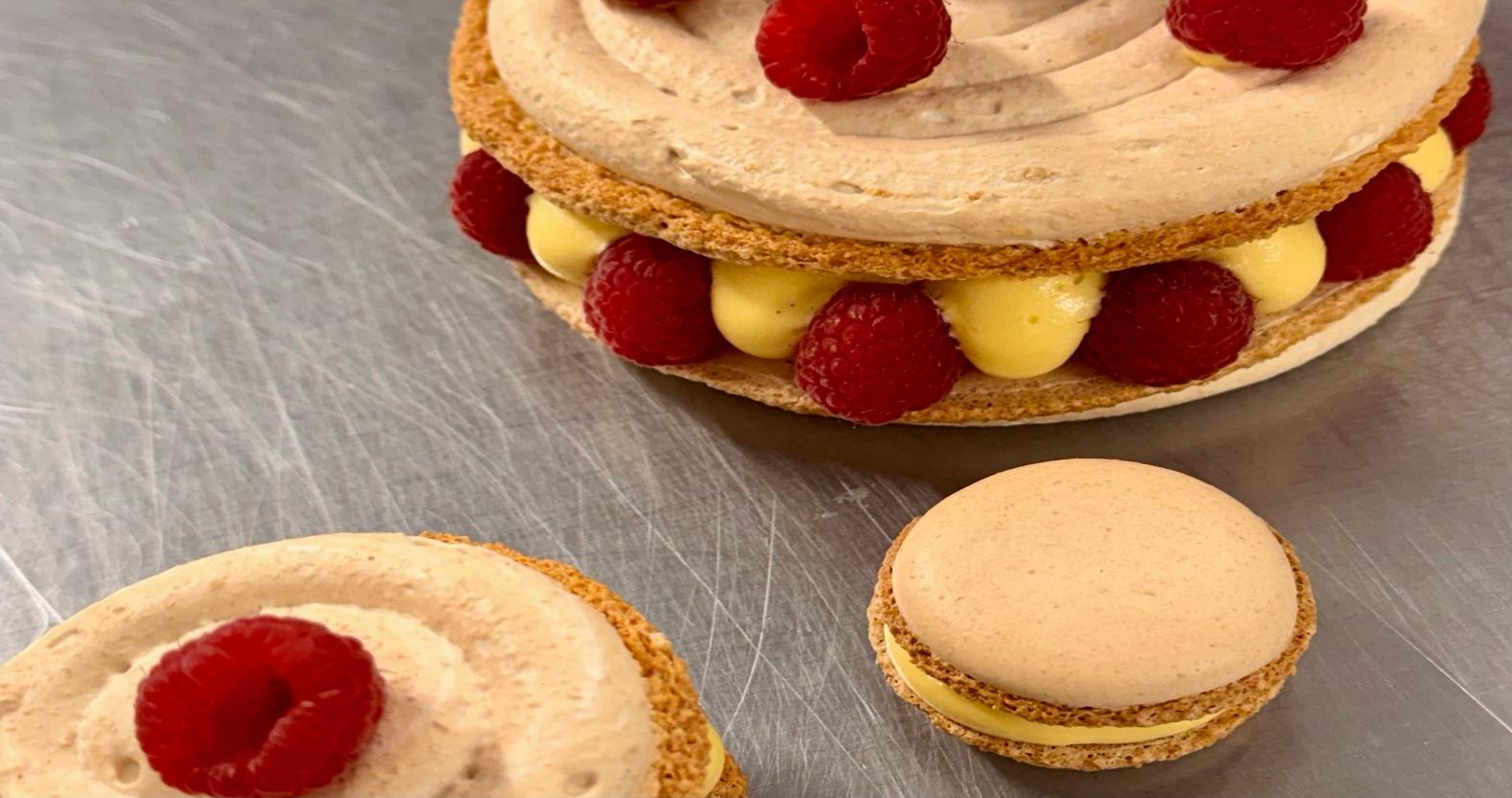
The finished product.
Fill it with passion (fruit)
Our filling brought a bright, tropical contrast to the nutty base. We made a passion fruit filling that was sharp, fragrant, and just sweet enough to balance the shells. Typically, this involves cooking passion fruit purée with sugar and eggs before whisking in what seemed like an insane amount of butter then allowing it to thicken into a silky and glossy filling. For the macarons, it was piped between two shells in neat, satisfying sandwiches. This is a stage that allows you to experiment and create different flavours.
The almond cake took a slightly more rustic approach. Once baked and cooled, it was paired with the same passion fruit filling and fresh raspberries. The berries cut through the sweetness beautifully, their tartness echoing the fruit filling while adding texture and freshness. It felt generous; resulting in the kind of dessert you’d happily serve in thick slices.
Assembly, Florian reminded us, is as important as any earlier step. Macarons should be filled with care, ensuring an even distribution without overflow. The almond cake, meanwhile, benefits from a more relaxed hand with layers, dollops of the filling interspersed with fresh raspberries, and a willingness to let the ingredients speak.
Delayed gratification
We left the class with boxes of our creations and one final, crucial piece of advice: patience. Macarons, Florian insisted, are best eaten after resting in the fridge for one to two days. Freshly made, the shells are too dry; given time, they absorb moisture from the filling, becoming perfectly tender.
It’s a lesson in delayed gratification – and one that, admittedly, is easier to appreciate in theory than in practice. He encouraged us to try a macaron later that evening and again the next day or even by day 3 and he was absolutely right, yet again.
There’s a quiet joy in learning something technical from someone who refuses to make it feel rigid or impossible to understand. Florian’s class wasn’t just about mastering macarons or perfecting an almond cake; it was about understanding the why behind each step, and finding confidence in the process. And perhaps that’s the real takeaway; that even the most delicate of pastries can carry a little bit of boldness and creativity within them.
You can book on to one of his classes by visiting the website.

0