Thank you for your interest in this story
To continue reading this article, subscribe to the Stray Ferret for as little as £1 a week
Already a subscriber? Log in here.
24
Oct
Yemi's Food Stories: A rice dish full of flavour
Yemi Adelekan is a Harrogate-based food writer and blogger who was a semi-finalist in the 2022 series of BBC TV’s Masterchef competition.
Yemi writes for the Stray Ferret about her love of the area’s food and shares cooking tips.
It’s satisfying carrying a dish of rice to the dining table and watching the conversation pause for a moment; not because it is elaborate and definitely not because it has taken hours to prepare, but because it is beautiful.
I was reminded of that recently while travelling through Crete, where simple ingredients are treated with remarkable respect. A handful of herbs, good olive oil, carefully cooked vegetables, rice infused with stock. Nothing complicated, yet everything tasted deliberate. It brought me back to some of the rice dishes I grew up making and eating, and to the many ways rice serves as a canvas for flavour across cultures.
Rice is often treated as an afterthought. It sits dutifully beside the main attraction, filling space on the plate without contributing much of its own character. I have seen too many workplace lunches start with packet rice that just looks pitiful on a plate.
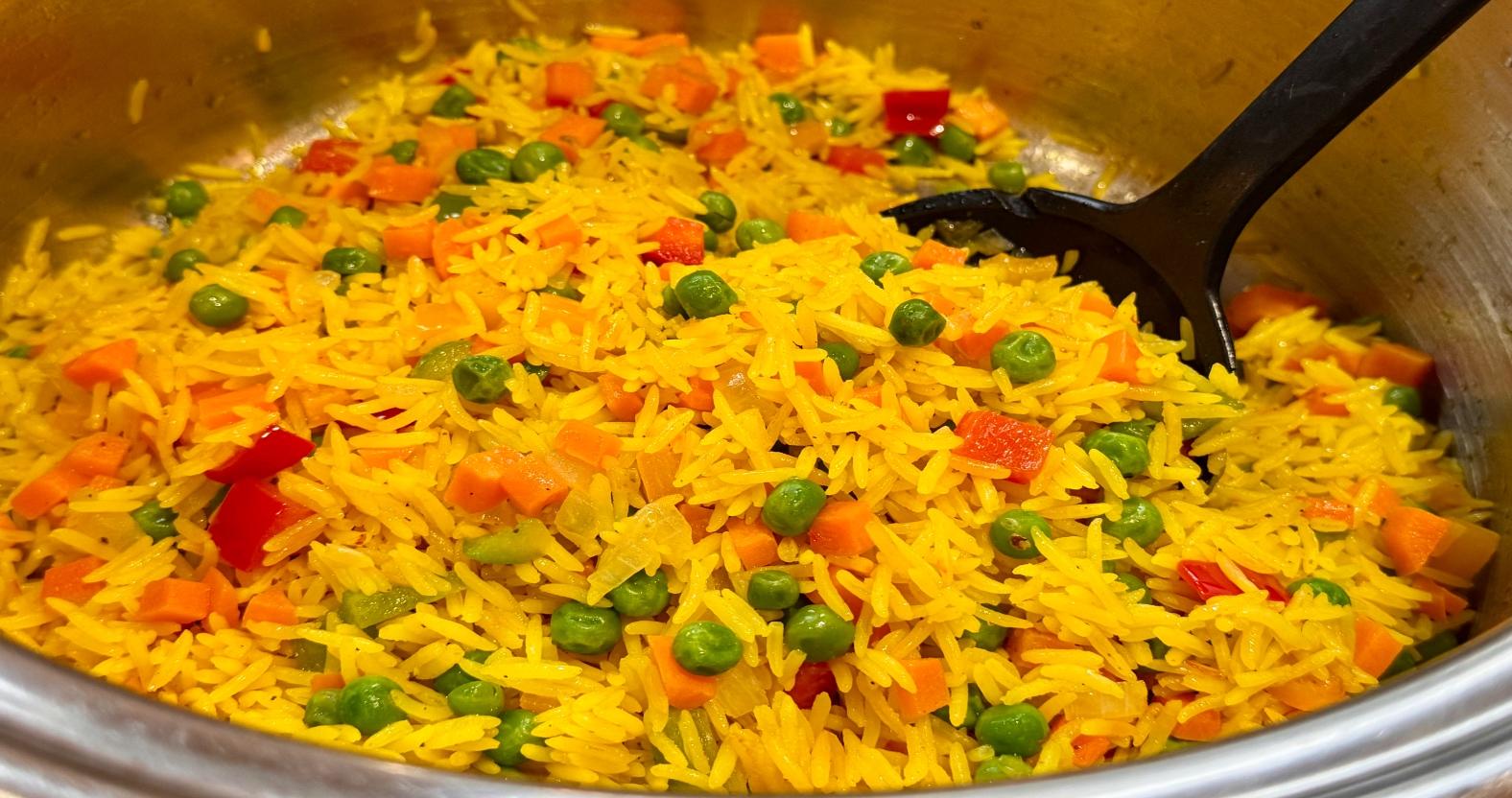
My food sometimes starts with a simple desire to create something beautiful and fuss -free. This is the basis for this vibrant, deeply flavoured rice dish that looks impressive enough for guests yet requires very little effort. The result is something cheerful and golden in colour, fragrant with spice and rich with coconut, while remaining versatile enough to accompany almost any protein you choose.
The first thing people notice is the colour and the vegetables evoke healthy eating.
Saffron and turmeric work together to create a luminous yellow hue that brings sunshine to the table especially on cold and dark Yorkshire days. The saffron contributes more than appearance. Bloomed gently in a little coconut oil, its floral warmth unfurls gradually through the dish. Turmeric brings earthiness and depth whilst reinforcing the striking colour.
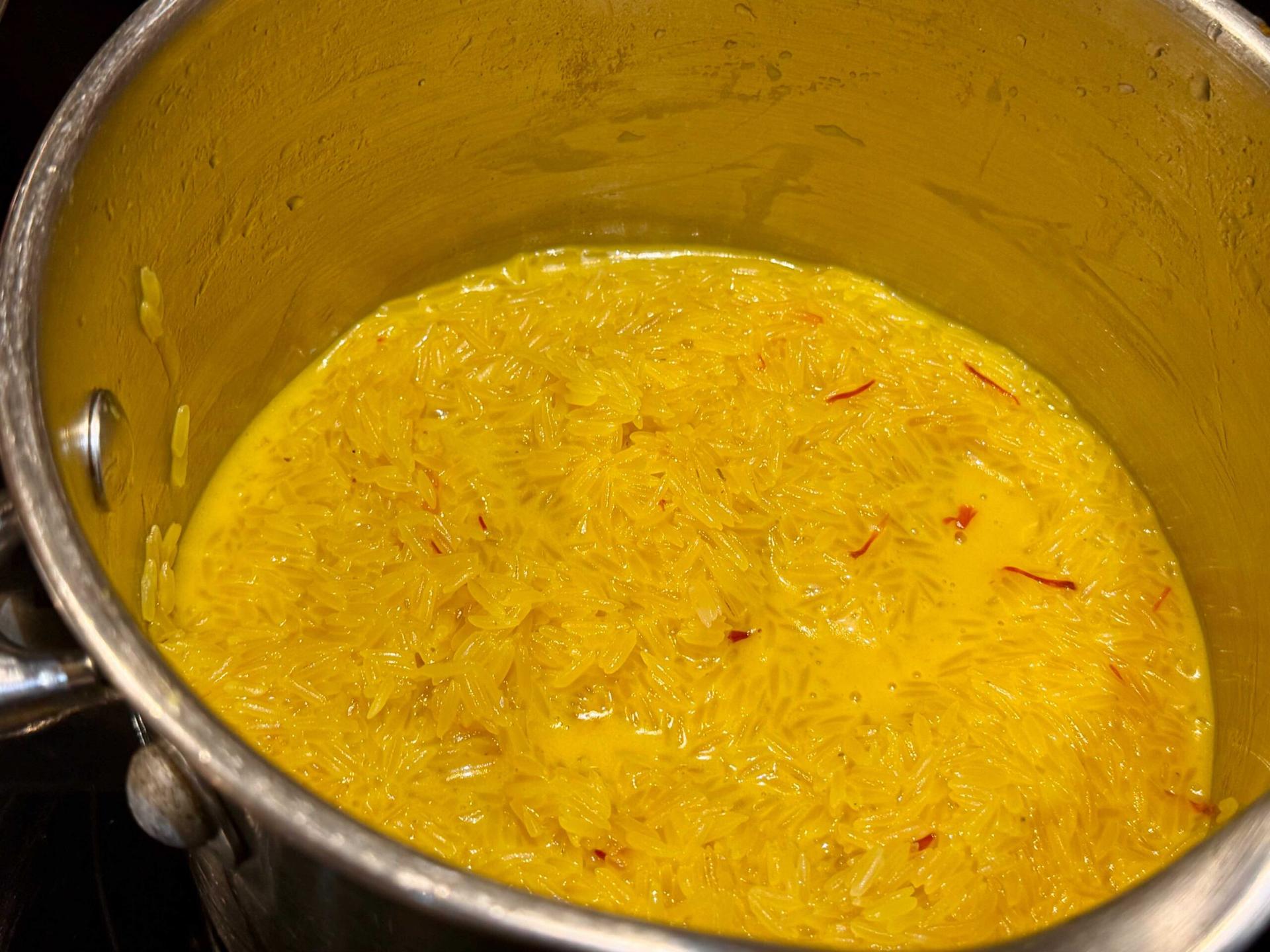
Rice in the pan.
Blooming the spices matter; many spices contain flavour compounds that are fully released in fat. Heating the saffron and turmeric in warm coconut oil before adding the rice creates a more rounded flavour filling the kitchen with an amazing aroma.
Once the washed long-grain rice is added, gently fry the rice in the oil for a few minutes. Coating the rice in the spiced oil helps the grain to remain separate whilst cooking. This is when the flavour begins to penetrate rather than simply sit on the surface of the rice grains.
In goes the coconut milk that lends even more character and body to the dish. Combined with a good homemade stock, it transforms the cooking liquid into something far more interesting than water alone. The coconut lends richness without heaviness, creating a subtle sweetness that softens the earthy notes of turmeric and complements the perfume of saffron. The stock provides the savoury backbone, ensuring the finished dish remains balanced rather than overly creamy.
Whilst the rice is cooking, dice some onions and mixed peppers, and blanch some peas and cubed carrots. Fry the onions and mixed peppers in a tiny amount of coconut oil with a pinch of salt before adding in the cooked rice, carrots and peas. Finish by checking and adjusting the seasoning.
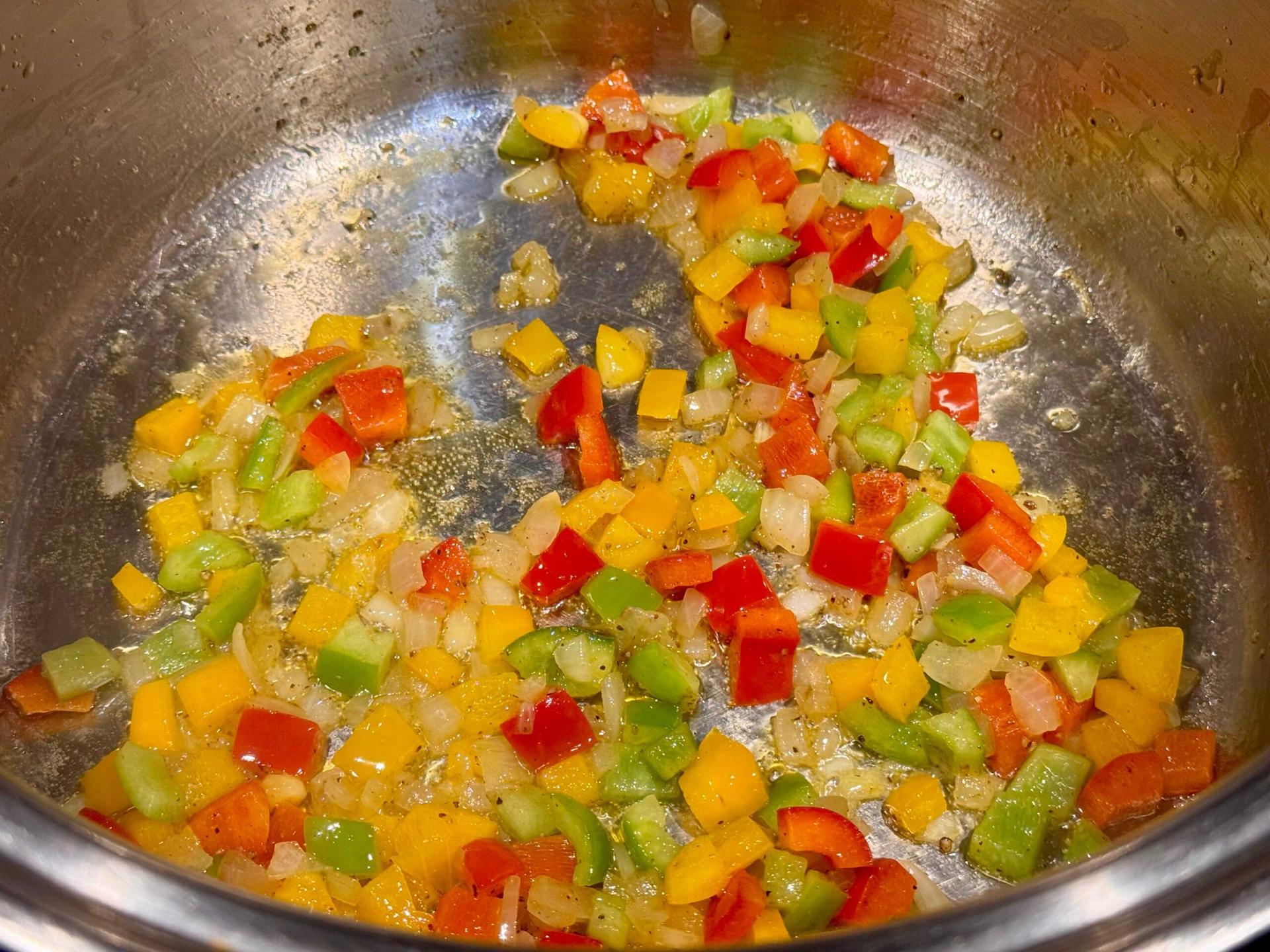
Vegetables cooking in the pan.
As I cooked this recently, I found myself thinking about the many rice dishes that I have eaten in different countries. I remembered the lamb Biryani that I had somewhere along the curry mile in Manchester which has stayed with me for over twenty years; I remember the risotto that was barely memorable in some restaurant chains and the sometime bland and overcooked rice dishes in some restaurants.
What interests me about food is how recipes travel with us.
After nearly three decades in Britain and fourteen years in Yorkshire, my cooking naturally reflects multiple influences including my Nigerian heritage, living in the West Indies, experiences gathered from travels, conversations and meals with strangers, friends, neighbours and family.
What matters is understanding why an ingredient belongs rather than adding it for novelty. In this dish, coconut enriches but does not overwhelm. Saffron elevates rather than dominates. The vegetables provide sweetness and texture while allowing the rice to remain the central character.
Every ingredient has a purpose. Every flavour has a role. Perhaps that is why guests respond so warmly to it.
The dish arrives looking celebratory, its golden grains studded with colourful vegetables, carrying aromas of spice and coconut across the table. Yet it asks very little of the cook. There are no complicated techniques, no specialist equipment and no last-minute panic. Just thoughtful ingredients working together in harmony.
For me, that is often the sweet spot of good cooking: food that feels generous without being exhausting, impressive without being intimidating.
So the next time you need something simple that still feels special, consider giving this coconut and saffron rice a place on your table. This dish works because it has flavour from the spice without the heat but you can easily add some chilli for some heat.
Serve it alongside grilled fish, roasted chicken, lamb chops or simply enjoy it as it is.

0