Thank you for your interest in this story
To continue reading this article, subscribe to the Stray Ferret for as little as £1 a week
Already a subscriber? Log in here.
07
Aug
Combined authority publishes rationale behind mayor's £20 million pothole 'raid'
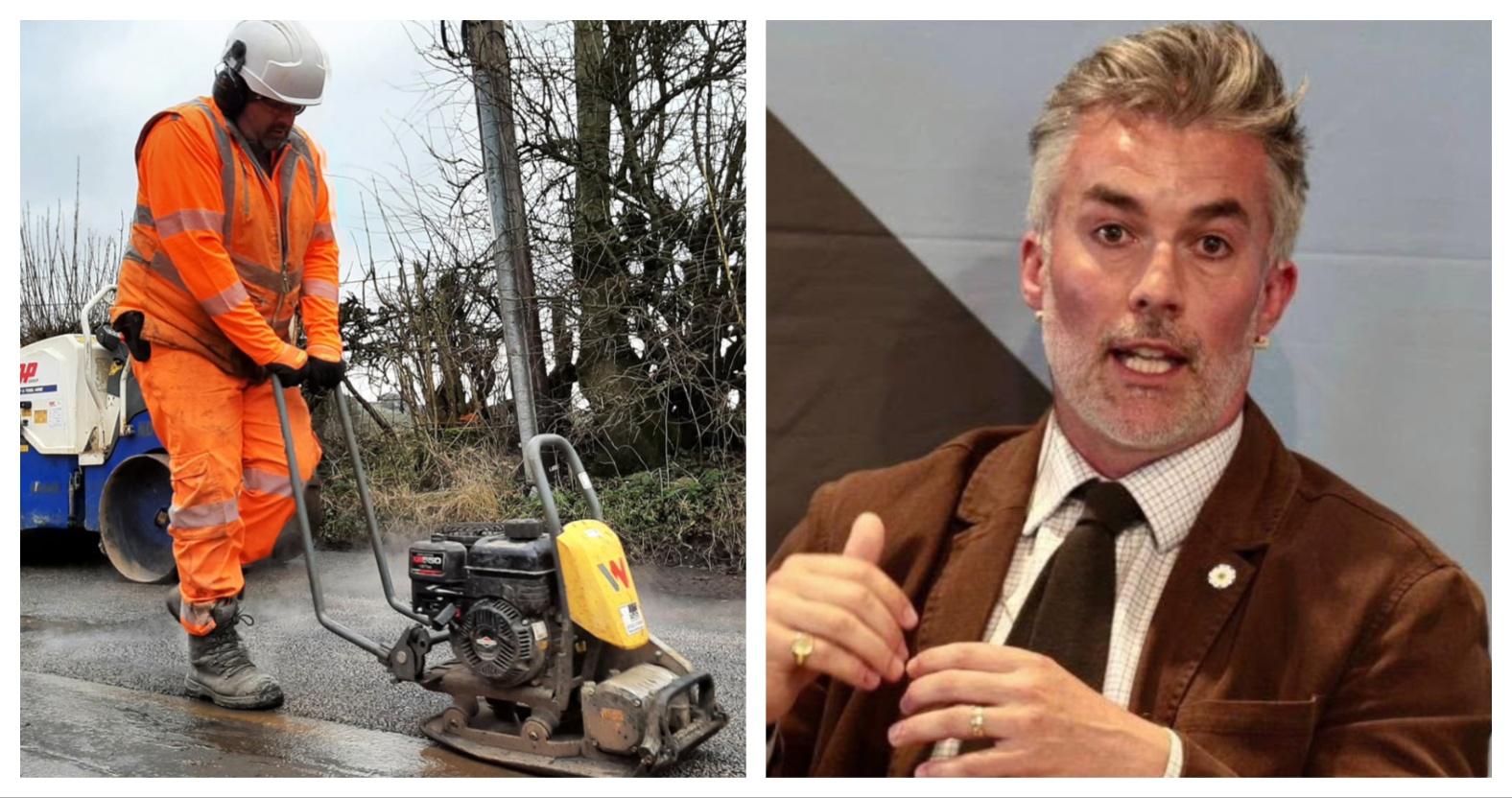
York and North Yorkshire Combined Authority has revealed its reasons for diverting £20.5 million of roads funding from North Yorkshire to York.
Labour mayor David Skaith, who chairs the combined authority, changed the funding formula for highways this year to allocate a bigger slice of the pie to Labour-run City of York Council at the expense of Tory-controlled North Yorkshire Council.
The move infuriated local Conservatives, who claimed the money had been raided from North Yorkshire's roads in a nakedly political act.
Ripon Minster and Moorside Cllr Andrew Williams, a member of the Conservative and Independents group on North Yorkshire Council, even likened Mr Skaith to highwayman Dick Turpin.
The Stray Ferret has repeatedly asked the combined authority what evidence or studies were used to justify the decision.
After protracted freedom of information correspondence with the combined authority, it sent us a Rationale for Highways Maintenance Funding Split document this week.

The combined authority meeting on March 27 when the roads funding decision was made.
The document, which we have published in full at the end of this article, is the most comprehensive account to date of the reasoning behind the combined authority’s decision.
It says the old DfT formula was based on road length, and maintenance costs for highways structures, such as bridges and streetlights.
It adds the new approach “seeks to deliver a compromise between the traditional ‘road length’ formula based on an asset inventory, and road usage metrics to reflect how roads are used and the economic activity they support, including rate of deterioration and consequence of consequence of network degradation or failure”.
The Department for Transport used to allocate highways funding based on a 92.7/7.3 ratio in favour of North Yorkshire.
But the creation of the combined authority in 2023 gave the mayor power to decide how to distribute the split between the two local authorities.
Mr Skaith decided to change to a 90:10 split, which will reduce the overall sum awarded to North Yorkshire by £20.5 million for the four-year funding settlement from 2026-30.
A total of £456.2 million has been awarded to the two councils over the four-year period.
Both will receive more than they previously did — but the change in the split has caused deep divisions. North Yorkshire Council threatened legal action over the move, but withdrew the threat.
Here is the combined authority's statement in full.
Rationale for Highways Maintenance Funding Split
"York and North Yorkshire Combined Authority receives the Mayoral Transport Fund from DfT to support its investment in the maintenance and improvement of its transport network. Devolution means that how this funding is spent is decided locally, within parameters set by central government.
It is the responsibility of the combined authority to distribute this funding according to mayoral priorities, national guidance and local ambition. Although not the highways authority, this includes responsibility for distributing funding for highways maintenance to local highways authorities to undertake this work.
DfT does not specify how that funding should be distributed across YNYCA, although incentives for maintaining asset management and transparency standards remain, and the authorities must be able to meet their statutory requirements.
In previous years, DfT’s Highways Maintenance Block allocation formula has meant that their funding would be split on a [92.7:7.3] ratio between North Yorkshire and City of York, if totalled across the region. This formula is driven by road length, with multipliers for road classification, numbers of bridges and structures, numbers of lighting columns and the relative cost of maintaining different structures. It does not take full account of local significance of particular routes, road usage or factors such as types of vehicle, traffic loading or climate resilience.
The mayor is prioritising distributing funding according to the outcomes it delivers for the region as a whole (such as economic growth), rather than by length of road or to retain each authority’s historic ‘share’. By allocating funding with reference to local circumstances, the mayor and the combined authority will be able to take account of anticipated funding (e.g. the Structures Fund) and other locally important differentials such as traffic loading, climate resilience.
The following potential methods of allocating funding were explored:
DfT Allocation Methodology (Network Length) - assumed
NYC 92.89%
CYC 7.66%
Population (ONS data)
NYC 66%
CYC 34%
Road Usage
NYC 87%
CYC 13%
The proposed distribution of funds will enable York and North Yorkshire Combined Authority to respond to changing circumstances and priorities through the Mayoral Road Maintenance Fund (10% of maintenance funding available), prioritising responsiveness to local needs and supporting regionally important outcomes.
The distribution of the remainder of the highways maintenance funding per authority (on a 90:10 ratio) seeks to deliver a compromise between the traditional ‘road length’ formula based on an asset inventory, and road usage metrics to reflect how roads are used and the economic activity they support, including rate of deterioration and consequence of consequence of network degradation or failure.
As York and North Yorkshire Combined Authority's transport function grows and increased data is made available, this methodology continue to be developed to further reflect local need and priorities."

4