Thank you for your interest in this story
To continue reading this article, subscribe to the Stray Ferret for as little as £1 a week
Already a subscriber? Log in here.
13
Sept
Explained: What would a tourist tax in North Yorkshire look like?
This week, the government outlined plans which will pave the way for a tourist tax being introduced in North Yorkshire.
The policy will hand mayors, such as Labour’s David Skaith, the power to impose an overnight charge on room bookings and give them the ability to raise revenue locally.
It comes as a 76-page report, which was commissioned by Mr Skaith, analysing different models for a tourist tax in North Yorkshire was published on Monday.
In this article, we take a closer look at the report and unpick what a visitor charge could look like in the county.
What is a tourist tax?
A visitor levy — commonly known as a tourist tax — is a charge for overnight accommodation, such as hotels, in a defined area.
It is used to raise money to help offset the strain of high visitor numbers.
Cities such as Manchester, Liverpool and Edinburgh all have versions of a levy, which are used to clean streets and set up marketing campaigns to increase footfall.
The government outlined plans this week to give mayors across England the power to implement uncapped levys.
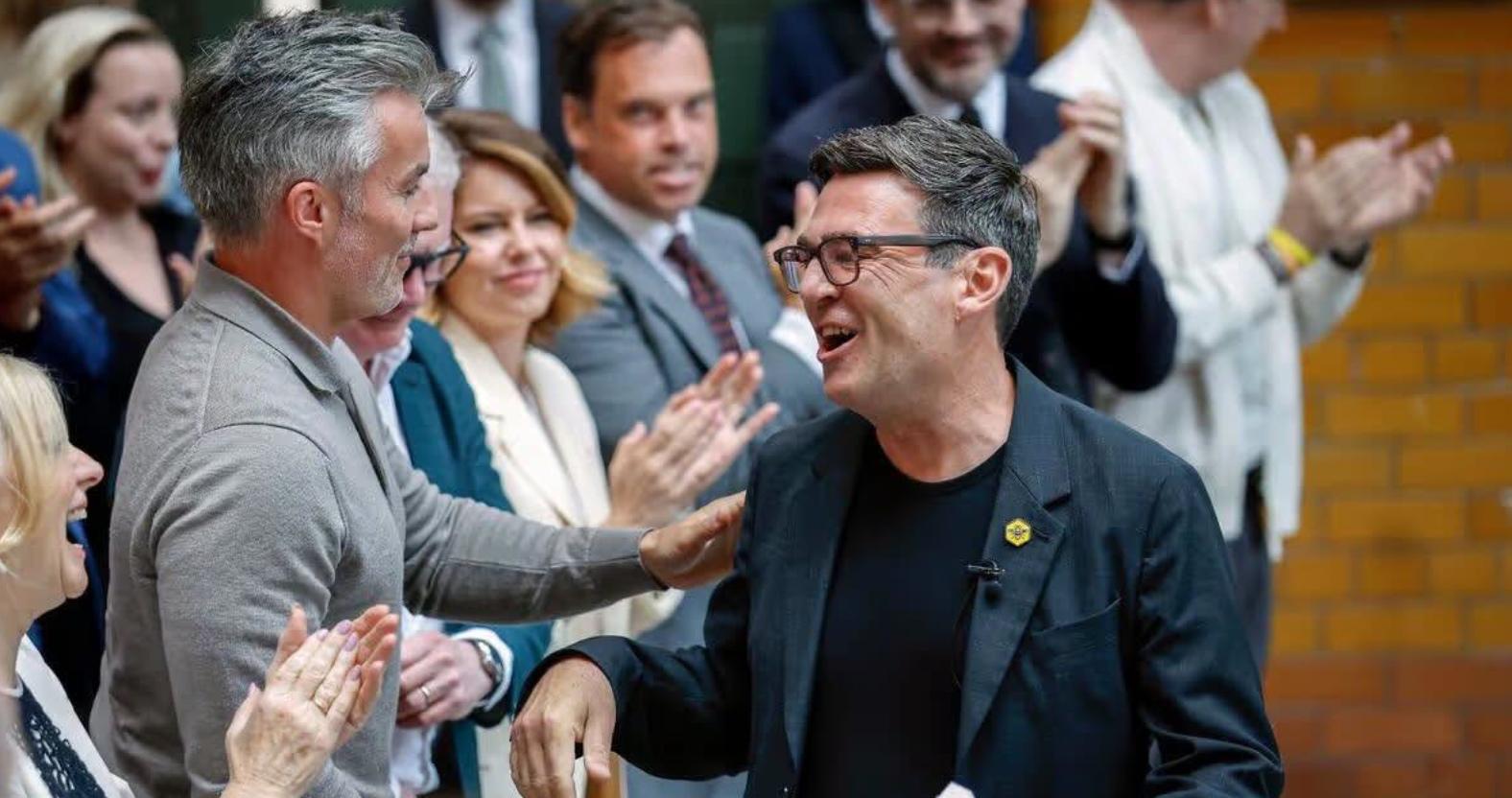
York and North Yorkshire mayor David Skaith (left) is a key regional ally of Andy Burnham (right).
Prime Minister Andy Burnham has framed the policy as part of his devolution agenda, which will give local mayors the means to raise revenue.
However, the legislation to introduce an overnight visitor levy has yet to be brought before Parliament.
What would a North Yorkshire levy look like?
A report commissioned by Mr Skaith on Monday (September 7) said a £1-a-night room charge could raise £26 million a year in North Yorkshire.
The recommendation was made in report by Policy Lab, which was set up last year by York and North Yorkshire Combined Authority, which Mr Skaith chairs, and York St John University.
The flat rate was considered the best option for the county because it was the simplest to follow and offered a reliable revenue stream.
However, the recommendation was dashed on Thursday as the government opted for a percentage fee as its preferred option.
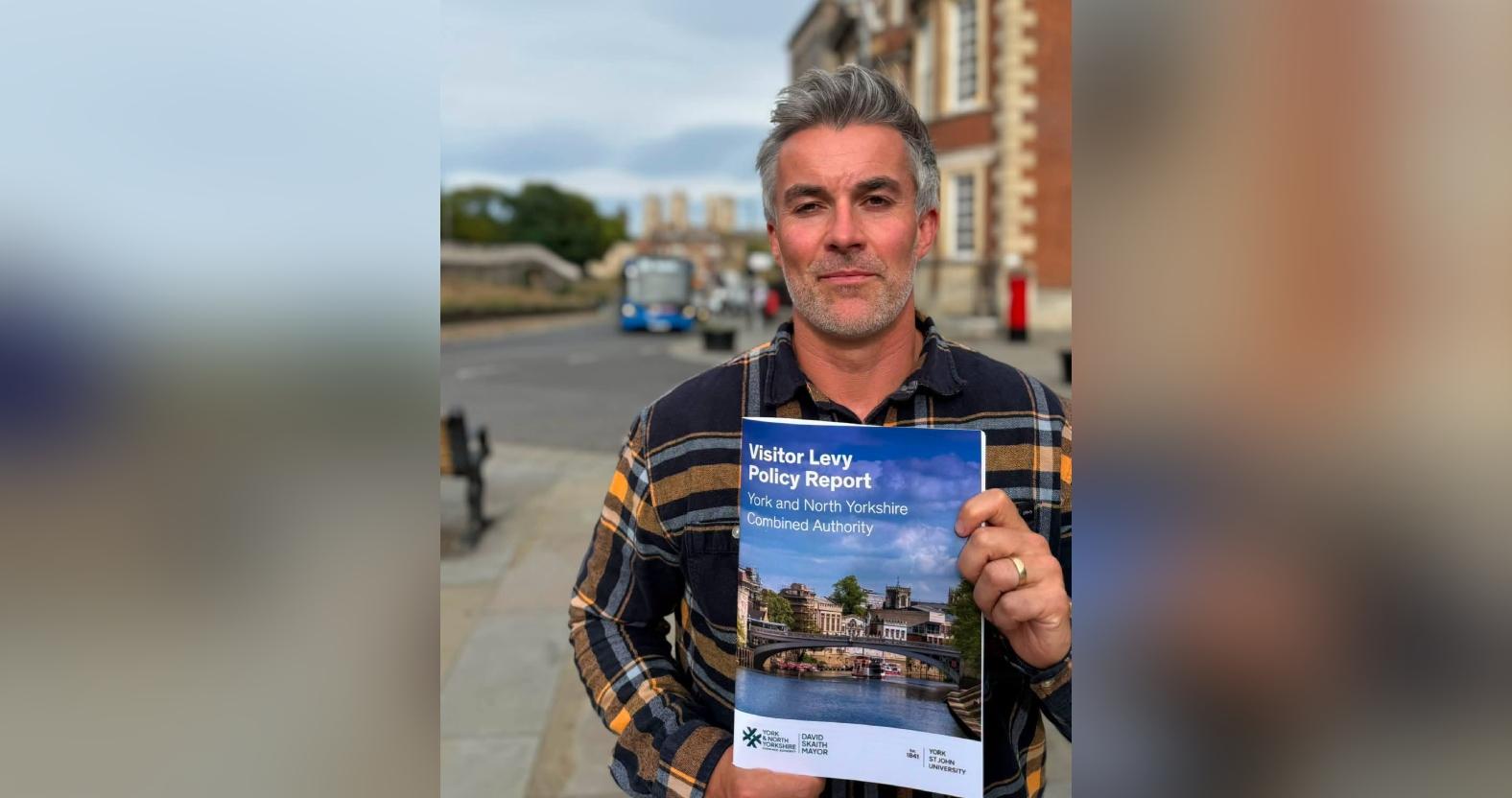
David Skaith with the tourist tax report he commissioned.
It said any levy would have to be charged as a percentage of the cost of accommodation, rather than as a flat fee, to protect budget accommodation providers, such as caravan parks and camping sites.
Mayors will be able to decide whether to introduce a levy and how the revenue should be invested in their area, in consultation with their residents and local businesses.
The report commissioned by Mr Skaith analysed three separate versions of a tourist tax: a flat rate, a tiered rate and a percentage based rate.
It found that a flat rate would be the “simplest to calculate, report and audit” and would allow for “targeted exemptions”.
By comparison, a tiered rate — which would require accommodations to be classified — was considered to be a model that could be moved towards in the coming years, but not viable as a the county’s first levy.
A percentage rate was considered “weak” and complicated from an administrative point of view.
Who would be exempt?
The report was keen to stress that “targeted exemptions” could be put in place.
Among the areas that the authors suggest are low-cost accommodation, such as campsites and youth hostels.
This could include holiday homes in areas such as Pateley Bridge and the surrounding area, which often see campers pitch up to explore Nidderdale.
While the report recommends that exemptions could be implemented, it stressed that they should be kept to a minimum in order to relieve administrative burden on hotel and guesthouse staff — who may come into dispute over the levy.
It said:
Minimising the number and complexity of exemptions or designing them in a way that does not place undue burden on individual operators, should be treated as a design priority from the outset.
The government said it will give mayors the flexibility to offer exemptions — such as for campsites — so they can tailor the levy to the specific needs of their area.
Why do we need a tourist tax?
Mayor Skaith has long advocated for a tourist levy in North Yorkshire.
The Labour mayor has argued that tourism puts pressure on infrastructure and services in the county, which a levy would help to fund to improve.
Following the publication of the report on Monday, Mr Skaith said:
York and North Yorkshire has something for everyone. Millions visit every year, and that’s why a visitor levy could be a total game changer for us.
Thriving communities and thriving destinations go hand in hand, but welcoming so many visitors puts pressure on the infrastructure and services our residents rely on.
We must get this right for our county so we can invest in our communities, and our hospitality and tourism businesses. That's why I'm committed to keep talking with the sector as the details come together.
Mr Skaith also signed a letter, which was sent to Chancellor John Healey and Angela Rayner, local government secretary, pledging to cap the new charge at 5%.
The letter was also signed by Labour mayors in London, Greater Manchester, Liverpool City Region, West Midlands, North East, West of England, West Yorkshire, South Yorkshire and East Midlands.
However, the idea of implementing a tourist levy is not universally welcomed.
Harrogate hotels voted against implementing a similar levy in February this year. North Yorkshire Council and hotels in York have also opposed the move, fearing the extra cost could deter visitors.
What happens now?
The government has not yet passed the legislation for an overnight visitor levy through parliament, which means the mayor and combined authority cannot introduce one at this stage.
However, the government has made it clear that a percentage charge will be required for any fee which is implemented.
For now, Mr Skaith has said he will continue to meet with the region’s tourism and hospitality groups as he continues to develop plans for a tourist levy.

0