Thank you for your interest in this story
To continue reading this article, subscribe to the Stray Ferret for as little as £1 a week
Already a subscriber? Log in here.
28
Jun
I have a solution to the council flag debate — we should ban them all
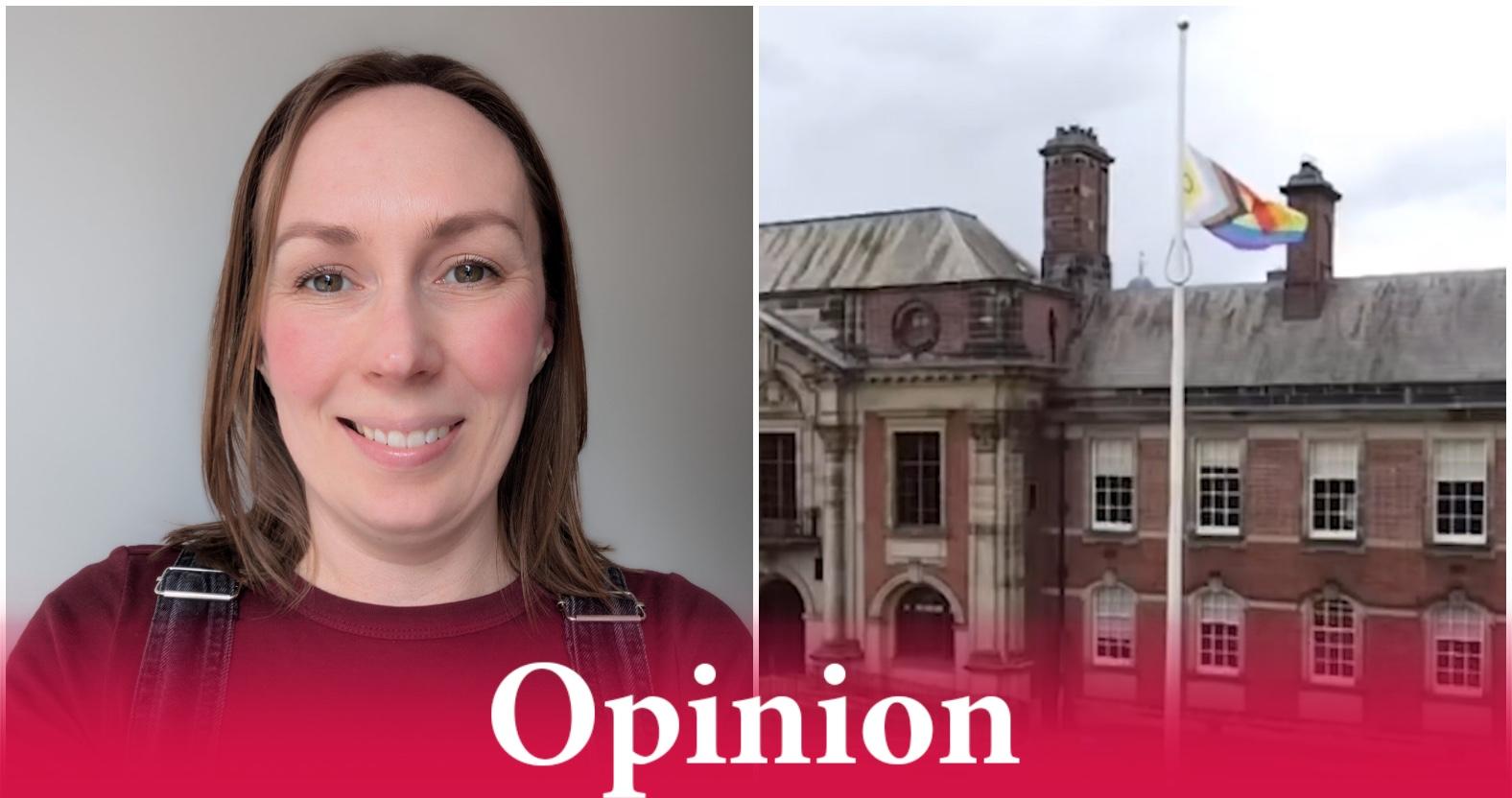
Vicky Carr is a journalist turned writer who grew up in Harrogate and returned in her late 20s to raise her family here. Find her on Instagram @vickycarrwrites.
We all love a good flag, don’t we?
Not only do they look pretty, blowing in the wind above a building, they’re also a great way of sharing our obnoxious views without having to use any tricky words.
This month, during the men’s football World Cup, people have been alarmed by the very low number of England flags being flown around the Harrogate district.
I’ve seen comments on Facebook from people who’ve heard flying the cross of St George is no longer allowed because it may upset foreigners or immigrants, or snowflakes, or whoever else can be blamed for this non-existent problem.
Sadly, it’s nothing new. When I was working in local journalism in during the 2010 World Cup, I took a phone call from someone who told me they knew for a fact that a pub in town had been told by police to take down its England flag because it might offend someone.
It was absolute nonsense – a rumour which had taken on a life of its own and become incontrovertible truth to those who were already inclined to believe it. This year, clearly, the rumour persists.
Have those who believe it considered that there may be a simple explanation for the low number of England flags being flown?
For a start, it’s often a sign to football fans that they can watch the match in the premises – and there are fewer and fewer pubs which show live sport these days.
Equally, perhaps people don’t feel comfortable flying the cross of St George because it has been weaponised. By flying it, you’re not just saying “I support England at the World Cup”. You may (inadvertently or otherwise) be saying “I’m taking my country back from immigrants”, or “I think Nigel Farage is a fairly decent chap and definitely not a frog-faced, self-serving smear on public life”.
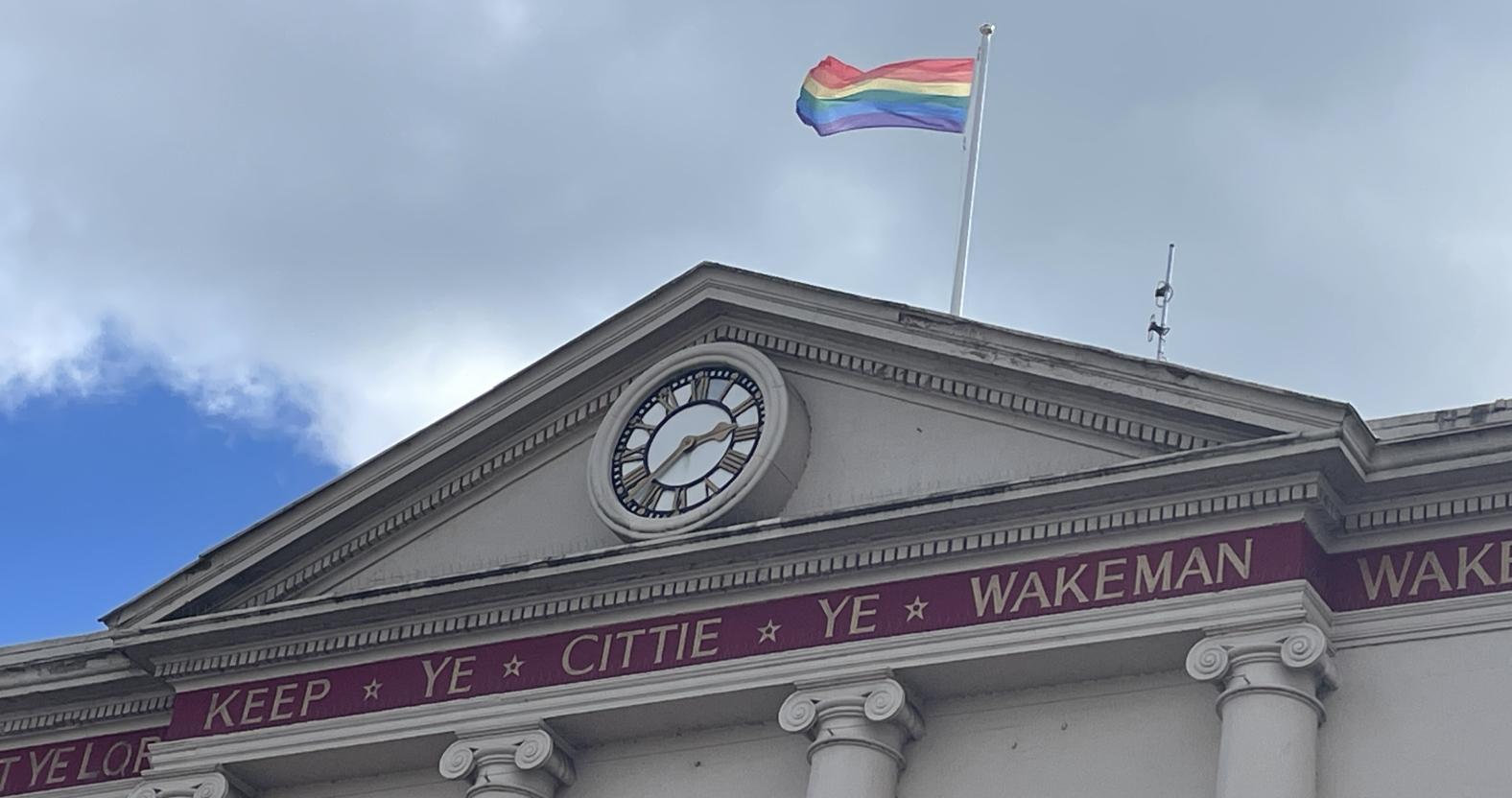
The rainbow flag flying from Ripon Town Hall on May 17, 2026.
It may not surprise you to hear that I don’t own anything with an England flag on it. It has been so abused for the intimidation of minorities that I find it a deeply uncomfortable symbol of Englishness – one with which I no longer identify.
There has been a second flag-based controversy this week, to which I had the opposite reaction. North Yorkshire Council posted on social media that it was flying the Pride flag outside its Northallerton headquarters this month – and there was an immediate pile-on.
Many of these people were simply misinformed. “Why not fly our Union flag?” they demanded.
Of course, what they failed to check was whether the Union flag is flown outside County Hall. It is – right next to the Pride flag – and it’s there all year round. But let’s not let facts get in the way of an indignant rant on Facebook.
“When’s straight pride month?” others asked.
We hear the same thing with depressing regularity. Every June, people rage that they are “forced” to tolerate others celebrating their sexual identity.
International Women’s Day in March brings a similarly predictable response: “Why isn’t there an International Men’s Day?” (There is. It’s in November.)
See also Black History Month, which brings a wave of demands for an allocated time to celebrate white history, as if that’s not already marked during all 11 other months of the year.
The reason for all these celebrations is to recognise groups which have previously been subjugated. North Yorkshire Council, along with many other organisations, flies the Pride flag to recognise people who spent many, many years without the same rights as their friends, neighbours and colleagues.
They had to hide who they were, or face arrest, imprisonment, or worse – and all of this within living memory. Pride month is a wonderful opportunity for them, indeed for everyone, to celebrate equality, in the eyes of the law at least.
Again, you may be unsurprised to hear I’m all in favour of this recognition.
‘When you’re accustomed to privilege, equality can feel like oppression’
Yet to some, these celebrations feel threatening. By flying the Pride flag, they argue, North Yorkshire Council is prioritising LGBTQ+ people over others.
It’s a weak argument, at best. It fails to recognise the history of legal and social oppression endured by many people because of their sexuality. It overlooks the fact that even acknowledging their identity in public can still, in 2026, feel risky and radical.
As the saying goes, when you’re accustomed to privilege, equality can feel like oppression.
Next time you find yourself wondering why a group needs a flag, a month or a public celebration, ask yourself this: are people in this group still living with the legacy of inequality?
And when you want to fly a flag yourself (or make a big fuss about others being allowed to do so), just check whether what you’re actually trying to do is establish your dominance.
Because a flag is a symbol of intent. And that intent can be open and supportive and celebratory, or it can be aggressive and exclusionary and cruel.
Until we can all tell the difference between the two, perhaps banning flags is the best solution.
Just as I tell my bickering children, if you’re going to use your toys as weapons, we’ll have to take them away until you learn to play nicely.

7