Thank you for your interest in this story
To continue reading this article, subscribe to the Stray Ferret for as little as £1 a week
Already a subscriber? Log in here.
09
Jan
Longevity but poor health in later life… 10 stats from new North Yorkshire public health report
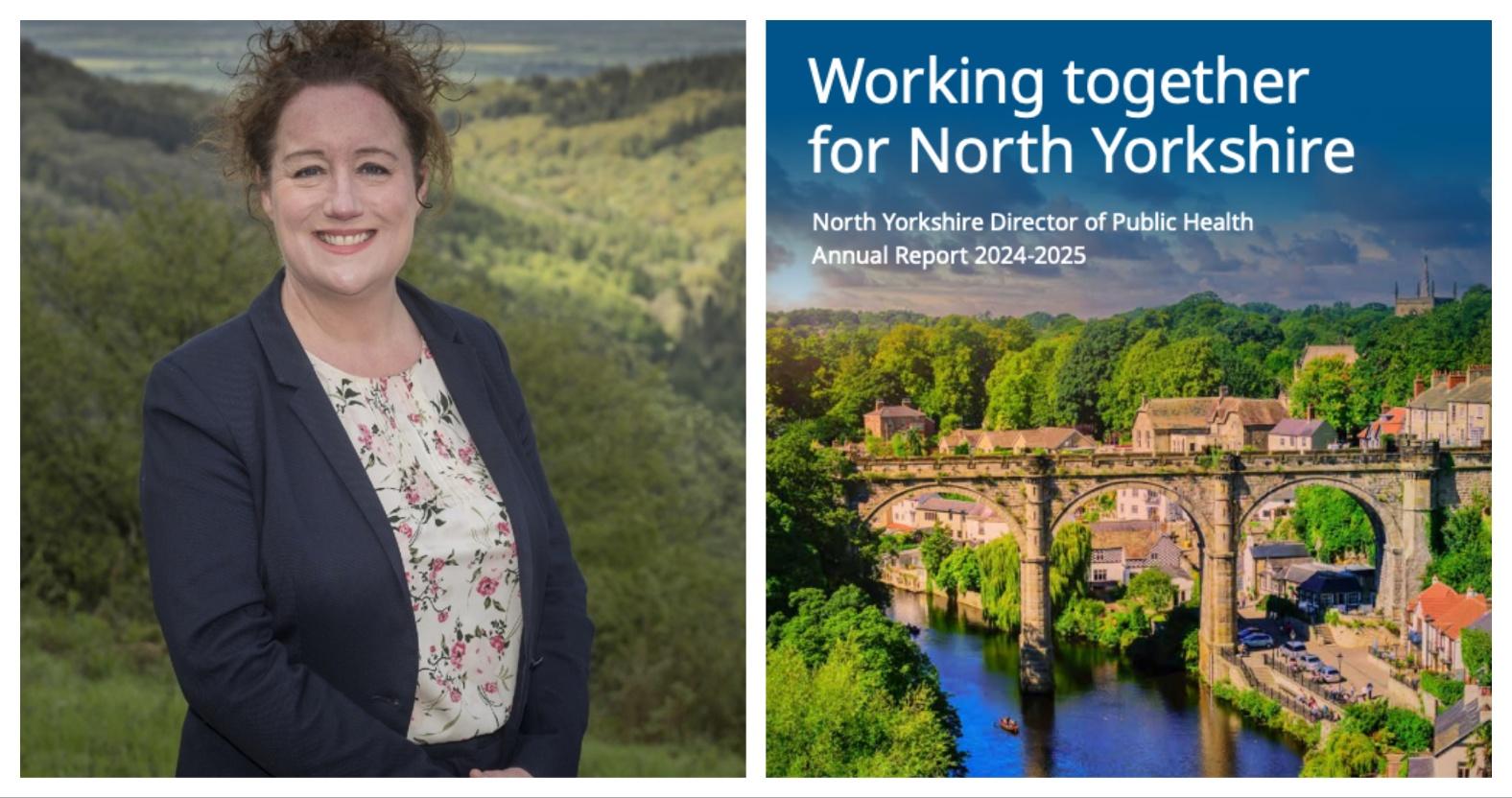
Each year, Louise Wallace, the director of public health for North Yorkshire, publishes an annual report containing a wealth of statistics on the state of the county’s health.
Ms Wallace's latest report, covering 2024/25, has just been published.
It reveals North Yorkshire Council’s public health grant was £25,714,561 in 2024/25 — a more than 20% reduction on a real-terms basis since 2015/16.
We have scanned the 51-page document to find 10 key public health findings for England’s largest county, which is home to about 620,000 people.
1 Longevity — but poor health in later life
Life expectancy in North Yorkshire is 83.8 for women and 80.2 men, which is higher than the respective UK averages of 80.0 and 79.1. However, healthy life expectancy — the number of years lived in good health — remains notably lower than total life expectancy in North Yorkshire. For women it’s 64.6 years, which means 19.2 years in poor health, and for men it’s 63.8 years, which means 16.4 years in poor health.
2 Older demographic
North Yorkshire has a significantly older demographic than the national average. A total of 26.4% of residents are aged 65 and over, compared with 19.3% in England. This proportion is projected to rise to 33% by 2043. Just 17.5% of the population is under 18.
3 Breast screening down
Breast screening rates have declined from 82.4% in 2011 to 73% in 2022. No reason is given.
4 Cervical cancer screening down
Another concern is that cervical cancer screening coverage has decreased from 79% in 2010 to 75.5% in 2023 in women aged 25 to 49. It has decreased from 82.3% in 2010 to 78.6% in 2023 for women aged 50 to 64.
5 Smoking below 10%
Smoking rates have declined to 11.6% nationally and 9.8% in North Yorkshire but it is still the leading cause of preventable death in the UK. Smoking remains disproportionately high among people with lower incomes and poorer mental health.
6 Women at far greater risk from falls
Double the number of women aged over 65 have an emergency hospital admission due to a fall compared with men (1,860 females compared with 975 men).
7 Gender gap in mental health admissions
The rate of hospital admissions for mental health conditions in females under the age of 18 is almost double the rate of males.
8 Abortion increase
The rate of abortions has increased to 16.3 per 1,000 in 2021, up from 12.6 per 1,000 in 2018. An increase in the rate of abortions for those aged over 25 has also been seen — it has risen from 10.6 to 14.2.
9 Gender gap in caring
A total of 11% of women provide unpaid care in North Yorkshire compared with 7.6% of men.
10 Predominantly White British
White British comprise 93.27% of North Yorkshire’s population. The largest minority ethnic groups are White Other (2.85%), Asian/Asian British (1.4%), and Mixed/Multiple ethnic groups (1.1%).

0