Thank you for your interest in this story
To continue reading this article, subscribe to the Stray Ferret for as little as £1 a week
Already a subscriber? Log in here.
20
Aug
Pinewoods guardian 'calls out' council for inaction on woodland fire risk
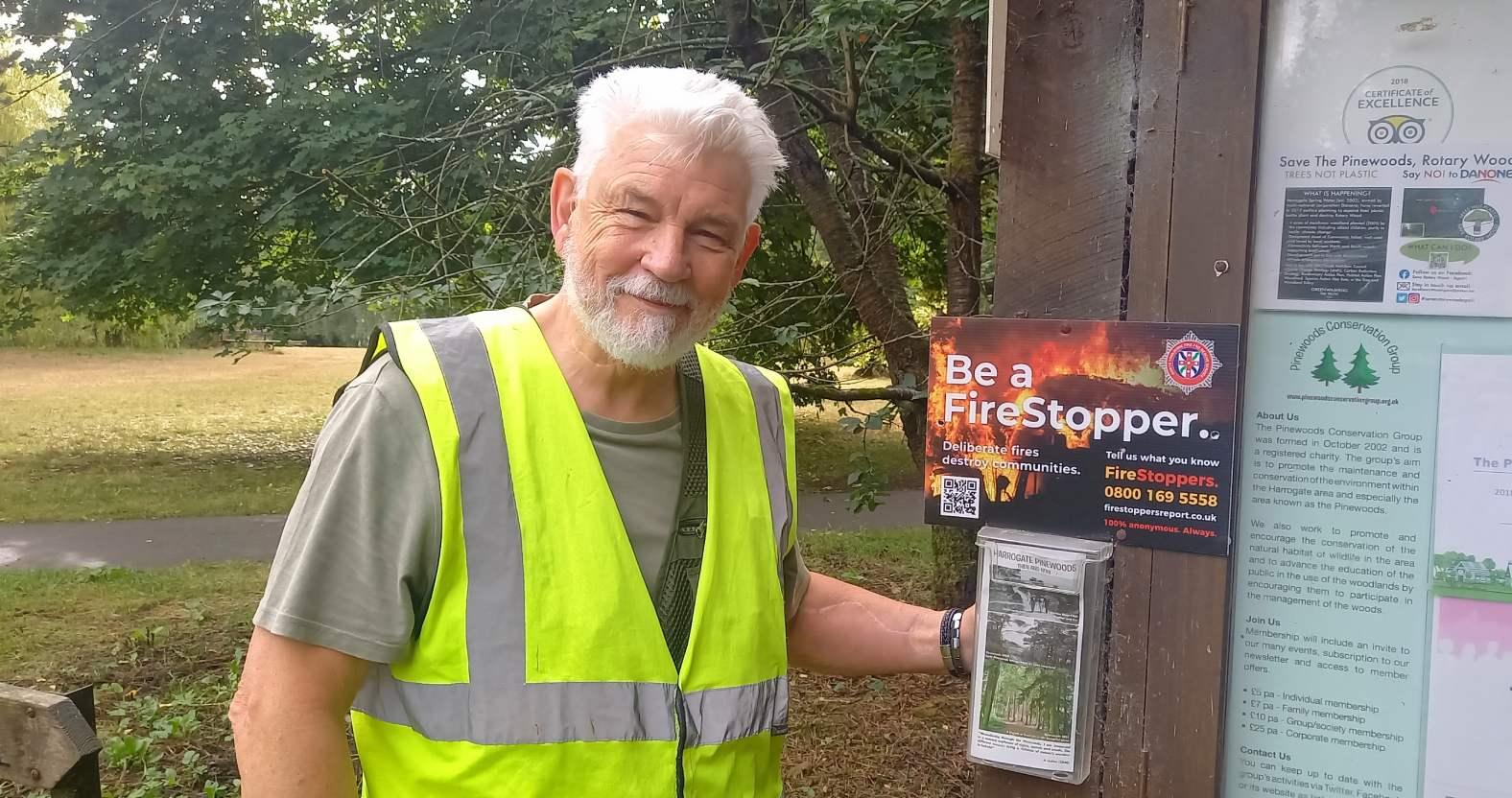
A volunteer who has spent years campaigning for special legal protection for Harrogate’s Pinewoods is “calling out” senior council officers, who he says have not done enough.
Lyndon Wallace is singling out North Yorkshire Council chief executive Richard Flixton and the council’s environment chief, Karl Battersby, for not introducing and enforcing a public spaces protection order (PSPO) to protect the woods from wildfires and other threats.
A PSPO is a power given to local councils to stop specific anti-social acts in a defined local geographic area.
Mr Wallace, who is a member of the Pinewoods Conservation Group, said:
I’ve held my tongue for so long because we still have to work alongside the council. But I have been angered and frustrated for over three years with the lack of action by North Yorkshire Council in preventing the threat of fire and dealing with the other problems we regularly experience.
I am calling out Richard Flixton and Karl Battersby to take responsibility for the problems in the Pinewoods. I want to see prohibiting signs installed immediately, and a PSPO before next spring.
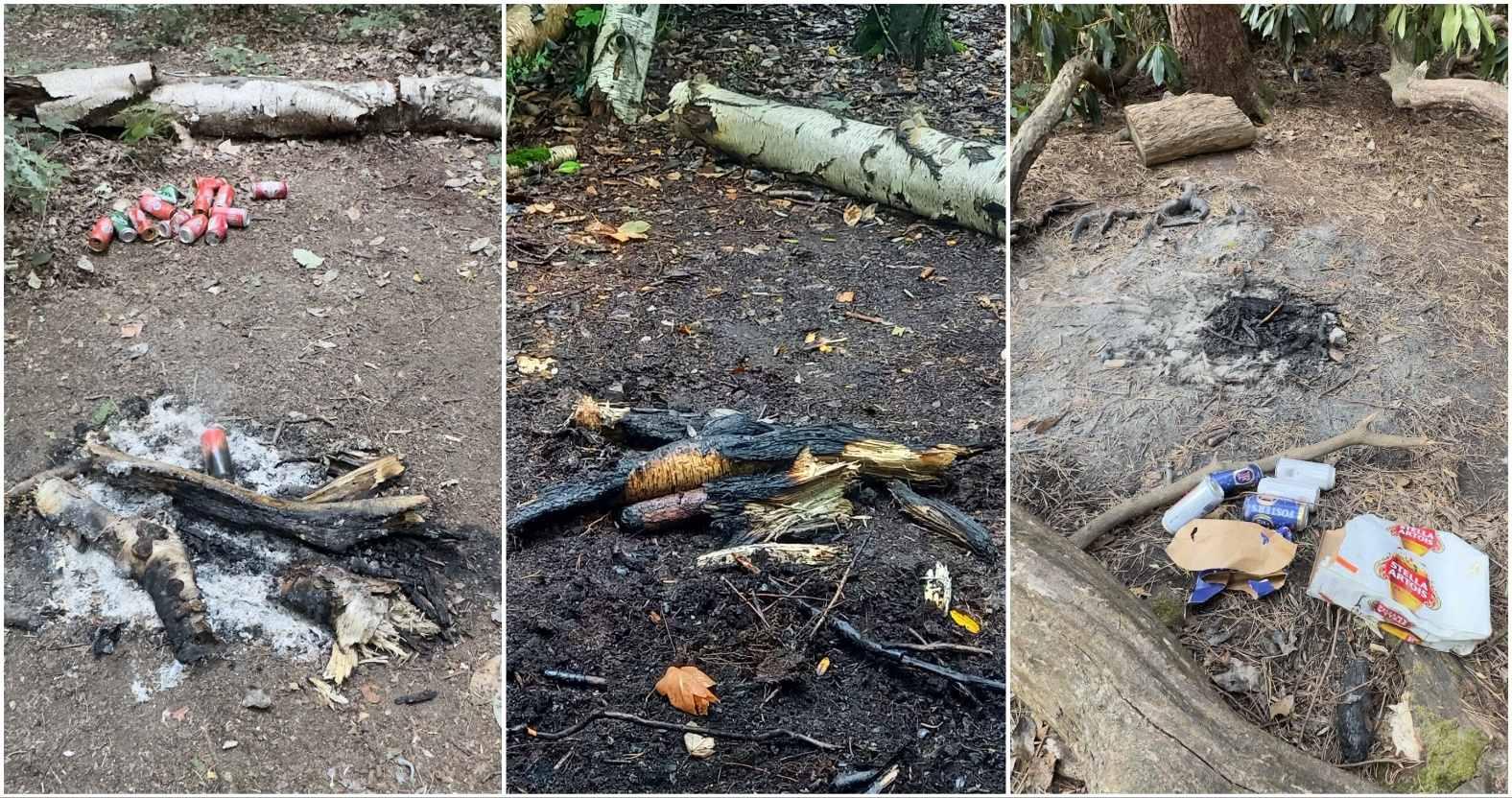
Mr Wallace often finds litter around the smoking embers of a fire from the night before.
Mr Wallace visits the woods most days from 6.30am, and checks the area for signs of campfires, which are often made under the trees. If he finds one, he calls North Yorkshire Fire and Rescue Service, which dispatches a crew to put it out.
The Stray Ferret joined him one morning this week. He told us:
Fire is the biggest threat to the woods by far. It has taken 230 years to grow into what we see today, and it could be lost in a matter of days or even hours.
That is not scaremongering, it is a reality. I have mapped about 35 fire hotspots over the last three years in the Pinewoods, so this is a very real threat.
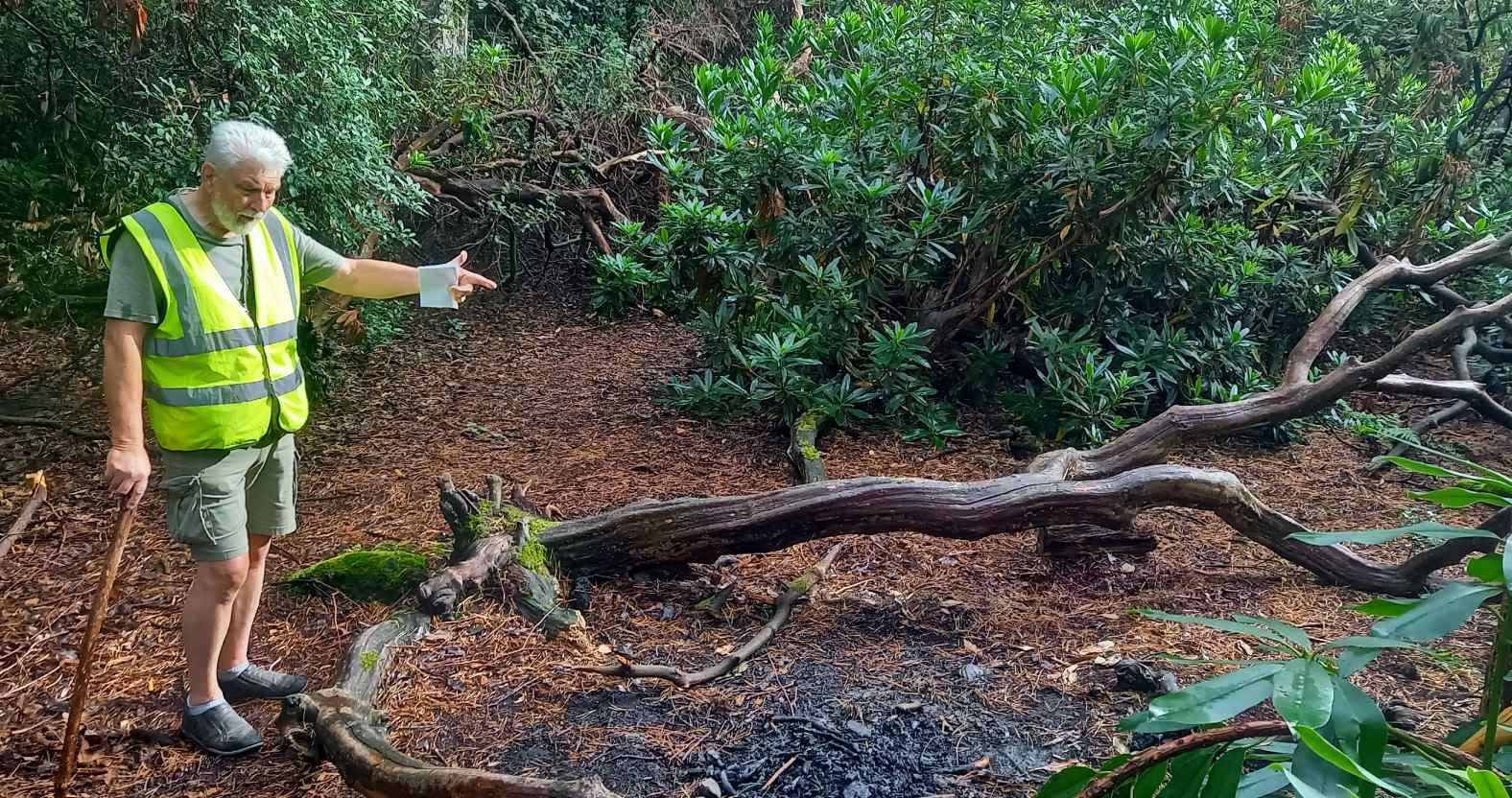
Lyndon Wallace of Pinewoods Conservation Group shows where people have made a campfire in the woods.
Mr Lyndon worries that dry ground, a thick layer of pine needles, underlying flammable peat, and low-hanging branches make the woods particularly vulnerable to fire, and fears that if the worst happened, homes on the surrounding roads – Cornwall Road, Harlow Moor Drive and Snapdragon Way – could also be risk.
His concerns have been heightened over this summer, which saw the driest July since records began in 1836. Dozens of wildfires have claimed nearly 100 square miles of land across the UK since March, and in response the government has introduced a temporary ban on the sale of disposable barbecues and issued an emergency phone alert, which stated:
Even a small flame can rapidly develop into a major wildfire placing lives, homes, businesses and emergency responders at risk.
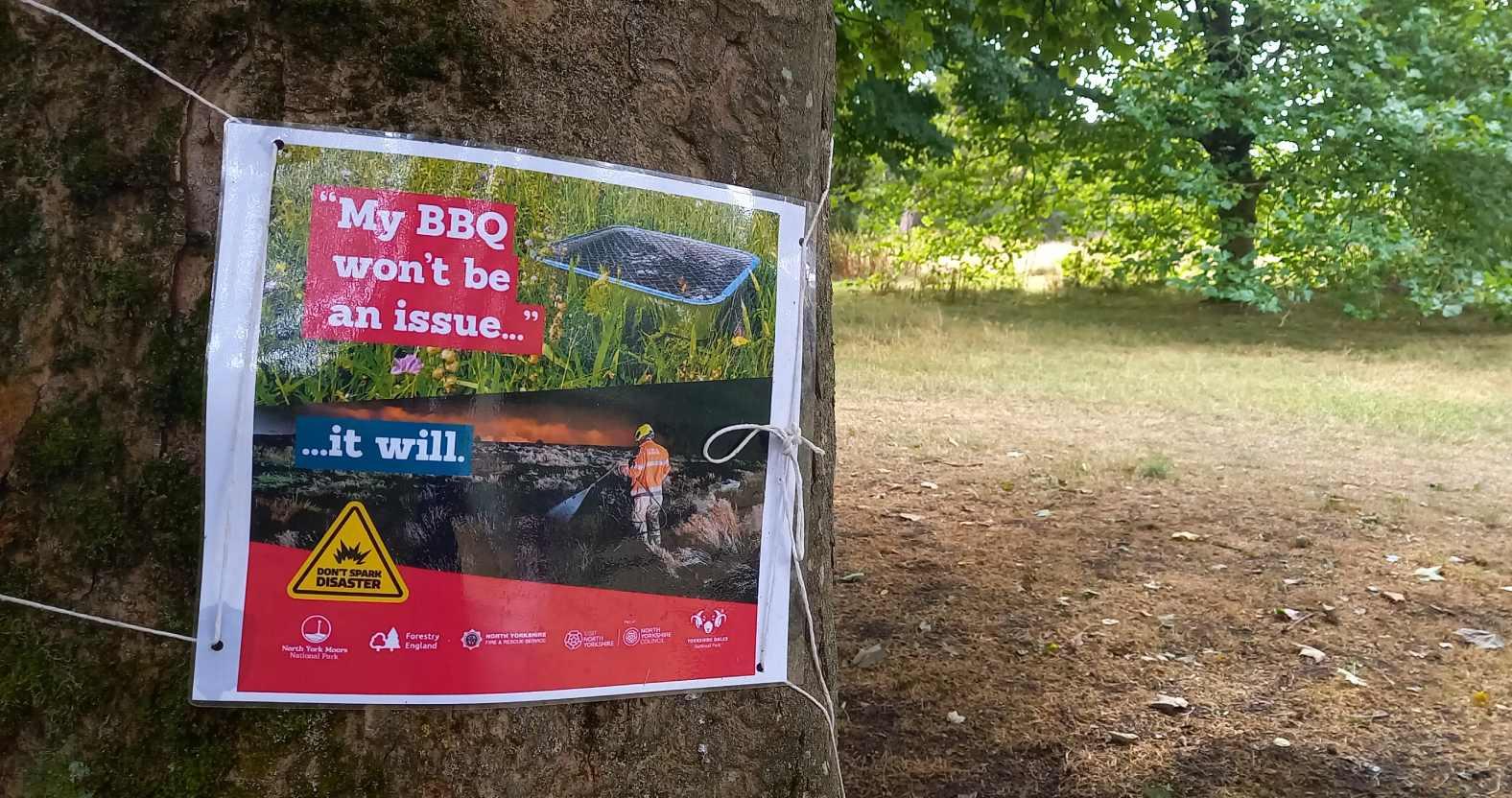
A sign in the Valley Gardens, near the entrance to the Pinewoods.
Fire risk remains even after rain
According to North Yorkshire Fire and Rescue Rescue, crews have attended 52 small fire-in-the-open incidents in the Harrogate area since the beginning of April, each one posing its own dangers.
Rain over the last couple of days has done little to lessen the risk. According to the fire service, people should still refrain from making fires, as land is still dry and fire can spread quickly.
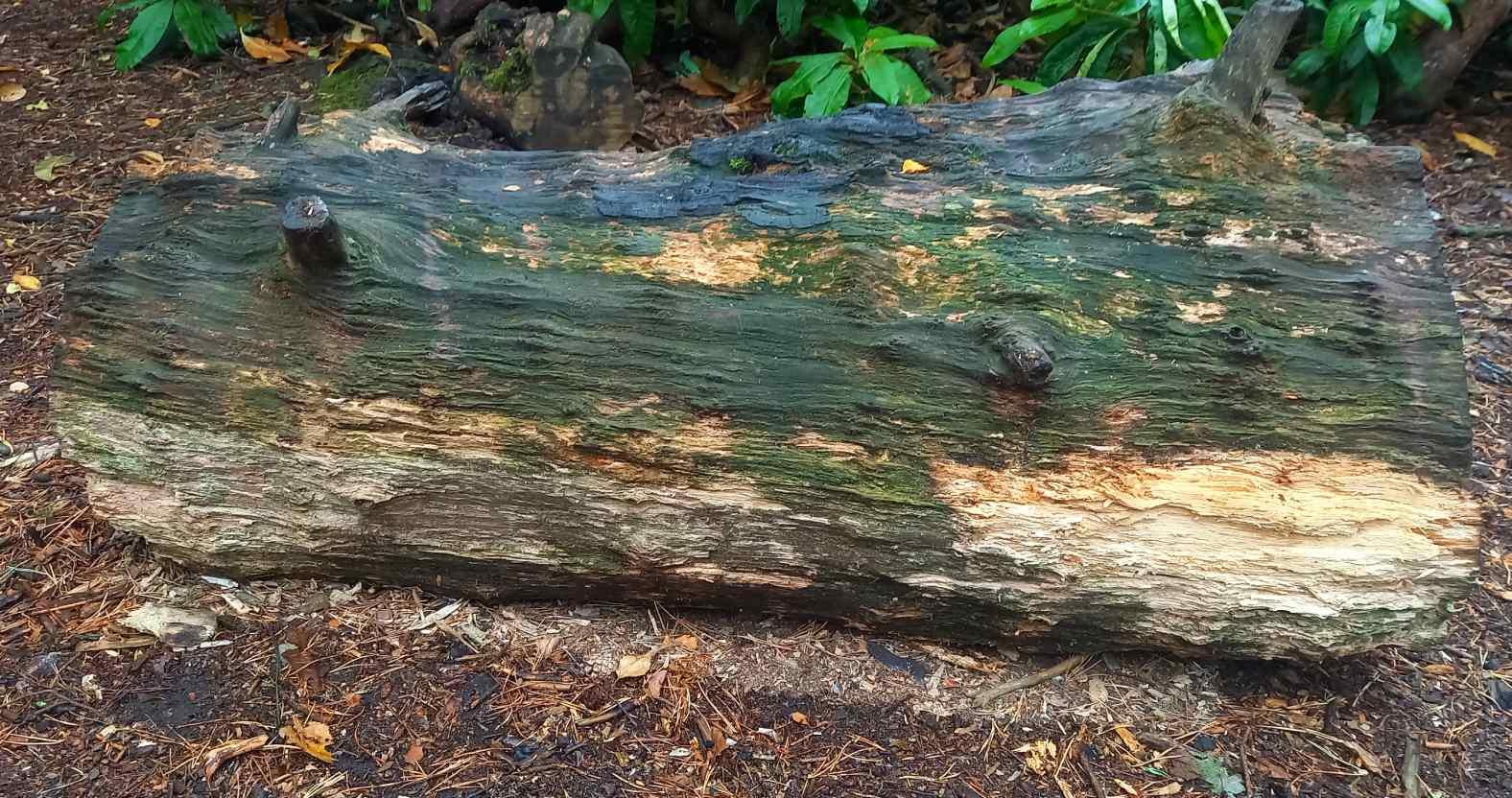
Even after a night of rain, the woodland floor is dry under the shelter of logs and trees.
Fire can move underground
As we headed off the main path into the bushes, Mr Wallace soon found the site of a campfire that had been made just a few days ago.
He said:
This one was particularly dangerous, because it was made right underneath a huge pine tree. If that had gone up....
The implications are obvious – the tree, with drooping branches touching the ground, grows right next to a stand of tall pine trees, whose resin makes them particularly vulnerable to fire.
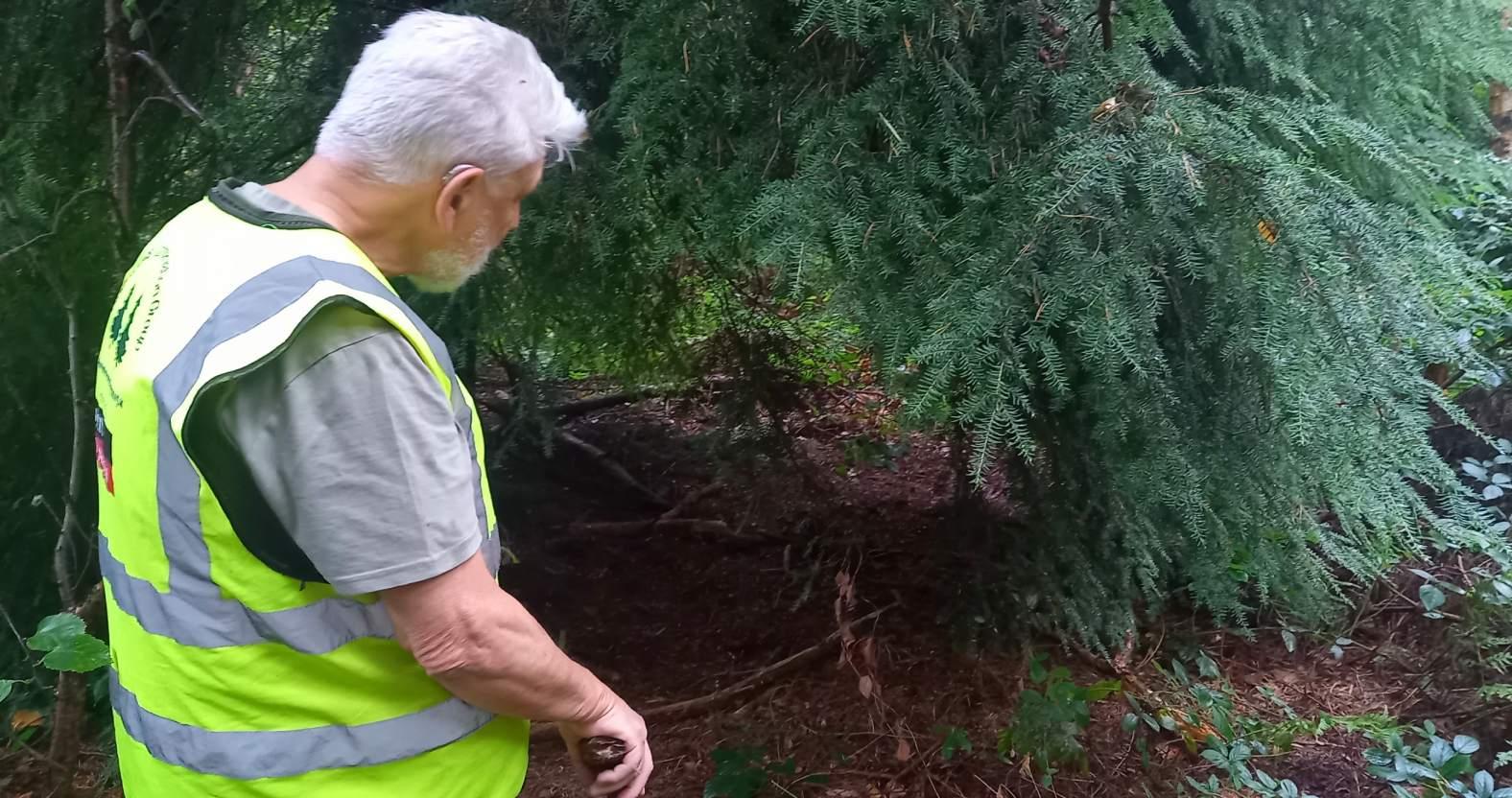
Mr Wallace found the remains of a campfire under the branches of this tree.
Not far away, he shows me the site where a couple of years ago, school-leavers held a book-burning ceremony, sending flames shooting high into the branches.
Another few metres away is a depression in the ground where the smouldering embers of yet another blaze had to be dug out by the fire service. He said:
One of the dangers is that a fire can appear to have been put out, but it can move underground, burning the peat, and reignite somewhere else two or even three days later. That’s what happened here.
The peat is here because before the first Scots pines were planted here in 1796, it was rough moorland, and this species of tree simply adds to the flammability of the area.
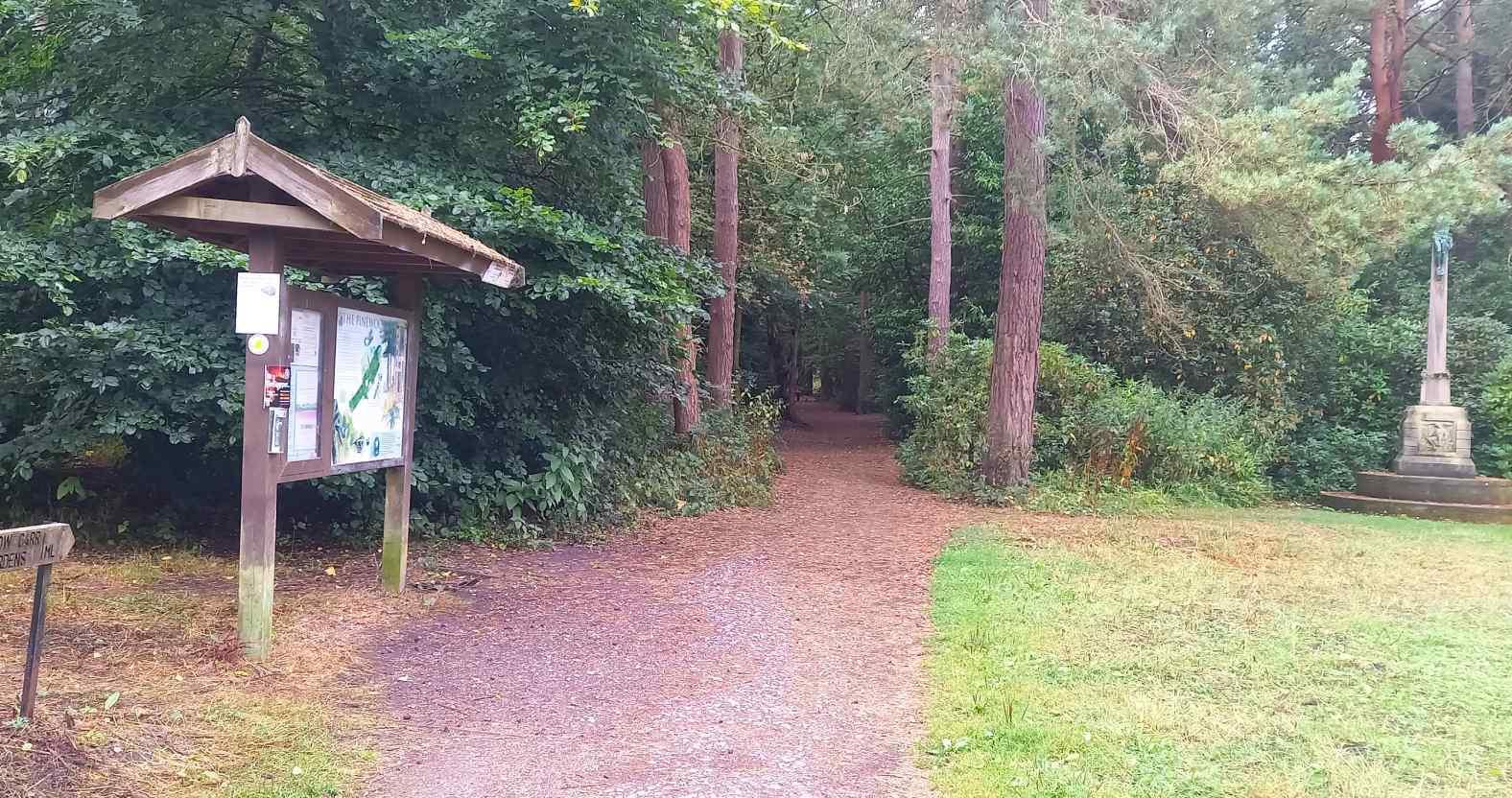
The Valley Gardens entrance to Harrogate's Pinewoods.
Mr Wallace said that, contrary to popular belief, it was not always young people making the fires – he has found people of all ages sitting around makeshift firepits.
Some of them just don’t realise what they’re doing could be dangerous, and when I tell them, they’re fine about it. Others aren’t so friendly.
He said the danger to the trees came largely from a lack of knowledge and education about the importance of keep flames away from dry vegetation. But he also said the local authority was also responsible.
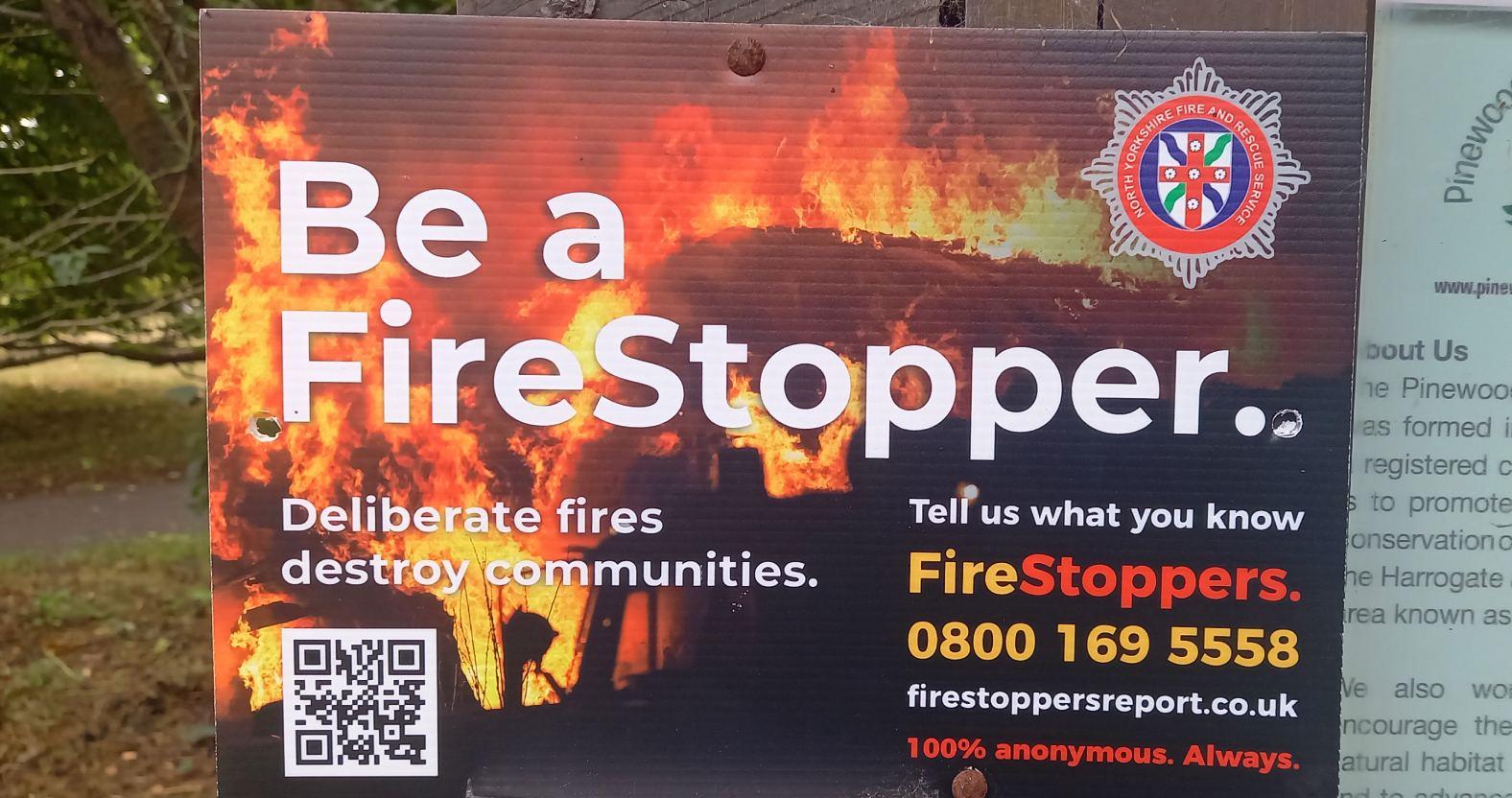
A sign put up at the Pinewoods by North Yorkshire Fire and Rescue Service.
He said:
It’s obviously the fault of people who make the fires, but I also blame the council, who could have done something a long time ago.
A fire in the Pinewoods would not only affect the woodland, but also the surrounding properties. NYC has been made aware of this, but no effective action has been taken.
If there is a major fire in the Pinewoods, Mr Flinton and Mr Battersby, you must be held accountable.
North Yorkshire Council has been contacted for comment.
Reporting a fire
North Yorkshire Fire and Rescue Service is encouraging people to always report acts of deliberate fire-setting. If there is an immediate risk to life or property, they should call 999, but for non-emergencies, they can contact North Yorkshire Police on 101.
Anyone reluctant to speak to the emergency services about deliberate fire-setting can also report fires anonymously, using the national FireStoppers initiative.
North Yorkshire Fire and Rescue Service is a partner in FireStoppers, which can also be used to report attacks on firefighters, fire safety concerns, hoarding risks and fly-tipping.
FireStoppers can be reached on 0800 169 5558, or at firestoppersreport.co.uk.

1