Thank you for your interest in this story
To continue reading this article, subscribe to the Stray Ferret for as little as £1 a week
Already a subscriber? Log in here.
16
Aug
Stress, burnout and low mood: Why learning to pause can change how you respond

This article is by James Graveson, Harrogate-based Advanced Care Practitioner.
Many of us know the ritual all too well. We sit at home after a difficult day carrying worries about work, relationships, finances or loneliness. Rather than facing those feelings, we search for something to escape them. We pour a drink, switch on the television or endlessly scroll through our phones. These distractions offer temporary relief but rarely address what lies beneath.
I see this regularly in my work. Beyond minor ailments, patients frequently present with headaches, palpitations, low mood and overwhelming exhaustion. Alongside physical causes, I often see how stress, burnout and emotional overload can affect how people feel and cope.
It is remarkably easy to drift through life, feeling less like the driver and more like a passenger watching events unfold.
NHS England estimates that around one in four adults experiences anxiety or depression in any given week, reminding us how common these struggles really are.
When we experience anxiety, loneliness or uncertainty, we can naturally feel drawn towards escaping these uncomfortable emotions. Psychologists refer to this as experiential avoidance. Rather than sitting with difficult emotions, we instinctively seek relief through distractions such as our phones, television, alcohol or other behaviours.
The difficulty is that avoidance rarely solves the problem. Instead, it often reinforces the very cycle we are trying to escape. We experience discomfort, seek temporary relief, feel better briefly, then find ourselves facing the same thoughts and emotions again. Without recognising the pattern, we can spend years repeating the same cycle expecting a different outcome.
Breaking that cycle begins with recognising that we can learn new ways of thinking and responding.
Viktor Frankl wrote about the space between what happens to us and how we respond. Within that space, he suggested, we have the freedom to choose our response. See more in this YouTube video:
We cannot always control our circumstances or emotions, but we can learn to recognise our reactions and choose what we do next. That pause is where change begins. Like any skill, learning to use it develops through practice rather than good intentions.
Consider how we approach growth elsewhere in life. If we want to lose weight, we do not expect a handful of gym sessions to transform our health. If we want to master an instrument or learn a new language, we accept that progress requires consistency, structure and guidance.
Personal growth is no different.
Recognising that I lacked the skills to pause before reacting and alter my patterns of thinking, I committed to weekly therapy.
Alongside this, I explored psychology, behavioural change and Stoic philosophy, and read Atomic Habits, Dopamine Nation and The Chimp Paradox. Together, these experiences taught me to focus on the only thing I could truly control: my responses. Gradually, that pause became a habit. My responses became choices that reflected the person I wanted to become rather than the emotions I happened to be experiencing.
Understanding ourselves is not enough; knowing what to do and consistently doing it are very different things. Real change came from repeatedly using that pause to practise healthier behaviours until they became my new default.
The quick fix is an illusion. Lasting change rarely comes from a moment of inspiration but from repeatedly choosing better responses long after motivation has faded. The destination gives us direction, but the journey is where growth happens.
As Aristotle argued, excellence is formed through repeated practice. Modern neuroscience shows that the brain can adapt in response to repeated thoughts, behaviours and experiences. In practice, repeatedly choosing healthier responses can make those patterns easier to maintain. Growth, then, is rarely a single breakthrough. It is built through small, intentional habits practised daily.
Turning the corner begins with an honest look at ourselves. We might ask: What am I avoiding? What kind of person do I want to become? What small step could I take today that moves me in that direction?
For me, that meant growing confidence by trying new hobbies, exercising regularly, learning to love my own company by eating out alone and even going to the cinema by myself. If that feels too daunting, start small. A walk through the Valley Gardens, sitting quietly with a notebook, or simply allowing yourself time to reflect can be a powerful first step.
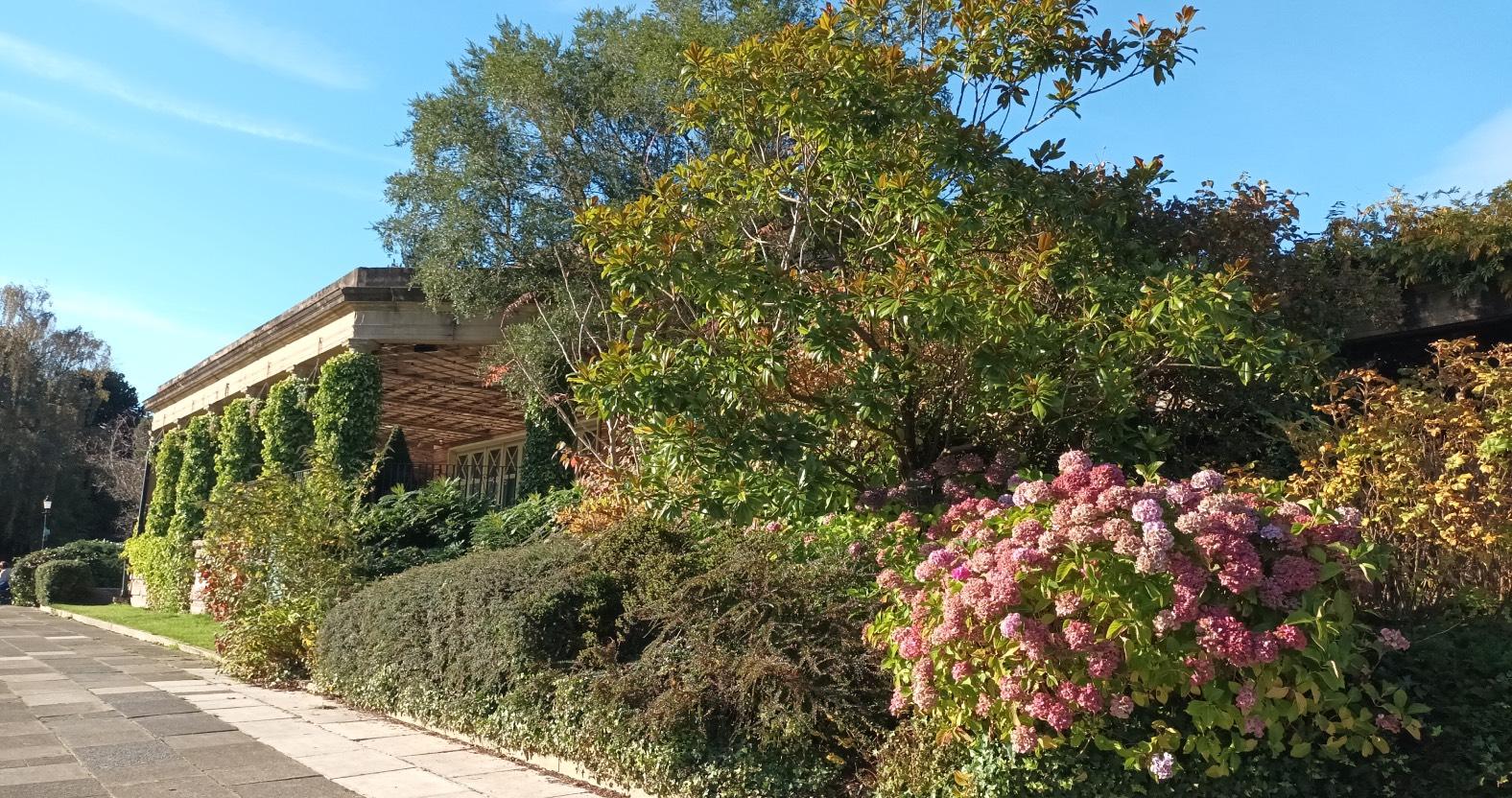
Valley Gardens
Self-examination is challenging, but it does not have to be faced alone.
If you are struggling and are unsure where to start, whether with your mental health or physical symptoms, I would always recommend speaking with your GP. They can help assess what is happening and signpost you towards the most appropriate support.
If you have a particular interest in the ideas explored in this article, Harrogate Library also offers free access to books on psychology, behavioural change and mental wellbeing.
A final thought comes from a close friend whose words have stayed with me: “This too shall pass.”
Those words remind me that difficult thoughts and emotions do not have to dictate my response. They are temporary, and within the space between what happens and how we respond, we can pause, reflect and choose our next step.
We cannot always choose our circumstances, and we cannot always choose what we feel, but we can choose how we respond. Those choices, repeated day after day, are where lasting change begins.
For your mental health, North Yorkshire Talking Therapies offers a self-referral service through its website or by telephone, providing a range of courses and cognitive behavioural therapy.
If coping mechanisms have developed into substance dependency, North Yorkshire Horizons can offer specialist support.
If you are experiencing a mental health crisis, call NHS 111 and select option 2 to speak with the Mental Health Crisis Team or call the Samaritans on 116 123.

1