Thank you for your interest in this story
To continue reading this article, subscribe to the Stray Ferret for as little as £1 a week
Already a subscriber? Log in here.
01
Aug
Yemi's Food Stories: Rediscovering coconut macaroons at cruising altitude
Yemi Adelekan is a Harrogate-based food writer and blogger who was a semi-finalist in the 2022 series of BBC TV’s Masterchef competition.
Yemi writes for the Stray Ferret about her love of the area’s food and shares cooking tips.
Food stories have a funny way of finding you. Sometimes they arrive in a pre-loved family recipe book, sometimes at a market stall or around a kitchen table with friends. And, as I recently discovered, sometimes they appear somewhere between Leeds Bradford and Amsterdam, at cruising altitude, courtesy of a coconut macaroon and a small act of kindness.
Flying with Dutch airline KLM to Amsterdam recently, I settled into that familiar plane rhythm where everyone quietly disappears into their own little world. Books came out, headphones were out, laptops opened, eyes closed.
Beside me was Chris Cook, a lecturer at Durham University, though I did not know that at the time. We were polite seat neighbours rather than chatty ones, until a macaroon wrapper created the sort of opening no food writer could possibly ignore.
Chris had finished his in-flight macaroon and, when the hostess came past, I helped pass the wrapper and paper cup along. It was the smallest gesture, really, but it started a conversation. Before long, we were talking about macaroons, baking, food columns, faith and university life.
Chris told me he had only ever made almond macaroons. I told him I saved my macaroon until I could appreciate it; there was no point eating it shortly after breakfast.
I also told him about Yemi’s Food Stories, my column for the Stray Ferret, and somewhere between the clouds and the cabin crew’s offer of drinks, I promised I would write about coconut macaroons and share the recipe with him.
That, for me, is the joy of food writing. It is not always about fancy meals, posh restaurants or unusual culinary discoveries. Often, it is about the conversation sparked by a biscuit wrapper. It is about people, memory, curiosity and the way food gives us permission to talk to strangers. Food stories can be created at home or abroad, in the skies, on land or at sea. All they need is a little noticing, a little kindness and someone willing to say, “Have you ever made these?”.
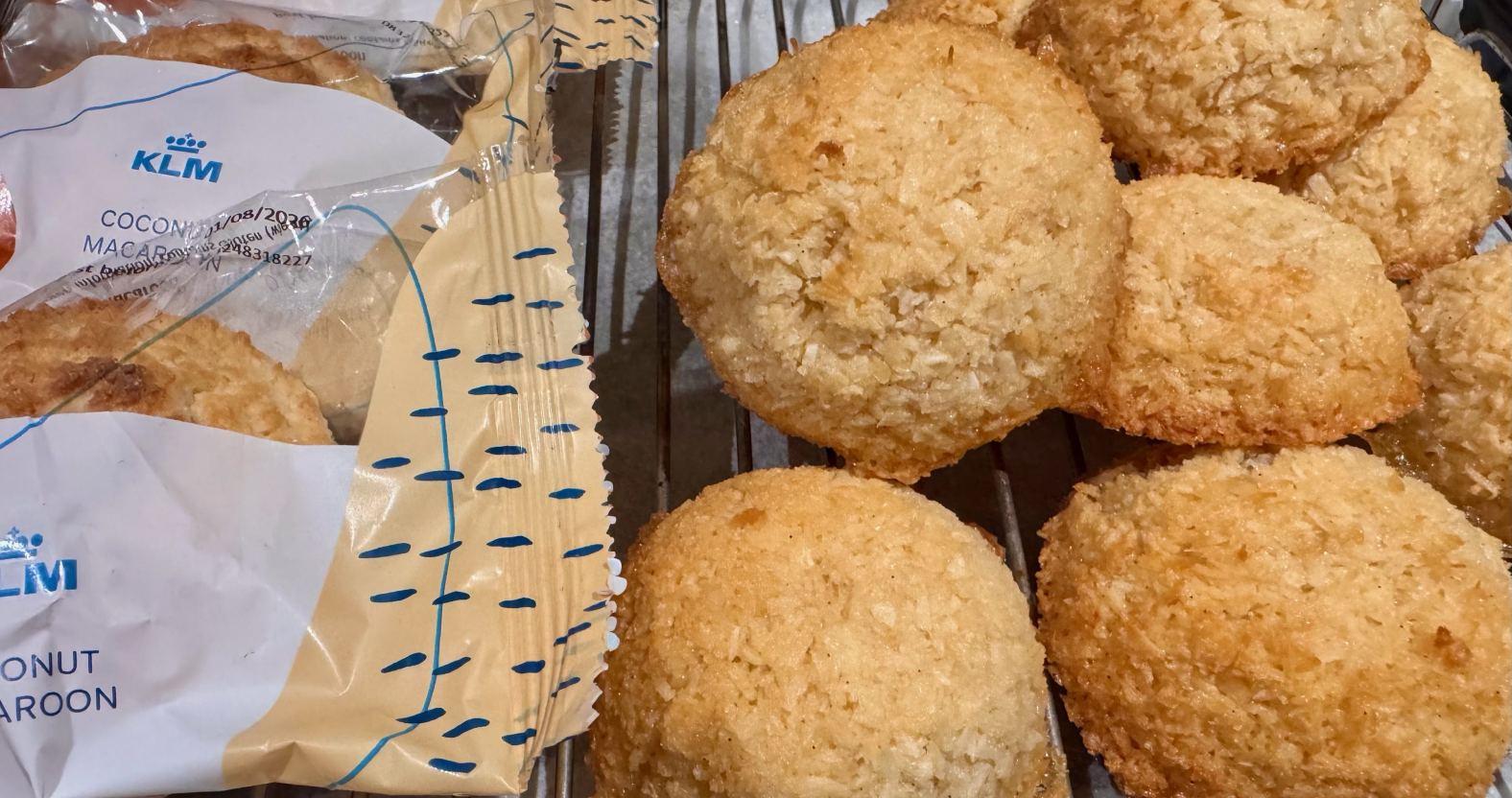
Yemi's coconut macaroons next to some supplied in flight by Dutch airline KLM.
The KLM hostesses were wonderfully understanding when I cheekily and shamelessly requested extra macaroons. I explained that I was a food writer and wanted to photograph the macaroons for a future post, and they were delighted to give me some extras.
Now, there are many things I have brought back from trips: cheese, spices, chocolate, Madeira wine and occasionally bottles of olive oil. But a small stash of airline macaroons, gathered for editorial purposes, might be my favourite yet.
The recipe
Back home, I started thinking about how to make coconut macaroons sing. My first instinct was to toast the coconut before mixing it in. Toasting has a habit of deepening flavour, bringing out nuttiness and adding a gentle golden warmth. I could already imagine the kitchen smelling like a tropical bakery. But then I looked at Mary Berry’s coconut macaroon recipe and had one of those rare moments of restraint. It was simple, reliable and exactly the sort of recipe that encourages people to have a go. So, rather than fiddle, I followed it.
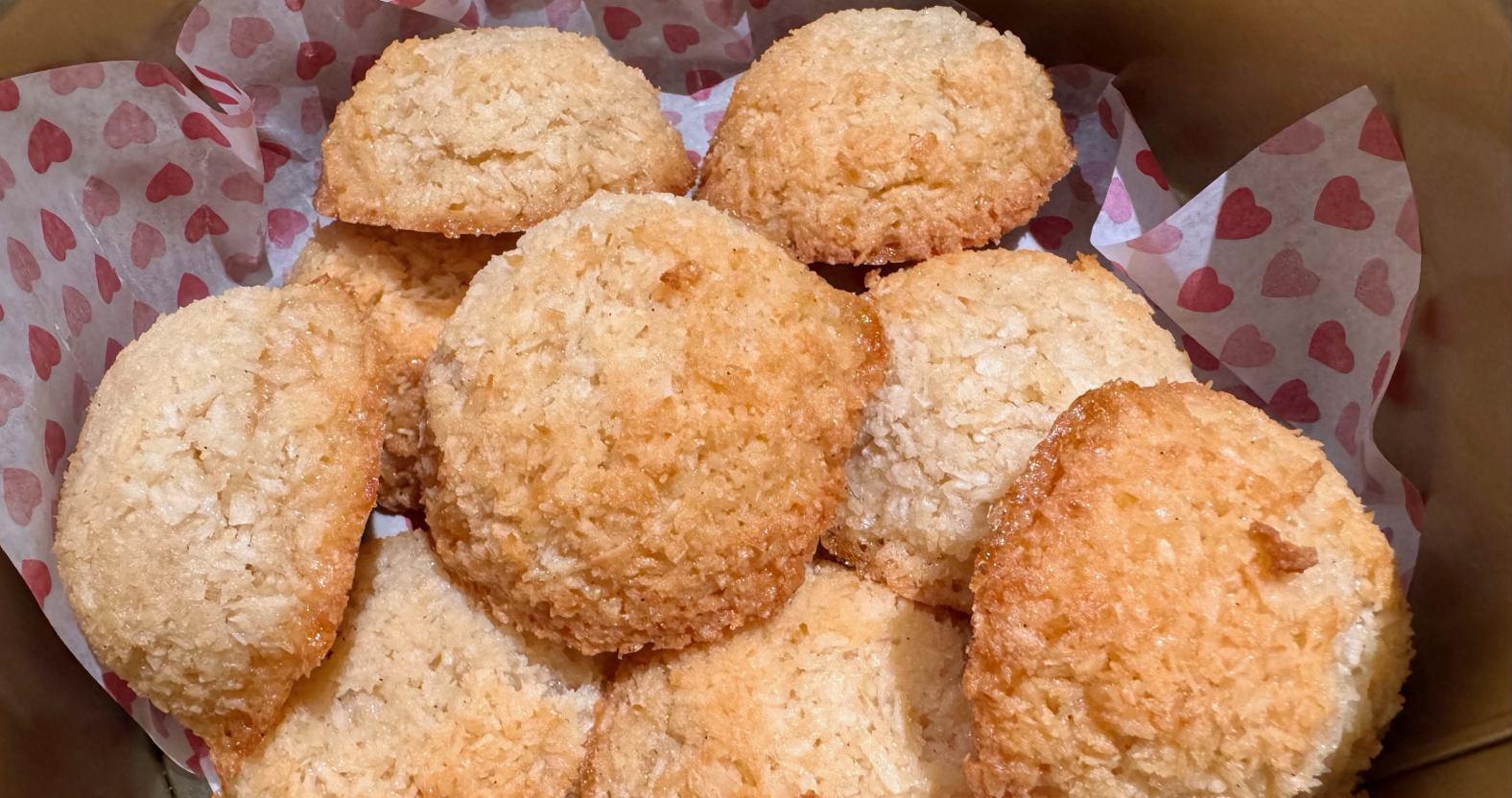
That is part of the charm. Coconut macaroons are wonderfully unfussy. They do not ask for specialist equipment, advanced technique or a whole afternoon blocked out in your diary. They are a happy little mixture of desiccated coconut, sugar and egg whites, shaped into small mounds and baked until golden. Some versions include vanilla, some are topped with an almond, and some are dipped in chocolate once cooled.
Mary Berry’s approach keeps things pleasingly straightforward: light, chewy, crisp at the edges and sweet enough to feel like a treat without becoming too much.
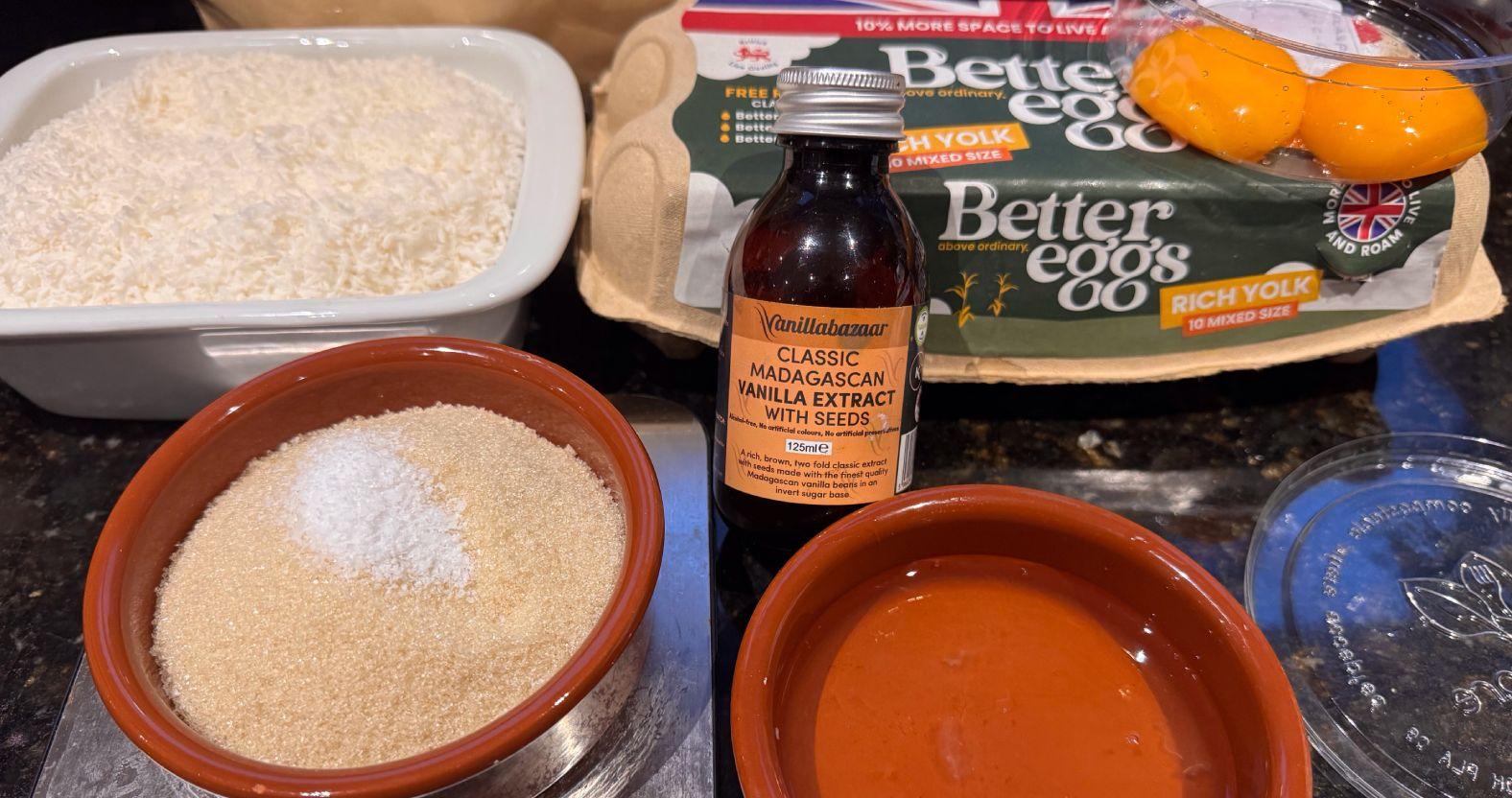
Not many ingredients are needed.
For a simple batch, preheat the oven to around 170-180°C, line a baking tray with parchment and lightly whisk two egg whites until just frothy. Fold in 150g caster sugar, 175g desiccated coconut, a pinch of salt and half a teaspoon of good-quality vanilla.
Spoon the mixture into small domes, leaving a little space between each one, and bake for about 15-18 minutes until the edges are lightly golden. Let them cool before moving them onto racks; they firm up as they sit. I used an ice cream scoop to get the perfect dome shape.
If you are feeling playful, dip the bases in melted dark chocolate, or use a thin drizzle to create a zig-zag chocolate pattern or, yes, try my original thought and gently toast some of the coconut first. But if you are new to macaroons, start simple.
There is something deeply satisfying about a bake that delivers so much texture from so few ingredients: a crisp shell, a chewy middle and that unmistakable coconut flavour that reminds me of childhood golden coconut candies.
So, Chris Cook, this one is for you. Thank you for the unexpected macaroon conversation somewhere over Europe, and for reminding me that food stories do not wait politely until we are in a kitchen. They turn up wherever people do - in queues, train carriages, market aisles, family homes and, occasionally, on a quiet flight with a helpful neighbour and a very generous cabin crew.

0