Thank you for your interest in this story
To continue reading this article, subscribe to the Stray Ferret for as little as £1 a week
Already a subscriber? Log in here.
10
Aug
Yorkshire escapes drought designation – for now – after England's driest July for 190 years
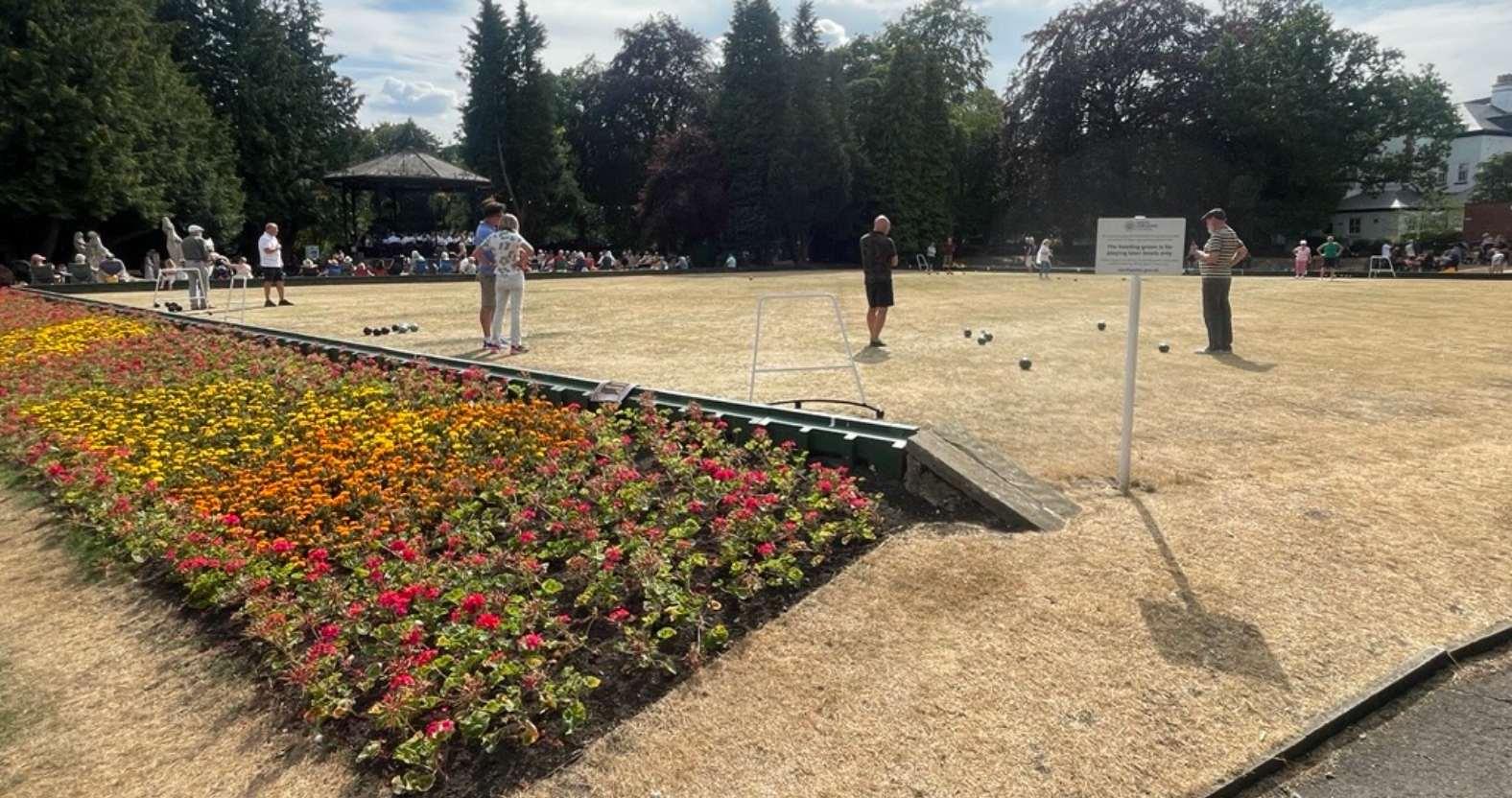
Several more regions are officially now in drought, the Environment Agency announced today (August 10), but Yorkshire is not among them – yet.
The East Midlands, Lincolnshire & Northamptonshire, Kent & East Sussex, and Solent & the South Downs became the latest to move into drought status, following a dry start to August.
Along with the areas announced last week – which included most of the South, plus East Anglia and the West Midlands – more than two thirds of the country (71.3%) are now experiencing a flash drought.
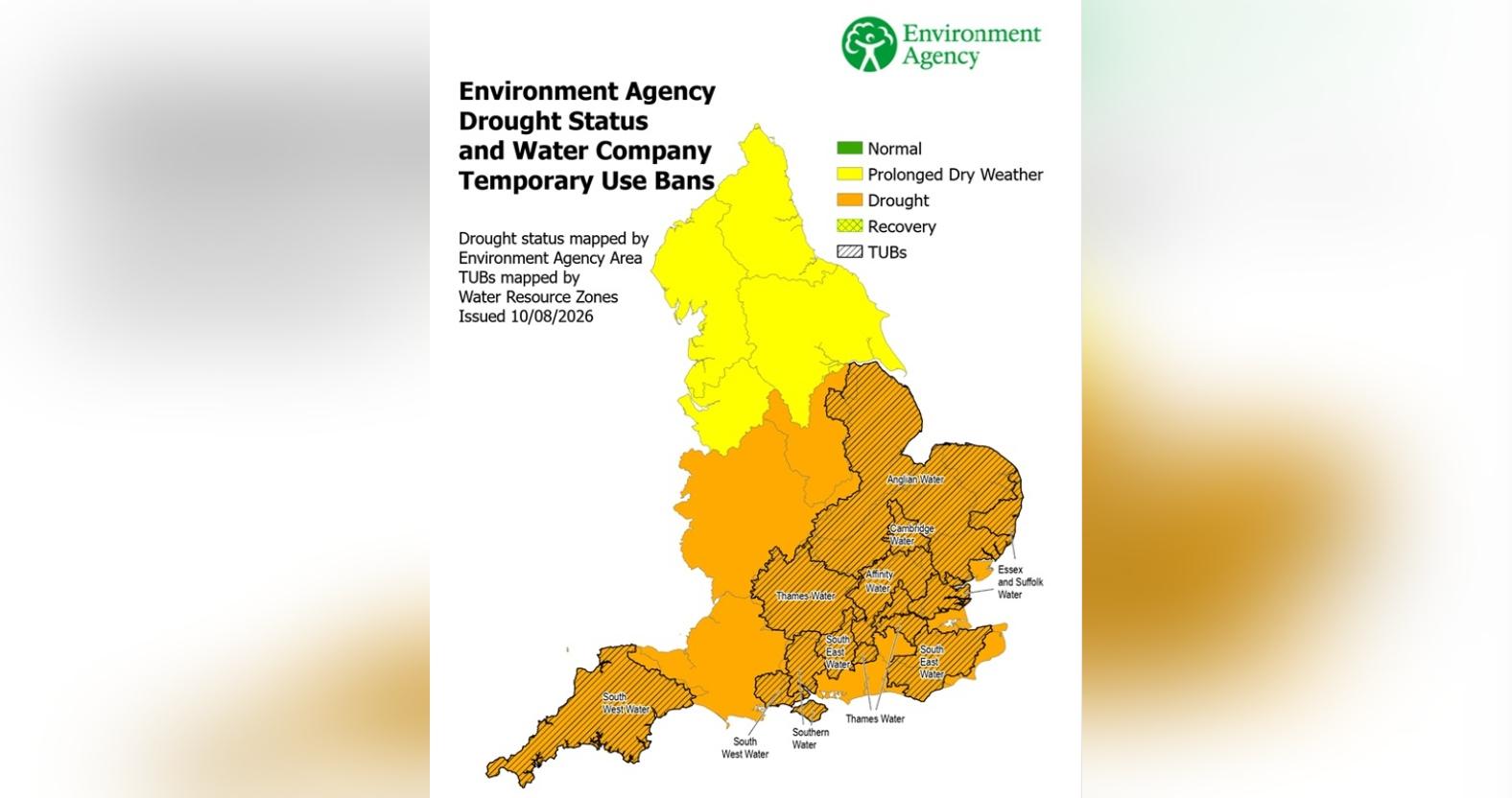
The areas in drought are shown in orange; those experiencing prolonged dry weather are coloured yellow. Graphic and data: Environment Agency.
Nowhere in England is now 'normal'
Yorkshire and the North East have moved to ‘prolonged dry weather’ – the stage before drought – and nowhere in England is now deemed to be in ‘normal’ status.
The new designations take the total number of people living in drought areas to 45 million. More than 27 million people are now living under restrictions on water use.
Photo: Pexels.
The changes follow the driest July in 190 years and just 5% of expected rainfall this month to date. There are warnings of more dry weather and another heatwave on the way, with temperatures tipped to reach the mid-30s in some places.
The National Drought Group, which includes the Met Office, government, regulators, water companies, the National Farmers’ Union, Canal & River Trust, anglers and conservation experts, has warned all regions of the country are experiencing pressure on their water resources.
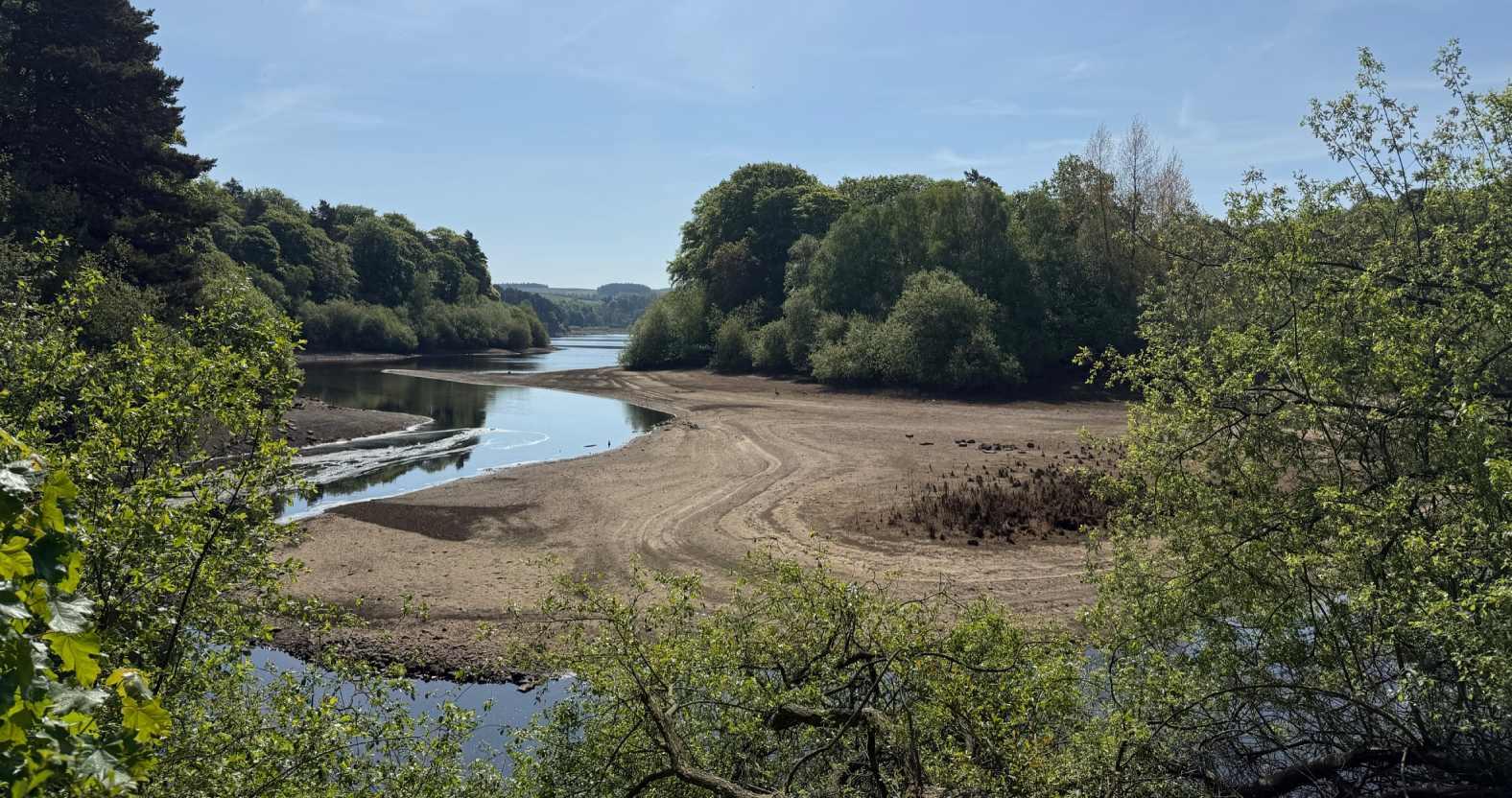
Reservoirs across the region are depleted.
Wildlife and agriculture suffering
Wildlife is being affected, particularly breeding birds, amphibians, and species such as white-clawed crayfish, which have not fully recovered from previous droughts.
Agriculture too is suffering. National Farmers’ Union deputy president Paul Tompkins said:
With no meaningful rain forecast in the coming weeks, the situation facing farmers and growers is increasingly concerning.
Many farmers have completed the earliest harvest on record, with poor yields in key crops reported in some areas of the country. Livestock and dairy farmers are already using winter feed because grass has stopped growing, while growers are working hard to keep fruit and vegetables watered, but many are struggling to access the water they need.
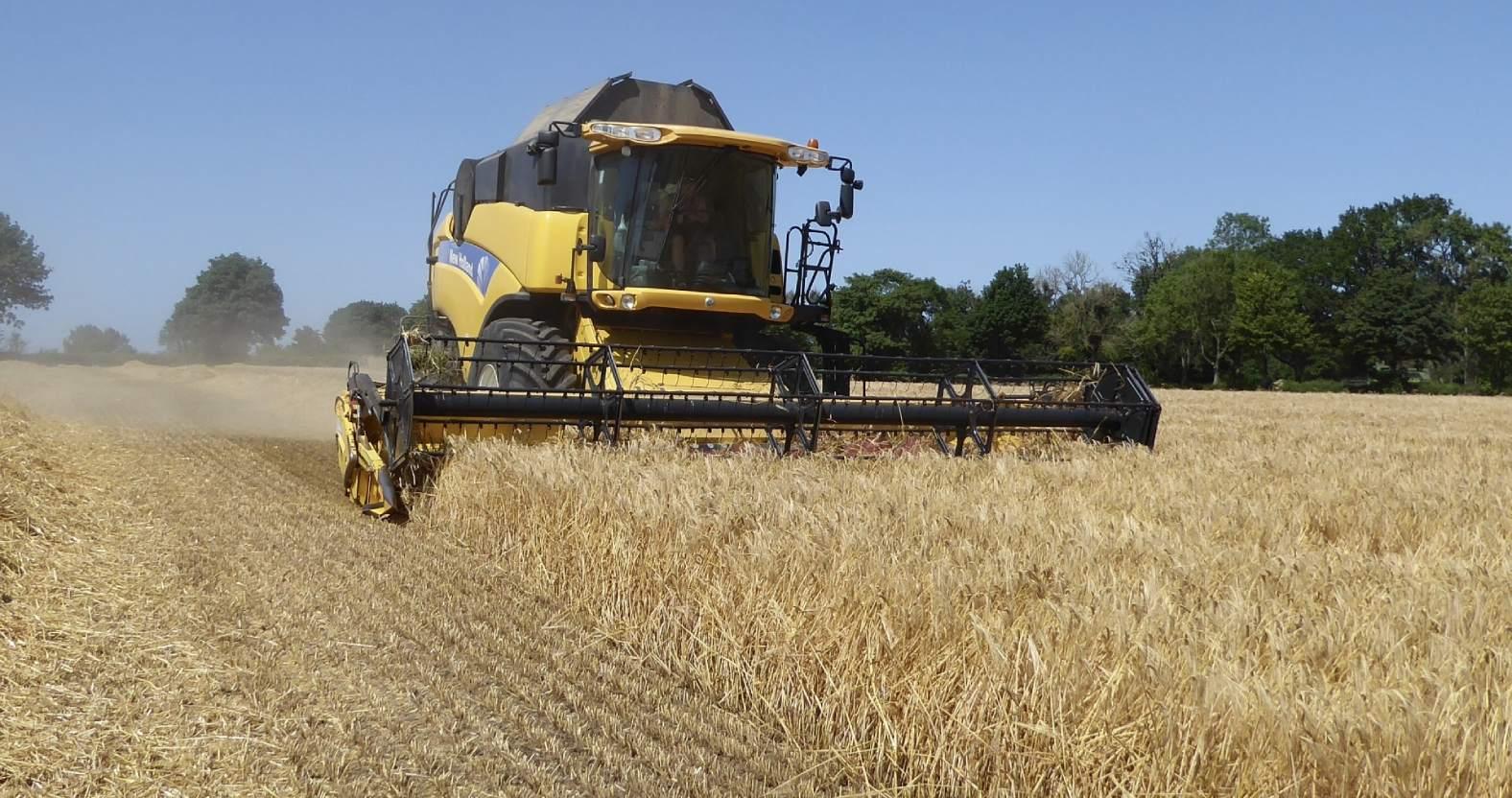
Photo: Heather Middleton.
'No strong signal for rainfall'
England is not alone in facing drought – mainland Europe is also struggling with heatwaves and dry weather. Wildfires have devastated large areas of France and Spain, and extremely low water levels on the Rhine and Danube are disrupting energy generation, freight, and river transport.
Sarah Davies, head of environment and energy at the Met Office, said:
July 2026 was one of the most remarkable months in the UK's climate record. England and Wales both recorded their driest and sunniest July on record, together with periods of exceptionally high temperatures. These conditions have significantly increased pressure on water resources in some parts of the country and contributed to the ongoing drought concerns.
Looking ahead, forecasts for the remainder of August and into September suggest a good deal of dry weather is expected, mixed with some unsettled spells. While some areas may see useful rainfall at times, there is currently no strong signal for a sustained period of widespread rainfall, with below average rainfall more likely than above-average for the period as a whole.
Things we can all do
In the meantime, everyone can do their bit to tackle water shortage, said Nicci Russell, CEO at water efficiency and conservation group Waterwise.
She added:
The experts are telling us that these extraordinary climate emergency impacts we're seeing in real time, right in front of our eyes, are not random one-off events.
It's entirely reasonable that at this time, we only use water for essential purposes. None of us can live without water – and society, the economy and the environment can't function without it.
We all have a role to play in making sure there's enough water to go round – and there are lots of simple things we can all do at home and at work to help close the gap between the water we need, and the water we have.
Turn that hosepipe off! Step away from the sprinkler! Let your lawn go golden and your car go dirty. Knock a minute off your shower time – imagine if everyone in England and Wales did that, saving 15 litres of water every time, and you can see how small actions by each of us make a real difference.
We all need to save water – of course there is work to do for the water companies and governments, and big business, but we all need to step up.

0