Councillors have been urged to approve plans for 1,300 homes in Ripon when they meet tomorrow (May 14).
The homes, off Clotherholme Road, would have a significant impact on the city, sweeping away key sites of military history and leading to significant changes to roads and junctions.
The plans include a new primary school, sports pitches, a country park and a neighbourhood centre.
Four city centre junctions will be improved and Clotherholme Road, Kirkby Road, College Road and Trinity Lane will be redesigned to prioritise pedestrian safety and encourage cycling.
It would increase Ripon’s population by about 3,000 people, which is greater than the combined size of Masham and Pateley Bridge.
Ripon Military Heritage Trust said in a statement it was “extremely disappointed” and fears rare 1939 military huts and training bridges that played a key role in 20th century warfare will be destroyed. We will publish more on this in a separate article shortly. The Stray Ferret is backing the trust’s campaign to save Ripon’s military history — you can sign the petition here.
A report by case officer Kate Broadbank at North Yorkshire Council recommends councillors on the strategic planning committee grant outline approval, subject to the final details being agreed. The 14 councillors on the committee will decide whether to accept the recommendation.
Ms Broadbank’s report concludes:
“The proposal would contribute towards ensuring the district’s housing needs are met, including the requisite provision of affordable homes, self-build homes, as well as employment land and significant green infrastructure not previously available to the public.
“Overall, for the reasons set out in the report, it is considered the proposal is compliant with the overarching policies of the development plan and national planning policy requirements and thus, represents sustainable development.”

Where the homes would be built. Pic: Homes England
Harrogate Borough Council backed the scheme in February last year, shortly before it was abolished.
The report said it had come back to North Yorkshire Council’s strategic planning committee, which determines major planning applications, because of new information and ongoing discussions around the section 106 payments that developers are required to pay to councils to compensate for the impact of their schemes on local infrastructure.
The section 106 payments include:
- £2.7 million to North Yorkshire Council to provide a new primary school
- £1,9 million to North Yorkshire Council to improve facilities at Ripon Grammar School and Outwood Academy secondary schools
- £1.1 million towards health care
- £198,250 towards bus services.
If councillors approve the scheme, the principle of development will be established; the details will be ironed out in a subsequent reserved matters planning application.
Government agency Homes England, which is proposing the scheme, will appoint a housebuilder once the scheme is ratified.
Ripon Barracks in north-west of Ripon remains an active Ministry of Defence site but is due to be decommissioned over the next few years.
The 85-hectare development site is accessed via Clotherholme Road to the south and Kirkby Road to the north.
Read more:
- New Clotherholme plans heighten fears for Ripon’s military heritage
- New details of Ripon’s 1,300-home Clotherholme scheme released
How Ripon played a key role in two world wars
Michael Furse, a trustee of the charity Ripon Military Heritage Trust, explains why Ripon and Harrogate have such military significance — and why the trust is fighting to preserve it as part of the the 1,300-home Clotherholme development.
The Stray Ferret is backing the trust’s campaign to save key parts of the city’s military history, as reported here. Please sign the petition here. If it gets 500 signatures it will be debated by North Yorkshire Council’s Skipton and Ripon planning committee.
World War I: 350,000 soldiers pass through Ripon army camp
The British Expeditionary Force marched to war in 1914. The modest force of six divisions acquitted itself well but by the end of 1914 was exhausted having fought at Mons, Le Cateau, the Aisne and Ypres.
However, they helped the French hold off the German army and in what is known as the Race to The Sea prevented the Germans from turning the left flank of the allied armies.
Numbers were made up initially from the territorial force, but Field Marshal Lord Kitchener realised more troops would be needed and set about this with vigour, raising six more divisions by the end of August 1914, and a further 17 divisions by March 1915.
Dubbed Kitchener’s New Army or unkindly, Kitchener’s Mob, these further divisions were formed of volunteer soldiers and the need to process the huge number of them and to train them quickly led to the creation of large army camps, of which Ripon was one. An estimated 350,000 men passed through the camp during the 1914-18 war.

A recruitment poster
What was needed for one of Kitchener’s large camps? Clearly, good rail communications were essential – most soldiers coming to Ripon for training or leaving for the front marched to and from Ripon station, at that time on the main LNER route from King’s Cross to Edinburgh.
The camps needed to be relatively close to the conurbations that provided the volunteers for military service, but to have sufficient space to house up to 30,000 men at a time and to allow civilian soldiers to be trained properly for service on the Western Front, which included training in trenches built for the purpose.
Ripon’s north and south camps trained complete divisions of 16,000 men at a time. Little remains of this enormous undertaking – the camp was demolished and the land returned to the landowners who had offered it for the duration of the war.
Some hospital accommodation blocks remain in Lark Lane, converted into houses, but as they are on large plots, the number dwindles yearly. A set of cavalry lines remained until recently but were torn down to make way for a small housing development, reflecting the complete lack of interest shown by local government in heritage in general and military heritage in particular.

A 1945 aerial photo of Ripon Camp – note the Bailey suspension bridge in what is now the Doublegates housing estate.
World War II: Ripon pioneers bomb disposal and bridges
The same reasons for selecting this part of England for training from 1914 to 1918 held true in 1940. Good communications, not just with mainline LNER service to London Kings Cross via Leeds, but the development of road freight meant that the A1 had become an important complement to the railways.
Harrogate
At the outbreak of war in September 1939, several government departments were moved from London to areas of greater safety. Harrogate was one of those safe areas and attracted a number of government bodies, primarily the Air Ministry’s Departments of Planning, Production, and Research.
With about 3,000 staff they were described In 1939 as being ‘a very vulnerable basket of precious eggs’. During 1940 there was a pressing need to increase the number of aircraft for the RAF. Working with the Ministry of Aircraft Production, the ‘Harrogate Programme’ arranged for and set a production quota of 3,000 fighters per year. The programme was so successful that over 4,200 fighters were produced in 1940.
In all, some 25 hotels and a number of schools were requisitioned and a group of ‘temporary office buildings’ designed by Sir James West, chief architect for the Ministry of Works, were erected to house the influx of civil servants and military personnel. These included staff of the General Post Office, who managed the post and were also responsible for civil telephony, the Office of Works, the RAF as well as servicewomen from the WRNS, WAAF and ATS.
Ripon
As war with Nazi Germany approached there was a need for accommodation for a much-expanded army. A large number of militia camps were built in the summer of 1939, including one at Ripon, with two barracks intended to each house a battalion-sized unit. One of these was intended to train Sappers.

Some of Ripon’s Second World War huts. Pic: Ripon Military Heritage Trust
The bombing of London and its surroundings in the blitz of 1940 led the Corps of Royal Engineers to move the School of Military Engineering from Chatham to Ripon, a process that started in late 1940 and was completed in early 1941.
The school occupied Deverell Barracks, which is now the only militia camp barracks left and which Homes England, the government’s property developer, is intending to demolish in its entirety, despite advice from both Historic England and the Twentieth Century Society that some of its rare or unique buildings should be preserved.
During the period the school was in Ripon (from late 1940 to early 1949), much critical work related to military engineering took place. Bomb disposal training was based in Ripon, and important development work on mine and obstacle clearance by armoured units was taking place as early as 1942.
Bailey bridge training and testing took place in and around Ripon, and many of the allied engineers who erected Bailey bridges in Italy or North West Europe were trained there. The River Ure was used to train Sherman tank drivers how to exit tank landing craft, an essential skill to master for D-Day. And the load and wind testing for the Bailey suspension bridges that were so essential in the India and Burma campaigns took place on what is now Doublegates housing estate.
Instead of destroying all these historic buildings we want to preserve a small group of them and re-purpose them for community uses and as a permanent interpretation centre where Ripon’s military history can be told. If we are to succeed, we need your support and help. Without this, a key and tangible part of Yorkshire’s military history will be lost forever.
Please support the campaign for a small part of the 1,300-home Clotherholme scheme to be set aside to preserve Ripon’s military history. You can sign the petition here and find out more about the campaign here.
Read more:
- Stray Ferret backs campaign to save Ripon’s military heritage
- Ripon campaigners prepare for post D-Day battle with the bulldozers
- Community diagnostic centre opens at Ripon hospital
Stray Ferret backs campaign to save Ripon’s military heritage
The Stray Ferret is today backing a campaign by Ripon Military Heritage Trust to save key parts of the city’s military history.
Government agency Homes England has planning permission to build 1,300 homes on army barracks at Clotherholme.
But there are fears it will bulldoze sites of international significance, including huts built by Neville Chamberlain’s government in 1939 and training bridges that shaped international warfare, to make way for the housing.
The trust accepts the homes will be built but is campaigning to preserve a number of surviving structures on a site at Laver Banks.
It wants to repurpose huts that would otherwise be demolished not just for heritage reasons but also so they can be used for employment and community use.
They would then feature in a newly created military heritage centre and a military heritage trail that would tell the story of Ripon’s part in international warfare.
We have launched a petition urging people to back the campaign to save Ripon’s military heritage.
If 500 people sign then North Yorkshire Council’s Skipton and Ripon area constituency committee will be obliged to debate it, which will present an opportunity to raise awareness of the issue.
You can sign here.
The trust has adopted the campaign slogan ‘heritage worth fighting for’.
Trustee Michael Furse said:
“The wooden militia camp is unique because it is the last one standing.
“We are not proposing to stop the development. What we are saying is we would like to preserve some of the most important structures from it on a different site.
“We would then like to display those structures in a way that shows them off in a cohesive manner.”
The campaign will run up to the 80th anniversary celebrations of D-Day when Winston Churchill’s great grandson will be in Ripon for the city’s commemorations.
John Plummer, editor of the Stray Ferret, said:
“We fully support this campaign. Ripon’s military heritage should be treasured — not destroyed.”
In the weeks ahead we will provide updates on the campaign and, with the help of the trust, tell the remarkable story of Ripon’s vital role in defending Britain over the years.
Read more:
- New Clotherholme plans heighten fears for Ripon’s military heritage
- Sketches by Magritte to go under the hammer in Ripon
New Clotherholme plans heighten fears for Ripon’s military heritage
The organisation fighting to save Ripon’s military heritage from being bulldozed has said it is “hugely disappointed” about updated plans for the 1,300-home Clotherholme housing scheme.
Government agencies Homes England and the Defence infrastructure Organisation provided the update in a planning report published on North Yorkshire Council’s website last week.
The homes will be built at the barracks site which contains internationally significant military structures, including huts constructed in 1939 when Neville Chamberlain’s government prepared for war with Germany and training bridges that influenced global warfare.
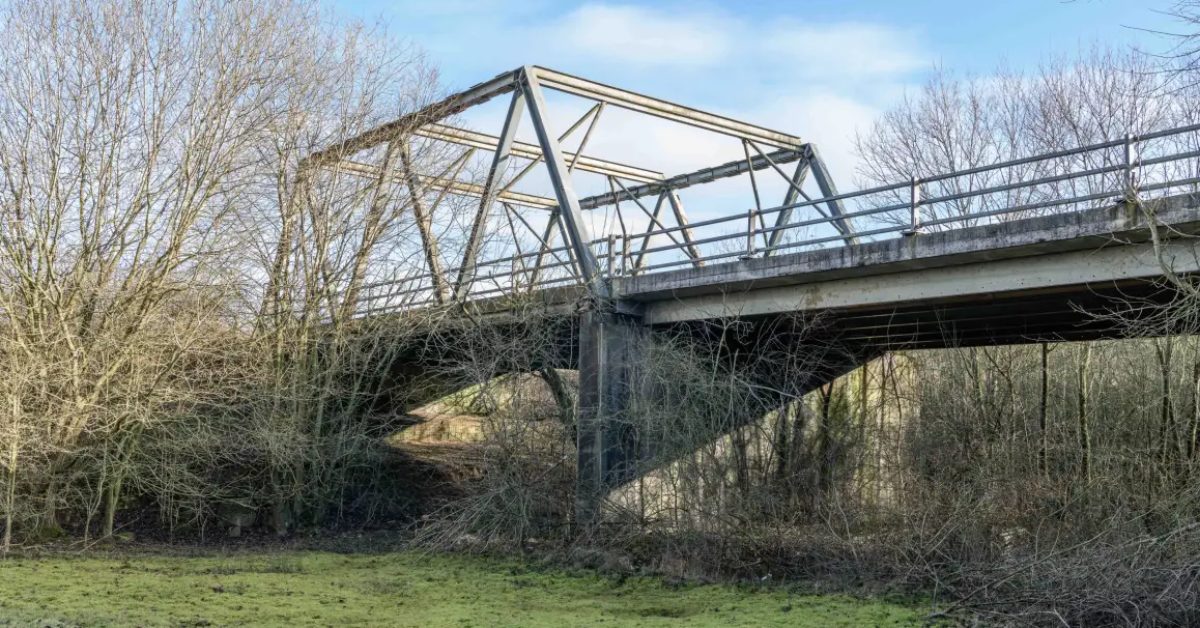
The demolition training bridge. Pic: Ripon Military Heritage Trust
The report pledged to “work with the Ripon Military Heritage Trust on a heritage strategy which will balance the urgent need for new homes for local people with a strategy for preserving and recording the unique history and heritage of the barracks”.
But the trust, which has launched a website as part of a campaign to preserve key aspects of the site, fears the agencies have shown little desire to co-operate since Harrogate Borough Council granted planning permission in February last year and their pledges remain vague and opaque.
Trust chairman Guy Wilson said:
“We are hugely disappointed that after 15 months of engagement with Homes England, the current outline planning application lacks any provision for the preservation of even a single example of the rare and unique huts at Deverell Barracks.
“Neither has any land been allocated to allow for the relocation and re-use of these heritage assets. Both were specific requests that the Harrogate Borough Council planning committee called for in February 2023.
“It has sadly become apparent that none of the parties to this development has any real interest in preserving the heritage of the site and none has made any attempt to work constructively with us. All they are interested in is appearing to do enough to get their present plans passed without alteration, in which case the result will be that significant heritage assets will be lost and this we very much regret.”
The planning update said the housing scheme will preserve the main military roads and names as well as provide information signs.

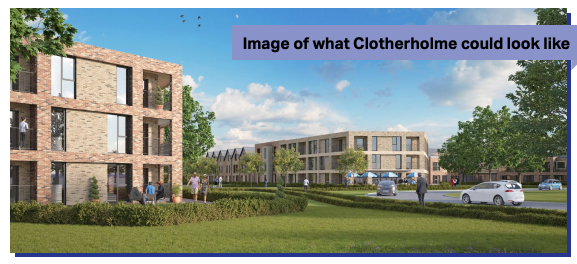
How the site will look. Pic: Homes England
It also talks about “exploring ways to integrate a walking tour, virtual tour or to develop other forms of public exhibition at the site”.
One of the conditions of planning consent was to allocate £100,000 to the trust to conduct a feasibility study on preserving and retaining some of the existing military buildings on the site. But progress since then has been limited.
Mr Wilson said:
“Unfortunately, we are sceptical about their commitment to developing a feasibility study, as after 15 months of engagement with Homes England there has been no proper engagement with the real issues involved in preserving the heritage.
“During that period work has begun on producing an options appraisal; all the proposals put forward by the trust have been ignored and they have refused to allow the process to be based on a clear understanding of the assets’ heritage significance.”
He added:
“Where is the commitment to assess significance? Where is the list of assets to be preserved? Where is the agreement to transfer ownership of assets required? Where is the commitment to allocate the necessary land to relocate assets? Where is the commitment to build into the development timescale the reality of fund-raising?
“Instead of work on these crucial issues we have been stonewalled at every turn by all parties. Their heritage strategy is aimed at ticking boxes and getting approvals not at preserving the heritage.”
Read more:
- Tank will be on the Ripon Inn lawn for launch of D-Day anniversary celebrations
- New details of Ripon’s 1,300-home Clotherholme scheme released
Editor’s Pick of the Week: Tim Stedman returns, a new mayor awaits and Ripon prepares for 1,300 homes
No corner of the Harrogate district has been immune to new housing in recent years but the sheer scale of the 1,300-home Clotherholme development will alter Ripon forever.
Planning approval was passed by a whisker last year. Since then, the government agencies behind the scheme have said little so this week’s planning update contained some key insights.
There are now just five days until North Yorkshire elects its first mayor. Confused? Read senior reporter Calvin Robinson’s article about the main manifesto differences and look for a recap this weekend of his interviews with all six candidates. We will provide live coverage at the count in Harrogate on Friday.
There are 241 days to Christmas, but Harrogate received one of the best possible festive presents this week with the news that Tim Stedman will return to the town for his 24th panto season. Tim is so loved he would have probably been elected mayor if he’d stood — or at least livened up the sometimes tedious hustings.
Contrary to appearance, Tim is well into his 50s and the slapstick tomfoolery of a lengthy panto, often twice a day, must be exhausting. We should treasure him while we can.
Sadly his long-term double act partner Howard Chadwick won’t be back for what is always a seasonal joy, whatever your age.

Pateley Bridge Cemetery. Picture: Bill Boaden.
Finally, there can be few better places to rest for eternity than Pateley Bridge Cemetery. Look at that view. So plans to create hundreds of new plots this week will be welcomed by Nidderdale folk. The plans even cater for new natural burial sites.
Read more:
- Councillors approve late-night outdoor dining at Harrogate restaurant
- City council supports rejuvenation plans for Ripon’s Spa Baths
- Firefighters called after car crashes into Knaresborough home
New details of Ripon’s 1,300-home Clotherholme scheme released
Work on the 1,300-home Clotherholme scheme in Ripon is expected to begin next year and last until 2037, according to a newly published update.
Land at Claro Barracks, Deverell Barracks and Laver Banks will be bulldozed to make way for the homes, a primary school and a neighbourhood centre with shops, a café and a community space.
Four city-centre junctions will be improved and Clotherholme Road, Kirkby Road, College Road and Trinity Lane will be redesigned to prioritise pedestrian safety and encourage cycling.
Homes England, the public body that funds new affordable housing, and the Defence infrastructure Organisation, which is part of the Ministry of Defence, provided the update in a planning report published on North Yorkshire Council’s website.
Councillors granted planning permission subject to conditions in February last year, shortly before Harrogate Borough Council was abolished. Six councillors voted in favour and six voted against, which meant the committee chair’s casting vote in favour proved decisive.
The new planning report says the barracks scheme will create an “exemplar new sustainable community” on brownfield land on the edge of Ripon. Here are some of the key details.
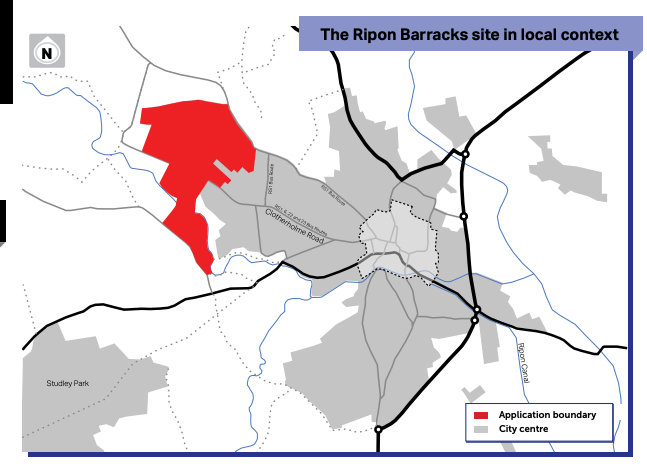
The red section indicates where will be affected.
30% affordable homes and new school
Clotherholme will include 1,300 homes, 30% of which will be classed as affordable. The report said:
“That’s 370 new affordable homes for local people, split between affordable rent and shared ownership
“We’ll also build a new primary school next to a new local neighbourhood centre with shops, a café, employment and training facilities and community space. We’ll provide new improved open space at Laver Banks which will be accessible to the whole community.”
A total of 5% of the site will be dedicated to custom build homes providing up to 60 extra care / assisted living homes.
Developers are obliged to pay to mitigate for the impact of their development on local infrastructure through legally binding contracts negotiated with councils known as section 106 agreements.
The new planning report says the proposals for financial contributions include:
- £2.7m towards a two-form entry primary school, which will be built at the neighbourhood centre in the middle of Clotherholme.
- £1.9m towards the expansion of local secondary education.
- £1.07 million towards improved healthcare buildings and facilities in Ripon.
The report adds:
“We’ll provide traffic-free routes to school across the whole development, which connect into existing walking and cycling routes, and we’ll make sure the school has playing fields too.
“The school will be built and opened early in the development timeline, meaning that families moving to Clotherholme will have school places for their children, and other local schools won’t be put under pressure.”
Major transport schemes in Ripon
The report says there will be “24 separate improvements to the road network agreed with North Yorkshire Council to make sure that Ripon keeps moving”.
They include improvements to four city-centre junctions “before the first home is occupied at Clotherholme”.
The four junction improvements are:
- Traffic flow improvements at the clocktower junction
- Traffic flow improvements at Coltsgate Hill junctions on North Street
- Signalling improvement at Skellgate junction
- Priority changes at Westgate Street/ Blossomgate
The report adds:
“We will install state-of-the-art signal control as part of these upgrades which allow real-time monitoring of traffic build-up and management of the signals to reduce congestion and maximise traffic flow.
“Our proposals also include the provision of a one-way scheme at Kirkby Road (westbound), College Road (eastbound) and Trinity Lane (southbound). Blossomgate, east of Marshall Way, will also become one-way.”
The report says there will be £793,000 towards delivering a phased bus service for Clotherholme over a four-year period, adding:
“We will redesign Clotherholme Road, Kirkby Road, College Road and Trinity Lane to prioritise pedestrian safety and encourage cycling, and we will introduce traffic-calming measures to reduce vehicle speeds. Our package of transport and active travel proposals have already been agreed in principle with North Yorkshire Council.”
12-year timeline

The report says the Ministry of Defence “has confirmed that they are in the process of agreeing a transfer of the land at Ripon barracks to Homes England”, adding:
“Following transfer, the land will be redeveloped by Homes England and partners in phases commencing with Deverell Barracks and moving to Claro and Laver Banks once the army has fully vacated to ensure the growth of a sustainable community.
Indicative phasing plan Indicative phasing Phase 1 2025 – 2029 Phase 2 2028 – 2033 Phase 3 2027 Phase 3 2027 Phase 4 2027 – 2028 Phase 5 2027 and 2029 Phase 6 2028 – 2033 Phase 7 2030 – 2032 Phase 8 2031 – 2037 Phase 9 2029 – 2033 The phasing plan on page 15 shows the order in which we’re intending to develop parcels of land at Ripon Barracks.
A developer partner will be appointed in 2025 and between 50 and 100 homes per year will be built meaning that the full redevelopment will take around 13 to 14 years to complete.
“There will be a series of key milestones throughout redevelopment including the opening up of Laver Banks for public use in 2027, phased provision of the local centre between 2028 and 2033 as well as the new primary school which is due to open in 2028.”

Green space
The report says nearly 50% of Clotherholme will be public green space, which is the equivalent to about 55 football pitches. Of this 39.6 hectares, nearly 7.5 hectares will be playing fields.
The report says Homes England and the Defence Infrastructure Organisation are writing a biodiversity net gain delivery plan “which sets out our approach to habitat preservation and creation of on-site and off-site biodiversity to achieve a target of 10% net gain”.
It adds:
“We will be providing playing fields at the new primary school which could be available for community use too. We’ll separately provide 11 sports pitches as part of Laver Banks improved open space (including a senior and junior football pitch and club house), and are looking to collaborate with local clubs to make sure we’re providing what is needed.
“We will also be paying towards the upkeep of these facilities — all part of the site-wide stewardship strategy we’re producing. We will also provide financial contributions towards the off-site provision of rugby, cricket, hockey and 3G sports pitches, for the benefit of sport in Ripon.”
Read more:
- Plans approved for 1,300 homes at Ripon Barracks
- Ripon primary school named as one of the most diverse in North Yorkshire
- BT answers Ripon Civic Society’s call to repair historic city centre telephone kiosks
Plans approved for 1,300 homes at Ripon Barracks
Councillors have approved plans to build 1,300 homes at Ripon’s army barracks, subject to conditions.
Harrogate Borough Council’s planning committee met this afternoon to consider an application from government housing agency Homes England, which has been developing the plans for several years alongside the Ministry of Defence.
Councillors were split over the scheme’s impact on roads in the city as well as whether historical military buildings on the site, which were used during both world wars, would be protected.
Votes were tied at six for and six against supporting the officer’s recommendation to defer the plans to officers to approve, subject to conditions.
This meant the committee’s chair, the Conservative councillor for Harrogate St Georges, Rebecca Burnett, cast the deciding vote to see the plans passed.
Clotherholme
The military is set to vacate the site in 2026 but phased work will now begin.
The housing scheme is called Clotherholme and also includes a new primary school, sports pitches, retail, food and drink units, and a 60-bed care home.
The site is home to the Royal Engineers and consists of Deverell Barracks to the east, Claro Barracks to the west and Laver Banks to the south.
Homes England says 3,000 people will live there to increase the population of Ripon by a fifth, although this does not take into account the loss of military personnel who have lived in the community for decades.
It’s expected that all the homes would be built by 2035 and 30% will be classed as affordable.
No new road
Campaigners have long raised fears about the impact on local roads and there have been calls to include a relief road via Galphay Road, but this was rejected.
Access to the site would be from Clotherholme Road and Kirkby Road.
Homes England undertook traffic studies that predicted queues and delays at existing junctions if the homes were built, so changes to the Low Skellgate, Coltsgate Hill and Clock Tower junctions have been proposed as part of 28 alterations to the existing road network.
A new roundabout would also be created at the junction of Kirkby Road and Chatham Road.
‘Hell to drive through’
Liberal Democrat county councillor Barbara Brodigan spoke on behalf of Ripon Spa Residents’ Action Group against the plans.
Cllr Brodigan said she was not against the site being developed but objected to the number of homes proposed. She said a relief road should be built to accommodate any increase in traffic. She said:
“The city was founded 600 years ago and the layout of its streets and centre has hardly changed. It’s pretty to look at, but hell to drive through.
“The layout of the city’s streets was not designed for cars but for horses and carts and people on foot.”

A computer generated image of how Chatham Road and Napier Street in Ripon would look under the plans
Ripon Independent councillor for Ure Bank, Sid Hawke, said there was a question mark over the traffic surveys undertaken by the developer. He said:
“Have you been up Clotherholme Road at peak times? It’s absolute mayhem, you’re talking about putting 1,300 houses up there. Thats 2,000 cars on that road.”
David Rowlinson, speaking on behalf of the applicant, said highways and transport had been a “key issue” that Homes England and the MoD had worked through whilst developing the scheme. He said:
“We’re not new to this site, we’ve been working on it for five years. We’ve looked at this very thoroughly and worked with North Yorkshire County Council’s highways department to get their on-the-ground views.
“We feel we’ve robustly assessed the impacts and come up with the best solution possible for Ripon.
“North Yorkshire County Council has confirmed there is no defensible reason to refuse the application on highways and transport grounds.”
Military history
The barracks were originally built as a convalescent camp for troops during the First World War.
Thousands were housed there, including the wartime poet Wilfred Owen, who wrote some of his famous works there.
Jane Furse, on behalf of the Ripon Military Heritage Trust, asked councillors to defer the plans until a strategy had been produced that protected from demolition two training bridges and a hut, which has been called one of the best-surviving Second World War-era prefab structures.
However, the bridges and the hut are not protected under planning laws.
Read more:
- Ukraine war could delay Ripon Barracks housing plans, says councillor
- NHS objects to planned 1,300-home development on Ripon barracks
Ms Furse gave a history of the military’s involvement at the site spanning two world wars and the Cold War.
She added:
“We request robust, enforceable conditions are imposed to protect our internationally significant heritage.”
Historic England raised “strong concerns” over the demolition of the hut but it has been decided that it can’t be retained because of asbestos, which HBC officer Andy Hough called “extremely regrettable”.
Homes England said it is committed to working with Ripon Military Heritage Group on studies to resolve what happens to the buildings.
Mr Rowlinson said:
“We give a commitment that until issues are resolved and a strategy is developed, structures will not be destroyed.
“We’re happy to do that, we need to work through the process with the group.”
‘Evidence-based decision’
The Conservative councillor for Ripon Spa and cabinet member for housing, Mike Chambers, who is also a former serviceman, said he supported “the majority” of the scheme but there are “clear issues” with the traffic assessment, so he would not be supporting the proposal.
Cllr Chambers claimed the changes to the Low Skellgate junction, banning right turns, “will only seek to exacerbate the situation”.
Conservative council leader Richard Cooper, who was on the planning committee today as a substitute, said rejecting the plans on transport grounds would risk a costly appeal.
In 2022, HBC had to pay £25,000 in costs after the authority was taken to appeal over its rejection of the Leon drive thru on Wetherby Road. Cllr Cooper said:
“You go and sit before an appeal and say to them ‘I drove down that road once and it was busy’, they’ll laugh at you.
“They did it with the Leon application, they laughed at us because there was no evidence to back up a refusal on traffic grounds and we lost the cost of the appeal because of that.”
Cllr Cooper added:
“If we aren’t a planning committee that bases our deliberations upon evidence, then we arent fit to be a planning committee at all. All our decisions should be evidence-based.”
The applicant has agreed to pay £4,694,875 to North Yorkshire County Council to go towards local primary and secondary schools.
It will also pay £907,267 to the NHS to support healthcare facilities.
Ukraine war could delay Ripon Barracks housing plans, says councillorIf the war in Ukraine escalates the Ministry of Defence (MoD) could delay vacating the Ripon Barracks site for housing to be built, according to the leader of Ripon City Council.
For several years, government housing agency Homes England and the MoD have been developing plans to build 1,300 homes at Ripon Barracks, which has been used by the military since World War 1.
The scheme is called Clotherholme and also includes a new primary school, sports pitches, retail, food and drink units and a 60-bed care home.
The site consists of Deverell Barracks to the east, Claro Barracks to the west and Laver Banks to the south.
Deverell Barracks has already been vacated however Claro Barracks is still operational and in use by the Royal Engineers.
Previously, the MoD has said it would close the site in 2019 and 2023.
A computer generated image of how Chatham Road and Napier Street in Ripon would look under the plans.
Earlier this month, Conservative MP Julian Smith published a letter he received from defence minister Alex Chalk that said Claro Barracks will remain in use until late 2026.
Although the letter said that phased work would begin at Deverell Barracks once planning permission has been granted.
‘A changing world’
At a meeting of Ripon City Council this week, council leader Andrew Williams, who is also an independent councillor on North Yorkshire County Council, said the 2026 date is “optimistic” due to a changing geopolitical situation.
Cllr Williams said:
“In a changing world since these proposals were first put on table, the world is clearly a more unstable place than when this process started several years ago.
“There is a real risk of proper armed conflict escalating in Europe in a way that several years ago could have seen to be a farcical and ludicrous proposition.
“I suspect the MoD will need to retain part of its estate than it envisaged doing several years ago. As a consequence there may still be a need for a barracks in Ripon well beyond 2026.”
A Ministry of Defence spokesperson said:
“We remain committed to the disposal of Claro Barracks.
“With the adjacent Deverell Barracks now vacated, it is ready for the planned and phased redevelopment of the combined barracks site at Ripon.”
Read more:
- NHS objects to planned 1,300-home development on Ripon barracks
- Calls to assess impact of Ripon Cathedral’s £6m expansion on cafes and shops
- 1,300-home Ripon housing scheme set to be approved
Councillors will meet next Thursday afternoon in Harrogate to make a decision on whether the Ripon Barracks scheme goes ahead.
The plans have been recommended for approval by HBC case officer Andy Hough in a report.
The meeting will begin at 2pm on February 23 at the council’s Civic Centre. It will also be streamed live on its YouTube channel.
1,300-home Ripon housing scheme set to be approvedA scheme to build 1,300 homes on historic army barracks in Ripon looks set to be approved next week.
Harrogate Borough Council officers have recommended its planning committee gives the scheme the go-ahead when it meets on Thursday.
If councillors vote to accept the recommendation, it will see Ripon’s population increase by almost 20%, with an estimated 3,000 people expected to occupy the new homes.
Building work is likely to continue until 2035 and 30% of homes would be deemed ‘affordable’.
The 85 hectare-scheme would also include a new primary school and sports pitches as well as shops, restaurants and offices that could support up to 678 jobs.
However, there are concern about the impact on health services, the road network and the loss of key sites of military history.
The report to councillors concludes:
“The proposed development will deliver a range of significant public benefits that demonstrate compliance with adopted policies and the aspirations of the Ripon Neighbourhood Plan.”
Payments for health and schools
Applicants the Secretary of State for Defence and Homes England, a non-departmental public body that funds new affordable housing in England, which are behind the proposal, have agreed to pay a minimum of £907,267 for health care facilities as part of a section 106 agreement developers pay to fund infrastructure costs associated with their schemes.
The agreement would also see the developers pay £2.7 million for primary school education and £1.9 million for secondary school education.
A two-form primary school with a playing field would be built on the site.

A computer generated image of the proposed Ripon barracks site.
Development would take place on the sites of Claro Barracks, Laver Banks and Deverell Barracks, which played key roles in the First and Second World Wars.
The report acknowledges “strong concerns” over the demolition of Deverell Barracks, which according to the non-departmental public body Historic England contains buildings that make it ‘one of the best surviving WWII temporary standardised prefabricated sites’.
The report says the developers would ‘explore retention of these structures’ but adds there are ‘significant issues with their re-use’ due to the presence of asbestos and concludes there is no ‘certainty of retention’.

Part of the current site
The significance of two military bridges on Laver Banks became apparent recently following research by Ripon Military Heritage Group and the report says the applicants have “confirmed a commitment to keep on working together” with the group.
The report says the highways authority, North Yorkshire County Council, “considers there is no defensible reason to refuse the application on highway or transportation grounds” in the wake of proposed highways changes.
Read more:
- NHS objects to planned 1,300-home development on Ripon barracks
- Calls to assess impact of Ripon Cathedral’s £6m expansion on cafes and shops
Decision on 1,300-home Ripon barracks scheme could be made this month
A decision on whether to build a major 1,300-home scheme on an army barracks in Ripon could be made within weeks.
The scheme, which has been submitted by government housing agency Homes England, would see houses built on Claro Barracks off Clotherholme Road.
The proposal was submitted to Harrogate Borough Council in September 2020, but has yet to be decided.
Council officials have now said the scheme could come to the authority’s planning committee this month after negotiations over NHS contributions were nearing an end.
Trevor Watson, the council’s director of economy and culture, told an overview and scrutiny commission meeting on Monday that developer contributions for health was the “last big issue” to overcome.
He said:
“We are confident that we are now approaching the final negotiations in relation to what was the last big issue that has caused a few problems.
“That is the level of contributions towards health provision. We are nearing an agreement on that, I think.
“That will allow us to bring forward the application for determination by Harrogate Borough Council at a special planning committee, we hope on February 23 and we also hope with a recommendation of approval.”
Claro Barracks
Mr Watson added the scheme was a “once in a generation opportunity” to develop a brownfield site included in the Harrogate district Local Plan 2014-35, which outlines where development can take place.
Harrogate Borough Council will be abolished at the end of next month and succeeded by the new North Yorkshire Council.
The negotiations over developer contributions come after NHS managers in North Yorkshire objected to the scheme because of concerns about the amount of funding that would be provided for local healthcare.
In a letter to the council, Andrew Dangerfield, head of primary care transformation at NHS Humber & North Yorkshire Integrated Care Board, said the method used by Homes England to assess healthcare need as a result of the new homes was “at odds” with the NHS.
He added the developer had offered “zero” section 106 contributions to help mitigate demand as a result of increased population due to the scheme.
Read more:
- Ripon councillors reject ‘flawed’ transport report
- Plans submitted for 1,300-home Ripon development
- NHS objects to planned 1,300-home development on Ripon barracks
Mr Dangerfield said:
“The integrated care board is concerned about Homes England’s overall approach to health, they have sought to provide zero section 106 contributions towards the provision of healthcare infrastructure on a development of significant scale (circa 3,000 people), using a methodology which is at odds with the NHS commissioners and local healthcare partners.
“The integrated care board, who has direct expert knowledge of the local surgeries in the area and is responsible for the commissioning of healthcare services have consistently outlined that the existing practices do not have capacity to absorb the population created by the 1,300 homes coming forward as part of this application, and therefore have requested mitigation in the form of a section 106 contribution.”
Mr Dangerfield added that should no contributions towards healthcare be made, then the development “cannot be considered sustainable”.
In October 2020, NHS North Yorkshire CCG – which preceded the integrated care board – said in a letter to the borough council that it was seeking £553,128 from Homes England in contributions to health.
The planned homes in Ripon will include a significant number of two and three-bedroom mid-range houses and will include apartments in the centre.
It also includes a community centre, employment space, shops, parkland, a new primary school and sports facilities.