Thank you for your interest in this story
To continue reading this article, subscribe to the Stray Ferret for as little as £1 a week
Already a subscriber? Log in here.
28
Mar
The bus boss steering his family firm around the industry's 'potholes' and roadworks in Harrogate
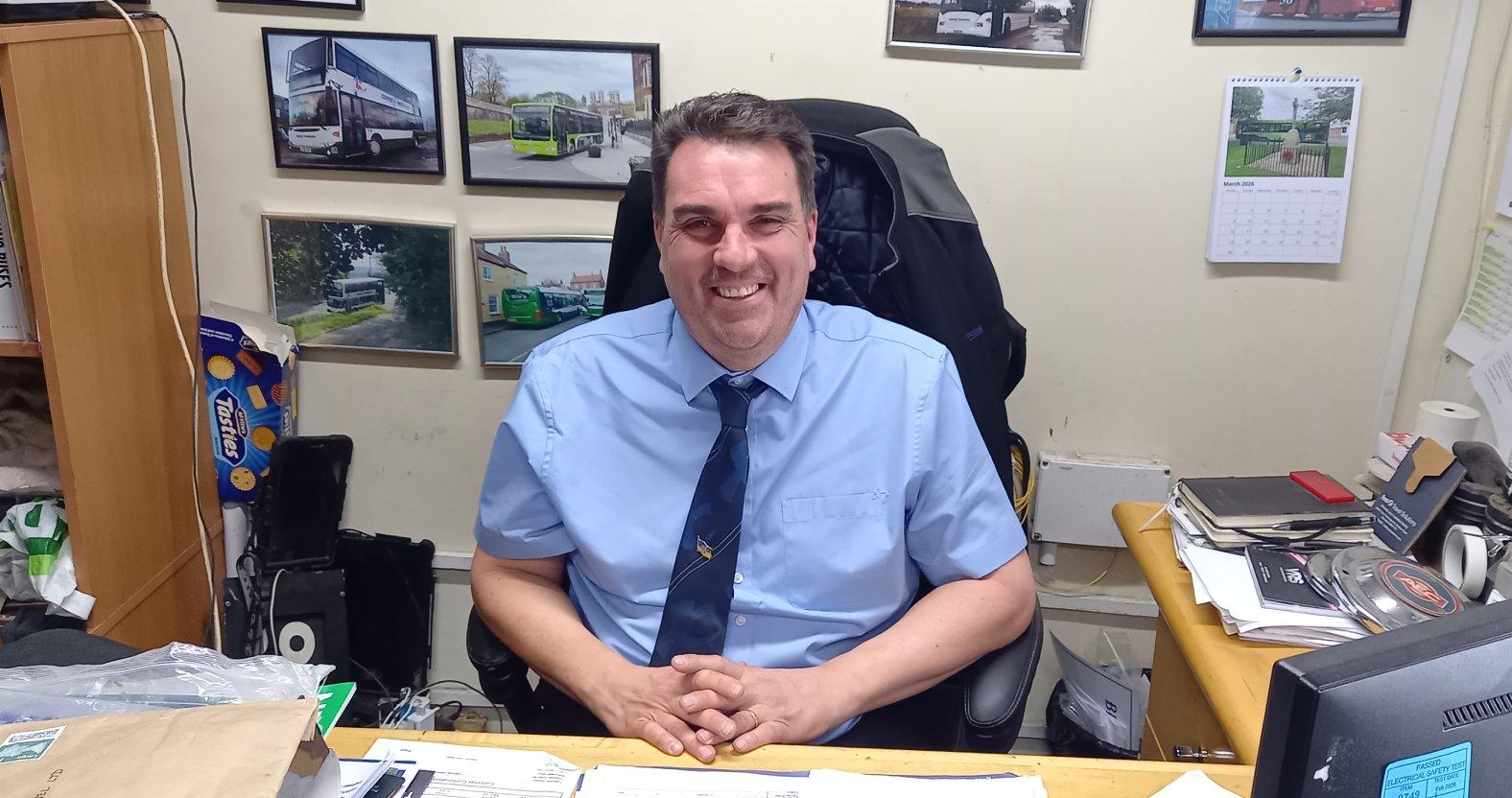
From a unit near the end of one of the old runways at the former RAF Marston Moor airfield at Tockwith, Craig Temple works 12 hours a day, running one of the region’s most familiar transport companies.
Connexions Buses operates dozens of services from here, including routes from Harrogate to Otley and Wetherby, as well as the buses that pupils of St Aidan’s and St John Fisher Schools rely on to get from villages as far away as South Milford, south of Tadcaster.
Even though he works nearly twice the hours of the average worker (he puts in a half-shift on Saturdays as well), Craig has actually slowed down. As a younger man, he was routinely working 14-hour days and admits he missed his children growing up.
But then, running a bus company is not an easy job. He told the Stray Ferret:
Every day should be the same – I mean, we're providing the same services – but actually, every day is different.
A car might drive into one of our vehicles, or someone might collapse on a bus, or be sick on one.
A tree branch might break a windscreen which costs £1,000 to repair, or a driver might not have been able come in to work.
Once, the fuel didn’t turn up, so we had to go to Leeds to fill up the buses until 11.30 at night.
No matter what people see out on the streets, there’s an awful lot of work that’s gone on in the background.
Craig’s whole career has spent on the buses, or running them. After a degree in information systems for business at Leeds Met, in 1994 he went to work at Blazefield, as it was before Transdev bought it out.
He said:
That was a good time to be working in the industry. It had gone from being nationalised to people owning their own businesses.
But there’s now a move away from individuality, where routes have their own brands, to uniformity.
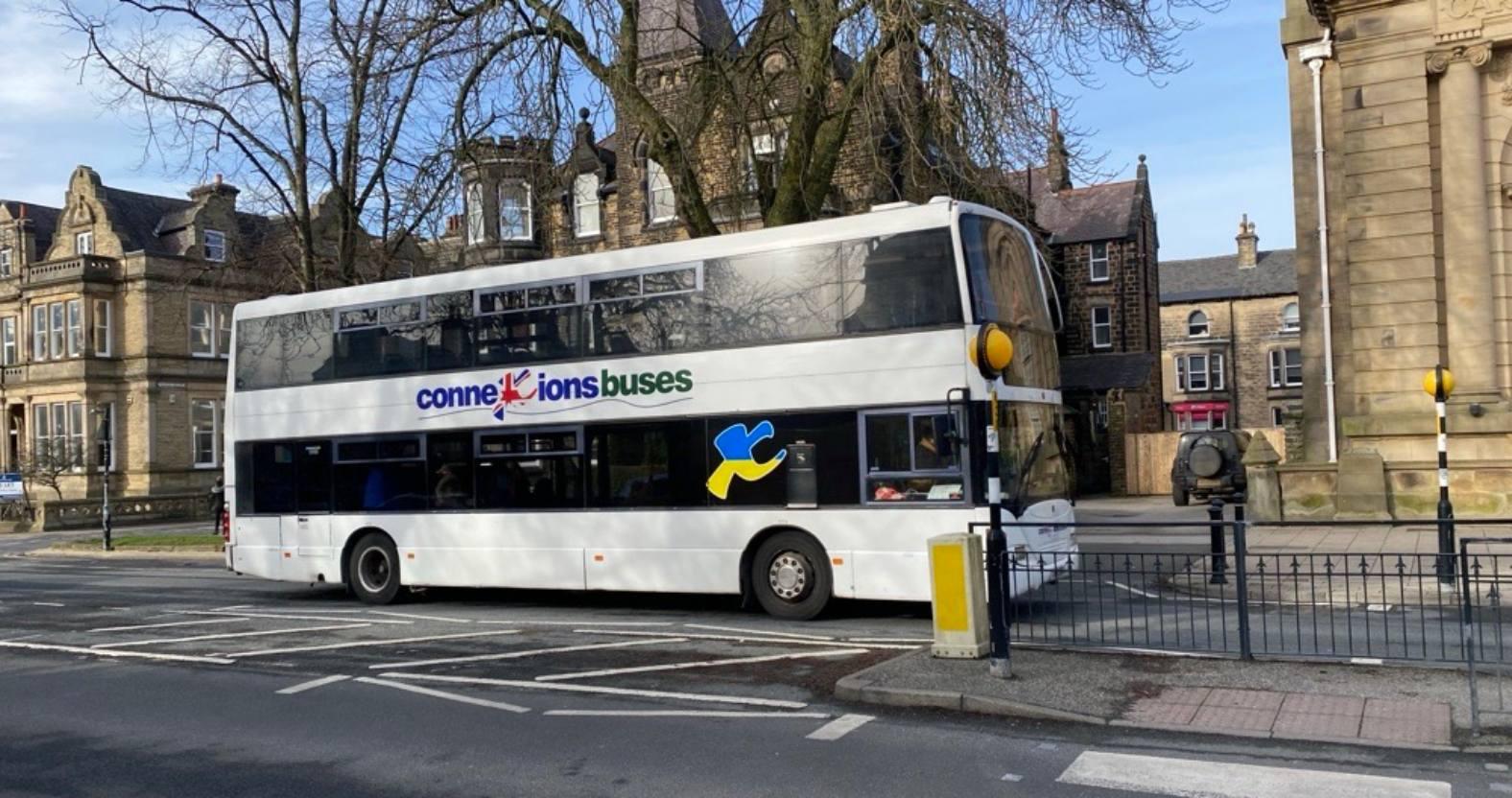
Connexions operates buses around the district and beyond.
Different mentality
He sees Connexions as the antithesis to that kind of corporate facelessness, and believes his company’s approach pays off. He said:
We’ve got a different mentality as a small company. Every vehicle has to run. If a bus fails to run, it’s as annoying to us as it is to the customer.
Passenger numbers on one of our services are up by 25% over the three-and-a-half years we’ve run it.
That’s because we’re reliable, friendly, and we have drivers that the customers know. If a regular passenger doesn’t turn up one day, our drivers are likely to notice. That relationship makes a difference.
Although he employs 65 people and puts 36 vehicles out on the roads every day, Craig still drives buses. He says it “sorts his head out”, and he clearly still enjoys life on the road.
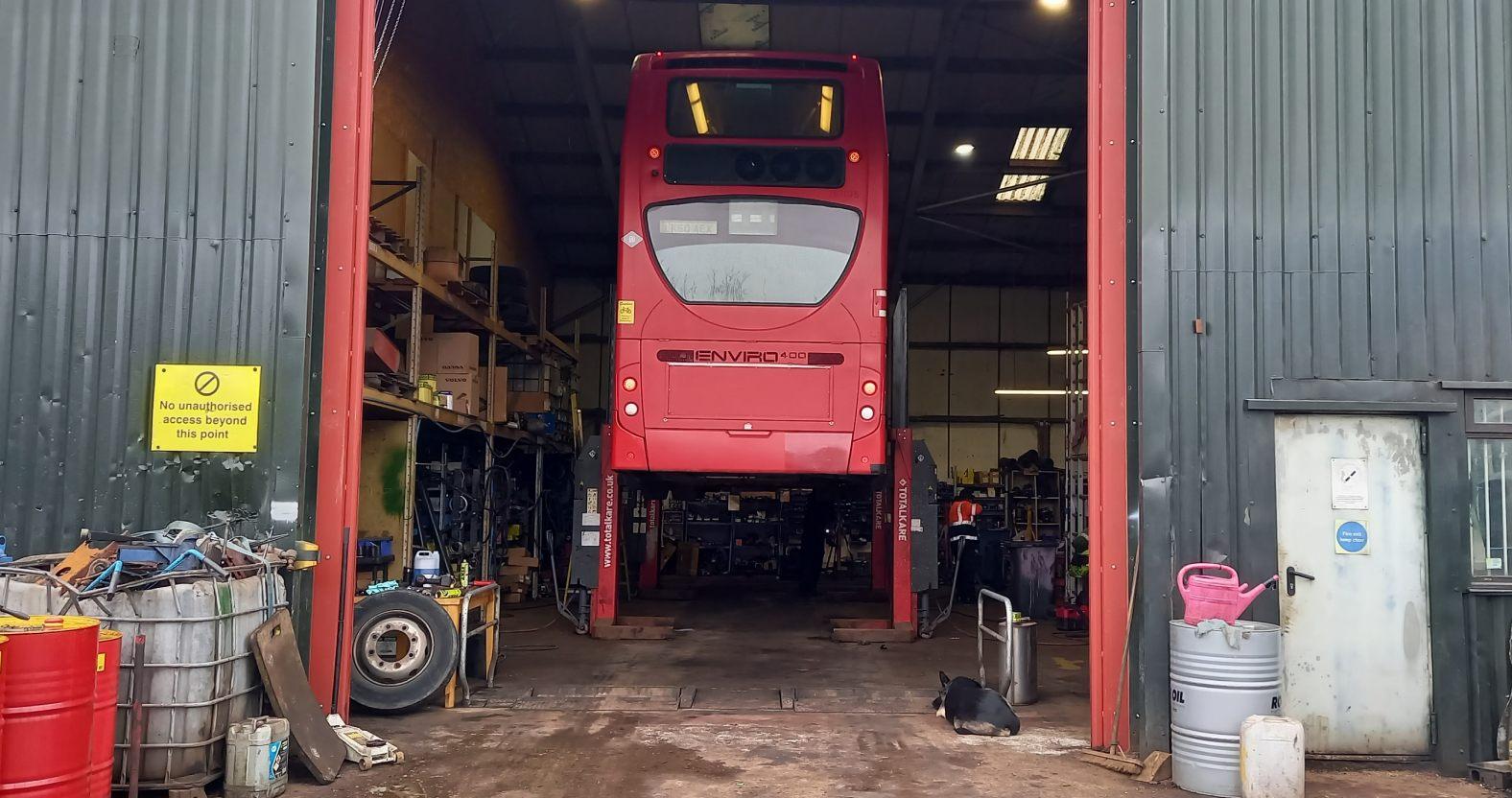
A bus undergoing maintenance at Connexions' depot near Tockwith.
Franchising
But there are clouds – or perhaps potholes – on the horizon. South of the River Wharfe, for example, bus franchising is to be introduced next year, meaning that control of bus routes, fares, and schedules will shift from private companies such as Connexions to the West Yorkshire Combined Authority (WYCA).
The idea is to create a public-controlled network designed for passengers rather than shareholders, with improvements to reliability, integration of services, and better-value fares.
But Craig is not happy:
I don’t agree with it at all. We built up the number 64 route from Aberford to the middle of Leeds over seven years, and now West Yorkshire Combined Authority is going to take it off us – which is immoral, in my view.
Big companies will be OK – they can put in for 20-bus or 30-bus lots. But you can’t run a corner shop like you run Asda.
And the franchising people want us to all be the same. Where there is franchising, all the buses are one colour. In Manchester, for example, they’re all yellow.
Ten years ago, I’d have thought of it all as a challenge, but I just don’t want it now.
Diesel costs
Fuel prices also pose a challenge. The week the Stray Ferret visited, the American and Israeli attacks on Iran had caused the price of diesel to jump from 115p to 146p in a matter of days, adding thousands to the monthly bill.
Asked if he would change his fleet to all-electric, he said:
Our wifi goes down when all the schoolkids log on. Imagine all our buses charging up here – there'd be no kettles working in the village!
'Harrogate could grind to a halt with no curb on cars'
But it is congestion exacerbated by roadworks that appears to antagonise Craig more than anything else.
He said:
Roadworks crop up on a daily basis that we don’t even know about. If they call them ‘emergency roadworks’, they can do anything. So now they say anything is ‘emergency’.
Often we’ll call the council and even they don’t know about some of the roadworks. We have to go through the council’s Passenger Transport people, and they have to talk to someone else. It can be really difficult to get answers, and it seems to have got worse.
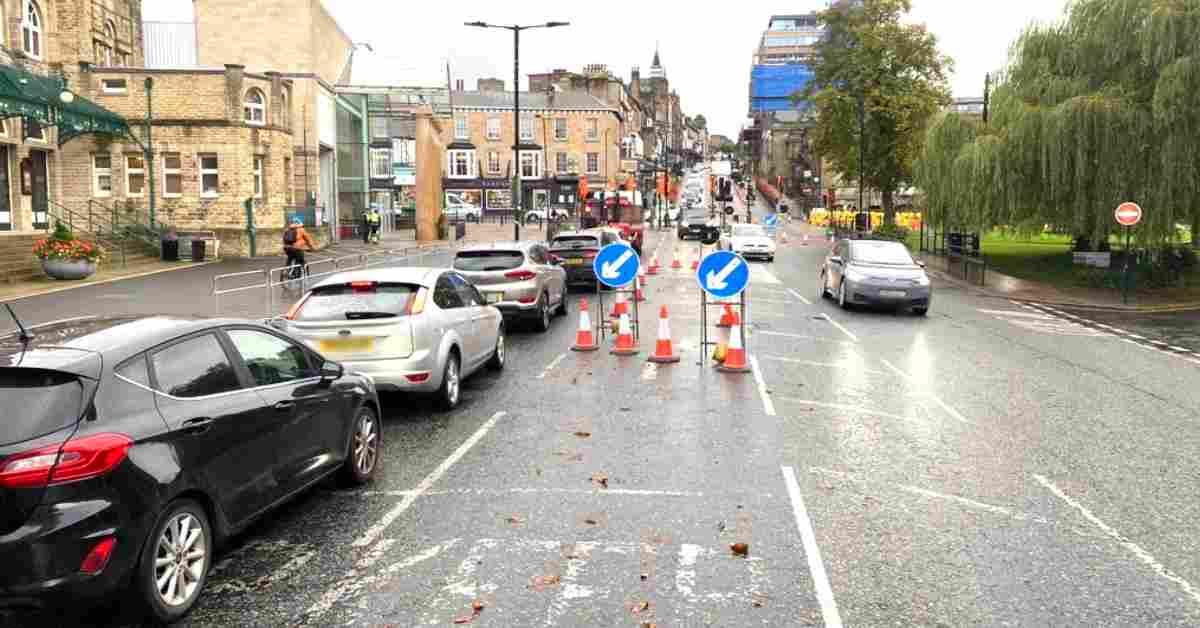
Roadworks causing tailbacks.
Of all the towns Connexions operates in, Craig is particularly frustrated with the congestion in Harrogate. He said:
I’ve been involved in the bus industry since 1994, and even back then we were trying to get bus lanes in Harrogate. If you’re sat in traffic in your car and you see a bus sailing past, you’re more likely to take the bus, aren’t you?
It’s difficult, because car use is such an ingrained habit, especially in Harrogate. But the whole place will just grind to a halt without some curbing of cars.
Between us and Transdev, Harrogate has a relatively good network of services. People should give it a try. I think they’d find it’s different from what they expect.
Yet despite the challenges, Connexions remains a successful family business – Craig's wife and son also work there – and will soon take delivery of a new £350,000 98-seat double decker to meet high demand on the St Aidan's service.
'Big profits shouldn't exist in our industry'
It's true that bus services are not known as a quick way to make lots of money, but with more councils investing in measures to get people out of their cars, they could be a growth area. So could big profits exist in the future?
Craig said:
I don’t think they should. In this business, if you’re making excess profits, they should be reinvested.
We’re a private company, but we’re running a public service. It’s wrong to make big profits and then also expect the council to pay for unprofitable services.
Given all the challenges in keeping the buses running across his patch of North and West Yorkshire, and the lack of any prospect a big payday, why does he still do it? After more than 30 years of plying the roads and navigating the unending challenges of running a medium-sized transport business, what keeps him going?
He said:
You have to have an interest in it. There’s a lot of easier things you could do. But I like going out and seeing our buses out on the road – it gives me a bit of pride.

3