Thank you for your interest in this story
To continue reading this article, subscribe to the Stray Ferret for as little as £1 a week
Already a subscriber? Log in here.
11
Aug
Harrogate becks polluted in separate incidents – Environment Agency investigating
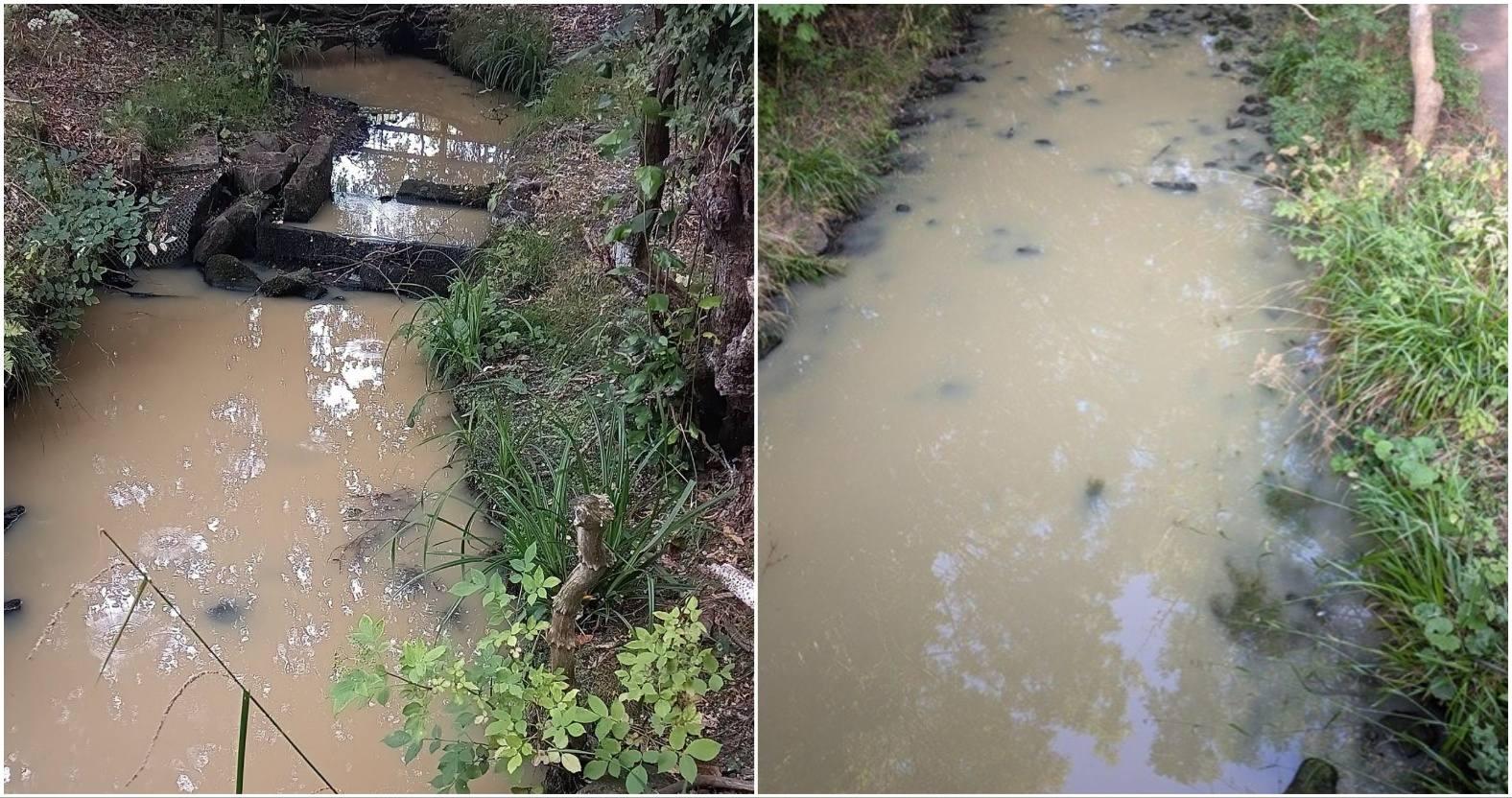
Two Harrogate becks have been hit by pollution over the last couple of days – but experts do not currently believe the incidents are related.
On Sunday (August 9), Bilton Beck turned the colour of milky tea, raising worries for local wildlife.
The Environment Agency was informed and sent a team to investigate.
A spokesperson for the agency told us:
Sediment entering the water is the most likely reason for any change in the Bilton Beck and officers are looking into the matter.
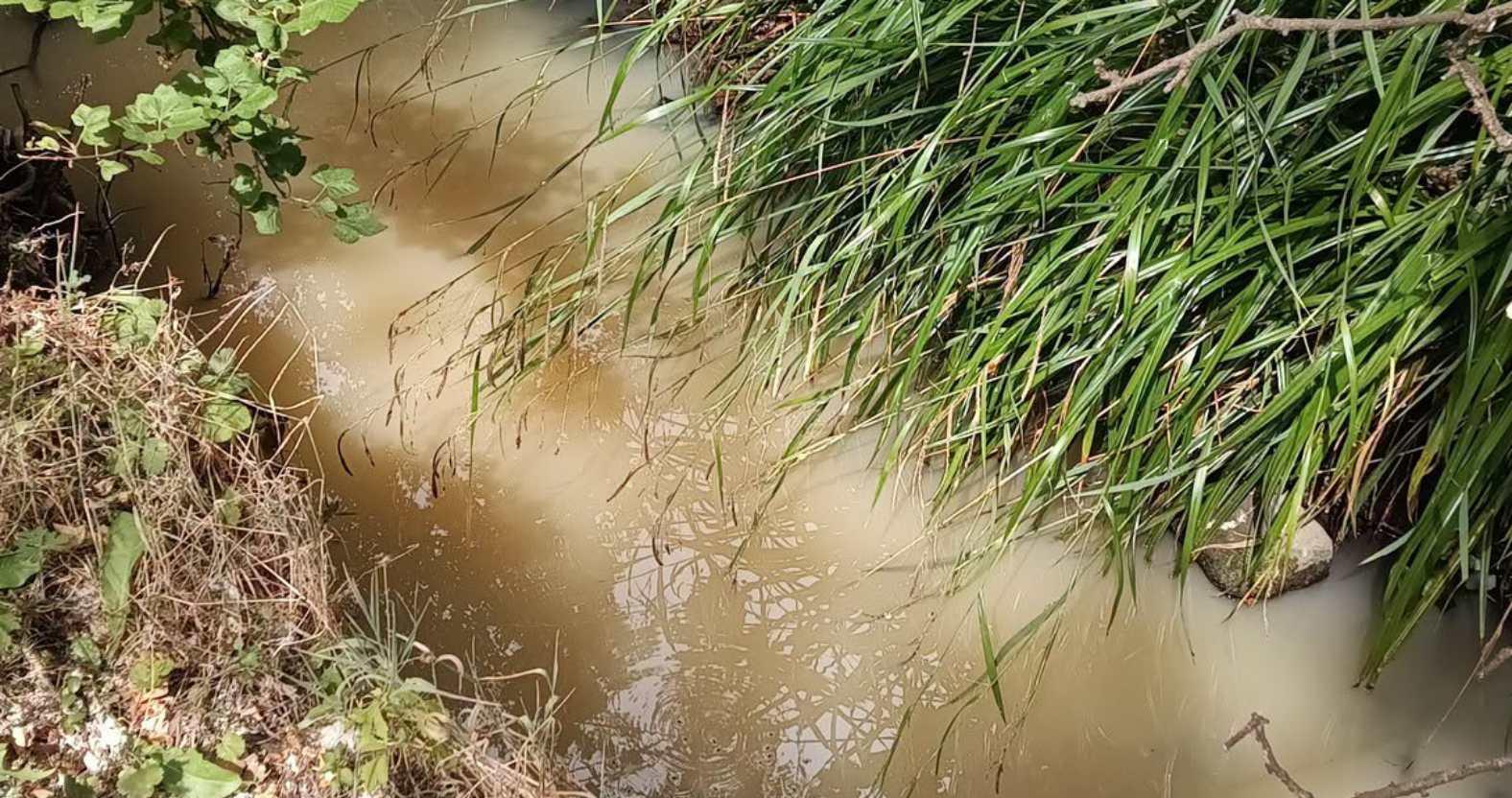
Pollution in Bilton Beck.
The spokesperson did not say where the sediment may have come from, but Keith Wilkinson, of Bilton Conservation Group, speculated that it may have come from a construction site.
He said:
I had a team of volunteers working on footpaths by the River Nidd this morning near the confluence of the Bilton Beck and the River Nidd. They reported back that the Bilton Beck was running perfectly clear, so perhaps this short-lived incident was building site run-off (clay, sand, cement mix etc) – not toxic, fortunately, but unwelcome because its silty nature deposits on the stream bed and chokes off the life-forms at the bottom of the food chain, such as invertebrate larvae, snails, annelid worms, freshwater shrimp, water hoglouse etc.
Just a day after the Bilton Beck incident, a stretch of Oak Beck at New Park also turned opaque, becoming worse overnight.
Again, Mr Wilkinson speculated that it may have been caused by construction work upstream, but this time, the Environment Agency had other ideas.
The spokesperson said:
We believe discoloured water in the Oak Beck could be caused by old oil being flushed from a surface water sewer. Any impact will be localised, and officers are investigating to find the source.
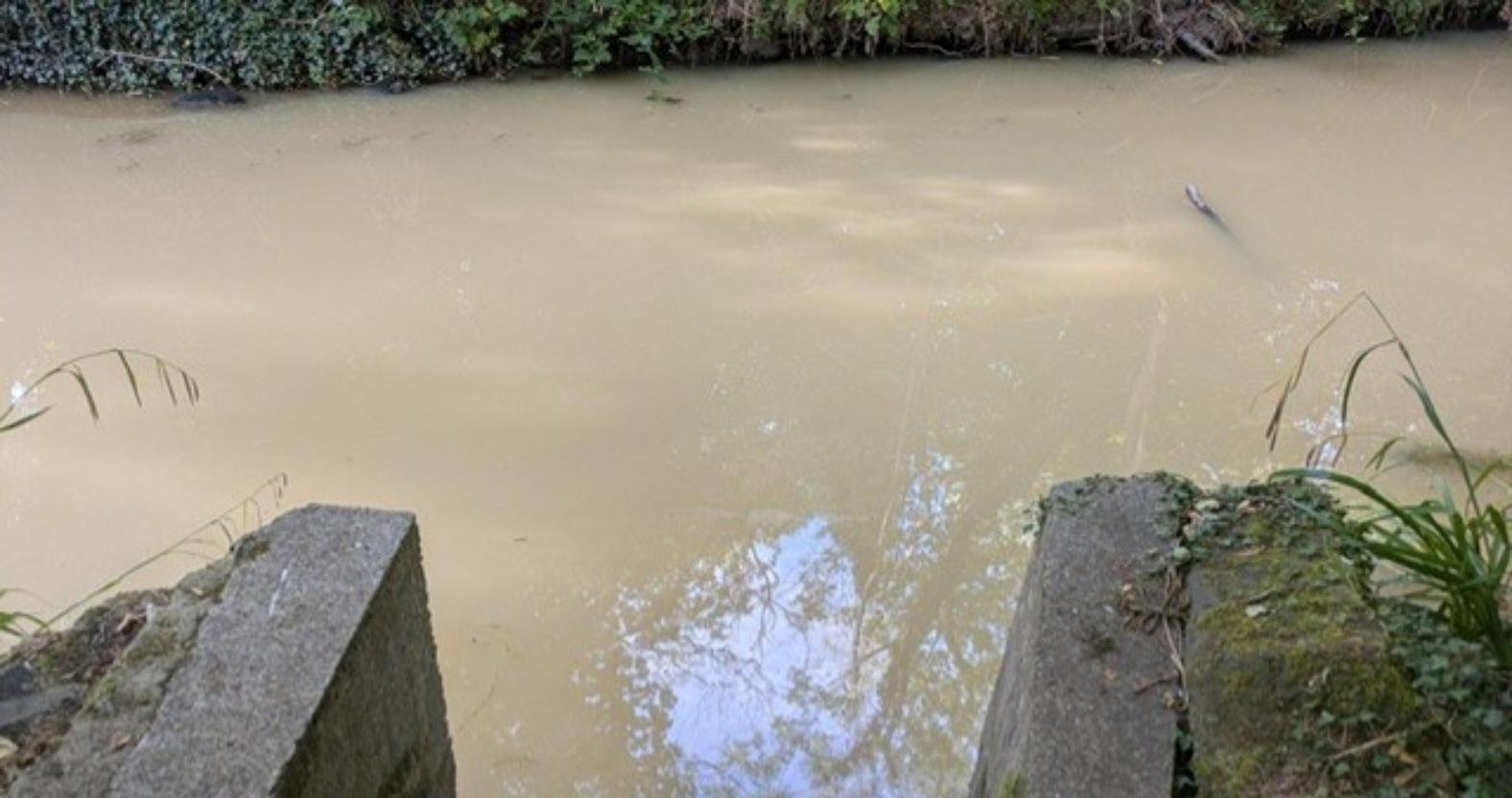
Pollution in Oak Beck.
The two pollution incidents come at a time when local wildlife habitats are already under strain from the dry weather.
Cow Dyke Beck, which runs into Oak Beck behind Pets At Home, has run dry this summer, possibly for the first time in living memory.
Concern for aquatic life is well-founded – a major pollution incident affecting Oak Beck in 2022-23 wiped out five species of fish. But recent environmental DNA testing by Bilton Conservation Group this year suggested they had finally bounced back, and good populations of brown trout, minnows, bullheads, stone loach and three-spined sticklebacks have been found.
Local watercourses have long been subjected to pollution from various sources – agricultural, domestic and industrial – and the Environment Agency has been working recently with Yorkshire Water and local conservation groups to tackle the problem.

1