Subscribe to trusted local news
If you are accessing this story via Facebook but you are a subscriber then you will be unable to access the story. Facebook wants you to stay and read in the app and your login details are not shared with Facebook. If you experience problems with accessing the news but have subscribed, please contact subscriptions@thestrayferret.co.uk. In a time of both misinformation and too much information, quality journalism is more crucial than ever. By subscribing, you can help us get the story right.
- Subscription costs less than £1 a week with an annual plan.
Already a subscriber? Log in here.
19
Sept
Dispatches from the US: A trip to Harrogate, Tennessee
David Hutter is a Harrogate-based ghostwriter (davidhutter.net). In the first of two articles, he writes about his trip to the United States and his visit to Harrogate, Tennessee.
A few months ago, while planning my family’s summer road trip around the eastern United States, I remembered that there’s a place called Harrogate in Tennessee. Looking at the map, I realised that we’d get fairly close to it on our way to Nashville. So, I decided to make a slight detour to visit this small community in the gently rolling western Appalachian Mountains.
Approaching on southern Virginia’s Highway 58, you’d be forgiven for thinking that you’re passing through a particularly foresty and hilly part of the Yorkshire Dales. Except, this is the English countryside with a twist as black bears (which we would later encounter elsewhere) roam this historically significant area.
In March 1775, just before the Revolutionary War, American folk hero Daniel Boone cut a path through the wilderness of this tri-state region (the Kentucky border being nearby, too), thus enabling European settlers to move en masse beyond the Thirteen Colonies for the first time.
Inside the cinema at the excellent Cumberland Gap National Historical Park Visitor Center, we watched a film about Boone’s trailblazing efforts, which, more than a hundred years later, led to a brief period when Harrogate, TN threatened to rival well-known US holiday destinations such as Aspen and Palm Springs.
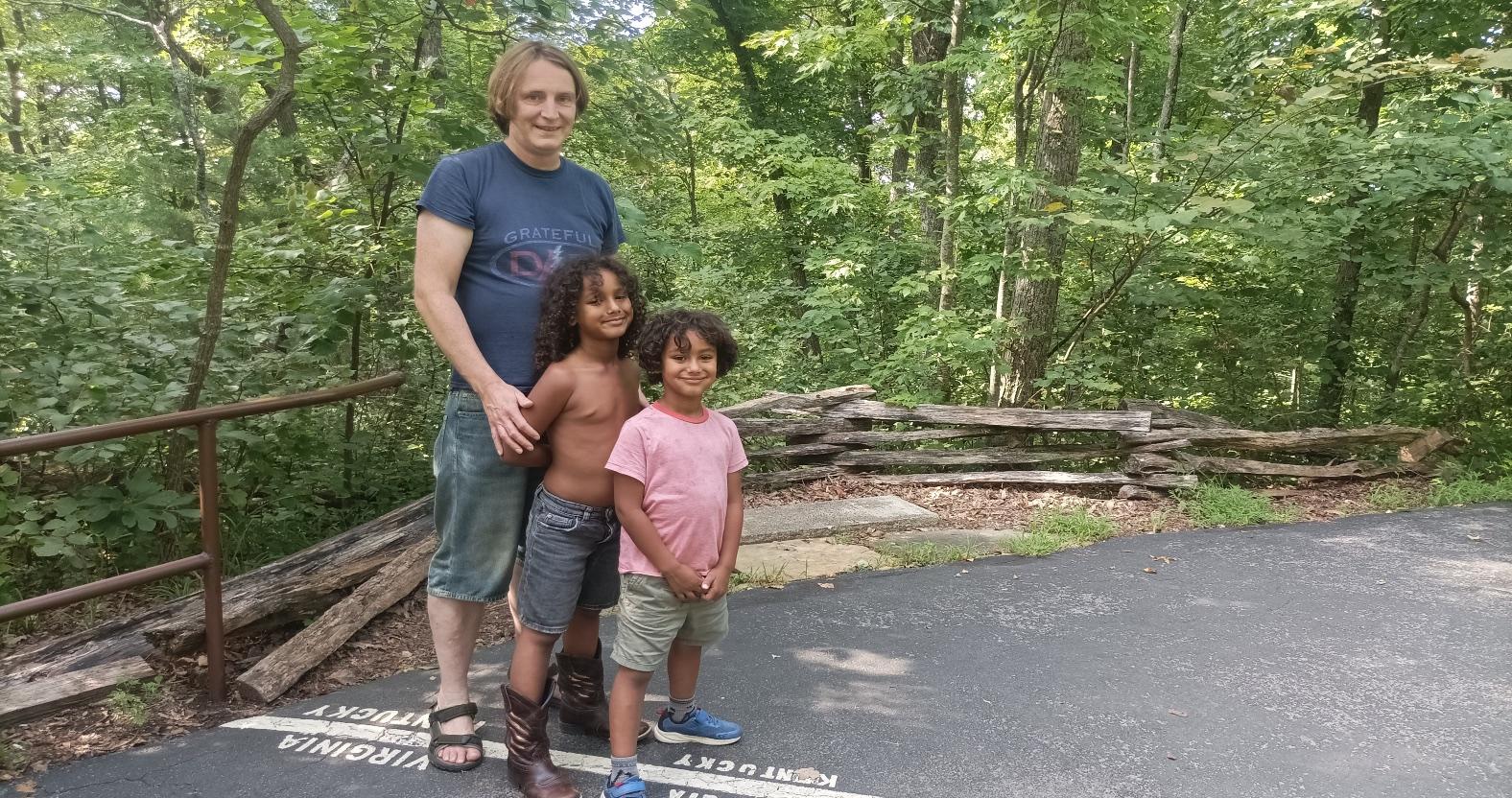
David, Ezra and Eli retracing Daniel Boone's steps on the Virginia-Kentucky border just outside Harrogate, Tennessee.
Since this area is rich in iron ore, the flamboyant Scottish entrepreneur Alexander Arthur decided to establish an industrial town called Middlesboro on the Kentucky side of the Cumberland Gap mountain pass in the 1880s. His grand vision for this previously undeveloped part of the country also extended to a spa resort for wealthy visitors across the border in Tennessee. And taking inspiration from the kind of place he envisioned, he named it Harrogate.
Here, just three miles from Middlesboro, Arthur opened the opulent Four Seasons in April 1892. Built at a cost of $20 million (about $730 million in 2026), it boasted 700 rooms and was the largest hotel in the entire United States at the time. But after the economic Panic of 1893, visitors stayed away, so it closed down just a year later.
With about 4,000 inhabitants, today’s Harrogate is what Americans call a “city”. Yet it doesn’t have any hotels anymore, so we spent the night in Middlesboro, the hometown of 1970s and 80s TV star Lee Majors (The Six Million Dollar Man and The Fall Guy). However, plans are underway to build a 72-room Comfort Inn in Harrogate. “Our first brand-name hotel,” Mayor Troy Poore proudly told me when I met him for a chat. “That’s a big thing for the county.”
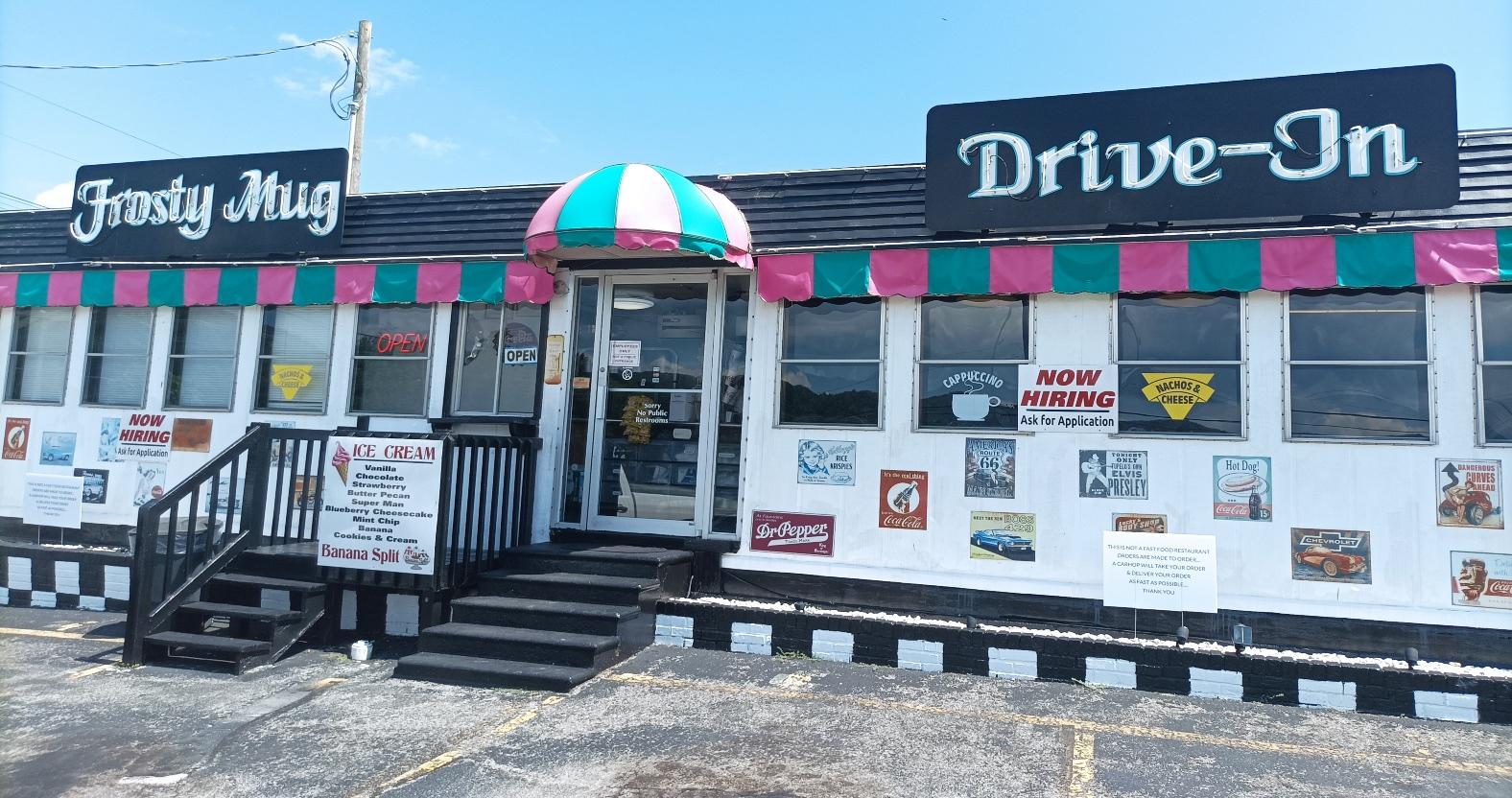
The Frosty Mug Drive-In — the best burgers in Harrogate.
Despite being roughly twenty times smaller than our Harrogate, the one in Tennessee has several independent restaurants. Craving an experience we couldn’t have at home, we opted for the Frosty Mug Drive-In, which served some of the best burgers we had during our travels.
Most of the other customers simply waited in their cars to get the food that was freshly prepared for them inside this quintessential diner. But we decided to eat at one of the tables in the garden, where a young waitress called Lacey told us about life here.
She said:
It’s a really good environment.
You kind of know everybody. And we work right across from LMU, so we get a lot of kids from other parts of the US and from overseas.
LMU stands for Lincoln Memorial University, which was set up in 1897 on the site of the former Four Seasons Hotel. It was named after US President Abraham Lincoln because he’d always wanted to repay the people of East Tennessee for being loyal to him during the Civil War even though their state had seceded from the Union. Like our own Harrogate, the vast LMU campus has a Carnegie Library, which was opened in 1906, just like the one on Victoria Avenue.
In addition, the university has a museum dedicated to its namesake, where we saw some fascinating memorabilia related to him and the Civil War.
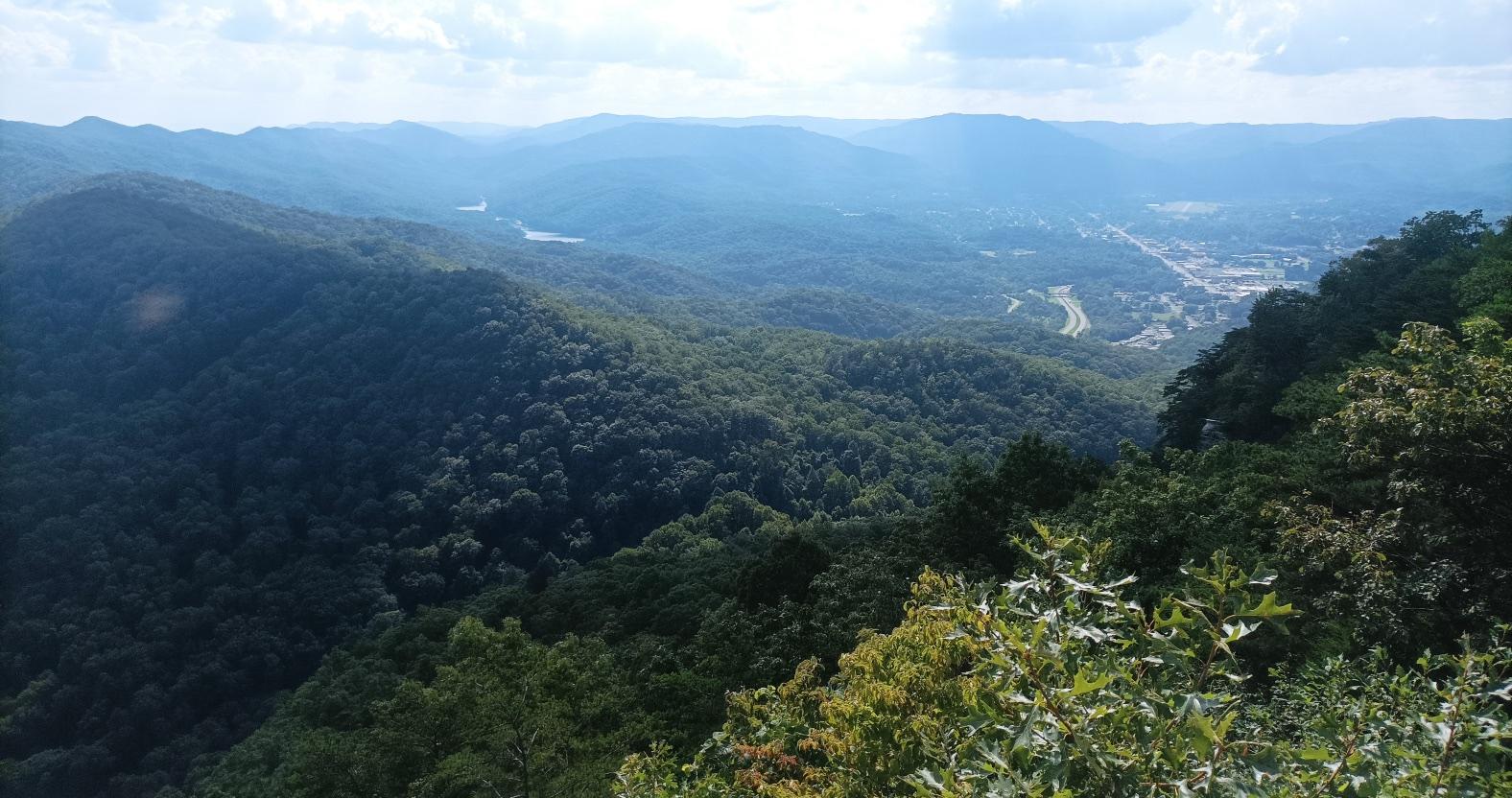
A view from the Pinnacle Overlook just outside Harrogate, TN.
Afterwards, we headed into the surrounding mountains, enjoying the stunning vistas at the Pinnacle Overlook. From there, it was a 1.5-mile trek to the Tri-State Point where the borders of Tennessee, Kentucky and Virginia meet. But in 30-degree heat, and with two young kids, we settled for a photo on the more accessible state line between the last two of those three territories.
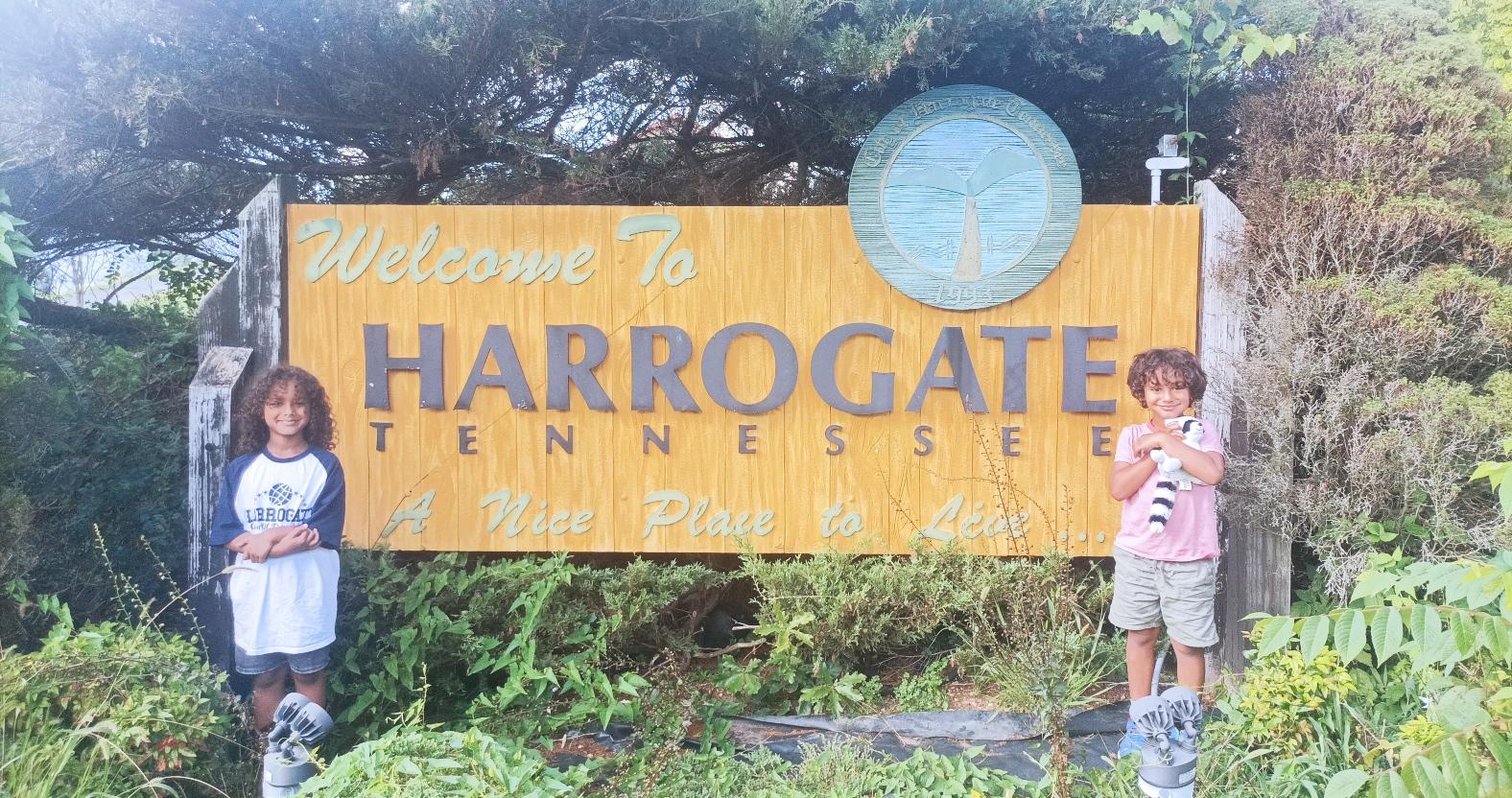
Then it was time for us to leave. As we drove off, we spotted a large sign that said: “Welcome to Harrogate, Tennessee: A Nice Place to Live”. To which I would add: “And to visit!”
Yet what about the two most important questions, you wonder. Well, we didn’t see any roadworks. And as for pronouncing the name, is it Harr-uh-gut or Harro-gate?
“No long A,” Mayor Poore said, leaving no room for doubt. “Everybody who’s lived here all their life knows that the pronunciation is Harr-uh-gut.”

0