Thank you for your interest in this story
To continue reading this article, subscribe to the Stray Ferret for as little as £1 a week
Already a subscriber? Log in here.
23
Aug
The story of a Victorian rugby player who died on his debut for Harrogate
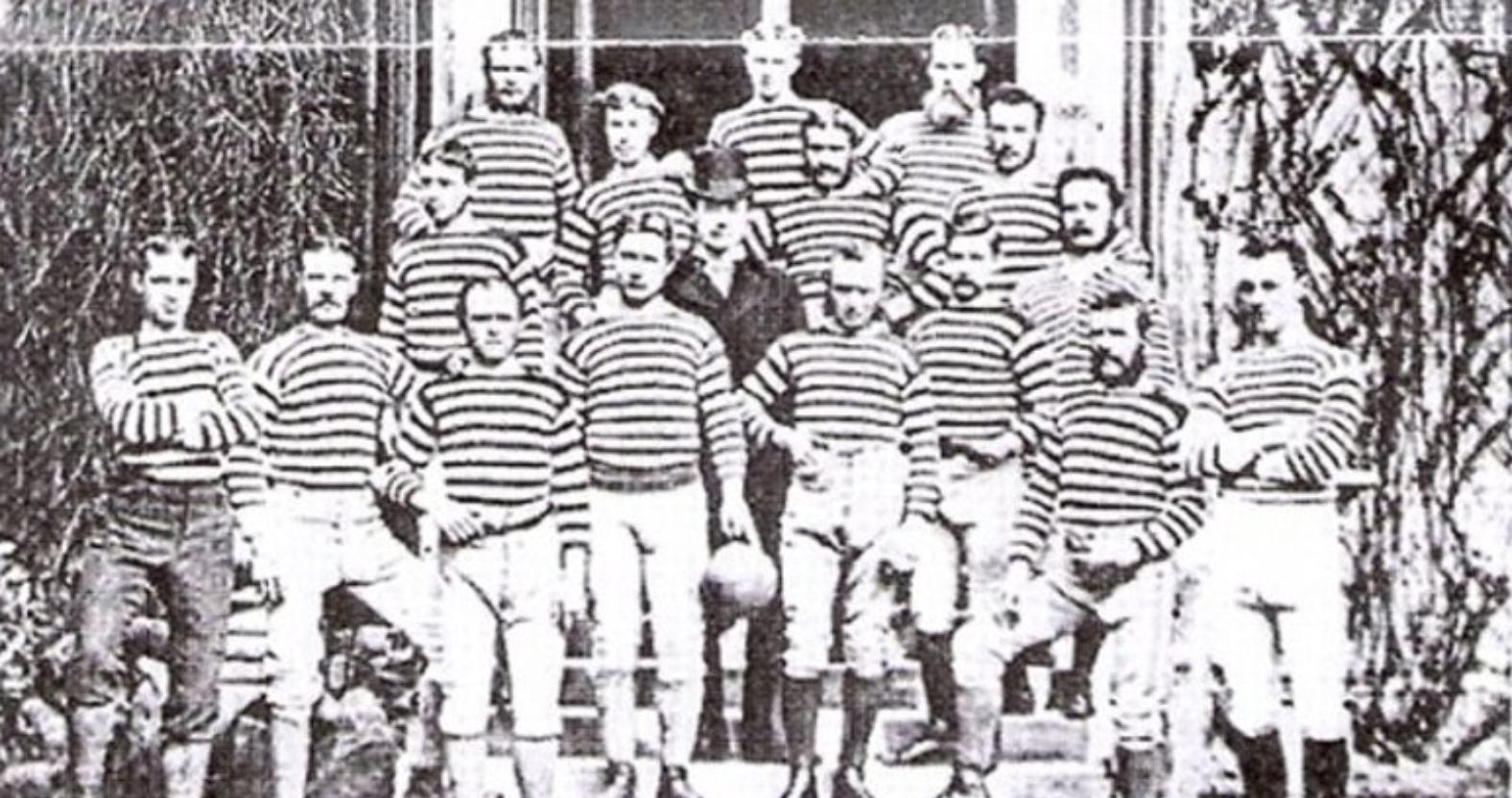
Mark Bake Hutchinson from Pateley Bridge was just 21 when he died during a game of rugby in 1892.
He’d plied his trade around the muddy pitches of Nidderdale but dreamed of the big leagues, which in those provincial days meant playing for Harrogate.
After submitting an application to the club, the forward was accepted ahead of the new season.
The first game of the campaign was against Stanningley in Leeds on a Saturday afternoon in September.
A newspaper article described how Mark woke up early, said goodbye to his grandmother and excitedly took the train from Pateley into Harrogate to meet up with his new teammates.
The club captain, G Smith, shared a compartment with him to Leeds and told the inquest that Mark was “very jolly and delighted” to have been chosen to play with Harrogate.
Through the working week, he worked as a stone dresser at Scotgate Ash Quarries in Pateley Bridge, a short walk from his home at Malt Kiln Yard.
The hard-wearing sandstone quarried there was a source of pride in Nidderdale and was used on railway platforms across the country. It was as tough as Mark and his fellow rugby players in a scrum.
Tragedy strikes
As the game unfolded, Harrogate were well off the pace. Stanningley scored four kicks and two tries before the tragedy occurred.
The ball was lofted high up into the sky. Mark was a little behind the rest of the players and he stood still to catch it.
But his positioning wasn’t quite right. The ball wasn’t going to land in his lap, so he had to lean backwards or he was going to end up fumbling it and risk letting Stanningley in for another try.
As the ball hung high in the air, a big fellow from Stanningley called Harry Haggas charged forward and tackled Mark as he tried to catch it. Because of the Harrogate player’s awkward stance, he flew into the air on impact, with his legs pointing skywards.
He landed in a heap and shouted out in pain.
James Birkinshaw, who worked as a billposter on Tower Street, later told the inquest that the game was played fair and square as far as he could see. He said Mark only spoke once after the incident when he told him, “I’m a gonner”.
He presumably meant the injury was the end of his match, not his life.
‘Hutchinson - very poorly’
One of the Stanningley players called Thomas Wright, who also happened to work in Harrogate, took Mark back to his home in Leeds so he could recuperate. A doctor had hopes for his recovery and initially thought he had just been winded by the collision.
But when he returned the next day, he took one look at Mark and realised it was a grim picture indeed. The injured man complained to the doctor of a sharp pain in his abdomen and he vomited several times. There were signs of internal bleeding.
A telegram was sent to Harrogate from Leeds that morning that simply said: “Hutchinson, very poorly, not fit to travel.”
Representatives from Stanningley came to Harrogate by train later that day and told the club that he had died. His grief-stricken grandparents, Alice and John, who brought him up, arrived from Pateley Bridge.
Newspapers reported that when the people of Stanningley went back to work and school on Monday morning, the mood was sombre. Groups of men, women and children were heard speaking about the shocking death in grave tones.
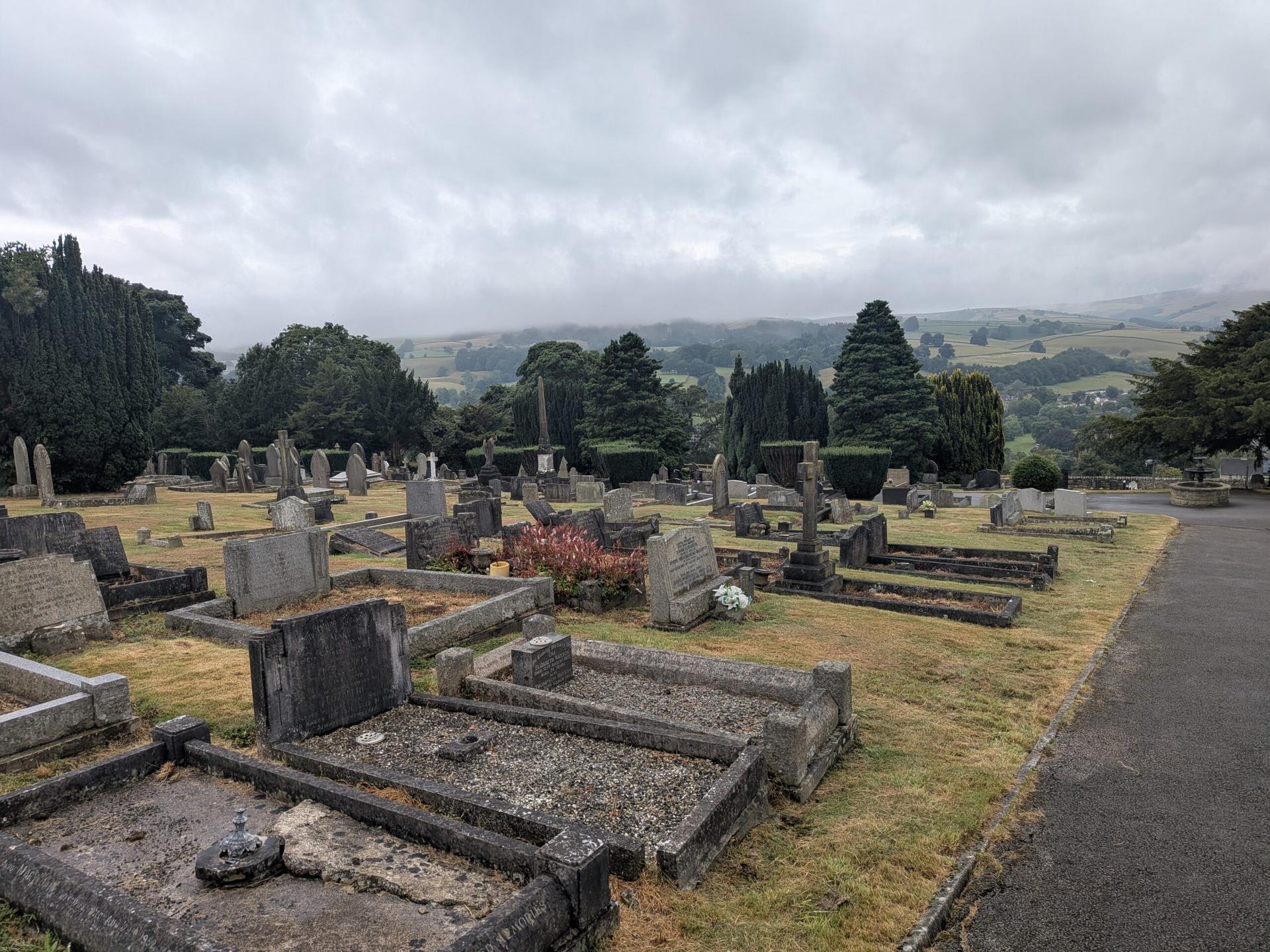
Pateley Bridge cemetery.
A bad dream
At the inquest, Captain Smith said the affair felt like a bad dream.
Smith had been impressed with Mark’s potential as a player and his neat style of play on the pitch. He described him as being very quiet but added that he played with spirit and determination.
On the night before the match, Mark had been practising with the Pateley rugby club.
He’d had a bad knock before while playing near Bradford and his grandmother had urged him to quit playing rugby so he could protect himself. She feared that one bad injury could put him out of action in the quarry.
She told the inquest that the temptation appeared to be too great for him as rugby was simply his favourite game. Mark told her as he was leaving the house to head to Stanningley:
I am going to enjoy myself, mother.
Mark’s funeral took place at Pateley Bridge cemetery and was attended by members of both Harrogate and Stanningley, including Harry Haggas, the man who he collided with. The players were pallbearers and they carried his coffin up Pateley High Street towards the church.
The Yorkshire Evening Post offered this sombre account of the event:
The ceremony was of an impressive and painful character. A mournful group collected, and the sorrowful expressions on the faces of one and all plainly betokened the errand upon which the party was bent. The greatest regret and sorrow was expressed on every hand at the shocking and painful incident which has marked the opening of the season of the respective clubs.
Risks of rugby
Mark’s death took place in a different era of the sport, three years before it split into two codes, rugby league and rugby union.
It was also four years before Harrogate moved to Claro Road, which would be the home of rugby in the town for more than a century. Before that, they played at some fields on Dragon Road near where Asda is today.
But Mark never pulled on the Harrogate jersey there. He was supposed to be starting his career, but instead, it was cut tragically short during a freak accident. While the sport and the town have changed greatly since 1892, the rough risks when playing the game remain.
Thomas also publishes a Leeds history newsletter called Bury the Leeds, which you can sign up to for free with your email address.

0